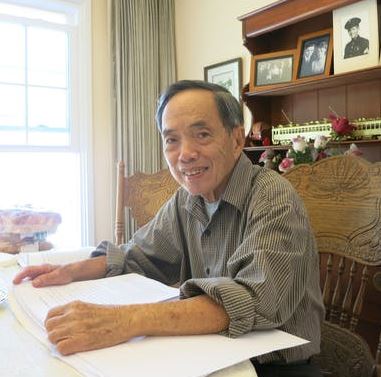
We mark last week’s passing of Trần Đình Trụ, the author of Ship of Fate: Memoir of a Vietnamese Repatriate (UH Press, 2017), with words from the book’s co-translators Jana K. Lipman and Bac Hoai Tran:
“Trần Đình Trụ’s life story was one of grace, fortitude, and devotion to his family. A skilled seaman and a naval commander, he journeyed from North Vietnam to South Vietnam as a young man, and then from South Vietnam to the Philippines, Guam, Japan, and ultimately, the United States. In his memoir, he recounts his evacuation from South Vietnam in 1975, his experiences in a refugee camp in Guam, and his decision to return to Vietnam in October 1975 with more than 1500 Vietnamese repatriates as the captain of the Việt Nam Thương Tín. After he successfully navigated the ship back to Vietnam, the new government viewed him and the repatriates with fear and suspicion. Trần Đình Trụ suffered physical and psychological brutality in “re-education” camps for more than twelve years. On release, he finally rejoined with his family and resettled in the United States. Through his memoir, Trần Đình Trụ captured the singularity of his life story and the universality of despair and uncertainty at the end of war. He will be deeply missed by his family and community.”
Read more about the book and Tru’s life in an essay by Professor Lipman that first appeared in The Conversation and was republished on the UH Press blog.
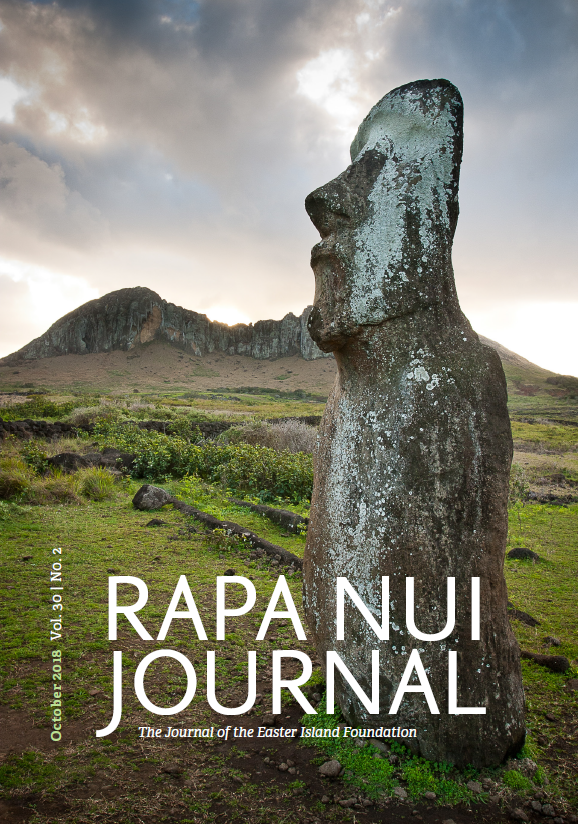
Applications are invited for the position of co-editor of Rapa Nui Journal: The Journal of the Easter Island Foundation (RNJ). The journal is published by the University of Hawai‘i Press in partnership with the Easter Island Foundation. Dr. Mara Mulrooney has served as the journal editor for the past several years and is looking forward to sharing the editorial duties with one or two co-editors.
The journal, launched in 1986 as Rapa Nui Notes, serves as a forum for interdisciplinary scholarship in the humanities and social sciences on Easter Island and the Eastern Polynesian region. Each issue may include Research Articles, Research Reports, Commentaries or Dialogues, Book or Media Reviews and EIF News.
RNJ is published twice a year and welcomes contributions from a wide range of social, cultural, indigenous and historical disciplines on topics related to the lives and cultures of the peoples of Rapa Nui and Eastern Polynesia. Abstracts for articles may be published in English, Spanish, and Rapanui. We welcome submissions from scholars across Oceania, North and South America, and beyond.
The editors are expected to assist in raising the profile of the journal, provide support increasing submissions, and secure timely and appropriate peer-review of articles. Editors will make the final decision on manuscripts, informing both the author(s) and reviewers of the final disposition. The editors must show openness to communicating with scholars about diverse ideas, openness to a diverse range of methodologies, and eagerness to continue building the journal’s reputation.
In accordance with the University of Hawai‘i Press’ mission to publish high quality scholarship, the following criteria are considered in selecting editors:
established record of scholarship
evidence of understanding the mission of the journal and its operation
a vision for the journal’s future
record of responsible service to scholarly publishing
evidence of organizational skill and intellectual leadership
The actual costs associated with production and the online submission system for the journal are covered by the publisher.
Selection Process: (1) Applications will be received by the UH Press Journals Manager by Sept. 4, 2019. (2) The applicants will be reviewed and ranked by the current journal editor and UH Press Journals Manager. (3) The top two candidates will be contacted by phone for an interview and to discuss the journal editorial workflow by Sept. 25, 2019. (4) The candidate selection will be made by Oct. 10, 2019. (5) The new editor(s) will begin working with the current editor and UH Press no later than January 2020. (6) All other applicants will be notified of the final selection.
Applications: The applications should include the following:
Vision Statement: Set forth your goals and plans for the content of the journal.
Co-Editors Background Information: Describe the qualifications and experience of each person on the editorial team that supports their inclusion. There is no need to include names of individuals that you would like to include on the larger editorial board. If you wish to include names of nominees for Book Review editors, you may; these individuals will be appointed by the editors after they are selected, so you are not required to include them in your application.
Institutional Support: It is important for candidates to examine the feasibility of serving as co-editor in light of the resources provided by the publisher and their own home university. If candidates expect to receive support from their host institution, we request a preliminary letter of support from a dean or other appropriate institutional official.
CVs for all potential co-editors (and if applicable, any associate editors).
For questions and further information about the application process, please contact: Pamela Wilson, Journals Manager, [email protected]. We encourage anyone who is considering an application and wants to discuss ideas or ask questions, to get in touch. The application packet should be no more than five (5) pages (excluding CVs), and must be received by Sept. 4, 2019.
Applications may be emailed as PDFs to Pamela Wilson, Journals Manager at [email protected].
University of Hawaii Press, 2840 Kolowalu Street Honolulu, HI 96822
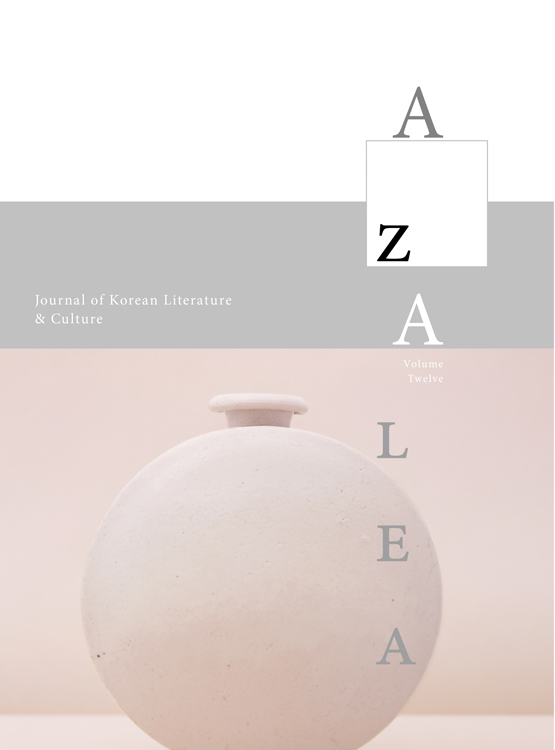
Last year, peace in Korea seemed imminent, thanks to cooperation between Trump and Kim, but now, with the subsequent failure of talks, that expectation has diminished. Still, perhaps because of that failure, it is very noisy in front of Seoul Station or at Gwanghwamun Square these days, where people gather every weekend to make their opinions known. This clamor can be seen as expressing Korea’s disorder, or it can be seen as evidence of Korea’s eagerness for change. Social energy in Korea is still very high. The same goes for Korean literature.
Also in this issue: Special Feature: Hansi by Ch’usa Kim Chŏng-hŭi, Special Feature: Zainichi Literature and Film Images by Too Bohnchang, an image index, and a Notes on Contributors section.
About the Journal
Azalea promotes Korean literature among English-language readers. Azalea introduces to the world new writers as well as promising translators, providing the academic community of Korean studies with well-translated texts for college courses. Writers from around the world also share their experience of Korean literature or culture with wider audiences.
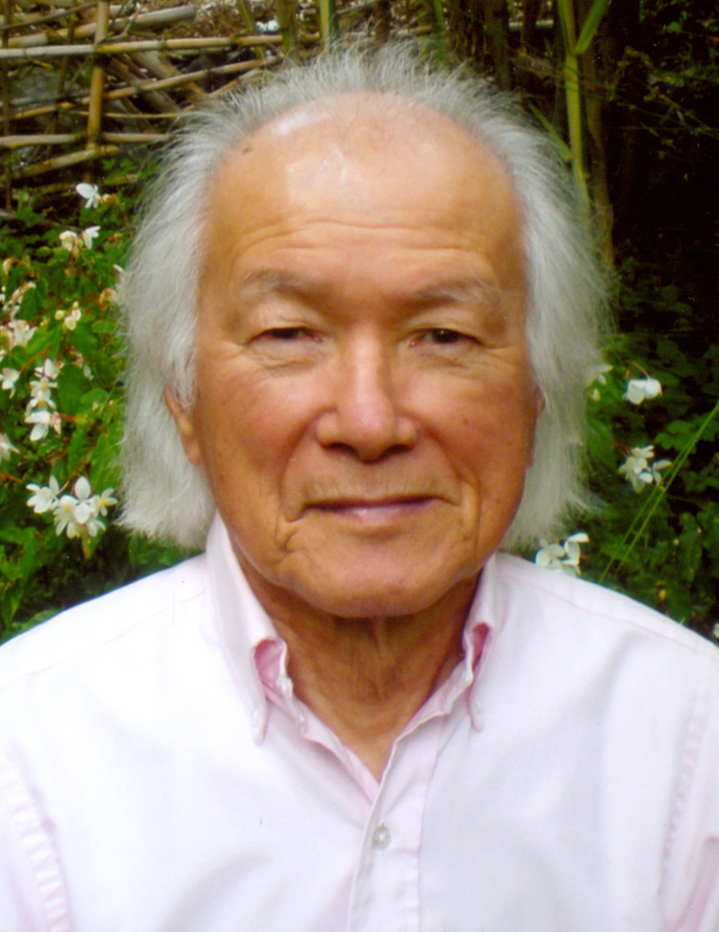
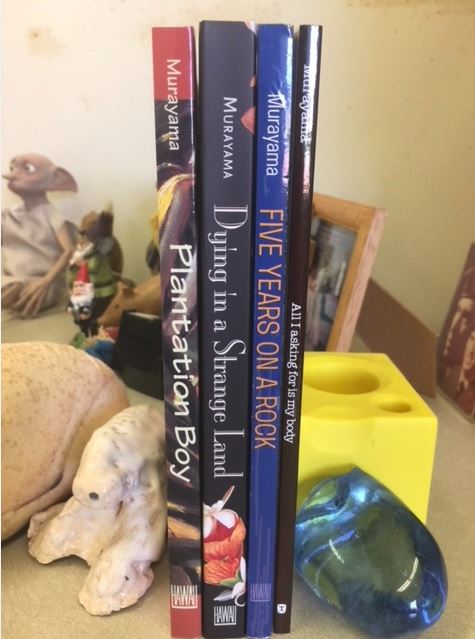
Originally this post was a way to mark this month’s Asian/Pacific American Heritage Month by sharing personal memories from an editorial perspective of a pioneering Asian American literary icon, Milton Murayama. It has grown to include other remembrances from a marketing perspective. We are all proud to be the publisher of his bestselling novels.
Masako Ikeda, Acquisitions:
I only met Milton Murayama once, at the Asian American studies conference held in Honolulu in 1991. I tagged along with Sharon Yamamoto, who acquired his manuscripts for Five Years on a Rock and then Plantation Boy. Nothing at that meeting was particularly memorable as I sort of stood in the background, but I ended up enjoying serving as his managing editor for those two books. We wrote letters back and forth and continued to do so even as the century changed. Most of the time all he said in his letters was that he wanted to buy copies of his books or he was writing a new book, which wouldn’t be finished for a while.
After Five Years our production department held onto an old computer drive knowing that Milton had not updated his system and refused to do so. Our marketing staff coaxed him a number of times: “Milton, I’ll help you set it all up.” He kept sending me hard copy manuscripts with perforations on both ends along with five-inch floppy disks. The manuscript wasn’t complete so he wanted everything back, including the floppy disks, which he couldn’t find anymore. Right before he sent the very final manuscript, which eventually became Dying in a Strange Land, we had gotten rid of the drive, and there was no way to read his WordPerfect files. I ended up asking our Production staffer to keystroke everything, which she did in three days.
Communication with Milton was always interesting and often a little strange. He’d call to complain about the copy editor who didn’t understand that “Pidgin English doesn’t have ellipses points, or letter spaces in between.” He would also hesitate to say “Okay bye” and hang up the phone, so our conversation would go on for a long time with several seconds of dead silence breaking our talks in the most uncomfortable way.
Milton passed away in July 2016, and I didn’t know it until a month later when we saw the obituary in the Sunday paper. I felt guilty for not staying in touch. I do think of him quite often just as I think about Sharon, his true editor, whose passing was almost fourteen years earlier.
Steven Hirashima, Marketing:
My fondest memories of Milton would be visiting his fudge brown three-story home in the hillside area of Glen Park of San Francisco. Whenever I was in town I would always make a point to book a visit. The ritual was always the same. I would call to say I’m leaving the hotel and heading for the Union Square BART Station. Once at Glen Park, I would call to say I arrived and no more than five minutes later Milton would arrive in his old Toyota and we would head up the steep and winding road to his “retreat in the hills.”
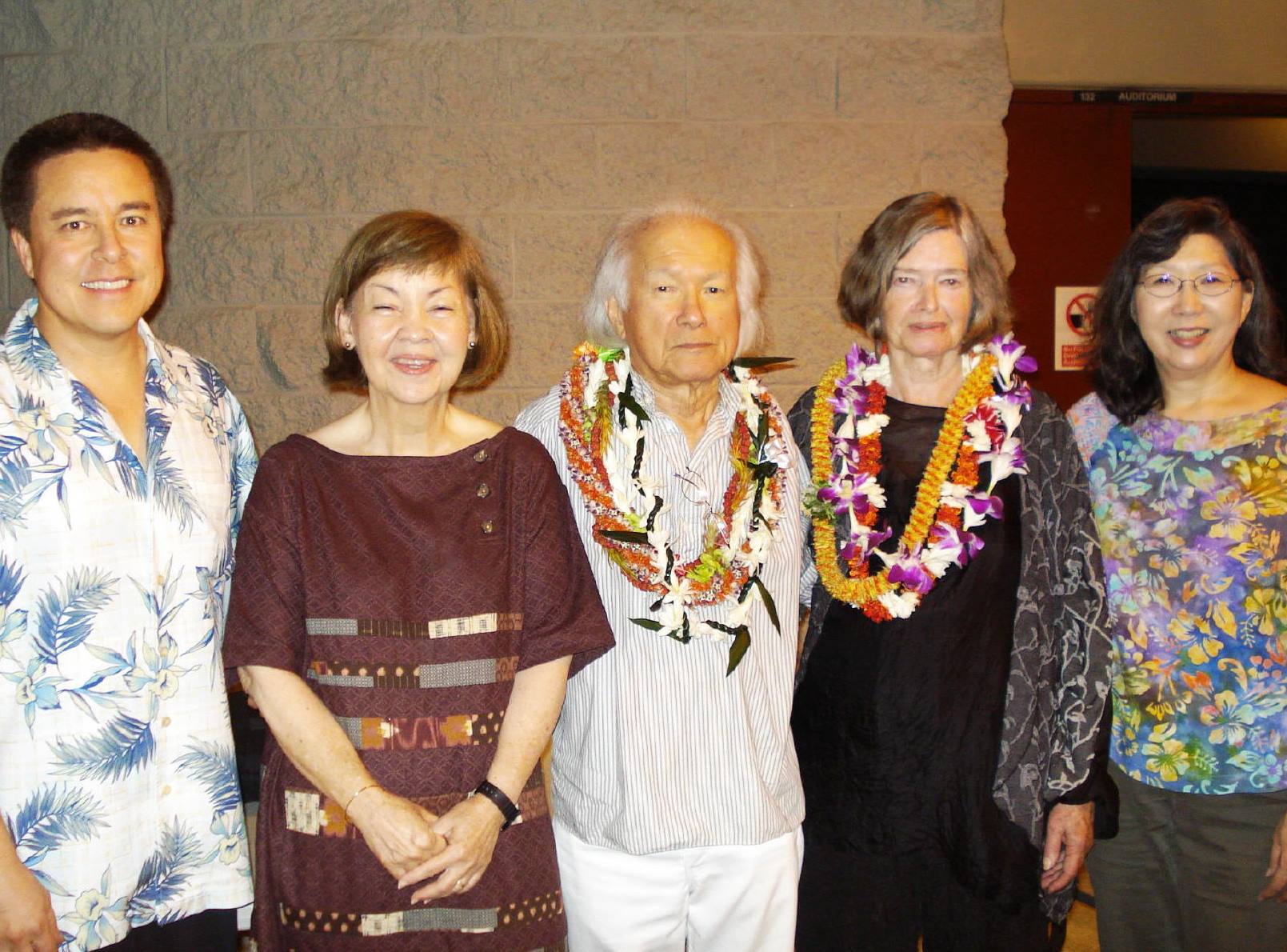
L to R: Steven Hirashima, Marie Hara, Milton Murayama, Dawn Murayama, Carol Abe after the “Revisiting Murayama” presentation, November 2008.
Overlooking the flatlands of the city with Candlestick Park and SFO to the west, I would always be given a tour as to what was updated or repurposed around the house since my last visit (the actor Lou Diamond Phillips’s childhood family had been a previous neighbor), from a newly reapportioned sunroom downstairs to a section outside with a bed of spring flowers to Milton’s designated writing room where tucked in a corner would be his antique word processor (a Commodore 64), which I almost convinced him to ditch in favor of a newfangled Mac but he never wavered and remained forever faithful to his trusty machine.
Any trip to the Murayamas would invariably end in the kitchen where Milton and Dawn were the most gracious of hosts. We would often gather around the large formal dinner table for spirited conversation from his next book project or his time in the 442nd, feasting on a bowl of delicious Alaskan King crab legs and steamed garlic brussels sprouts, masterfully prepared by Milton only minutes before. Looking back, they were wonderful and precious times. How I long for another afternoon with Milton. Until then, God Speed and Aloha.
Carol Abe, Marketing:
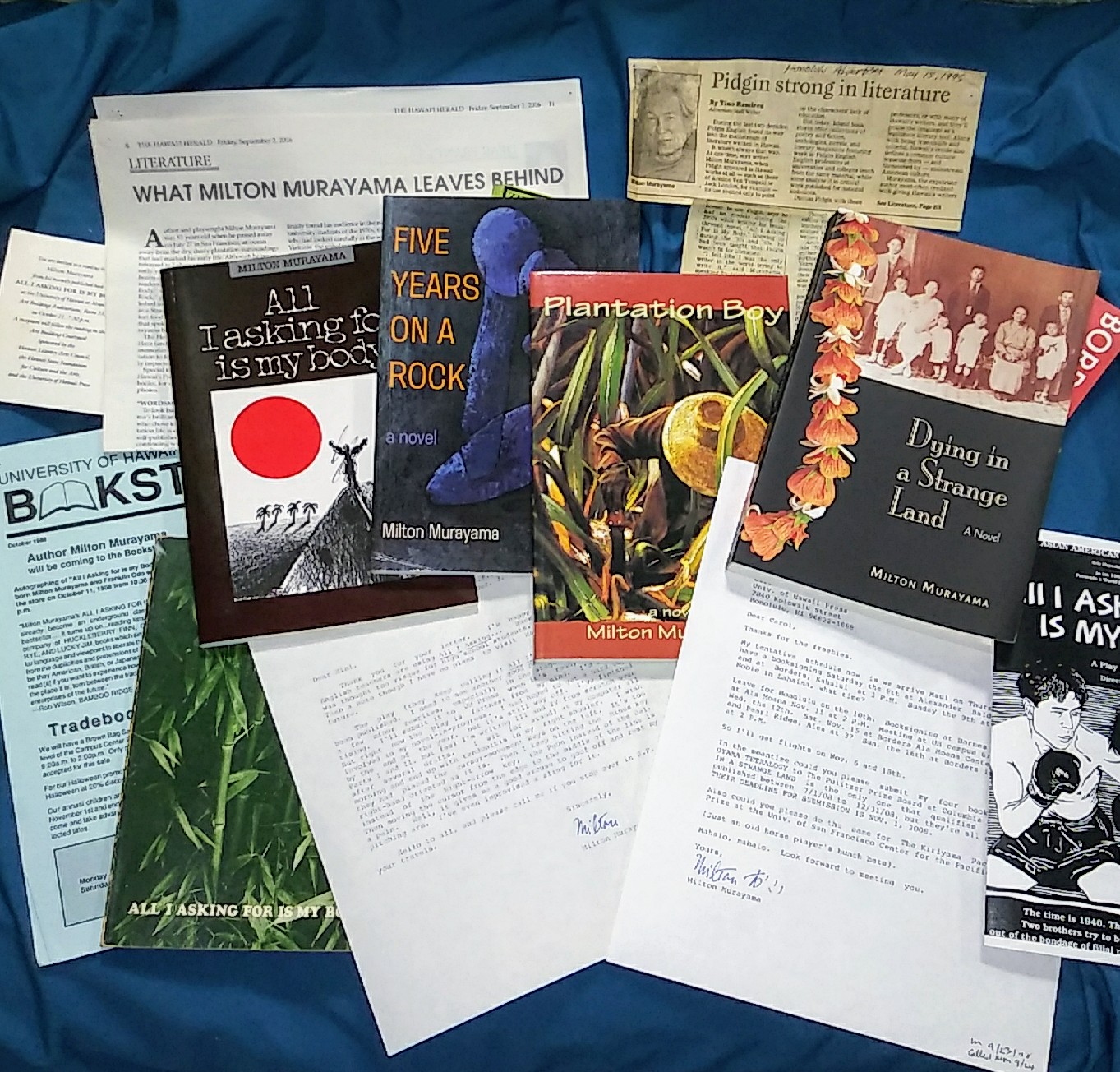
My very first encounter with Milton was in 1975, the year his original edition of All I Asking for Is My Body published, the green one with the bamboo forest on the cover and an overly large “$3” printed on the back cover. He and wife Dawn lined up signings at Honolulu Book Shops, at which I was a bookstore clerk (we weren’t called “booksellers” until twenty years later). Of course I bought a copy with my generous employee discount and had it signed, but didn’t otherwise have a personal connection to him. Jump to 2008: I’d been at UH Press for ten years and we released Milton’s fourth and final novel in his tetralogy about the Oyama family. Steve Hirashima had switched to managing our Asian studies list and I did the same for our Hawai‘i, Pacific, and Asian American titles.
Dying in a Strange Land had a pub date of June but Milton called and said he would wait to visit in the fall, when it’d be cooler, and he only wanted to do low-key promotion of a few bookstore signings. Then, as now, the Press had no travel funds to support a book tour anyway. He finally decided November would be a good time to come and would do Maui and O‘ahu signings, but no readings or talks. So I booked a combination of Barnes & Noble and Borders stores that followed his wishes and filled his itinerary. We corresponded by snail mail and exchanged letters. In one of these, Milton revealed some of the real-life equivalents to the characters in his books. He wrote, “There’s more fact than fiction in my stories.”
After a fan of his scolded me for not paying for his travel and doing him justice, a series of serendipitous things happened that culminated in an event more befitting of a literary icon, “Revisiting Murayama: From Plantation to Diaspora.” Gary Pak, as it happened, had videotaped an interview with Milton that he still needed to screen; the amazing Marie Hara agreed to be co-organizer and was a conduit to both UHM English department and Bamboo Ridge; Craig Howes put me in touch with Phyllis Look, who had directed a play of All I Asking. The program developed further by recruiting Arnold Hiura, Lee Cataluna, and one of our student employees, Tricia Tolentino, all tied together with Steve as emcee. (And, by rolling the dice, we obtained funding from SEED and Hawai‘i Council for the Humanities, including an honorarium for Milton.)
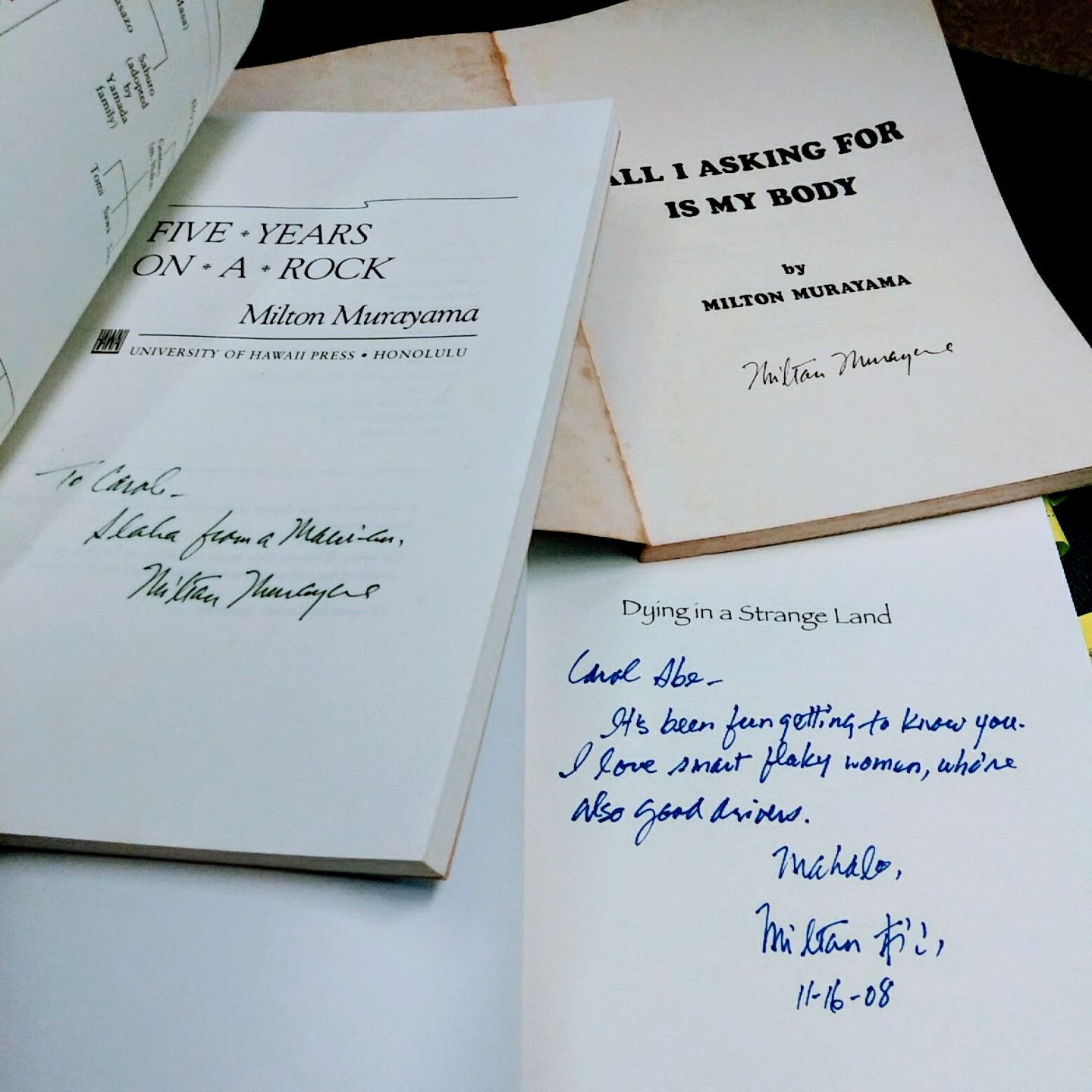
During their visit, I had chauffeured Milton and Dawn to four or five appearances, perhaps being a bit manic in my driving. At the end, I asked Milton to sign my copy of Dying in a Strange Land. We all laughed warmly as I read his inscription: “It’s been fun getting to know you. I love smart flaky women, who’re also good drivers.” It was my honor and pleasure to have been a tiny part of his life.
+++
Each of Milton’s novels can be read separately and not in sequence. Dying in a Strange Land is on sale now, at a very special price—click here to order.
We are proud to publish an extensive list of Pacific, Asian, and Southeast Asian studies journals. This Asian / Pacific American Heritage Month, explore and enjoy the following free journal content online:
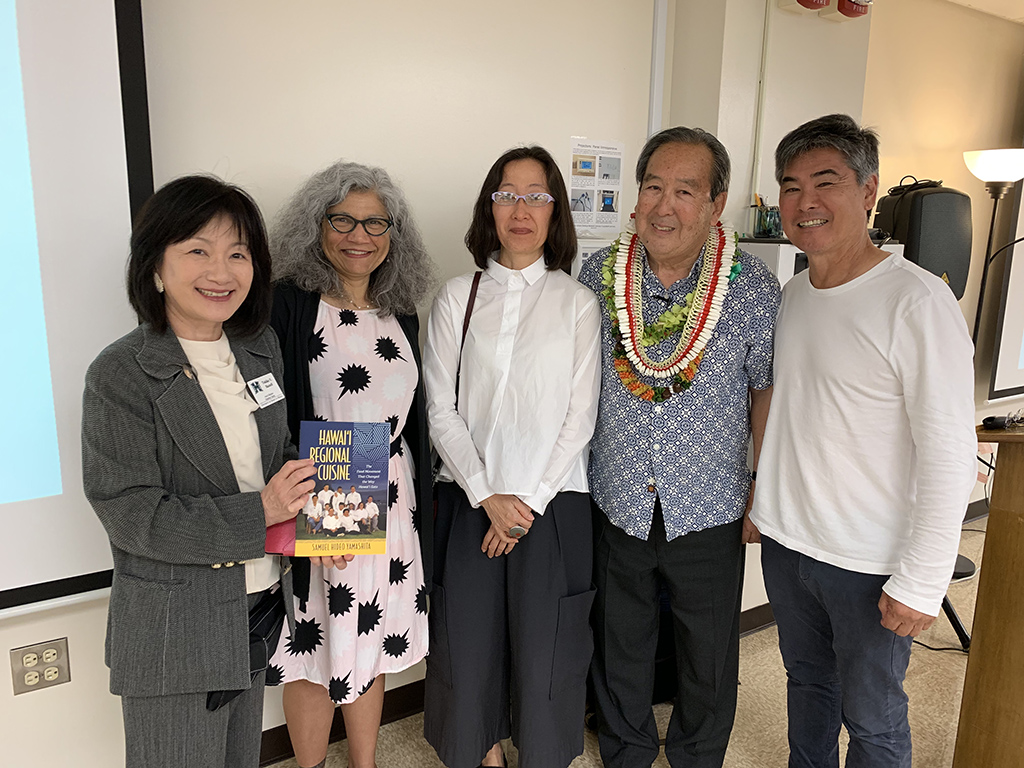
(L to R) Tokiko Bazzell, Monica Ghosh, Mire Koikari, Samuel Yamashita, Roy Yamaguchi
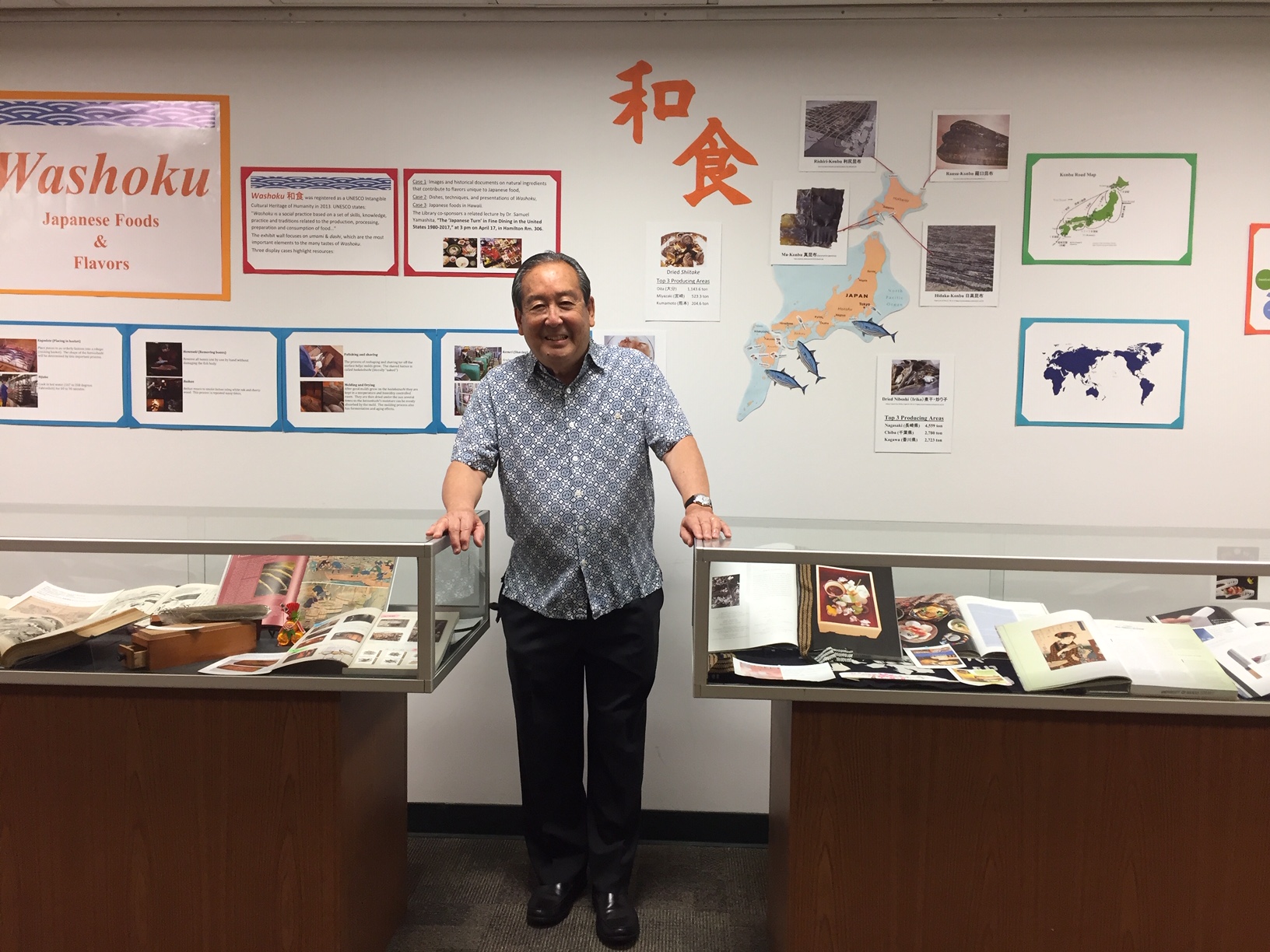
Pomona College history professor Samuel Yamashita‘s lecture on what he calls the “Japanese Turn” in fine dining drew a full house to University of Hawai‘i at Mānoa Hamilton Library last week (April 17). Audience members included well-known chef Roy Yamaguchi, who was part of this “turn” during his years in Los Angeles when he pioneered Euro-Asian cuisine. As a tie-in, advance copies and flyers were displayed of Professor Yamashita’s new UH Press book, HAWAI‘I REGIONAL CUISINE: The Food Movement That Changed the Way Hawai‘i Eats.His talk was related to the library’s exhibit by Japan collection librarian Tokiko Bazzell, “Washoku: Japanese Foods & Flavors,” which is on display until May 27 in Hamilton Library’s First Floor Elevator Gallery.
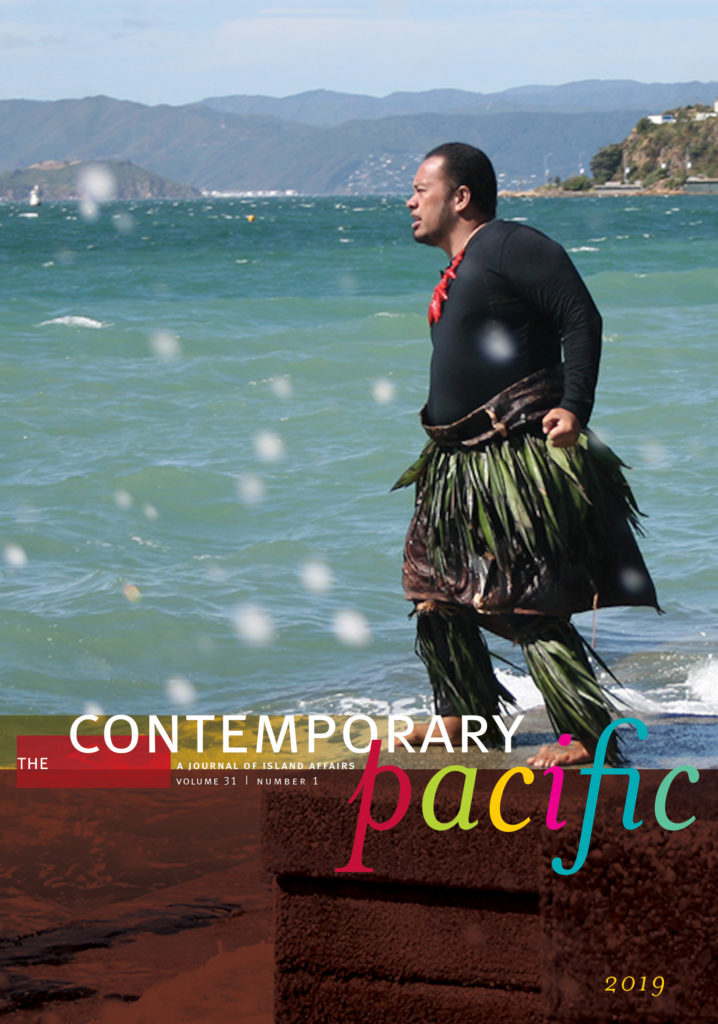
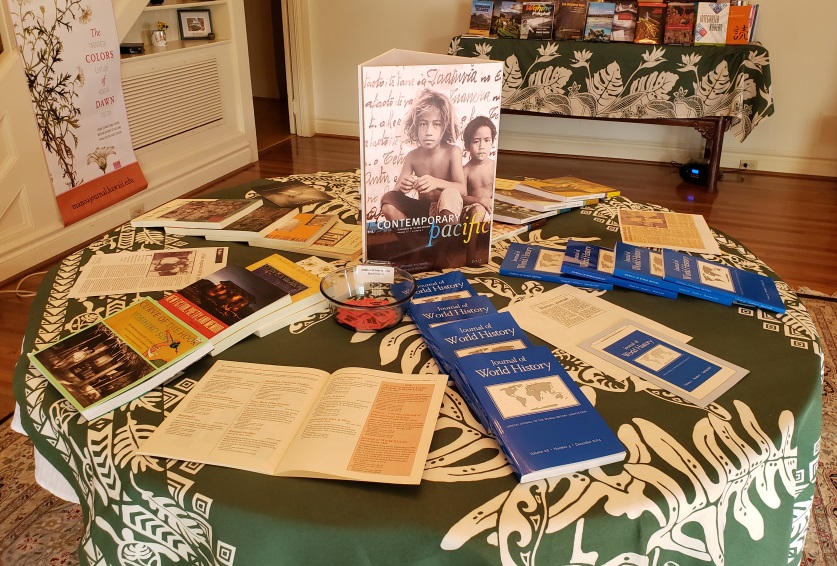
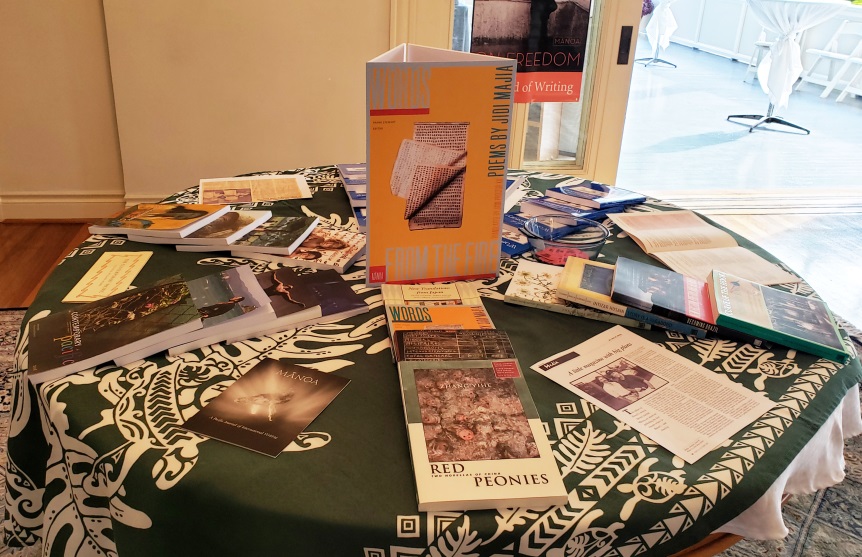
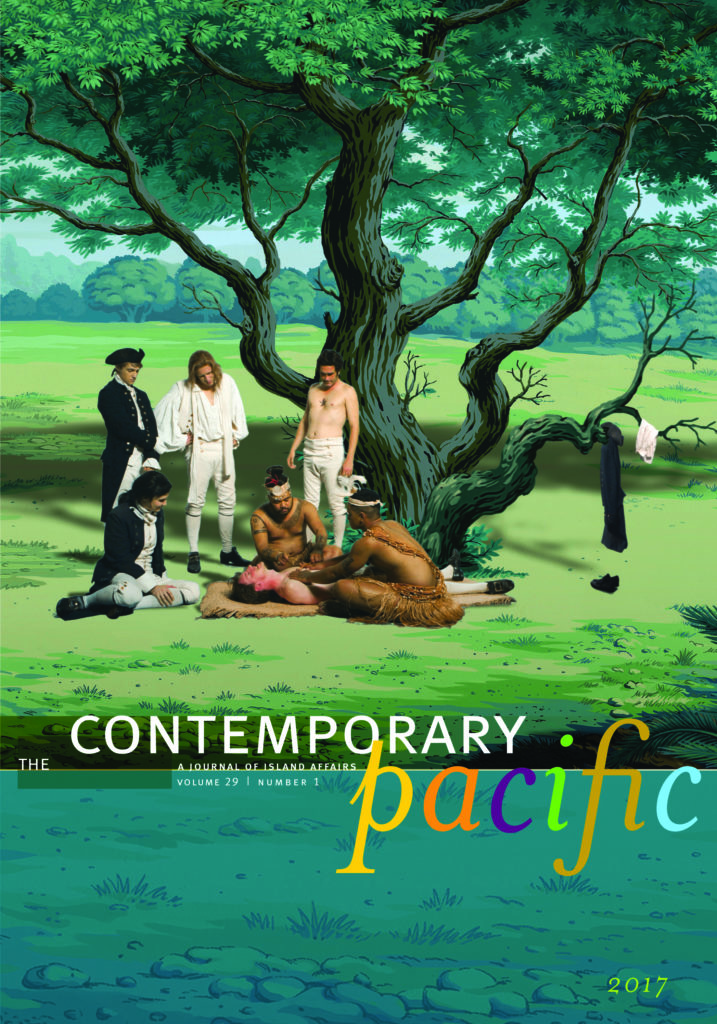
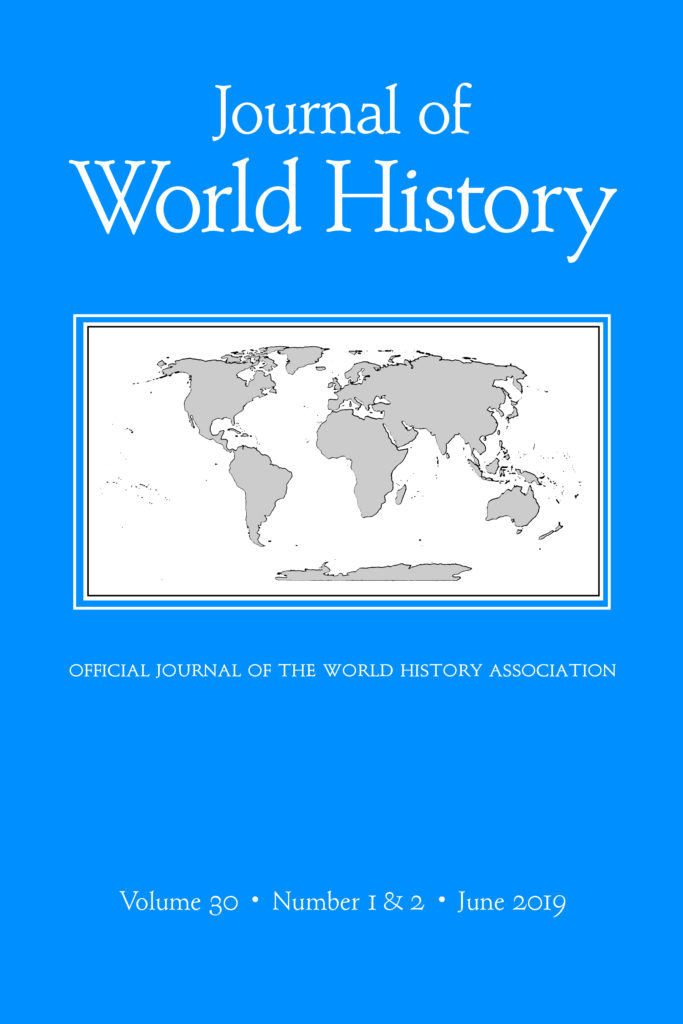
(HONOLULU, Hawai‘i) The University of Hawai‘i Press celebrates the 30th Anniversary for three influential university-based journals—The Contemporary Pacific, Journal of World History, and Mānoa—in collaboration with the Center for Pacific Island Studies, Department of History, and the Department of English at the University of Hawai‘i at Mānoa.
In the past three decades, these journals have attracted a growing, global audience for more than 6,300 articles read in over 170 countries. The Journal of World History served as a pioneer in the field of world history and continues to publish quality peer-reviewed articles and special issues quarterly. Research published in The Contemporary Pacific has shaped an entire field of Pacific Studies and has often demonstrated foresight and long-lasting relevance. Indeed, the journal kicked off its first issue in 1989 with an article on the potential impacts of climate change in the Pacific. Also among the journal’s most cited pieces are features published in its political reviews section which document the local and regional politics of Pacific Islands states. Mānoa brings to light new translations of international literature, highlighting the work of both emerging and established translators and authors, including Pulitzer Prize winners and Nobel laureates. In 2018 alone, works from the three journals garnered more than one-quarter million downloads.
The journals were founded in 1989 in response to the university president’s call to expand the journals published by UH Press. “Since being awarded the modest, three-year start-up funding, these journals now annually reach tens of thousands of researchers, scholars, students, and the general public,” said Joel Cosseboom, Interim Press Director & Publisher.
A special celebration was held at College Hill on March 13, commemorating the 30th anniversary of their founding. Learn more about The Contemporary Pacific, Journal of World History, and Mānoa below and at www.uhpress.hawaii.edu/journals.
ISSN: 1043-898X / E-ISSN: 1527-9464 Published twice a year.
Founding Editorial Team: Robert Kiste, Terence Wesley-Smith, David Hanlon, Brij Lal and Linley Chapman. Awarded Best New Journal (1990) from the Association of American Publishers. The journal editorial office is supported by the Center for Pacific Island Studies.
The journal covers a wide range of disciplines with the aim of providing comprehensive coverage of contemporary developments in the entire Pacific Islands region, including Melanesia, Micronesia, and Polynesia. It features refereed, readable articles that examine social, economic, political, ecological, and cultural topics, along with political reviews, book and media reviews, resource reviews, and a dialogue section with interviews and short essays. Each issue highlights the work of a Pacific Islander artist.
ISSN: 1045-6007 / E-ISSN: 1527-8050
Published quarterly.
Founding Editor, Jerry Bentley with Imre Bard as Book Review Editor. Awarded Best New Journal (1990) from the Council of Editors of Learned Journals. The journal editorial office is supported by the Department of History.
JWH publishes research into historical questions requiring the investigation of evidence on a global, comparative, cross-cultural, or transnational scale. It is devoted to the study of phenomena that transcend the boundaries of single states, regions, or cultures, such as large-scale population movements, long-distance trade, cross-cultural technology transfers, and the transnational spread of ideas. Individual subscription is by membership in the World History Association.
ISSN: 1045-7909 / E-ISSN: 1527-943X Published twice a year.
Founding Editors, Frank Stewart and Robert Shapard. Works in MĀNOA have been cited for excellence by the editors of such anthologies as Best American Short Stories, Best American Poetry, Best American Essays, Prize Stories: The O. Henry Awards, and Pushcart Prize. The journal editorial office is supported by the Department of English.
Mānoa is a unique, award-winning literary journal that includes American and international fiction, poetry, artwork, and essays of current cultural or literary interest. An outstanding feature of each issue is original translations of contemporary work from Asian and Pacific nations, selected for each issue by a special guest editor. Beautifully produced, Mānoa presents traditional alongside contemporary writings from the entire Pacific Rim, one of the world’s most dynamic literary regions.
The University of Hawai‘i Press supports the mission of the university
through the publication of books and journals of exceptional merit. It strives to advance knowledge through the dissemination of scholarship—new information, interpretations, methods of analysis—with a primary focus on Asian, Pacific, Hawaiian, Asian American, and global studies. It also serves the public interest by providing high-quality books and resource materials of educational value on topics related to Hawai‘i’s people, culture, and natural environment. Through its publications, the Press seeks to stimulate public debate and educate both within and outside the classroom.
UH Press is a member of the Association of University Presses and the Hawai‘i Book Publishers Association. The Press has also partnered with museums and associations to bring new or out-of-print titles into circulation, and offers publishing services for authors and partnering organizations.
News Release Date: March 19, 2019
Media contact: Pamela Wilson, Journals Manager [email protected]
808-956-6790
From Biography Coeditor John David Zuern’s Editor’s Note:
The format of this issue represents something of a departure for Biography. For many years we have published what we call “clusters” of essays focused on a particular theme alongside our individual open-forum articles. While our editorial staff typically determines the topics and invites the guest editors for our annual special issues, the cluster model gives us the opportunity to consider unsolicited proposals from colleagues who would like to present an edited collection of related essays to Biography’s readership. In the past two years, we have received a number of compelling pitches, and for the first time we are running two clusters in the same issue. These projects have emerged within different geopolitical and cultural contexts, but both address the question of how life stories are crafted and disseminated in media other than print. Continue reading “Biography 41-3 (Summer 2018)”
When it comes to listing events, we can’t miss first mentioning our exhibit booth at the Association for Asian Studies annual conference taking place March 16–19 in Toronto. Acquisitions editors Pamela Kelley and Stephanie Chun, and marketing managers Royden Muranaka and Steven Hirashima make up our staffing contingent at this important meeting, which is attended by numerous UHP authors (and prospective authors) of Asian studies titles.
* * * * * * * * *
Below is the current lineup of author appearances scheduled for the coming weeks—including a couple already past—mostly for our Hawai‘i-related titles. Unless otherwise noted, these events are free and the public is invited to attend; books will be available for sale and signing.
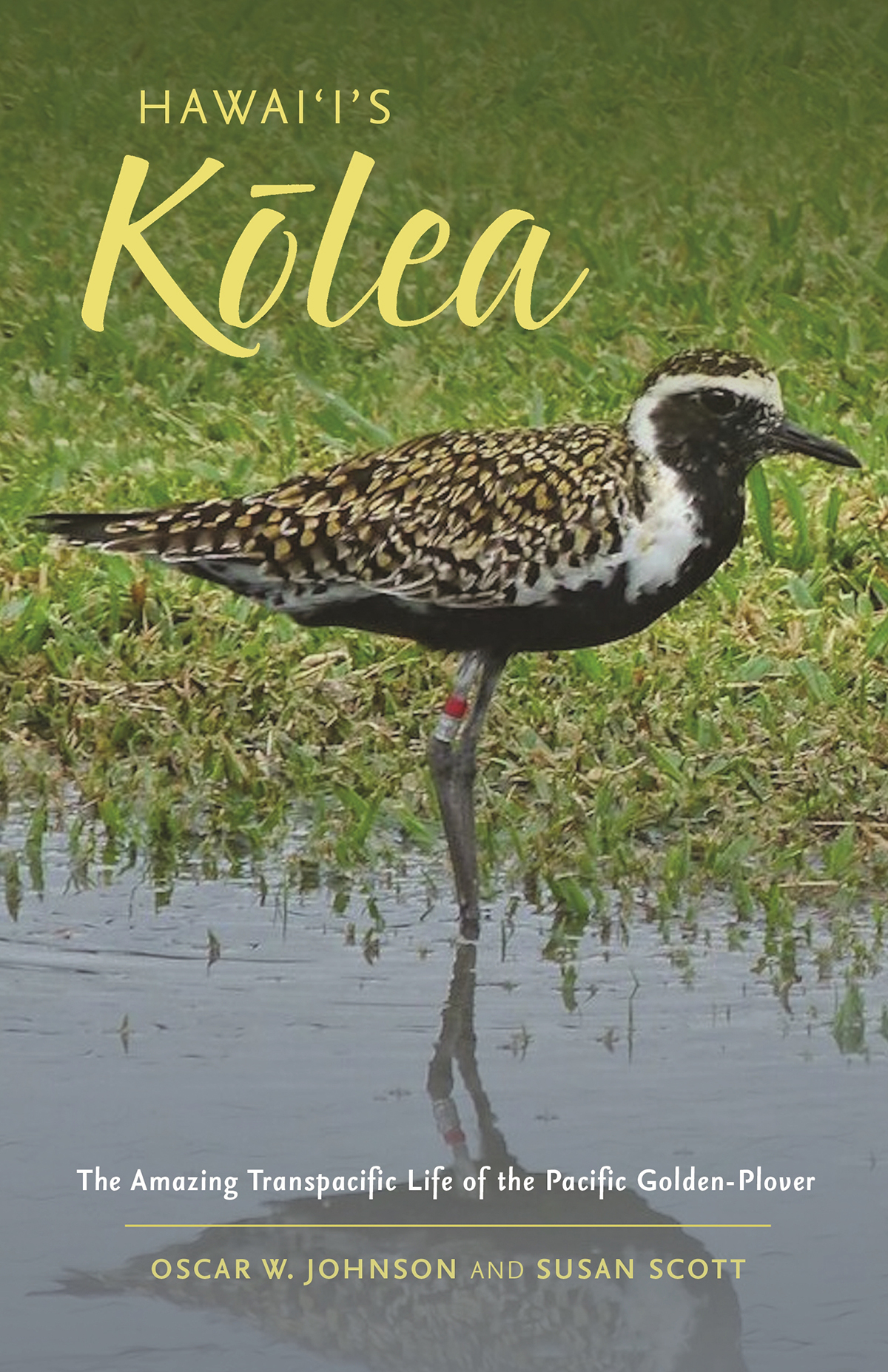
Thursday, March 16, 7:00 to 9:00 pm,Volcano Art Center, Volcano Village, Island of Hawai‘i Hawai‘i’s Kōlea coauthors Oscar “Wally” Johnson and Susan Scott will give a slideshow presentation on the amazing migratory bird at the Volcano Art Center Niaulani campus. While the event is free, a $5 donation would be appreciated. See more details on the VAC website. Wally leaves the next day to return to Montana, while Susan will stay on to do a signing on Saturday at Basically Books, before heading home to O‘ahu.
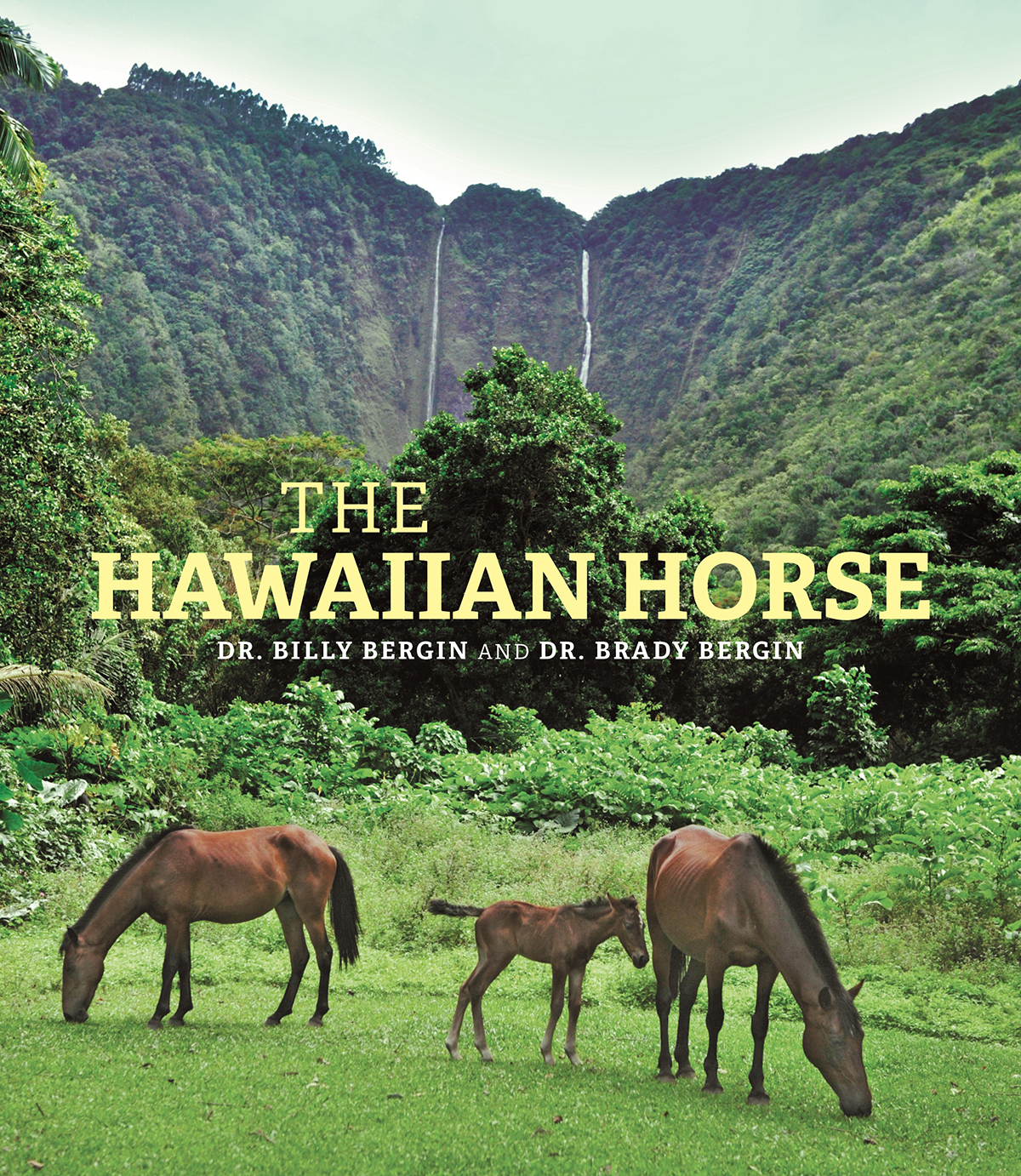
Saturday, March 25, three separate events in Kamuela and Hilo on the Big Island of Hawai‘i Dr. Billy Bergin and his son Dr. Brady Bergin, both respected equine veterinarians, will do a marathon book launch and signings for their new book, The Hawaiian Horse. The schedule and locations include:
• 9:00 am to 12 noon, Parker Ranch Store, 67-1185 Mamalahoa Hwy., Kamuela (phone 808-885-5669).
• 1:00 to 2:45 pm, Basically Books, 160 Kamehameha Avenue, Hilo (phone 808-961-0144). Includes a short talk.
• 3:00 to 4:30 pm, Lyman Museum, 276 Haili Street, Hilo (phone 808-935-5021). The authors will do a talk as part of the museum’s Patricia E. Saigo series of public programs. The cost is free for museum members and $3.00 for nonmembers. Read more on the event here.
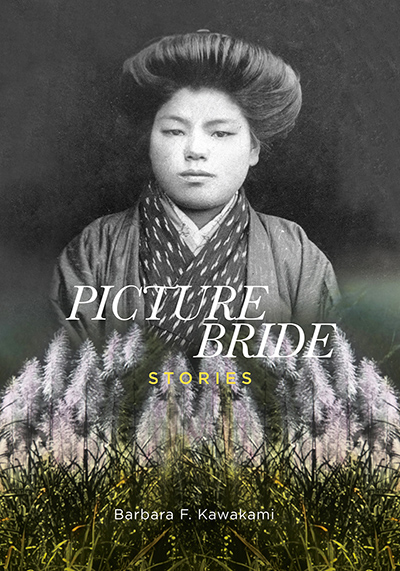
Ms. Kawakami has scheduled additional presentations on Picture Bride Stories, including one on Thursday, April 13, 12:00 to 1:45 pm, at Kaua‘i Community College’s International Education Center (Office of Continuing Education and Training Bldg., Room 106 C/D). On Saturday, April 29, she will be at Temari‘s annual “BOLTS of Fabric & Fun” sale to participate in the 11:00 am Textile Talk Stories with Ann Asakura, and will sign books before and after her presentation. The BOLTS event is being held at Japanese Cultural Center of Hawai‘i(which has its own Things Japanese annual sale the same day).
Thursday, April 13, 12 noon to 1:15 pm, Kuykendall Hall 410,UH Mānoa
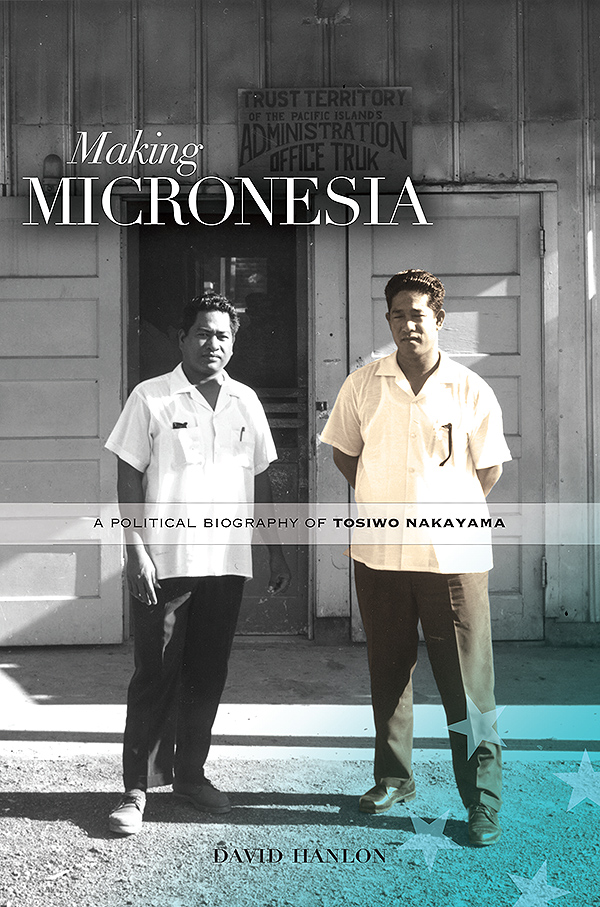
At this Brown Bag series sponsored by the Center for Biographical Research, David Hanlon‘s talk, “‘You Did What, Mr. President?!?!’ Writing a Biography of the Federated States of Micronesia’s Tosiwa Nakayama” explores his work behind Making Micronesia.
Saturday, April 22, 12 noon to 4:oo pm, Santa Rosa City Hall (100 Santa Rosa Avenue)
Several author appearances are scheduled for the coming months; here are the remaining ones lined up for February. These events are free and the public is invited to attend. Books will be available for sale and signing, unless otherwise noted.
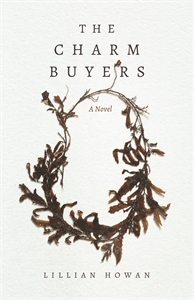
Saturday, February 18, 3:00 to 5:00 pm,Eastwind Books of Berkeley (2066 University Avenue) At this venerable independent bookshop, Lillian Howan will discuss and read from her debut novel, The Charm Buyers. Set in 1990s Tahiti during the last years of French nuclear testing in the Pacific, the book has been praised by early reviewers as “gorgeous,” “sensuous,” and “hynoptic” (see the blurbs under the “reviews” tab on the UH Press web page). A review scheduled to appear in the March/April issue of Foreword Reviews says, in part: “Howan’s language is breathtaking, building a land and family with detail and power. . . . The Charm Buyers is a thought-provoking insight into a time of cultural change. It captures an essence of existing between reality and surreality, dreaming and wakefulness, the past and the future.”
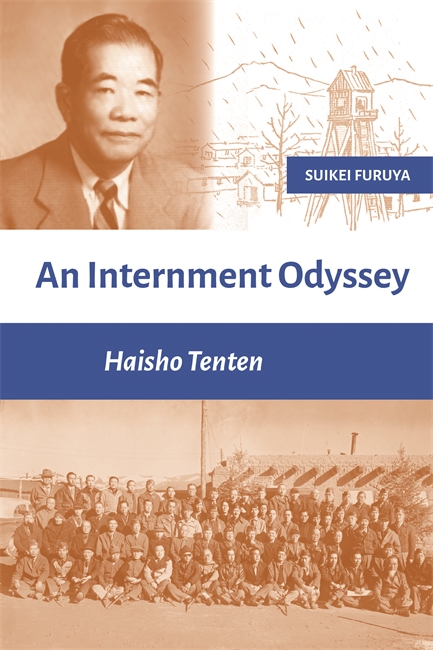
Saturday, February 18, 11:00 am,Japanese Cultural Center of Hawai‘i Fifty years ago, Suikei Furuya chronicled his World War II imprisonment and published his memoirs in Japan. It took JCCH Resource Center volunteer Tatsumi Hayashi ten years to translate the book into English and now An Internment Odyssey: Haisho Tentenhas been published by JCCH, with additional distribution by UH Press. The book launch will include a panel discussion with Tatsumi Hayashi, Sheila Chun, Brian Niiya and a member of the Furuya family. For further details, see the JCCH website.
Thursday, February 23, 12 noon to 1:15 pm, Kuykendall Hall 410,UH Mānoa
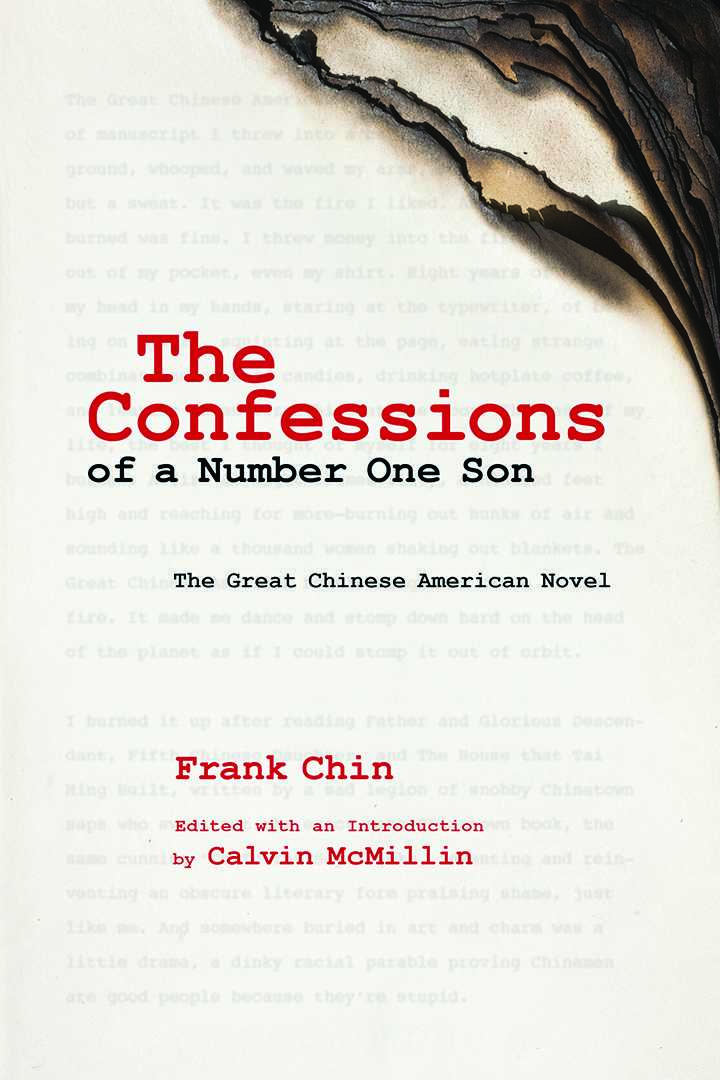
2015 | 280 pages
Paper | ISBN 978-0-8248-3892-8 | $24.00
Cloth | ISBN 978-0-8248-3926-0 | $45.00
“Chin takes the reader on a twisted trip, packed both with raunchy comedy and poignant tenderness. . . . McMillin did an excellent job of keeping Chin’s writing intact while cutting out repetitions or segments that went nowhere [and] should also be applauded for compiling one of the best biographical sketches of Chin, to date. The publication of “Confessions” affirms Chin’s rightful place as a literary giant, not only within the confines of Asian American literature, but in the global literary world.” —Nichi Bei Weekly
“Suspense builds as the novel becomes a darkly comic struggle with illusions, expectations and secret desires. . . . [Chin] writes fluidly, creates strong characters, and has a playwright’s ear for dialogue.” —Honolulu Star-Advertiser
“A spontaneous mix of reality and fantasy in this book contrasts with the underlying message about the damage people of color have endured because of racial prejudice. . . . Chin’s unique characters, with names like Gravelly Lake Ponders and Lily, the forty-three-year-old ex-nun, interact with convincing craziness.” —Foreword Reviews
“This heretofore unknown work captures the birth of a consciousness that is neither Asian or white American, but a third thing we witness being forged in the mind of its author. Its publication now should spur renewed interest and a critical reevaluation of the entirety of Frank Chin’s work, and cement his literary legacy.” —The International Examiner





“Trần Đình Trụ’s life story was one of grace, fortitude, and devotion to his family. A skilled seaman and a naval commander, he journeyed from North Vietnam to South Vietnam as a young man, and then from South Vietnam to the Philippines, Guam, Japan, and ultimately, the United States. In his memoir, he recounts his evacuation from South Vietnam in 1975, his experiences in a refugee camp in Guam, and his decision to return to Vietnam in October 1975 with more than 1500 Vietnamese repatriates as the captain of the Việt Nam Thương Tín. After he successfully navigated the ship back to Vietnam, the new government viewed him and the repatriates with fear and suspicion. Trần Đình Trụ suffered physical and psychological brutality in “re-education” camps for more than twelve years. On release, he finally rejoined with his family and resettled in the United States. Through his memoir, Trần Đình Trụ captured the singularity of his life story and the universality of despair and uncertainty at the end of war. He will be deeply missed by his family and community.”