



New Asian Studies Books – University of Hawaiʻi Press AAS 2026 Selection

University of Hawaiʻi Press is pleased to present a curated selection of titles for the Association for Asian Studies (AAS) Annual Conference.

Our AAS 2026 featured books and journals reflect the breadth and depth of contemporary Asian Studies research. These titles engage topics including colonialism and empire, intellectual history, cultural production, religion, and political life, offering new perspectives grounded in archival research, ethnography, and interdisciplinary analysis.

Award-Winning Titles at AAS 2026

University of Hawaiʻi Press is honored to celebrate two award-winning titles recognized by the Association for Asian Studies in 2026 for their outstanding scholarly contributions.

Even in the Rain: Uyghur Music in Modern China by Chuen-Fung Wong is the winner of the E. Gene Smith Inner Asia Book Prize, which recognizes exceptional and innovative research on Inner Asia. This book examines Uyghur musical life in contemporary China, revealing how musicians navigate cultural identity, artistic practice, and political pressure. Through ethnographic insight and musical analysis, Wong demonstrates how music functions as a powerful site of expression, memory, and resilience.

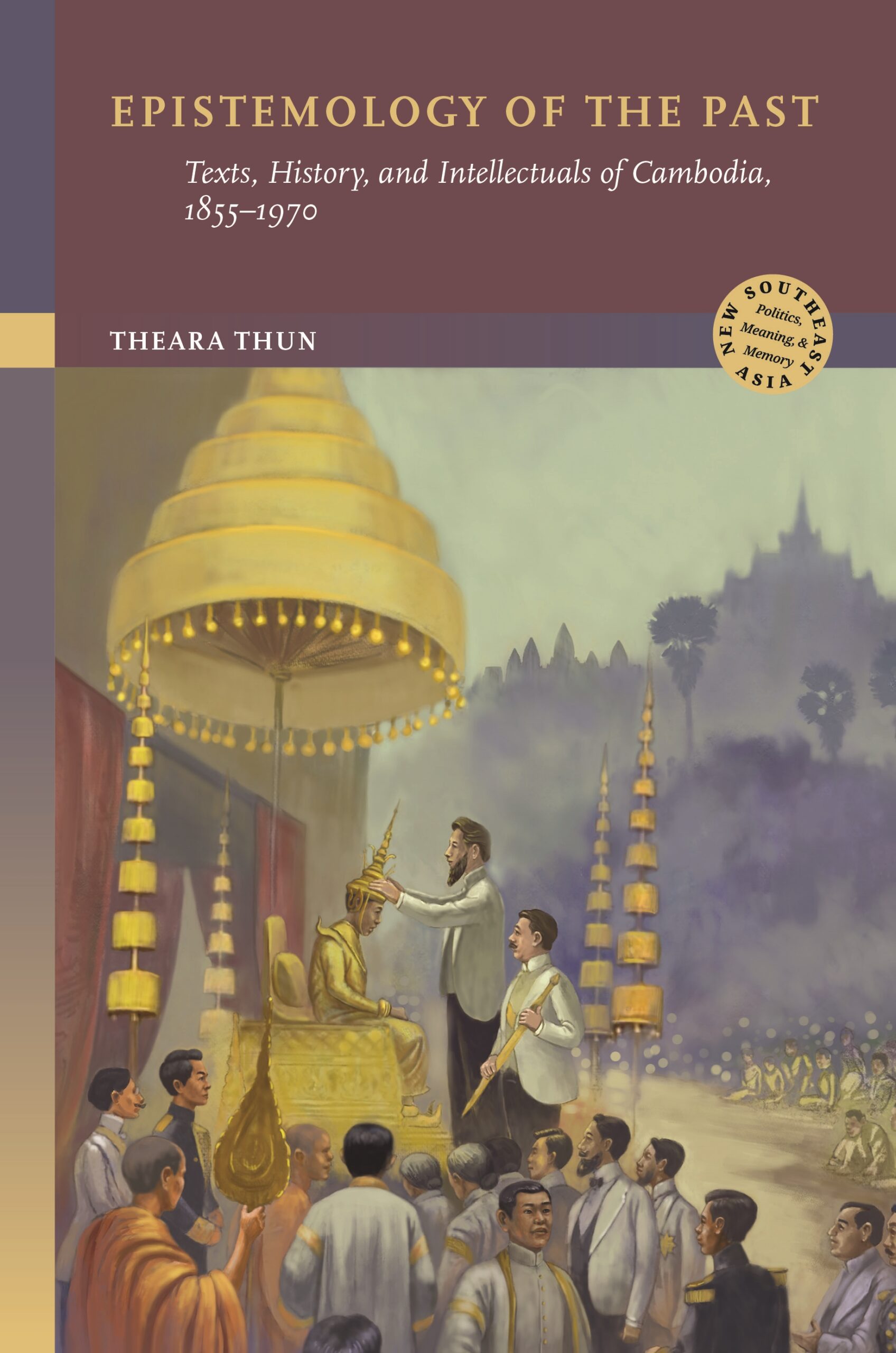
Epistemology of the Past: Texts, History, and Intellectuals of Cambodia, 1855–1970 by Theara Thun received an Honorable Mention for the Harry J. Benda Prize, awarded annually to an outstanding first book in Southeast Asian studies. This landmark study explores the development of historical knowledge in Cambodia by centering the intellectuals, texts, and scholarly practices that shaped understandings of the past during a period of colonialism, nationalism, and political transformation.

Explore Our New Asian Studies Titles & Journals

In addition to these prize-winning books, University of Hawaiʻi Press’s AAS 2026 featured titles and journals highlight recent and notable publications across Asian Studies and related fields. These works showcase cutting-edge research and diverse methodological approaches that speak to key debates shaping the discipline today.

To view the complete list of University of Hawaiʻi Press titles available for AAS 2026, please scroll to the bottom of this page, where you’ll find a link to our full conference selection in one place.

Receive 30% off with code AAS2026 through May 31, 2026. Visit us at Booth 325–327 in Vancouver or shop online.

BOOKS

JOURNALS

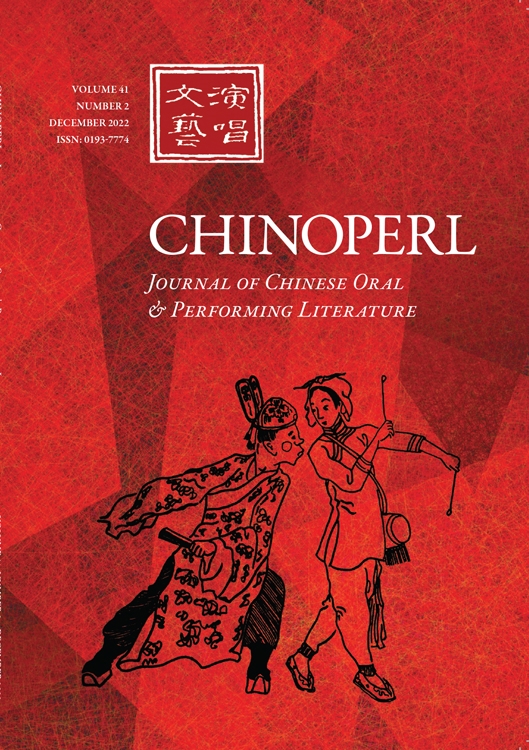
Journals: biography, Chinoperl, Journal of the Southeast Asian Linguistic Society, Philosophy East & West + more

Asian Perspectives

Volume 64, Number 2 (2025)

The Editor’s Note introduces this issue as written by Julie Field, Francis Allard, Bérénice Bellina-Pryce, and Cristina Castillo Cobo stating:

Asian Perspectives highlights leading research in archaeology, ethnoarchaeology, and biological anthropology in Asia and the Pacific Islands. Volume 64, Issue 2 of Asian Perspectives offers four articles on the ancient past of Asia and Island Southeast Asia. Our lead article (Zhang) focuses on the evidence for social complexity and militarism in the central plains of China. This is followed by an analysis of ritual activity as indicated by bronze manufacture at the site of Sanxingdui in southwest China (He). This issue’s final two articles cover research on Hoa Lu’s urban landscape, a major historical city in Vietnam (Vo), followed by a study of possible crocodile predation on humans and the symbolic behavior of maritime hunter-gatherers in East Timor (Bacon and Galipaud). The concluding section includes four book reviews spanning South and Southeast Asia, from the interpretation of rock art and origins of agriculture in India to the development of maritime cultures in Vietnam.

Our hard copy subscribers will notice that many of the figures in this issue of Asian Perspectives have been printed in color. This is the first of a three-issue trial run intended to test whether it will be financially feasible to continue printing in color without charging authors subvention fees, so future issues may retain this configuration. Of course, the digital version of every issue (published on Project MUSE) always contains color figures.

Find this introduction, articles, book reviews, and more at Project MUSE.

Biography

Volume 47, Number 2 (2024)

Author Cynthia Franklin starts this issue in the Editor’s Note stating:

The sending off of this issue to press is bittersweet. It is the last issue that has been fully in the hands of Paige Rasmussen. Paige assumed the position of Managing Editor for Biography in 2018. For the past seven years, she has brought to Biography her superb editing and design skills. Consider, for example, the award-winning spe­cial issue on Graphic Medicine! She also has managed the Center for Biographical Research—a job with many moving parts—with patience, sensitivity, and extraor­dinary competence. Paige has done everything from running workshops for our special issues, to copyediting, to weighing in on submissions, to communicating with authors, to managing our budget and finances, to navigating often byzantine university bureaucracy to keep the journal running, to supervising our Graduate Assistants, to tracking our readership, to running our socials, to overseeing our Brown Bag Biography series—and more. Paige was a dream for the rest of the Biog­raphy staff to work with, and the losses—personal and professional—that attended her move to Chicago were softened for us as she has generously continued to work in a freelance capacity. And our friendship will surely continue once her work for the journal concludes. This is the final issue that will be fully in her hands, although she is continuing to help during this time of transition as we celebrate the arrival of Laura Dunn, who has returned home to Hawai‘i from the San Francisco Bay area to serve as our new Managing Editor. We look forward to introducing Laura in the editor’s note to the next Biography issue.

Find this introduction, open-forum articles, postscript commentary, biographies, translations more at Project MUSE.

CHINOPERL

Volume 44, Number 2 (2025)

Special Issue: Soundscapes of Twentieth-Century China

Edited by Andrea S. Goldman and Jing Shen

Andrea S. Goldman introduces this special issue stating:

CHINOPERL authors and readers have long paid attention to the sonic dimensions of Chinese oral and performing literature. The oral in such literature, after all, implicitly presumes a listener who apprehends and is aurally engaged (or not) by the vocal and/or instrumental artistry of the performer. Much of this concern with the oral and aural component of performance was shaped by the precocious interdisciplinarity of the journal from its inception in 1969, which put into conversation scholarship on Chinese literature, performance, ethnomusicology, and history. But if the sounds of oral and performing literature in past issues of the journal have been frequently noted, their documentation has sometimes been more descriptive than analytical, focused on the signature Chinese sonic characteristics and musical or vocal conventions of the many varieties of opera, storytelling, ballads, or folk songs.

The more recent interdisciplinary approach of sound studies, or sound history, emerging in the 1990s and 2000s, differs from sound as an object of description in that—although still borrowing from (ethno)/musicology—it blurs the distinction between music and sound; or rather, it resists privileging music over all other sounds. I have neither the space nor the expertise to narrate a full history of the development of sound studies across all fields (or even for research on China), but here I will tease out three strains in this scholarship that will help to set the stage, so to speak, for the essays that follow.

Find this introduction, research articles, postscript commentary, research notes, memoriams, and more at Project MUSE.

PEW 75-4 cover
PEW 76-1 cover

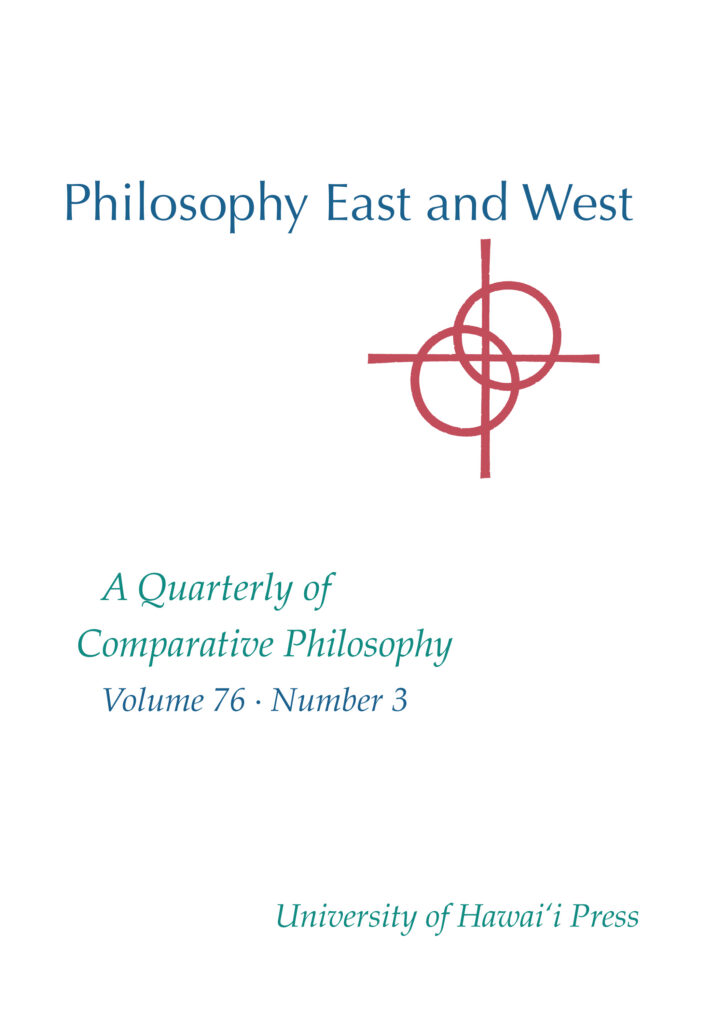
Philosophy East and West

Volume 76, Number 1 (2026)

Special Issue: Exploring Seongho Yi Ik’s Theory of Emotions

Guest Editor Youngsun Back talks about the Special Issue stating:

Yi Ik 李瀷 (1681–1763), known by his pen name Seongho 星湖 (Starry Lake), was a prominent figure in Korean Confucianism. Although he is less well known to English-speaking audiences than Yi Hwang 李滉 (1501~1571, known as Toegye 退溪), Yi I (李珥, known as Yulgok 栗谷), and Jeong Yak-yong 丁若

鏞 (1762–1836, known as Dasan 茶山), Seongho occupies a vital place in the intellectual lineage of Korean Neo-Confucianism. As this special issue demonstrates, he stood at the center of the dynamic development of Korean Confucian thought, serving both as a key intermediary between the philosophical legacies of Toegye and Yulgok and as a significant bridge between Toegye and Dasan.

Seongho also played a crucial role in shaping the distinctive character of late Joseon Confucianism, particularly through his contributions to the intellectual current known as Practical Learning (Silhak 實學). This intellectual trend sought to move beyond abstract metaphysical speculation, emphasizing instead moral cultivation grounded in lived experience, as well as a commitment to empirical inquiry, social reform, and effective governance. Another major factor that gave Seongho’s philosophy its innovative character was the influx of Western Learning (Seohak 西學), which had begun circulating in Korea during his time. Drawing on a wide range of intellectual resources, Seongho developed a form of Korean Confucianism that remained rooted in Neo-Confucian thought yet open to new ideas, marking him as a pivotal thinker in the unfolding of Korea’s intellectual tradition.

Find this introduction, articles, book reviews, and more at Project MUSE.

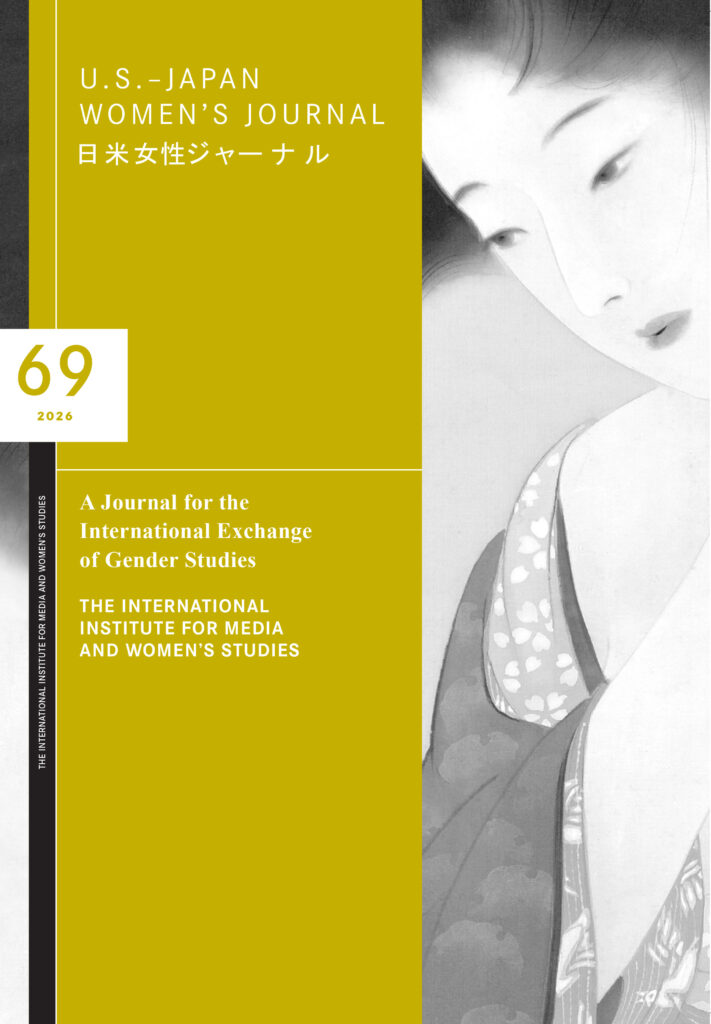
USJWJ 69 cover

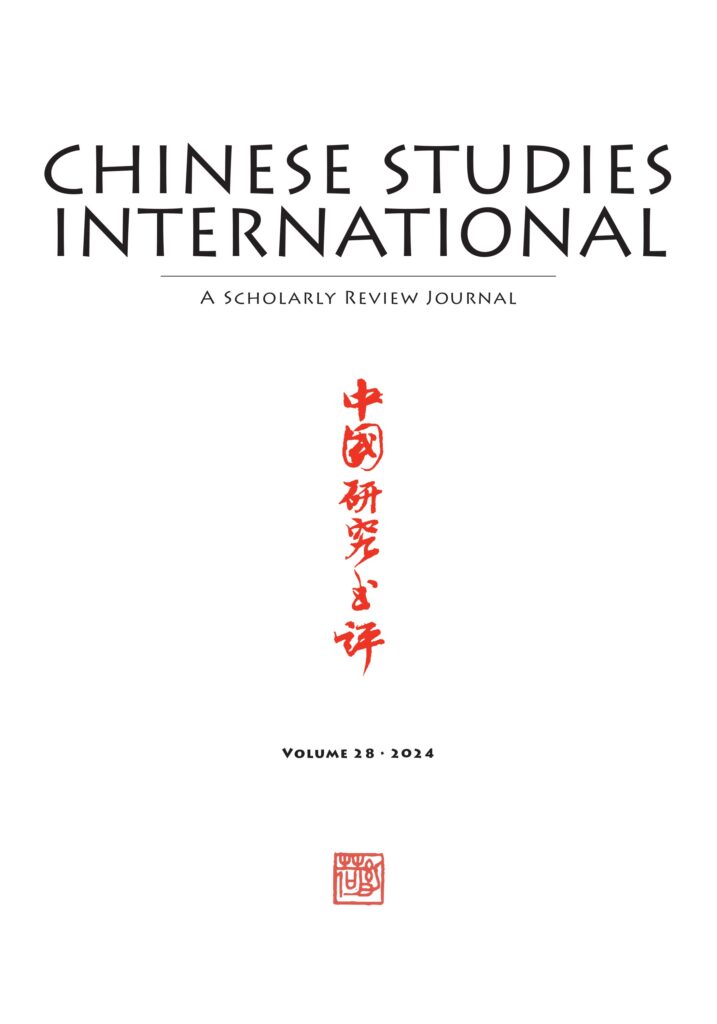
Journals: Chinese Studies International, Review of Japanese Culture & Society, Yearbook of the Association of Pacific Coast Geographers + more

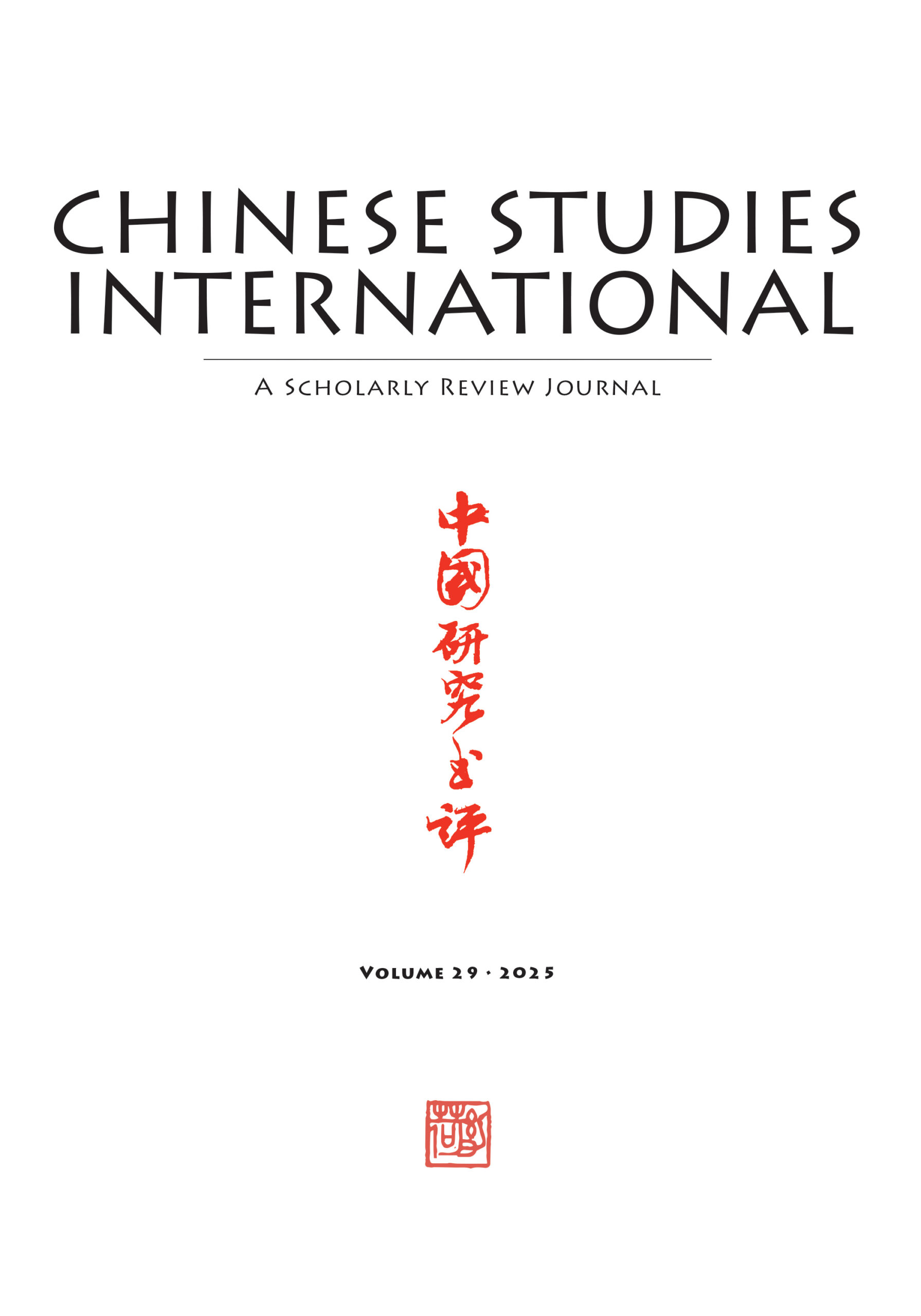
Chinese Studies International 29
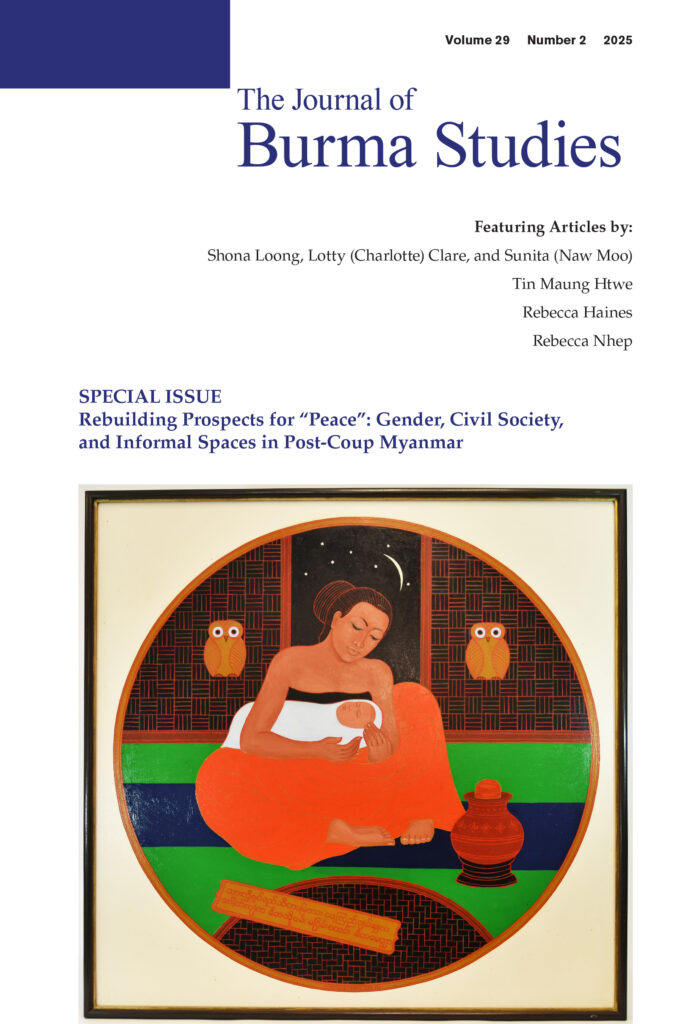
Journal of Burma Studies cover for 29-2

The Journal of Burma Studies

Volume 29, Number 2 (2025)

Special Issue: Rebuilding Prospects for “Peace”: Gender, Civil Society, and Informal Spaces in Post-Coup Myanmar

Special Guest Editors Julia Palmiano Federer and Aye Myat Su Wai, along with authors Laura O’Connor and Mariana Savka, discuss this special issue in the introduction stating:

This Special Issue explores the intricate themes of gender, civil society, and informal peace spaces in postcoup Myanmar. This collection of articles situates Myanmar women’s initiatives, practices, and spaces within Myanmar’s historical, political, and cultural context rather than broader attempts to promote women’s inclusion in ongoing peace processes as per the Women, Peace, and Security Agenda (Olivius, Hedström, and Zin Mar Phyo 2022). We view that in the ashes of a failed national-level Nationwide Ceasefire Agreement (NCA) process (2011–2015) and the fraught efforts to manage the fractured talks between different fronts of armed resistance (2016–2021) (Thawnghmung and Htoo 2022), a gendered analysis of women’s informal and unofficial peacebuilding efforts sheds light on the unique ways in which Myanmar women are mitigating conflict and sustaining “peace” after the 2021 military coup. In the context of a revolutionary conflict, the meaning of “peace” is constantly renegotiated and redefined with a focus onpower relations between antagonistic political actors. We choose to understand “peace” and, by extension, “peacebuilding” as moving beyond the stabilization of conflict toward a set of pragmatist visions of liberal peace in times of conflict (Bargués 2024).

Read this introduction, articles, and more at Project MUSE.

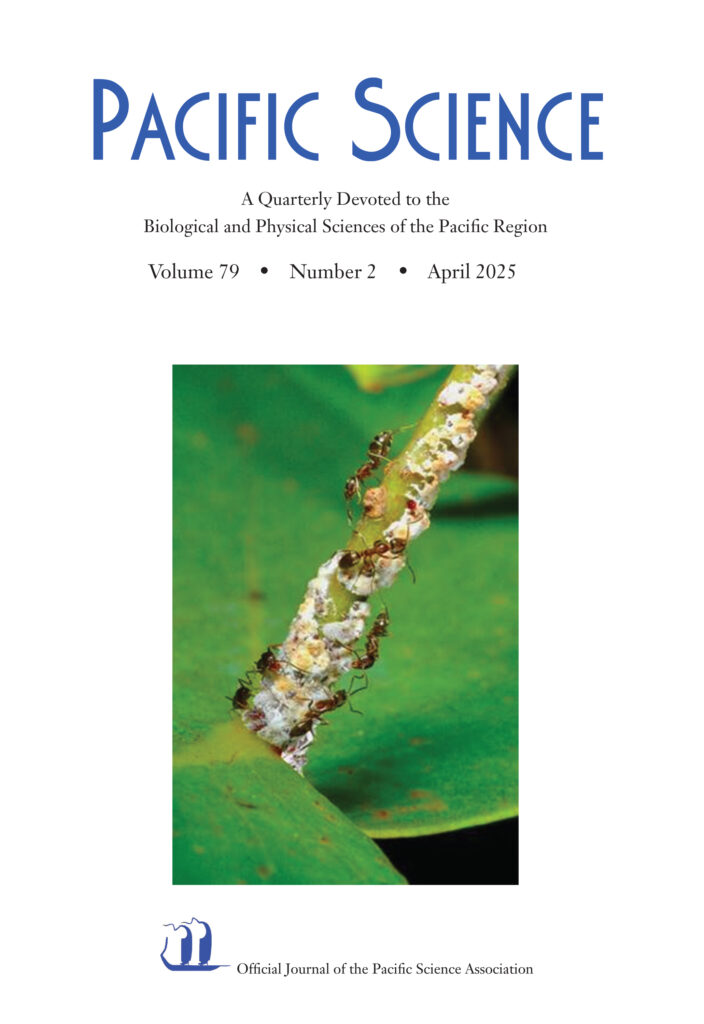
Pacific Science 79-2 cover

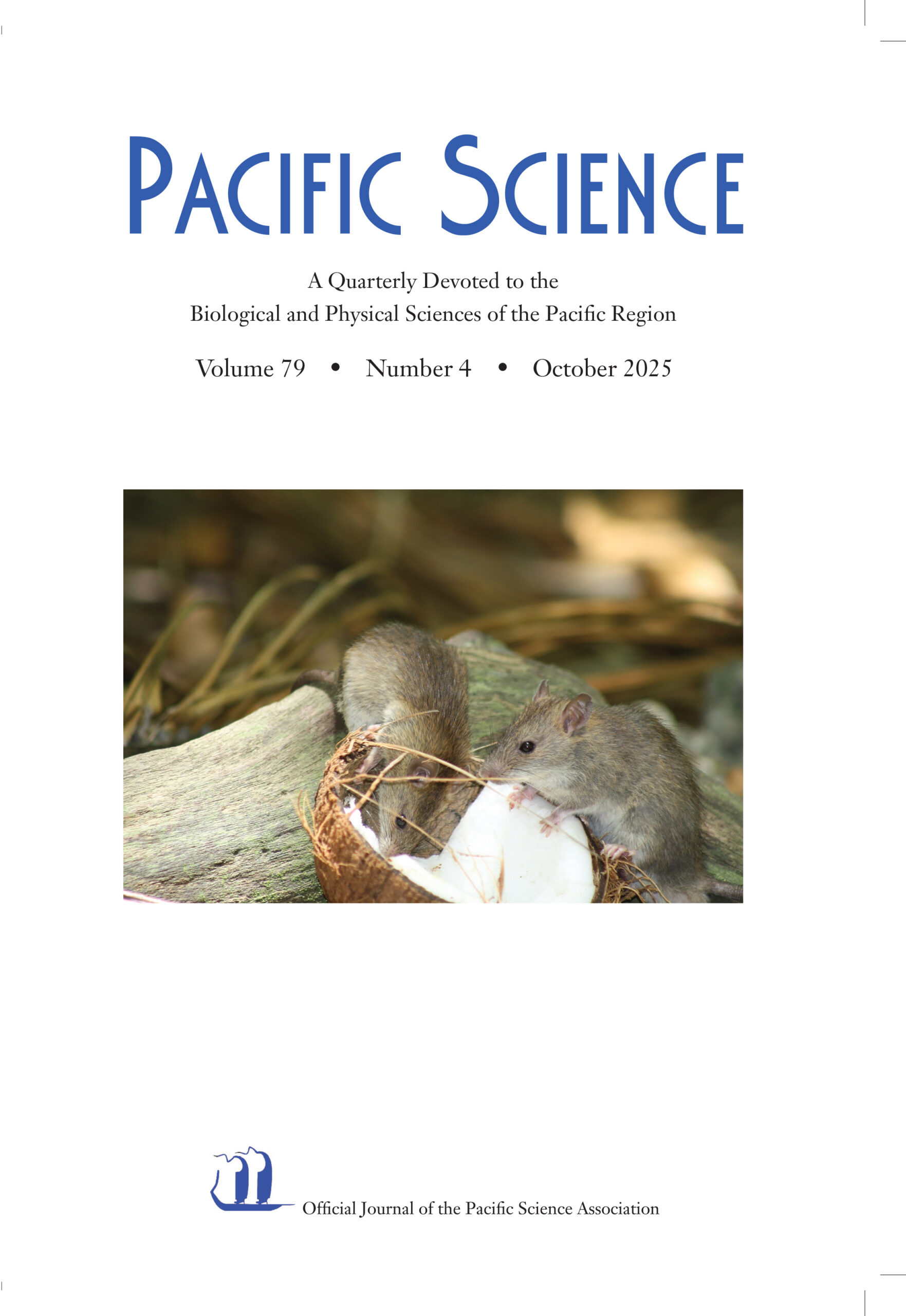
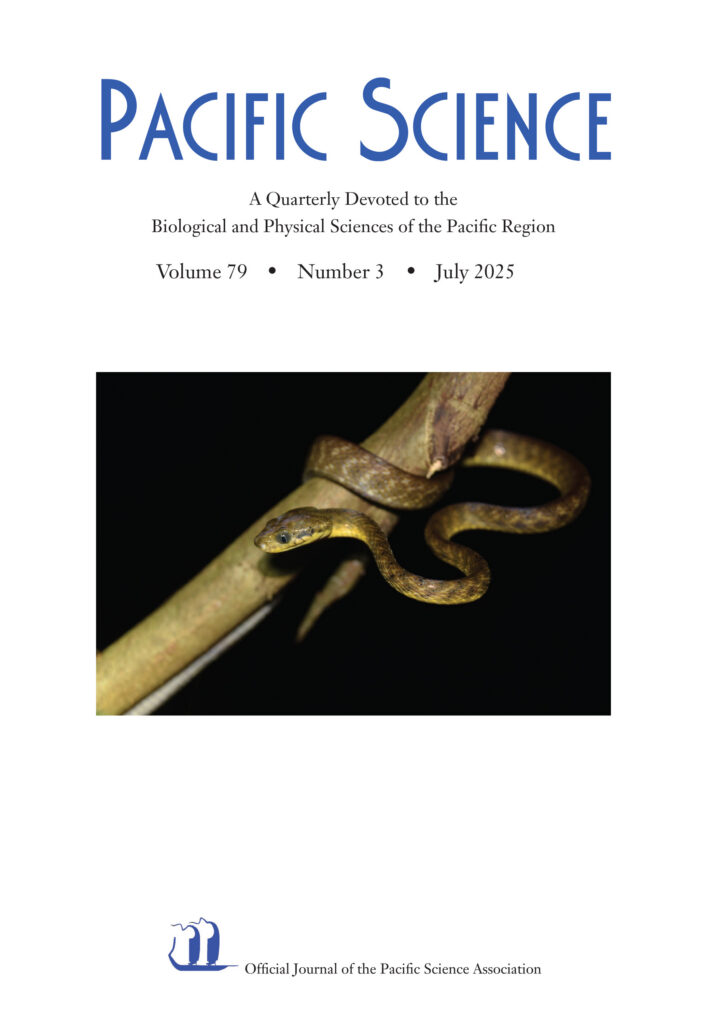
Pacific Science  

Volume 79, Number 2 (2025)

Biology and Impacts of Pacific Island Invasive Species. 18. Linepithema humile, the Argentine Ant (Formicidae)
Antoine Felden

Reexamination of Rat Lungworm (Angiostrongylus cantonensis: Nematoda) Prevalence in Wild Rattus spp. on the Island of Kaua’i after a 60-Year Hiatus
Israel L. Leinbach, Chris N. Niebuhr, Jaime A. Botet-Rodriguez,  Carmen C. Antaky, and Steven C. Hess

Taxonomic and Geographic Distributions of Native Angiosperms in the Islands of French Polynesia (South Pacific): An Analysis Based on the Nadeaud Botanical Database
Léa Gros, Jean-Yves Meyer, Robin Pouteau, and Philippe Marmey

Evaluating the Effect of Invasive Rat Management on Habitat Regeneration for Kaua’i’s Forest Birds
Ashley Cozette Romero, Lyssa Lini, and Liba Pejchar

Uncovering the Genetic Diversity of Adenophorus tripinnatifidus Gaudich. (Polypodiaceae), a Hawaiian Islands Endemic Fern
Nipuni Sirimalwatta, Paul G. Wolf, Carol A. Rowe, Tom A. Ranker, Kenneth R. Wood, Michael A. Sundue, and Clifford W. Morden

Assessment of Ecological Status via Macrobenthic Assemblages in the Nanji Islands, East China Sea
Xiaodong Zhou, Hanbing Zhao, Xiangyu Zhang, Ping Xu, Qingxi Han, Yinong Wang, and Zhong jie You

Find these research articles and more at Project MUSE.

RJCS 36 Cover

Review of Japanese Culture and Society

Volume 36 (2024)

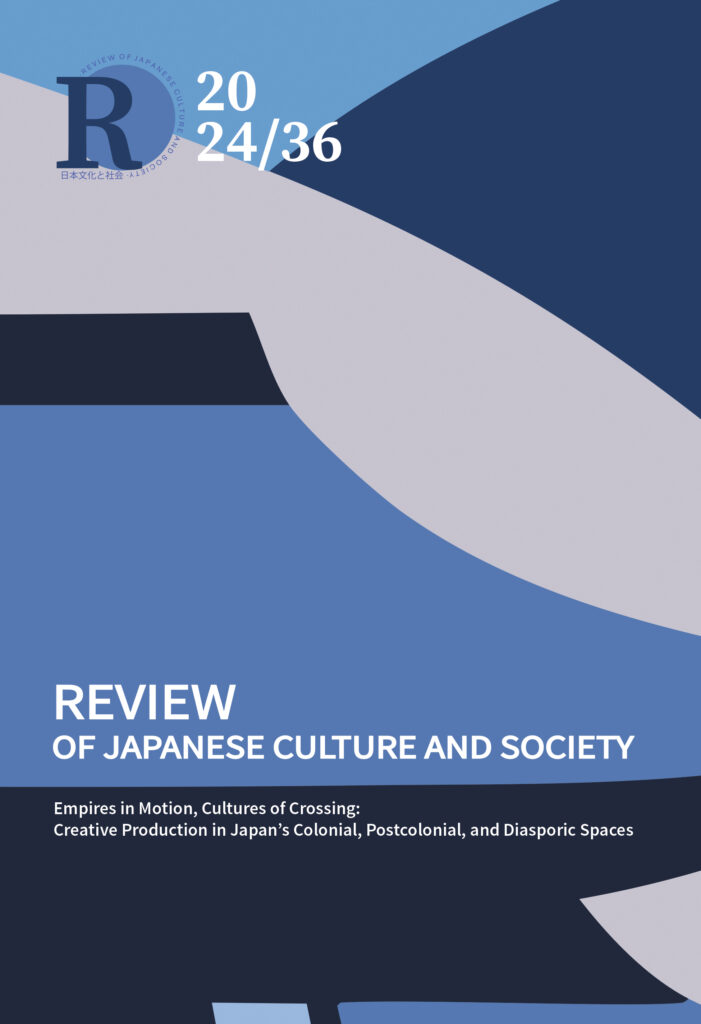
Special issue: Empires in Motion, Cultures of Crossing: Creative Production in Japan’s Colonial, Postcolonial, and Diasporic Spaces

Guest Editor John D. Szostak introduces this special issue stating:

Across the twentieth century, empires and their creation, disintegration, and reorganization functioned as engines of change and movement, driving global forces of expansion and migration, stimulating the generation of new identities and narratives, and inspiring new forms of cultural expression. Japan represents one key node of movements and crossings in the Asia-Pacific: a point of departure for outbound Japanese/Okinawan diasporas, and a destination, provisional or permanent, for Zainichi Korean and other minority communities. In addition to its geographical locality, Japan is also a symbolic site of cultural affiliation and aspiration, shaping experiences and molding identities in diasporic communities around the world. The aim of this special issue is to explore the ways that border-crossings associated with Japan’s colonial and post-colonial histories and legacies, both positive and negative and often ambivalent, exert a gravitational effect on the formations of identity, memory, and expression across global space.

This issue is thematically linked to the 2023 special issue of the Review of Japanese Culture and Society, titled “(Dis)Locating Zainichi: Transcending and Transgressing the Borders of ‘Japan,’” edited by Andre Haag and Cindi Textor. In that issue, the authors collectively consider Zainichi identity and cultural production as fixed neither entirely inside or outside Japan, but rather continuously shaped by cross-border movements over multiple localities in which Zainichi subjects live, write, and are represented. Even the title of this special issue, “Empires in Motion, Cultures of Crossing,” derives from their collaborations: “Cultures of Crossing: Transpacific and Inter-Asian Diaspora” was a symposium held in 2021 at the University of Utah, and “Empires in Motion: Colonial Diasporas and Cultural Production in the Shadow of the Japanese Empire” a conference at the University of Hawaiʻi at Mānoa in 2022, both held in preparation for “(Dis)Locating Zainichi.”

Find this introduction, articles, translations, and more at Project MUSE.

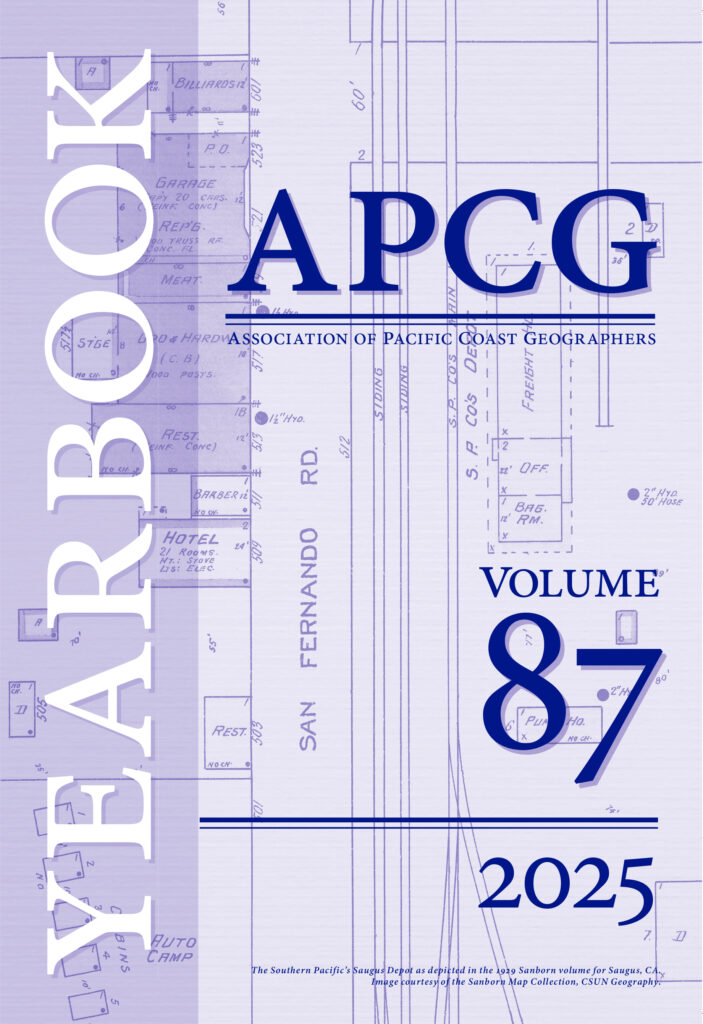
Yearbook of the Association of Pacific Coast Geographers

Volume 87 (2025)

Editor Craig S. Revels discusses the issue, annual meeting, and cover, stating:

It is my great pleasure to present the eighty-seventh volume of the Yearbook of the Association of Pacific Coast Geographers. Looking back at the first volume of the Yearbook, published in 1935 as the proceedings of the inaugural meeting of the Association, it is remarkable how encompassing and occasionally eclectic our collective endeavors have remained throughout our long history, and I believe each new volume reflects that tradition. As always, in addition to the usual selection of original research, this volume highlights our well-hosted 2024 gathering in Arcata, California.  At that meeting, Fernando Bosco’s Presidential Address introduced us to the concept of gastro poles, a novel adaptation of the classic growth pole theory of economic development. Carefully exploring the relationships between food, gentrification, and place identity in Buenos Aires, he shows us how food-led development has reshaped the urban fabric and has become entwined with larger questions of identity for residents and tourists alike.


Find this introduction, research articles, biographies, book reviews, meeting reports, awards, abstracts, and more at Project MUSE.

“Dr. Pinky” as special guest editor for new issue of Filipino American National Historical Society Journal and Call for Submissions for Volume 14!

Vol. 13 is guest-edited by Pat Lindsay C. Buscaino, Ed.D., known as Dr. Pinky, is a lifetime and founding charter member of the Filipino American National Historical Society–Houston Chapter (FANHS-HTX), where she served as President Emerita (2020–2024) and now continues as Community Liaison. A Filipino American storyteller, educator, and community advocate, her leadership centers on preserving Filipino American history and inspiring intergenerational storytelling that strengthens cultural identity and community connection.

Dr. Pinky welcomes readers to this issue in her introduction: Welcome to FANHS Journal, Volume 13! What an honor it is to be your Guest Editor for Volume 13 and to be part of the full circle journey—from co-chairing the conference to now crafting this capstone artifact of our accomplishments. I want to thank you for reading and supporting this journal, which has truly been a labor of love and community spirit. Every article in this journal speaks to the heart of the 20th Biennial FANHS National Conference 2024 in Houston, TX, which was entitled En[compass]ing Our Journeys. The FANHS National Conference 2024 occurred on July 16–20, 2024, in United Way Greater, Houston, TX, and was hosted by FANHS-Houston, TX (FANHS-HTX), the 32nd FANHS chapter in the nation. During the conference, we had over 100 educational and interactive presentations, such as lectures, workshops, film screenings, tablings, panel discussions, lunch and learns, and book talks. The FANHS Journal Committee, Dr. Patricia Halagao, Dr. Lily Ann Villaraza, and Dr. Terese Guinsatao Monberg, hosted two conference workshops, Our Journey to Re-Launch the FANHS Journal and Cultivating a Community of FANHS Scholars, to encourage attendees to submit their presentations to Volume 12 and conference proceedings, Volume 13. After the conference, we opened the call for submissions and selected fifteen articles to embody the theme of the conference.


Photo from Jeffrey Acosta and Max Frias’ “Continuing History of the Filipino American Community of Hampton Roads, Virginia” in this volume. The ship in the photograph is the USS Rizal (DM-14). The Rizal was in service with the U.S. Navy between 1919 and 1931 and had the distinction of being the only warship in the U.S. Navy with a majority Filipino crew. One of the members of the crew was Amenico Beang (inset). By 1935, 4375 Filipinos were serving in the U.S. Navy worldwide to include Hampton Roads, Virginia.
Composite image courtesy of Jeffrey Acosta.

Call for Submissions

The FANHS Journal Editorial team invites you to submit to the FANHS Journal (Volume 14), which will focus on the theme of “Mixed Race”.  Former FANHS Trustee and National Scholar Rudy Guevarra and Alejandro Acierto will be the Guest Editors for Volume 14, which is expected to be published in Fall 2026. 

We envision this volume of the FANHS Journal to reflect the theme of “Mixed Race” through both the content itself and the means through which contributors and editors have collaborated to create that content. “Mixed Race” calls forth those who identify and/or create content on what it means to be of mixed race (from multiple racial, ethnic, and/or Indigenous) ancestries. These identities and explorations into one’s multiplicity can be done through historical and/or contemporary experiences. What makes Filipino Americans unique in telling stories of mixed race identity, for example, is the longstanding history of racial mixing in the Philippines, during the Manila-Acapulco Galleon Trade with Mexico, and within the context of living, working, and building communities in the United States (See Call for Submissions for complete description of theme).

Contributions to this volume may encompass mixed race across:

·      Multiple generations and collaborations of mixed race experiences

·      Histories of colonialism and resistance that have forged mixed race communities and individuals over time

·      Laws and other actions meant to deny Filipino interracial marriages and recognize children of mixed ancestry

·      Academic and community approaches to telling our mixed race histories and stories

·      The diverse experiences of how mixed-race Filipino Americans have navigated their multiplicity

·      The marginalization of mixed race Filipino Americans within their own community through issues such as colorism, discrimination, racism, etc.

·      How mixed race Filipino Americans have embraced their multiplicity and created new terminology to express those mixed race experiences (e.g., Mexipino, Blackapina, Indopino, etc.)

·      Multigenerational mixed race experiences (e.g, descendants of the Louisiana Manila Men)

·      Geographic diversity of mixed race communities

·      Moving beyond the “celebration” and exotification of mixed race Filipino Americans

·      Cultural authenticity surrounding phenotype and language proficiency

We are looking for contributions that address the following Journal sections: Artwork, Collaborating with our Ancestors, Talk Stories, Community Research, Academic Articles, Reviews, and FANHS in Action, but would be particularly excited to see contributions that address histories in the following areas:

·      Book Reviews

·      Artistic contributions

·      Youth-generated work, including the use of social media platforms for storytelling

 Finally, we welcome contributions in multiple formats and modalities, including:

·      Written work (e.g,. essays, poems, articles)

·      Visual work (e.g., photo essays, prints, and other artistic work, video)

·      Mixed modalities (e.g,. pictorial essays, prints, zines)

·      Audio (e.g., recorded monologues, abridged oral histories, and accompanying article)

Please see Call for Submissions and Author Guidelines for theme description and instructions on how to upload your materials, as well as deadlines and the production timetable. Your work will be shared for peer review within our community. 

Deadline for submissions is January 15, 2026.

FAHNS cover for 13

Volume 13 can be found on Project MUSE.

Please also visit our UH Press FANHS page!


Volume 13
Table of Contents


Guest Editor’s Introduction
Pat Lindsay C. Buscaino

Our Reflections on the 20th Biennial FANHS National Conference 2024
Christy Panis Poisot and  Pat Lindsay C. Buscaino

In Memoriam: A Tribute to Peter Jamero
Dr. Dorothy Laigo Cordova

Rediscovered: Poetry in Conversation with Marina Espina
Randy Gonzales

Ode to Dawn Mabalon and Wendell Pascual: A Third Culture Kid’s Tribute to Friends Who Grounded Me
Myra Dumapias

New Mythologies: Honoring and Building Upon the Oral Traditions of our Ancestors
Gabriella Buba, Robin Alvarez, and Leila Tualla

The Legacy of Uncle Nick Viernes (1902–1991): Pioneer of Autonomous Cinema
Ashley Dequilla

Queer Kapamilya and The Balikbayan Project: The Return Home to Ourselves
Anthony Andre Zarate, Ethan Cueto, Kieren Guerrero, and Ren Verzosa

Pinoys, Parks, and (Historic) Places: Interpreting Filipino American History at the National Park Service
Marjorie Justine Antonio

The Journey of Building Our Village of Support for Pinay Moms in Social Work and Academia
Gabrielle Aquino-Adriatico, Ronna Bañada, and Linet Madeja-Bravo

Filipino Student Associations as Spaces of Solidarity and Cultural Memory: Community Building Rooted in History
Danielle Mangabat and Janeva Nicole Dimen

Sounding the Diaspora: The Great Filipino Songbook as a Strategy for Strengthening Filipino American Identity
Lou Ella Rose Cabalona and Allie Hacherl

Enmity to Affinity and Beyond: Filipino Eternal Indebtedness
Rustico Rasing

Continuing History of the Filipino American Community of Hampton Roads, Virginia
Jeffrey Acosta and Max Frias

Filipino American Journeys in the Archives: Considerations for Donating a Collection to a University Archives
Mariecris Gatlabayan

It’s All in the Bytes: Preserving Digital Photos and Videos
Mariecris Gatlabayan

National Conference 2026 Preview

Images


Volume 13 can be found here on Project MUSE.

Please also visit our UH Press FANHS page for more information on this fantastic journal!


Journals: Asian Theatre Journal, biography, Contemporary Pacific, Journal of Korean Religions, +more

Asian Theatre Journal

Volume 42, Number 2 (2025)

This issue includes as Special Section: South and Southeast Asian Ecotheatre with an introduction by Catherine Diamond who discusses the issue stating:

Ecology, the science of the complex web of relationships between organisms and their environment, became codified in the mid-nineteenth century. It originally centered on biological mutualism and excluded humanity, yet it has since been appropriated by the arts and humanities to foreground human–nonhuman relations. Derived from the Greek oikos, meaning household or hearth, or in a broader sense, “home,” this derivation might make it closer to cultures that do not think of nature in exclusively scientific terms. But even returning to ecology’s original scope, for rural and economically marginalized communities, ecological awareness paired with protecting their proximate environments is often a matter of immediate physical and cultural survival, while for those in the cities, it can be a more abstract global ideology that insists current economic and production systems are at odds with the planet’s capacity to thrive and provide. This ATJ special volume includes essays exploring performances dealing with both the rural and urban perspectives toward human-wrought environmental changes.


Find this introduction, translations, emerging scholars, book reviews and more at Project MUSE.

Front cover of The Contemporary Pacific Vol. 36 No. 2 (2025)

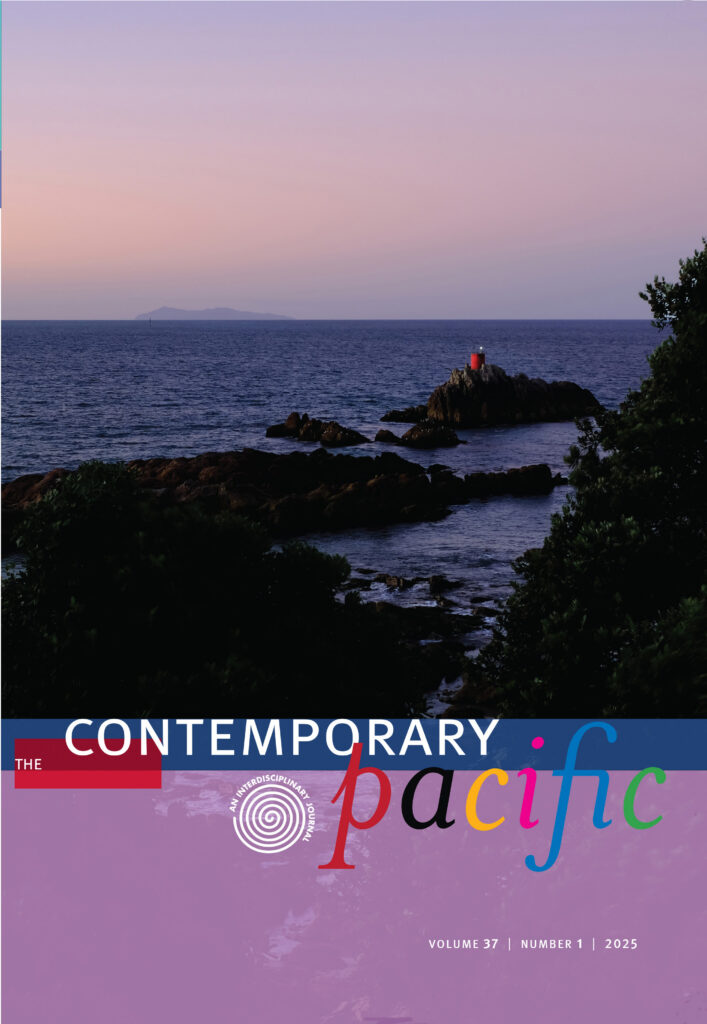
Contemporary Pacific

Volume 36, Number 2 (2024)

This latest issue features artwork by Edith Amituanai.  Amituanai’s work is discussed in About the Artist stating:

Edith Amituanai is a New Zealand–born Samoan photographer working from Tāmaki Makaurau. From interiors to driveways to communities, Amituanai’s practice is concerned with environments that shape who we are. Her ongoing study of the Samoan transnational community and their homes has taken her across New Zealand, Sāmoa, France, Italy, Canada, and the United States. In 2008, Amituanai was nominated for the Walters Prize for her series Déjeuner, which examined a new diaspora: expatriate New Zealand–Samoan rugby players living and working in France and Italy.  Her first foray outside of her Samoan community was the series La Fine Del Mondo (2009-2010), which focused on helping the Lai family, Chin refugees from Myanmar, settle into their new home in Massey, West Auckland. Amituanai’s interest in embedding herself in the environment she is working in means she often takes on different roles in the community, from sports team manager and youth worker to freelance photographer.

As a teaching artist, she has led a variety of workshops for art galleries, community groups, and institutions. In 2017, she undertook a six-week residency at Te Kura o Kimi Ora in Flaxmere, which resulted in Keep on Kimi Ora, an exhibition at Hastings Art Gallery featuring photographs taken by students of the school. Amituanai also taught photography in secondary schools in New Zealand as part of the Ministry of Education’s Creatives in Schools program.

Find these articles, book reviews, media reviews, About the Artist, and more at Project MUSE.

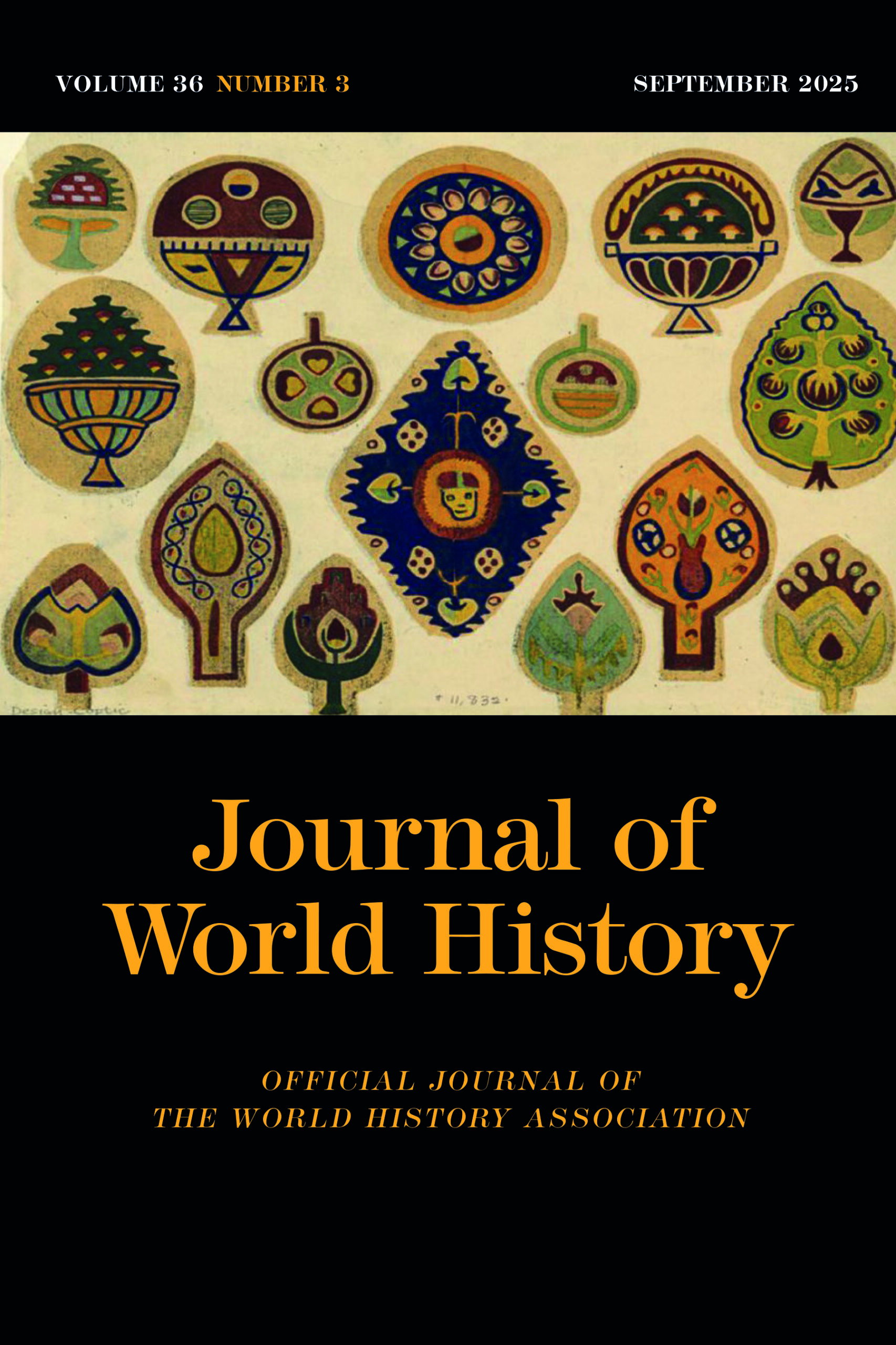
Hournal of Worl History 36-2 cover

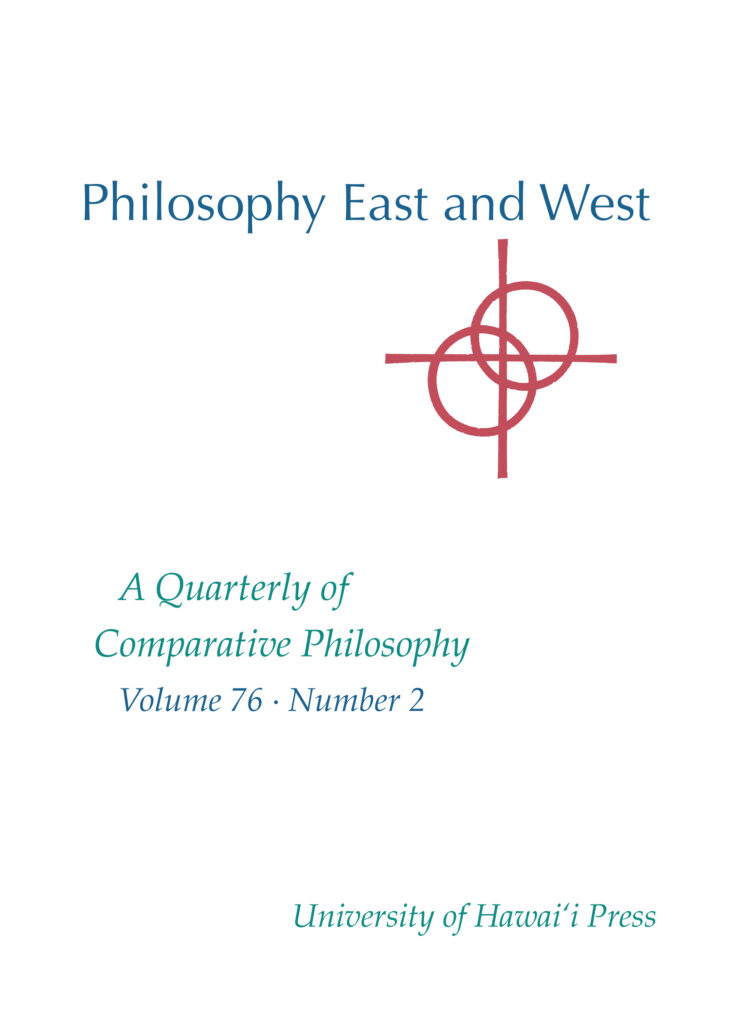
Philosophy East and West

Volume 75, Number 3 (2025)

This issue has an Special Feature: The Life and Work of J.N. Mohanty: A Philosophical Tribute.  Berger remembers Mohanty in the Introduction titled Some Memories of my Teachers, J.N. Mohanty stating:

It has been a little more than two years since I, along with many others, learned of the death of a giant in modern philosophy, and the loss still registers, as classical Indian Nyāya philosophers would say, the presence of his absence. Equally significant for his illumination of the thought of Edmund Husserl and of debates in the classical Indian tradition, that giant was Jitendranath Mohanty (1928–2023). I, along with several generations of people in these fields, in India and the United States, had the unmatched privilege and good fortune of being his student. I have written and done conference presentations about my learning experience from Mohanty and about his works in other venues, and so the editors of Philosophy East and West and this special issue have asked me to include my remembrance of him here.

Find this Special Introduction, articles, book reviews, and more at Project MUSE.

Journals: Journal of Daoist Studies, Journal of World History, Pacific Science + more

cover of Journal of World History 36-1

PS 78-2 cover
PEW_75_1 cover

Philosophy East and West

Special Feature: The Prospects, Problems, and Urgency of Global Intercultural Philosophy Now

Volume 75, Number 1 (2025)

Global Philosophy, Positionality, and Non-Relativist Perspectivism
Ralph Weber

Buddhism, Naturalism, and Animism (or Loving Our More-Than-Human Kin): Global Philosophy at Work in an Age of Ecological Crisis
Karin Meyers

Fazang’s Mereology as A Model For Holism
Felipe Cuervo Restrepo

Libertarianism, Hard Determinism, and Epoché in Indian Buddhism
Giuseppe Ferraro

The Sublime Extends to Chinese Aesthetics
Jonathan W. Johnson and Robert R. Clewis

Find these articles, reviews, and more at Project MUSE.

Journals: Buddhist-Christian Studies, Journal of Korean Religions + More


Buddhist-Christian Studies

Volume 44 (2024)

Editors Thomas Cattoi and Kristin Johnston Largen introduce this issue:

[T]he articles in this issue include several that offer a variety of perspectives on the thought of Thich Nhat Hanh for the sake of a more peaceful and just world. Another article examines whether and how certain interpretations of Theravāda Buddhist doctrines can lead to racist practices and policies. Yet another article looks at the current realities of Buddhist chaplains in the United States, both what they can offer in terms of a unique perspective on spiritual care and also the ways in which they are discriminated in a system that has been so dominated by Christian practitioners. And this is only the beginning. We hope that you will enjoy the breath of perspectives—scholarly, reflective, and practical —evidenced by this issue’s outstanding authors.

Find these articles, review, news and views and more at Project MUSE.

Cover Jounral of Korean religions JKR 15.2
PEW 74-4 cover

AAR24 | 30% OFF on Select Religion Titles

SEE OUR FULL LIST OF 30% OFF TITLES


Continue reading “AAR24 | 30% OFF on Select Religion Titles”

Journals: Asian Theatre Journal, Azalea, Manoa, Korean Studies, Pacific Science and more

Cover for ATJ 41-2
Azalea 16: Journal of Korean Literature and Culture

Azalea: Journal of Korean Literature & Culture

Special Features: Contemporary Korean Women Writers, Korean Women’s Poetry, Writer in Focus: Kwon Yeo-Sun, Voice from the Colonial Period: Imamura Eiji.

Volume 17 (2024)

Editor Young-Jun Lee introduces the new issue of Azalea with Special Features that focus on the Feminist Reboot of the 2010’s, stating:

Korean literature in the 20th century was dominated by men, but that changed in the 1990s after democratization and the rise of the economy. If you read literary magazines from the 1990s, you will find that names of women writers on the contents pages are strikingly more numerous than those of men. This trend has continued for almost three decades now and it is likely to continue for the foreseeable future, as long as Korean women writers are responding to Korean society, which keeps women in an inferior position. “Feminism Reboot” was one of the critiques of the resilient patriarchal system in Korea.

Personal income in South Korea has recently overtaken that of Japan. South Korea’s rise is not only economic, but also cultural. Pop culture fans, including many young people around the world, are fascinated by Korean culture and new works coming out of South Korea. The popularity of Korean language programs at universities around the world has gone beyond the limits of what those universities can accommodate. And yet, by any standard, it is still undeniable that women in South Korea are victims of serious social inequality.

Find this Editor’s note, articles, images, poetry, and more at Project MUSE.

Biography cover 46-3
JWH 35-3 front cover

Korean Studies

Special Section:  A Translational Reading of the Invention of Korea’s Confucian Traditions

Special Section: Portrayals of Motherhood in South Koran Popular and Practices Culture

Volume 48 (2024)

Editor Cheehyung Harrison Kim introduces this issue and the two Special Sections:

Two interconnected Special Sections are at the core of this volume. The first is titled “A Transnational Reading of the Invention of Korea’s Confucian Traditions,” exceptionally guest edited by Daham Chong (Sangmyung University). The second is guest editor Bonnie Tilland’s (Leiden University) superb “Portrayals of Motherhood in South Korean Popular and Practiced Culture.” Confucianism and motherhood are notions and practices tied to the ideological perception of constancy, on the one hand, and the shifting epistemological norms based on cultural and historical exigencies, on the other. The authors of the two Special Sections question and explore various historical and cultural predicaments of Confucianism and motherhood in modern and contemporary Korea.

The Special Section on the invention of Confucian traditions begins with Daham Chong’s meticulous account of the influence Max Weber had on modern Korean historians’ comprehension of Confucianism-derived systems in late Koryǒ and early Chosǒn, namely the civil service examination. Young-chan Choi (University of Oxford) adroitly investigates the epistemological changes distinctly occurring in late nineteenth century Korea, in which Confucianism comes to be seen as inferior to the modernist understandings of the world stemming from Protestantism. The postliberation space is Kim Hunjoo’s (Hanbat National University) research area, where the process of remaking Confucianism as a new tradition is carefully scrutinized in relation to the nation building process. The final piece in this Special Section is on literary culture. Owen Stampton’s (University of British Columbia) sophisticated article probes into the tension between tradition and modern life as experienced by women characters in Yi Kwang-su’s 1917 play Kyuhan, as well as discussing the birth of the modern stage in Korea.

Split Inalienable Coding in the East Bird’s Head Family
Laura Arnold

Observations on Tagalog Genitive Inversion
Henrison Hsieh

Variation and Change in Jakarta Indonesian: Evidence from Final Glottals
Ferdinan Okki Kurniawan

When Sound Change Obscures Morphosyntax: Insights from Seediq
Victoria Chen

Lexical Evidence in Austronesian for an Austroasiatic presence in Borneo
Juliette Blevins and Daniel Kaufman

Find these articles, squids, and more at Project MUSE.

This is an image of the front cover of Mānoa vol. 36 no. 1.

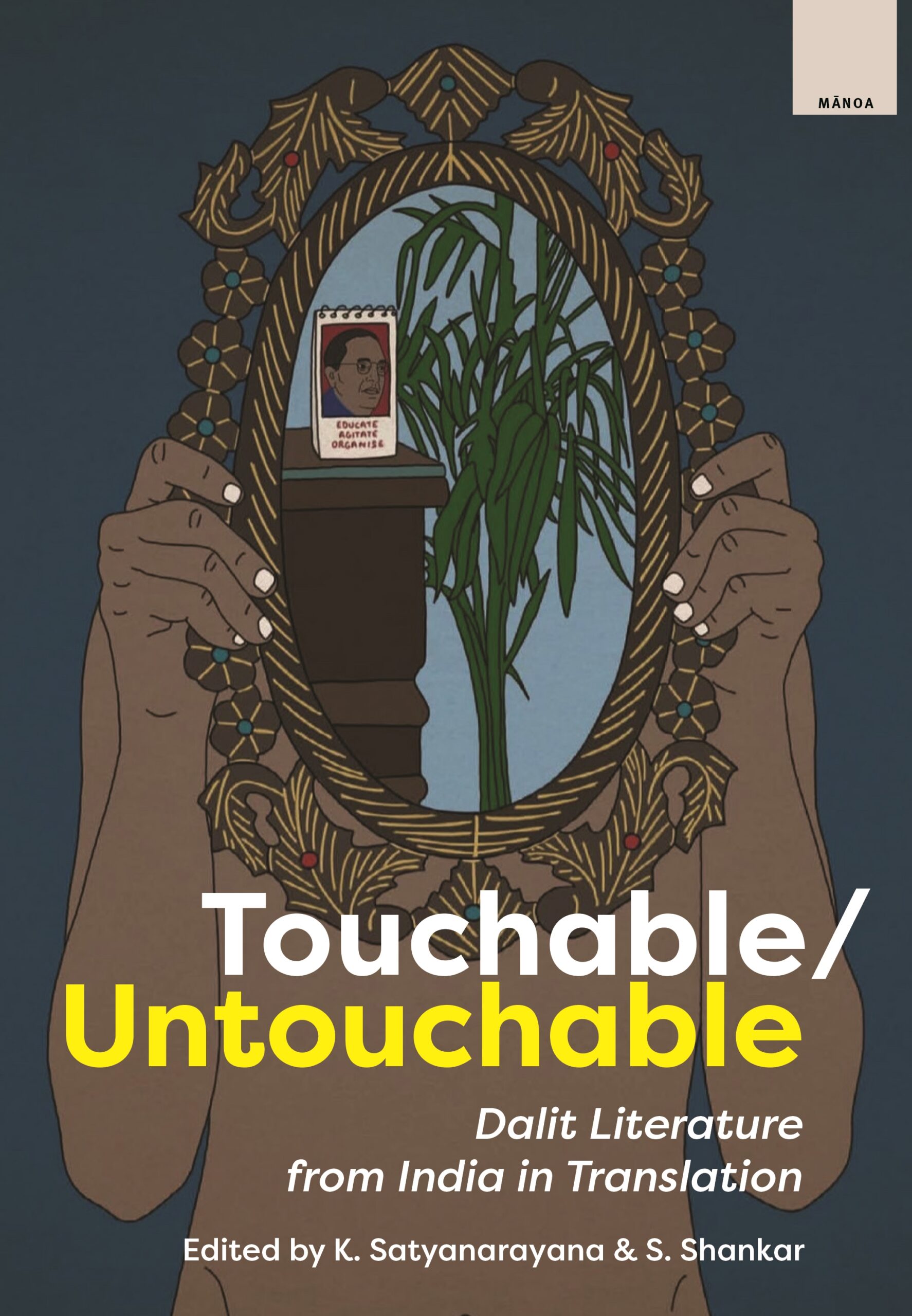
Mānoa

Volume 36, Number 1 (2024)

Special Issue: Karahee from the Cane Fields

Guest Editor Rajiv Mohabir introduces this issue:

Find Editor’s note, articles, songs, meditations, and more at Project MUSE.

Pacific Science 78-1 Cover photo of Nesting Laysan Albatross pairs

Pacific Science

Volume 78, Issue 1 (2024)

Pre-Contact Vegetation and Persistence of Polynesian Cultigens in Hālawa Valley, Moloka‘i
Patrick V. Kirch, Mark Horrocks, Gail Murakami, Noa Kekuewa Lincoln, Dolly Autufuga, and Jillian Swift

Nesting Success of Lepidochelys olivacea (Cheloniidae) In Situ Incubation in the Cabo Pulmo National Park, Baja California Sur, Mexico
Mónica E. García-Garduño, Elena Solana-Arellano, Carlos R. Godínez-Reyes, Paula Aguilar-Claussell, and David Ramírez-Delgado

Biology and Impacts of Pacific Islands Invasive Species: Falcataria falcata (Miquel) Barneby and Grimes (Fabaceae)
R. Flint Hughes, Aidan Anderson, David R. Clements, Joanna Norton, and Rebecca Ostertag

The Impact of Light Attraction on Adult Seabirds and the Effectiveness of Minimization Actions
André F. Raine, Scott Driskill, Jennifer Rothe, Stephen Rossiter, Jason Gregg, Tracy Anderson, and Marc S. Travers

Status of Laysan and Black-Footed Albatrosses on O’ahu, Hawai’i
Lindsay C. Young, Eric A. VanderWerf, Erika M. Dittmar, C. Robert Kohley, Kelly Goodale, Sheldon M. Plentovich, and Lesley MacPherson


Find these articles and more at Project MUSE.

Cover for USJWJ 66

Journal of Korean Religions, The Contemporary Pacific, U.S. Japan Women’s Journal + more

ATJ 41-1 cover
Front cover of Biography volume 46, number 2 (2024)

Biography

Volume 46, Number 2 (2023)

Editor Craig Howes discusses this edition and unique collection of writing:

[F]rom its first issue in 1978, Biography has been principally a forum journal, dedicated to publishing unsolicited articles from a wide variety of disciplines, and solicited reviews of recent critical and theoretical publications devoted to some aspect of life writing.  This issue continues the tradition, and renews this commitment. Seven very substantial articles and twenty-one reviews—nothing else. But a quick comparison of our first and latest issues reveals that some things have changed, largely in response to changes in the field itself. Although Biography declared itself an An Interdisciplinary Quarterly from the start, all of the first six articles dealt with American, English, and French literary or historical subjects. The current issue’s seven articles deal with religious, psychoanalytic, broadcast, graphic, and social media texts from a far wider range of geographic locations—North America and Western Europe, but also the Caribbean, Eastern Europe, and Western Asia, with glances at Africa and South and Eastern Asia for important context.

Find this Editors’ Note, articles, reviews, and more at Project MUSE.

Front cover of The Contemporary Pacific volume 35 numbers 1 and 2
JKR 15.1

Journal of the Southeast Asian Linguistics Society

Volume 17, Number 1 (2024)

Voice And Pronominal Forms In Kayan (Uma Nyaving)
Alexander D. Smith, Michael Yoshitaka Erlewine, and Carly J. Sommerlot

Chronology of Registrogenesis in Khmer: Analyses of Poetry and Inscriptions
Sireemas Mapong

Classifiers and Definiteness in Longdu (Min Chinese)
Joanna Ut-Seong Sio

Notes on the sociopolitical history of nomenclatures in Northeast India
Pauthang Haokip

Remembering Michel Ferlus (1935-2024)
Alexis Michaud and Minh Châu Nguyên

Find these research papers, data paper, reviews, bibliographies, remembrances, and more at eVols.

PEW 74-2 cover
USJWJ 65 cover

30% off for World History Association 2024

FIND OUR TITLES INCLUDED IN THIS SALE BELOW


FREE Special Issue: World History and Ethnic Studies
AVAILABLE THROUGH SEPTEMBER 2024

JWH associate editor Laura J. Mitchell introduces this free special issue in her introduction, “A Convergence Whose Time Has Come”:

This year’s digital-only special issue brings interdisciplinarity into relief by exploring the relationship between world history and ethnic studies—related fields that benefit from mutual interrogation, as this collection shows. The context of 2024—both globally and in the U.S., where most subscribers to the Journal of World History are based—compells questions about the composition of the nation, historic constructions of identity along racial, linguistic, and gendered lines, the articulation and mobilization of power within societies and across polities, and enduring dynamics of imperial conquest and resistance. As scholars, teachers, and world citizens we are confronted with the continued rise in authoritarian politics; wars in Israel-Palestine, Ukraine, and Sudan; significant elections in India, South Africa, and the U.S.; and student protest movements challenging the status quo in the U.S., Europe, and the Arab world. So evidence-based understanding about the historical functions of race, ethnicity, cultural movements, and state power are especially relevant.

FIND THE SPECIAL ISSUE HERE


Continue reading “30% off for World History Association 2024”

30% OFF on Select Religion Titles

SEE OUR FULL LIST OF 30% OFF TITLES


Continue reading “30% OFF on Select Religion Titles”
UH Press
Privacy Overview

University of Hawaiʻi Press Privacy Policy

WHAT INFORMATION DO WE COLLECT?

University of Hawaiʻi Press collects the information that you provide when you register on our site, place an order, subscribe to our newsletter, or fill out a form. When ordering or registering on our site, as appropriate, you may be asked to enter your: name, e-mail address, mailing 0address, phone number or credit card information. You may, however, visit our site anonymously.
Website log files collect information on all requests for pages and files on this website's web servers. Log files do not capture personal information but do capture the user's IP address, which is automatically recognized by our web servers. This information is used to ensure our website is operating properly, to uncover or investigate any errors, and is deleted within 72 hours.
University of Hawaiʻi Press will make no attempt to track or identify individual users, except where there is a reasonable suspicion that unauthorized access to systems is being attempted. In the case of all users, we reserve the right to attempt to identify and track any individual who is reasonably suspected of trying to gain unauthorized access to computer systems or resources operating as part of our web services.
As a condition of use of this site, all users must give permission for University of Hawaiʻi Press to use its access logs to attempt to track users who are reasonably suspected of gaining, or attempting to gain, unauthorized access.

WHAT DO WE USE YOUR INFORMATION FOR?

Any of the information we collect from you may be used in one of the following ways:

To process transactions

Your information, whether public or private, will not be sold, exchanged, transferred, or given to any other company for any reason whatsoever, without your consent, other than for the express purpose of delivering the purchased product or service requested. Order information will be retained for six months to allow us to research if there is a problem with an order. If you wish to receive a copy of this data or request its deletion prior to six months contact Cindy Yen at [email protected].

To administer a contest, promotion, survey or other site feature

Your information, whether public or private, will not be sold, exchanged, transferred, or given to any other company for any reason whatsoever, without your consent, other than for the express purpose of delivering the service requested. Your information will only be kept until the survey, contest, or other feature ends. If you wish to receive a copy of this data or request its deletion prior completion, contact [email protected].

To send periodic emails

The email address you provide for order processing, may be used to send you information and updates pertaining to your order, in addition to receiving occasional company news, updates, related product or service information, etc.
Note: We keep your email information on file if you opt into our email newsletter. If at any time you would like to unsubscribe from receiving future emails, we include detailed unsubscribe instructions at the bottom of each email.

To send catalogs and other marketing material

The physical address you provide by filling out our contact form and requesting a catalog or joining our physical mailing list may be used to send you information and updates on the Press. We keep your address information on file if you opt into receiving our catalogs. You may opt out of this at any time by contacting [email protected].

HOW DO WE PROTECT YOUR INFORMATION?

We implement a variety of security measures to maintain the safety of your personal information when you place an order or enter, submit, or access your personal information.
We offer the use of a secure server. All supplied sensitive/credit information is transmitted via Secure Socket Layer (SSL) technology and then encrypted into our payment gateway providers database only to be accessible by those authorized with special access rights to such systems, and are required to keep the information confidential. After a transaction, your private information (credit cards, social security numbers, financials, etc.) will not be stored on our servers.
Some services on this website require us to collect personal information from you. To comply with Data Protection Regulations, we have a duty to tell you how we store the information we collect and how it is used. Any information you do submit will be stored securely and will never be passed on or sold to any third party.
You should be aware, however, that access to web pages will generally create log entries in the systems of your ISP or network service provider. These entities may be in a position to identify the client computer equipment used to access a page. Such monitoring would be done by the provider of network services and is beyond the responsibility or control of University of Hawaiʻi Press.

DO WE USE COOKIES?

Yes. Cookies are small files that a site or its service provider transfers to your computer’s hard drive through your web browser (if you click to allow cookies to be set) that enables the sites or service providers systems to recognize your browser and capture and remember certain information.
We use cookies to help us remember and process the items in your shopping cart. You can see a full list of the cookies we set on our cookie policy page. These cookies are only set once you’ve opted in through our cookie consent widget.

DO WE DISCLOSE ANY INFORMATION TO OUTSIDE PARTIES?

We do not sell, trade, or otherwise transfer your personally identifiable information to third parties other than to those trusted third parties who assist us in operating our website, conducting our business, or servicing you, so long as those parties agree to keep this information confidential. We may also release your personally identifiable information to those persons to whom disclosure is required to comply with the law, enforce our site policies, or protect ours or others’ rights, property, or safety. However, non-personally identifiable visitor information may be provided to other parties for marketing, advertising, or other uses.

CALIFORNIA ONLINE PRIVACY PROTECTION ACT COMPLIANCE

Because we value your privacy we have taken the necessary precautions to be in compliance with the California Online Privacy Protection Act. We therefore will not distribute your personal information to outside parties without your consent.

CHILDRENS ONLINE PRIVACY PROTECTION ACT COMPLIANCE

We are in compliance with the requirements of COPPA (Children’s Online Privacy Protection Act), we do not collect any information from anyone under 13 years of age. Our website, products and services are all directed to people who are at least 13 years old or older.

ONLINE PRIVACY POLICY ONLY

This online privacy policy applies only to information collected through our website and not to information collected offline.

YOUR CONSENT

By using our site, you consent to our web site privacy policy.

CHANGES TO OUR PRIVACY POLICY

If we decide to change our privacy policy, we will post those changes on this page, and update the Privacy Policy modification date.
This policy is effective as of May 25th, 2018.

CONTACTING US

If there are any questions regarding this privacy policy you may contact us using the information below.
University of Hawaiʻi Press
2840 Kolowalu Street
Honolulu, HI 96822
USA
[email protected]
Ph (808) 956-8255, Toll-free: 1-(888)-UH-PRESS
Fax (800) 650-7811