



USE CODE WHA2022
Free U.S. domestic shipping on orders of $100 or more
Offer ends September 30, 2022
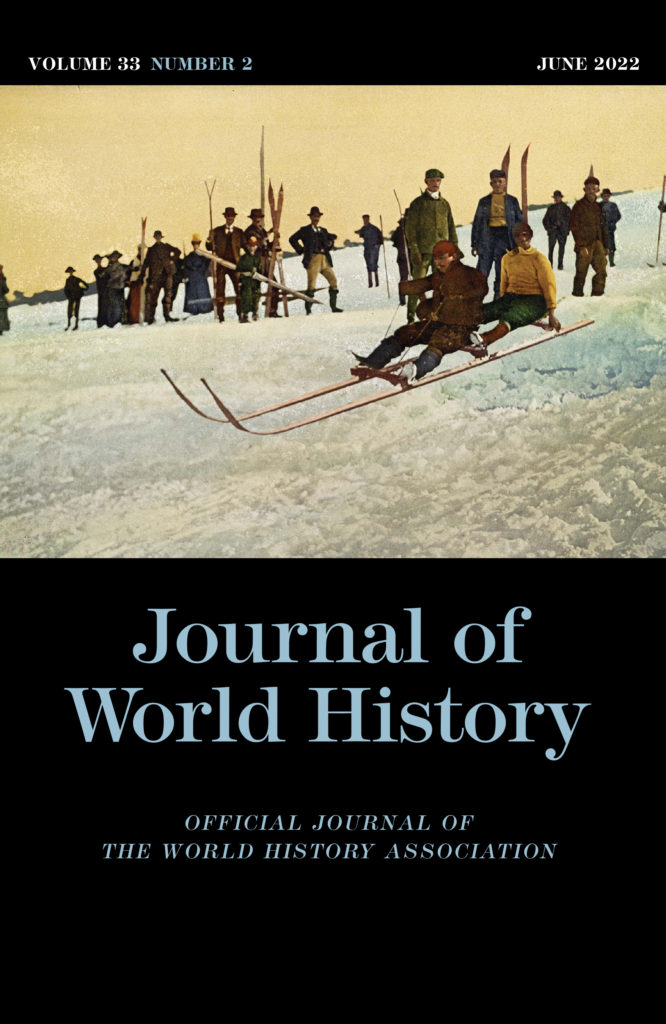
Find a digital-only special issue, “Missions & Conversions in World History,” of the Journal of World History FREE HERE.
Free U.S. domestic shipping on orders of $100 or more
Offer ends September 30, 2022
Find a digital-only special issue, “Missions & Conversions in World History,” of the Journal of World History FREE HERE.
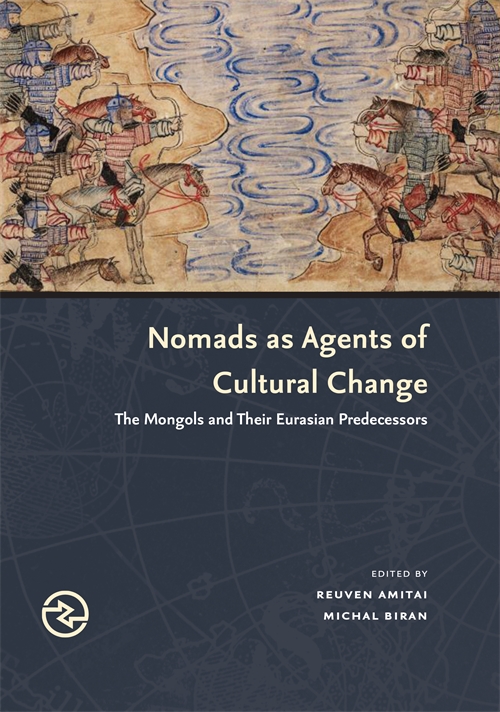
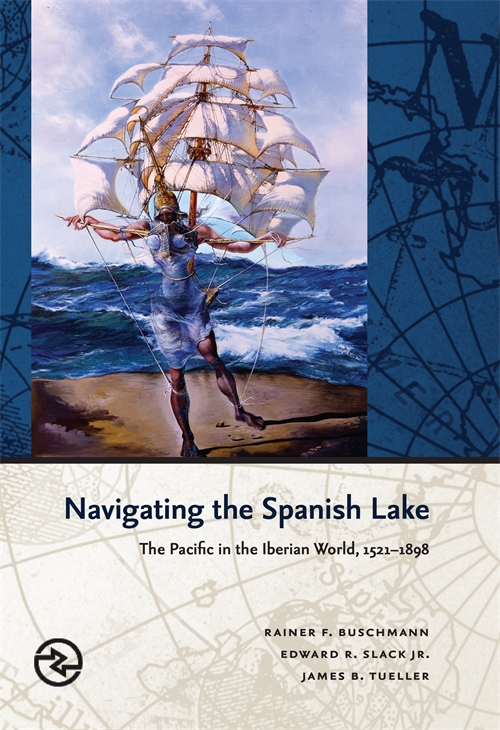
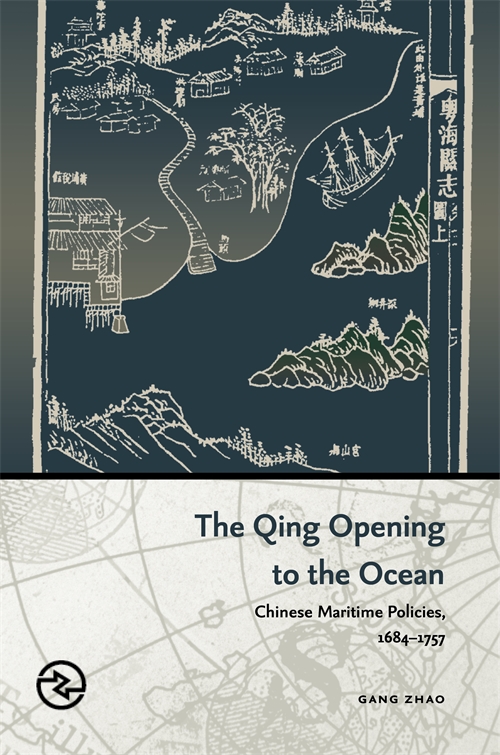
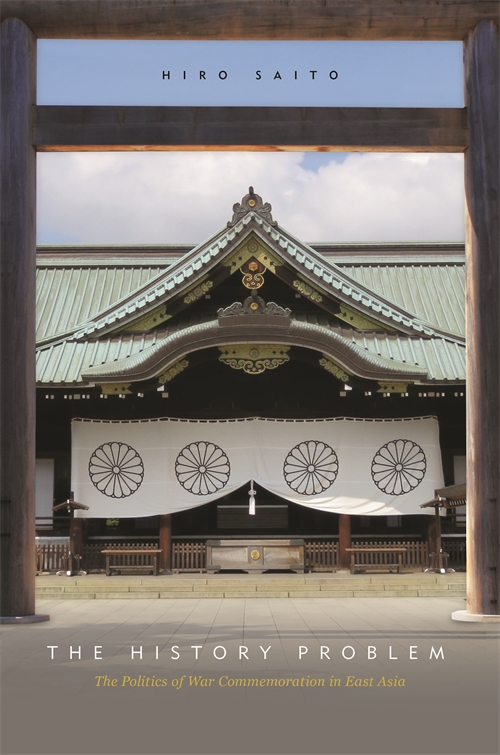
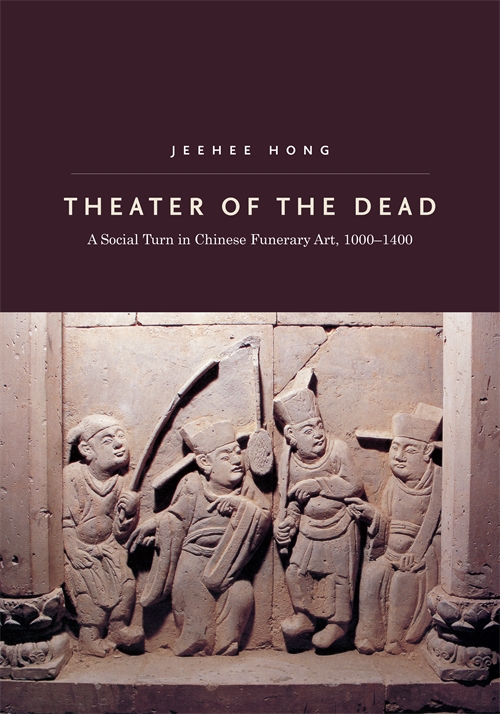
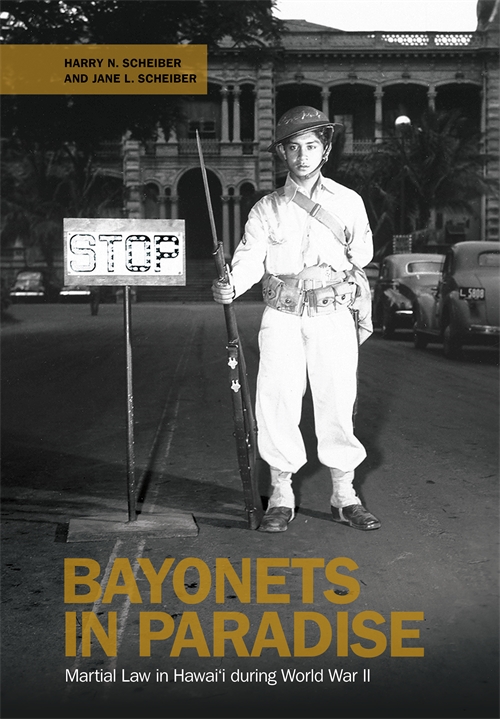
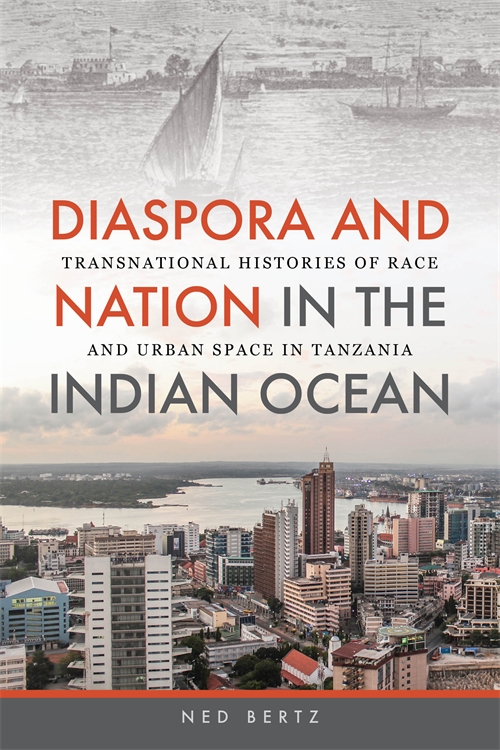
The World History Association will be hosting its annual meeting in-person and virtually in Bilbao, Spain from June 23 to 25, on the theme “Distance, Mobility, and Migration.” The Journal of World History offers this accompanying special collection “Missions and Conversions in World History,” free on the Project MUSE platform through September 30. Select World History Titles in our Books Department will also be 30% July 1 through September 30 with coupon code WHA2022.
Missionary efforts are usually enacted on a global scale and have been an important force within world history. This special collection of articles seeks to enhance our understanding of missionaries and conversion and their place in the discourse on religion in world history. Some of the articles in this special collection focus on the religious beliefs of the missionaries and converts, and how those beliefs adapted to the cultures of parties. Other contributors analyze the political ramifications of missionary undertakings, while still others explore the varied cultural exchanges and entanglements which result from these encounters, many of which extended beyond the religious.
This special issue provides accessible resources for scholars and teachers worldwide and features Guest Editor Stephen S. Francis, who discusses the issue below.

University of Hawai‘i Press: Tell us how this special issue came together.
Stephen S. Francis: My personal area of research is the history of religion and society, and also family relations and material culture, so I was drawn to these articles that not only dealt with the personal ideological conversion of peoples, but also how missionaries and religion affected other aspects of society and culture beyond the intended reasons for proselyting.
UHP: Why is this issue important now?
SSF: Since the latter half of the twentieth century and the beginning of the twenty-first, religion throughout the world has undergone radical change, but perhaps no more so than in the past. So, I think it is beneficial for us to look at the impact and effects of past encounters to place the current developments in context.
UHP: How do you hope people will use this issue?
SSF: One of the goals of Journal of World History is to show broader interconnections of ideas that go beyond nations and regions, and in editing this volume, I gained greater insight into my own localized study by seeing the similarities and how my own work fits into this larger discourse. I hope that other scholars will do the same, and that it will enhance their own research and world view.
UHP: How are things changing as the world has reopened slowly? Are there many ways the pandemic has affected your own research and teaching?
SSF: Specifically regarding the topic of this issue, I know that several churches have altered the way they have proselyted during the pandemic, and I am eager to see how some of those changes will be kept and what ones will be discarded as the world reopens, which in several years will be fascinating to research. I, like many, had to cancel research trips due to the pandemic, but it also gave me time to reflect and focus on ideas that I may have ignored if life had continued as “normal.”
“Missions and Conversions in World History: An Introduction”
Stephen S. Francis
Indigenous Encounters with Christian Missionaries in China and West Africa, 1800-1920: A Comparative Study
David F. Lindenfeld
American Missionaries and the Opium Trade in Nineteenth-Century China
Michael C. Lazich
The Intricacies of Accommodation: The Proselytizing Strategy of Matteo Ricci
Yu Liu
“A Missionary from the East to Western Pagans”: Kagawa Toyohiko’s 1936 U.S. Tour
Robert Shaffer
From Transformation to Negotiation: A Female Mission in a “City of Schools”
Julia Hauser
“Not Far from the Kingdom of God”: Shamanism and Colonial Control in Russia’s Eastern Borderlands, 1853–1917*
Jesse D. Murray
The Jesuit Heresiological Discourse as an Enlightenment Project in Early Modern China
Qiong Zhang
The New Woman, Her New Clothes, and Her New Education: Missionary Encounters and Consuming the Exotic
Mona L. Russell
The World History Association will host its annual meeting both in-person and virtually, from June 23 to 25, on the theme “Distance, Mobility, and Migration.” The Journal of World History offers this digital special issue “Missions and Conversions in World History” free on the Project MUSE platform through the end of September 2022. Select World History Titles in our Books Department will also be 30% July 1 through September 30 with coupon code WHA2022.

Volume 17-1 (2020)
Between Disaster, Punishment, and Blame: The Semantic Field of Guilt in Early Chinese Texts by Thomas Crone (review)
Michael Nylan
Dictatorship by Degrees: Xi Jinping in China by Steven P. Feldman (review)
John Sagers
Confucianism and Sacred Space: The Confucian Temple from Imperial China to Today by Chin-shing Huang (review)
Deborah Sommer
The Inconvenient Generation: Migrant Youth Coming of Age on Shanghai’s Edge by Minhua Ling (review)
Yinni Peng
Queer Chinese Cultures and Mobilities: Kinship, Migration, and Middle Classes by John Wei (review)
Shunyuan Zhang
Find more articles at Project MUSE.
Volume 13, Number 1 (2022)
The new issue includes the following articles and reviews:
The Philosophical Turn in Tonghak: Focusing on the Extension of Ethics of Ch’oe Sihyŏng
Cho Sŏng-hwan
The Faith of Sich’ŏnju in Tonghak/Ch’ŏndogyo and its Method
of Practice
Kim Yonghae
Find more research articles and reviews at Project MUSE.
The new issue features the following introduction by Trang Phan, John Phan, and Mark J. Alves
The current issue is the result of a workshop held at the Harvard Yenching Institute in April of 2021, entitled Vietnamese Linguistics, Typology and Language Universals, and which featured nineteen linguists working on diverse aspects of the Vietnamese language, ranging from semantics to historical phonology. Our purpose in gathering was to take stock of the great leaps in Vietnamese linguistic research that have occurred over the past few decades, to bring together cutting-edge research from each subdiscipline, and to begin a new collaborative dialogue on Vietnamese linguistics, typology, and language universals. Most of all, it was our belief that the time had come to reconsider Vietnamese linguistics as a unified field of inquiry. As a result, a new academic organization was founded: the International Society of Vietnamese Linguistics.
In the past twenty years, research into the Vietnamese language has advanced exponentially, in tandem with developments in our understanding of syntax, semantics, phonetics, and phonology—both on the synchronic and diachronic levels. Specific work on the Vietnamese language now informs and even leads broader linguistic inquiry in a number of unprecedented ways. These new developments invite a concentration of state-the-field research into a single volume, one that will serve not only to summarize current issues in each subdiscipline of Vietnamese linguistics, but also to initiate a longer, more collaborative conversation about the Vietnamese language.
Our goals in this special issue are thus twofold: first, we seek to provide a snapshot of current research into Vietnamese syntax, semantics, phonology, and phonetics, from both the historical and synchronic points of view, that may serve as a resource for linguists interested in exploring our current understanding of the Vietnamese language. Second, we hope that this issue will also serve as an invitation to all linguists working on the Vietnamese language or related languages to contribute to a broader, more cosmopolitan discussion—one in which discoveries of one subdiscipline may serve to inform or enlighten another.
Find more articles at eVols.
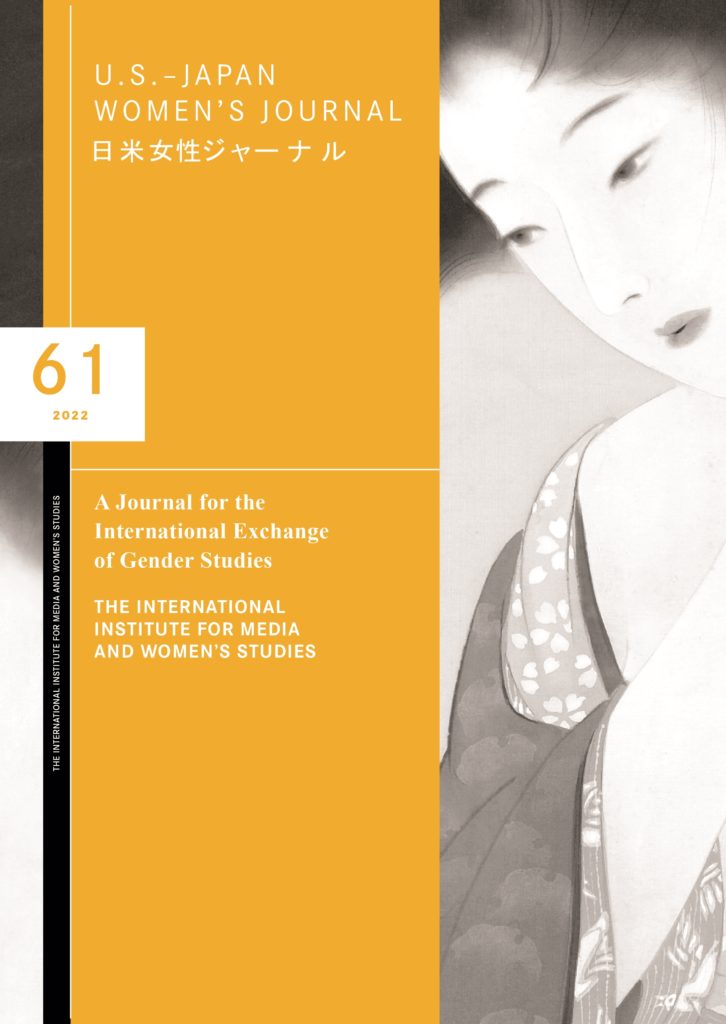
Volume 61 (2022)
The new issue features the following articles:
“Unseasonal Winds of Love”: A History of Prostitution and the Foreign Community in Early Modern Nagasaki
Martha Chaiklin
Historian and Feminist Kanō Mikiyo: A Lifetime of Writing Against Japanese Imperialism
Setsu Shigematsu
The “Emperor’s Heart” and the “Mother’s Heart”: What Gave Rise to the “Mothers of Yasukuni”
Kanō Mikiyo, Setsu Shigematsu
War-Themed Shōjo Manga as a Site for Female Subjectivity: An Aesthetic Analysis of Mothers and Daughters Narrating War
Kaori Yoshida, Kazumi Nagaike
Androids for the Stone Age?: Individuality, Space, and Gender in Murata Sayaka’s Convenience Store Woman
Ronald Saladin
Find more articles at Project MUSE.
Volume 39, Number 1 (2022)
The new issue includes the following translations and articles:
A Journal of the Plague Year by Terayama Shūji in Collaboration
with Kishida Rio: “Contagious Magic” for a Time of Epidemic Translated by Tsuneda Keiko and Colleen Lanki
Yi Kwang-su’s Gyuhan (Sorrows of the Inner Room): Korea’s
First Modern Play?
Introduction and Translation by Owen Stampton
The “Homosexual Code” in Contemporary Korean Theatre:
The Case of Shakespeare’s R & J in Seoul
Yeeyon Im
Isan Contemporary Performance: Embodied Isan Tone in
Thai Contemporary Performance Making
Tanatchaporn Kittikong
Find more translations, articles, and reviews at Project MUSE.
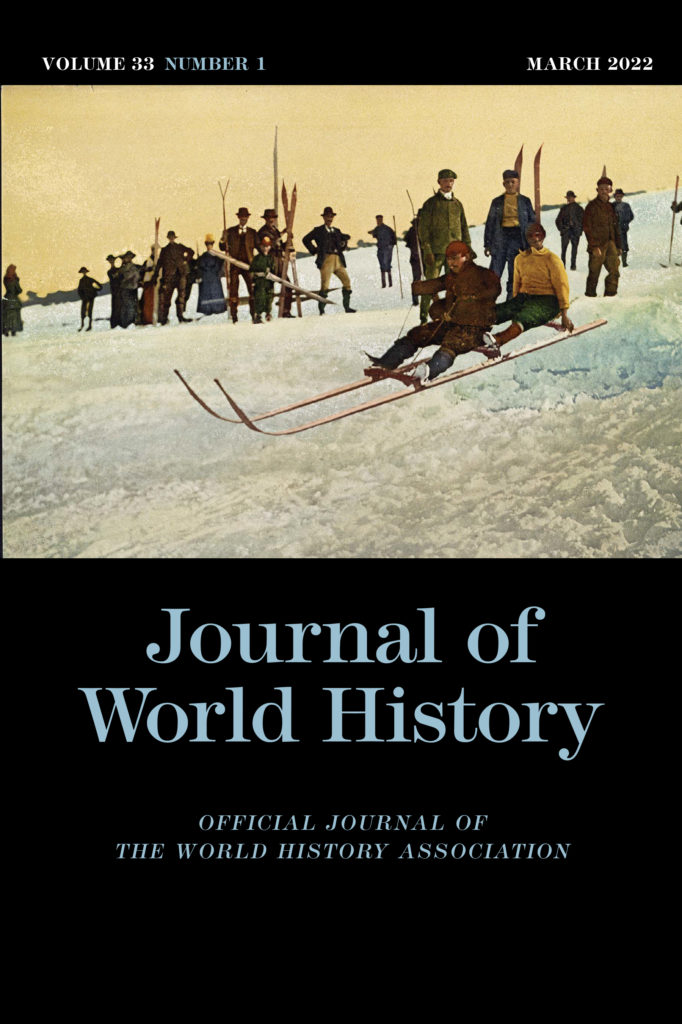
Volume 33, Issue 1 (2022)
A Short History of Feather Fans’ Spread and Cultural
Connotations: From Bronze Age Africa East to China
and West to Europe
Karen Eva Carr
Breaking the Containment: Horse Trade between the
Ming Empire and its Northern Neighbors, 1368–1570
Liping Wang and Geng Tian
Captive Colonizers: The Role of the Prisoners of War
from Poland-Lithuania and the Crimean Khanate in
the Russian Subjugation of Eastern Siberia
Dariusz Kołodziejczyk
Chains of Custody, Oceans of Instability: The Precarious
Logistics of the Natural History Trade
Vanessa Finney, Jarrod Hore, and Simon Ville
Abie Nathan and his Double-Edged Missions:
The Transnational Humanitarian and Human Rights
Activist during the Nigeria-Biafra War
Taiwo Bello
Find more articles and book reviews at Project MUSE.
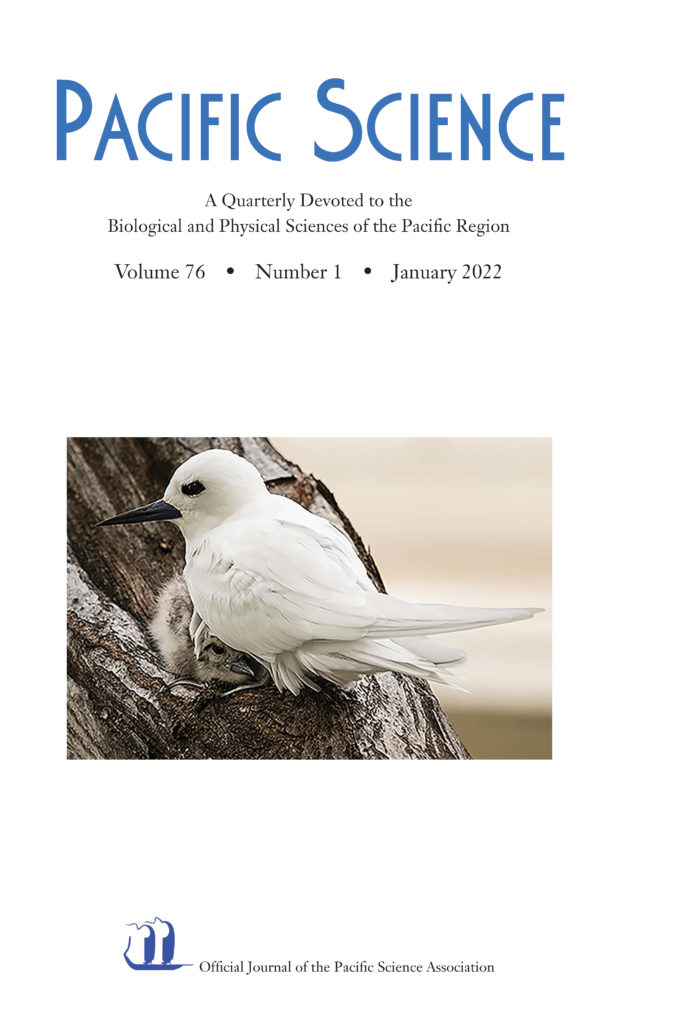
Volume 76, Number 1 (2022)
The new issue includes the following articles:
Spatial and Temporal Patterns of Fire on Saipan, CNMI
Ilan E. Bubb and Zachary B. Williams
Hawai‘i’s Toxic Plants: Species Richness and Species–Area Relationships
Donald K. Grayson and Heidi A. Lennstrom
Factors Affecting Breeding Success of White Terns (Gygis alba; Aves: Laridae) in Urban Environments of Honolulu, Hawai‘i
Eric A. VanderWerf and Richard E. Downs
Validation of the USPED Erosion and Deposition Model at Schofield Barracks, O‘ahu, Hawai‘i
Steven D. Warren and Thomas S. Ruzycki
Behavior of Hawaiian Petrels and Newell’s Shearwaters (Aves: Procellariiformes) Around Electrical-Transmission Lines on Kaua‘i Island, Hawaiian Islands
Robert H. Day and Brian A. Cooper
Epizoic Cyanobacteria and Algae on the Pelage of Pinnipeds:
A Literature Review and New Data for the Harbor Seal (Phoca vitulina)
Floyd E. Hayes, Sarah Codde, and Sarah G. Allen
A Short-Term Winner? Dramatic Increases in the Population of Mushroom Coral Lobactis scutaria (Anthozoa: Fungiidae) in Ka-ne‘ohe Bay, Hawai‘i from 2000 to 2018
Trevor Johannsen, Erik C. Franklin, and Cynthia Hunter
Find more research articles at Project MUSE.
Published twice a year since 1989 by the University of Hawaiʻi Press, Mānoa: A Pacific Journal of International Writing has two issues of special interest to readers this month, which has been designated Kalaupapa Month by the Hawaiʻi state government and celebrates two important figures. Father Damien, the Belgian priest who cared for victims of leprosy at Kalaupapa, Molokaʻi, was born on the 3rd, and civil rights leader Martin Luther King Jr. was born on the 15th.
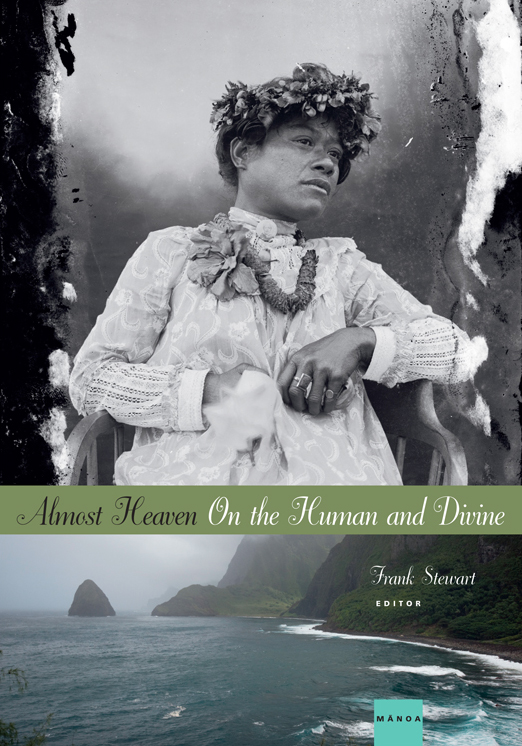
Almost Heaven: On the Human and Divine (winter 2011) presents Aldyth Morris’s play Damien in its entirety, plus a set of images reproduced from glass-plate negatives made at Kalaupapa in the early twentieth century. The images are from the collection of the Congregation of the Sacred Hearts United States Province. Morris was a Hawaiʻi playwright who received the Hawaiʻi Award for Literature in 1978 and worked for many years at UH Press.
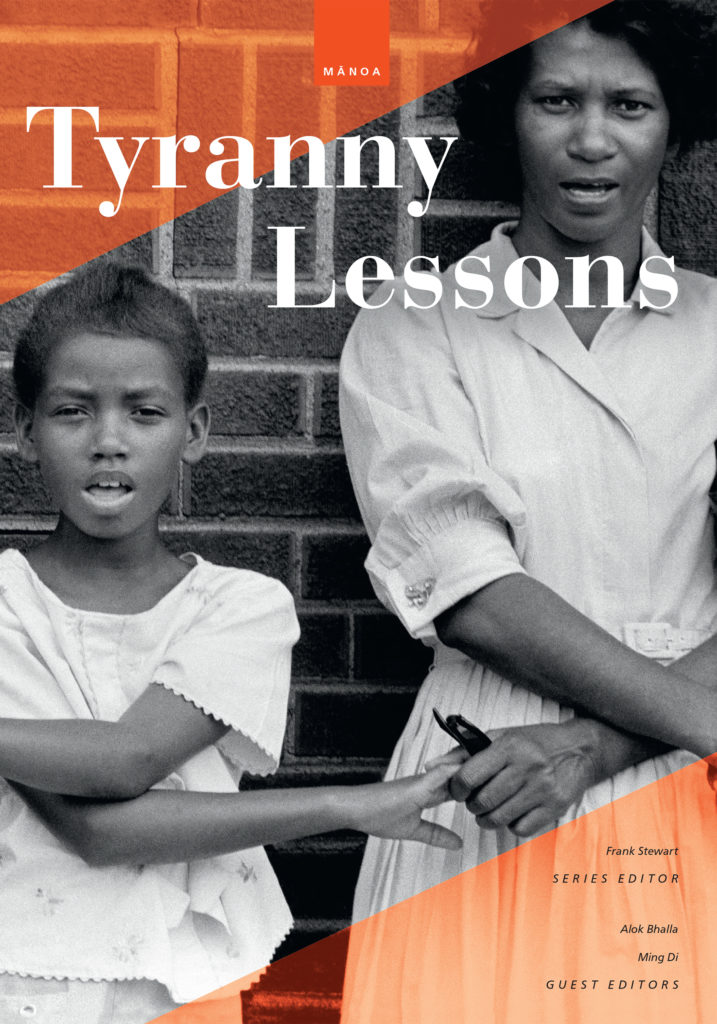
Tyranny Lessons: International Prose, Poetry, and Performance (summer 2020) features photographs from the 1960s by Danny Lyon from his book Memories of the Southern Civil Rights Movement. Lyon was the first photographer of the Student Non-violent Coordinating Committee and was jailed alongside Martin Luther King Jr. Working next to activists such as Julian Bond and Howard Zinn, he captured sit-ins, church bombings, speeches by John Lewis and other leaders, and the arrest and jailing of protestors.
Members of the UH community can view these works for free at Project Muse.
Links:
• Star-Advertiser article on Kalaupapa Month https://www.staradvertiser.com/2022/01/07/hawaii-news/
in-january-kalaupapa-month-hawaiians-reclaim-loved-ones/
• Mānoa website https://manoa.hawaii.edu/manoajournal/
• Almost Heaven https://muse.jhu.edu/issue/25083
• Tyranny Lessons https://muse.jhu.edu/issue/42693

Volume 40, Number 2 (2021)
The new issue includes the following articles and reviews:
“Making History”: Metatheatre in the Peach Blossom Fan
Allison Bernard
Find more research articles and reviews at Project MUSE.

Volume 22, Issue 2 (2021)
From the Guest Editors Rachel Emerine Hicks, Debra McDougall, and David Oakeshott in The Promise of Education: Schooling Journeys in the Southwester Pacific:
“Schooling journeys” is more than a metaphor in the southwestern Pacific. To step into a classroom, children and youth often travel hours each day or live for months at a time away from their families. The journey of schooling is rarely direct; it often winds between formal and informal learning and in and out of school, work, and home life. And the journey is expensive; many families struggle mightily to gather the money for fees, school supplies, uniforms, and transportation. Young people embark on these precarious journeys, and their families make sacrifices to support them, because schooling promises a better life—a move away from the backbreaking labor of subsistence agriculture toward a reliable salary that will better support their family and community. Because of the structural inequalities in school and a lack of jobs for those who complete schooling, however, few experience the socioeconomic advancement schooling promises. Still, students and their families continue to hope that schooling will lead to well-paid work. Even more important, though, going to school is seen as key to being a competent and effective person in society—increasingly for both women and men.
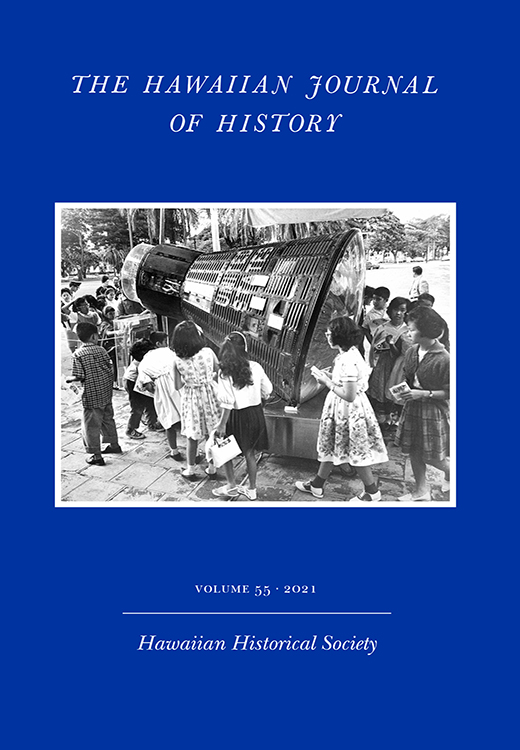
Volume 55 (2021)
The new issue includes the following articles, reviews, notes, and queries:
Aloha Space Age: NASA and the Hawaiian Islands, 1957—1970
David A. Smith
The First Attempt to Overthrow Liliʻuokalani
Ralph Thomas Kam
Dr. Richard You and the Golden Age of Hawaiʻi’s Athletics
John D. Fair
Incarcerating a Nation: The Arrest and Imprisonment of Political Prisoners by the Republic of Hawaiʻi, 1895
Ronald Williams Jr.
Hawaiian Women’s Fashions: Kapa, Cotton and Silk by Agnes Terao-Guiala (review)
Linda Arthur Bradley
Find more research articles, reviews, bibliographies, notes and queries at Project MUSE.

Volume 60 (2021)
The new issue includes the following articles and reviews:
Yosano Akiko in Belle Époque Paris / ベル・エポックのパリの与謝野晶子
Scott Mehl
Find more research articles and reviews at Project MUSE.
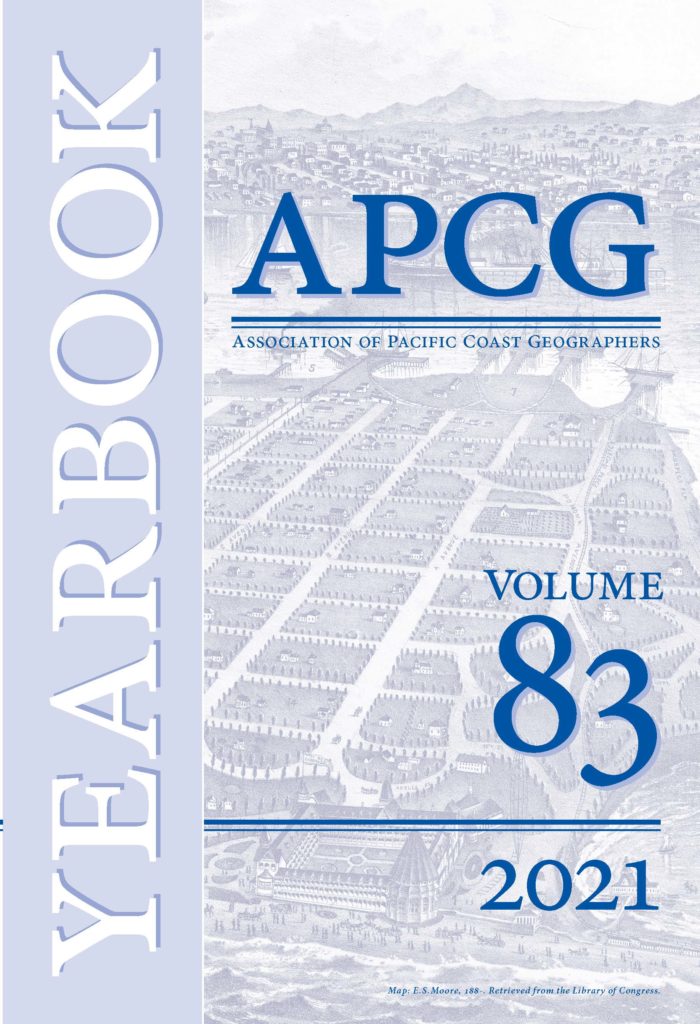
Volume 83 (2021)
Editor Craig S. Revels reflects over the COVID-19 pandemic and how it has affected geographers and members as he states:
Last year’s volume was published in a time of great uncertainty as the COVID-19 pandemic swept across the world, and this year’s unfortunately arrives under similar conditions, slowly improving though they may be. The tragedies, disruptions, and general state of societal affairs during the pandemic will not soon be forgotten…
Geographers have been at the forefront of research into the spread of COVID-19 since the earliest days of the pandemic, and Steve Graves and Petra Nichols contribute an analytical perspective on infection rates in Los Angeles County. In particular, they statistically identify a causal relationship between infection and a range of key socioeconomic and demographic variables, a relationship influencing the location and rate of spread for the disease. They leave us to consider how those factors must be addressed in any preparations for future public health crises.
In a significantly different context, Ray Sumner and John Menary
demonstrate that taking students into the field, always a valuable exercise, is even more rewarding when it leads to unexpected discoveries and challenges our carefully laid plans. In this case, a straightforward field methods class oriented around the Los Angeles River instead became an open-ended, student-driven exploration into the social dimensions of heritage, ethnicity,
culture, and urban development.
Volume 38, Number 2 (2021)
The new issue includes the following articles and reports:
Raktim Pariwar’s Red Lanterns: Dance and Cultural
Revolution in Nepal
Anna Marie Stirr
The Tokyo Festival World Competition 2019
Cody Poulton
Find more research articles, reports, and reviews at Project MUSE.
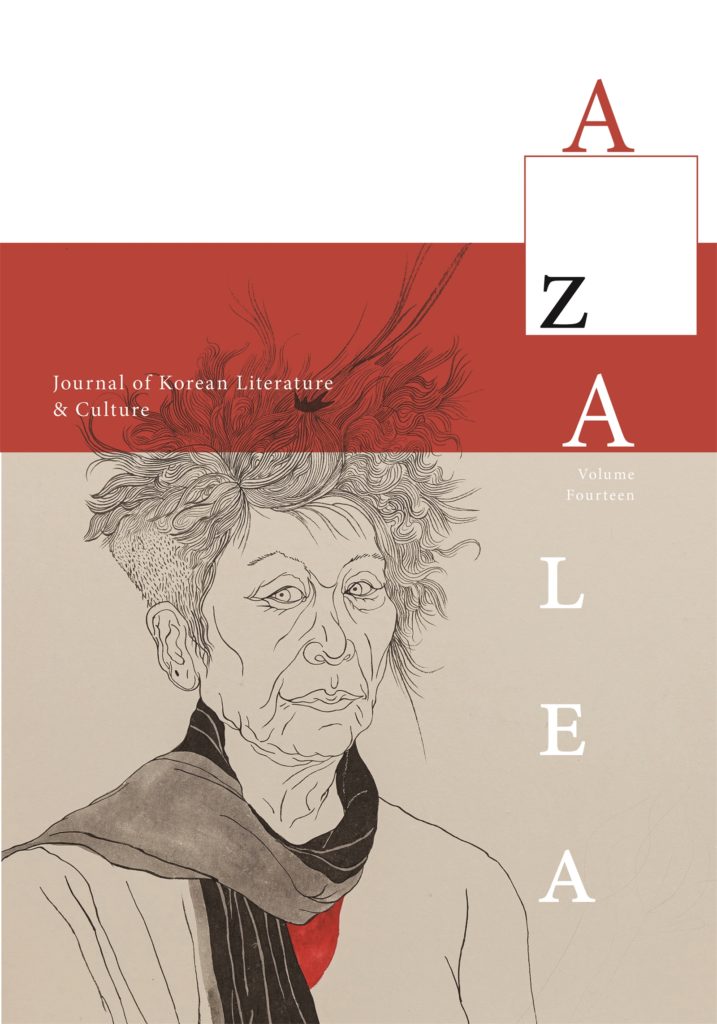
Volume 14 (2021)
From the Editor Young Jung-Lee:
One of the most important recent shifts in Korean literature is found in gender conflict. This “Special Feature: Gender Trouble in Korean Literature and Society,” guest-edited by Hye-Ryoung Lee, shows a fundamentally new perspective through six scholars reading Korean Literature and Society. Over the past decade, the #MeToo Movement has shaken the world, and Korean society has been no exception, as can be seen in Choi Young-mi’s poem “En,” introduced here with six critical essays. Even before its publication, “En” was the focus of media attention, and it remained a hot topic in Korean society for years due to Choi’s high-profile court battles.
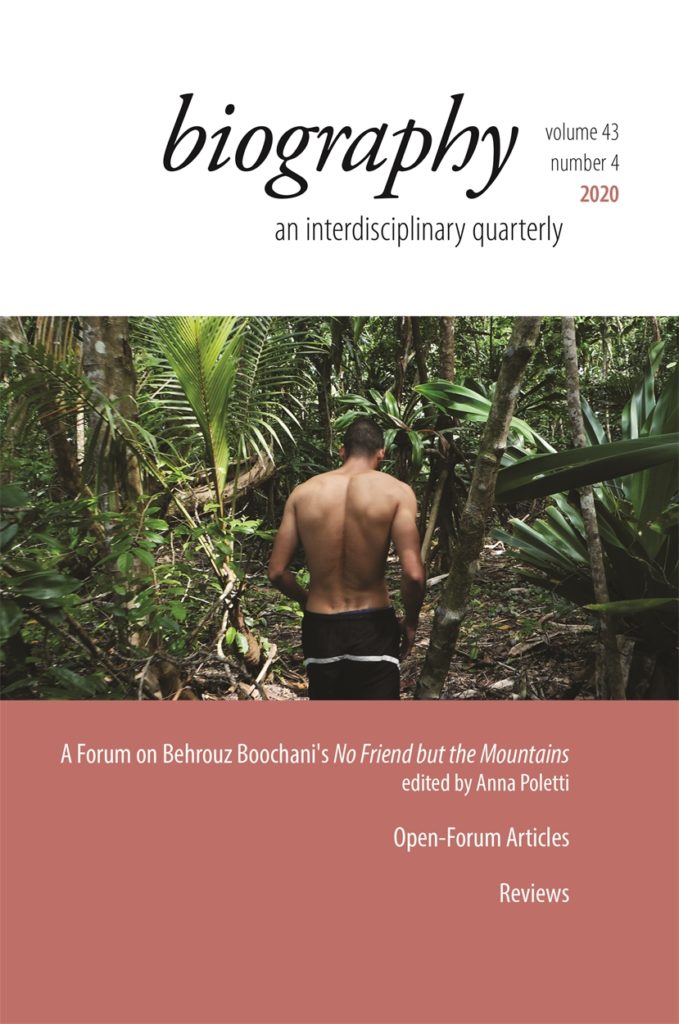
Volume 43, Number 4 (2020)
From Coeditor Anna Poletti:
With this forum, we, the editors of Biography, inaugurate a new feature of the journal that aims to respond to and amplify specific examples of the power of life writing as a cultural, political, and social practice, and which document key moments in the evolution of that practice. In this forum, No Friend but the Mountains is discussed as both a profoundly localized text responding to, making knowledge about, and exposing a highly specific and complex set of conditions, and as a uniquely transnational text that speaks to and about a global phenomenon. Its highly innovative use of life writing as a narrative technique and epistemological practice warranted, in our minds, a concentrated response from the journal. Commissioning and editing this response has renewed my appreciation for the primary concerns of lifewriting scholarship: tracking the mercurial power of personal storytelling to crystalize the contemporary moment in such a way that new knowledge emerges from the entanglements it depicts, and the entanglements it drags its readers into.
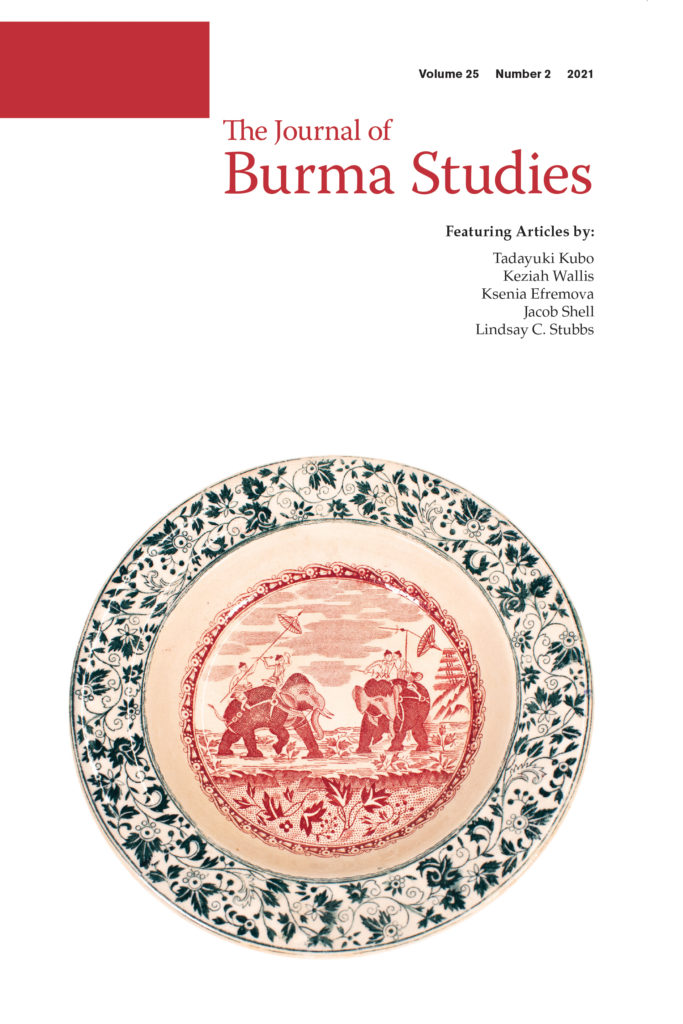
Volume 25, Number 2 (2021)
The new issue includes the following articles:
Ethnocentrism or National Reconciliation: Rethinking
Ethnic Relations and the History of Karenni
Tadayuki Kubo
Nats in the Land of the Hintha: Village Religion
in Lower Myanmar
Keziah Wallis
Elephant Riders of the Hukawng Valley, Kachin State:
Evasive Mobility and Vadological Geography
Jacob Shell
Volume 45 (2021)
From the Editor Cheehyun Harrison Kim:
This analytic potency of migration is superbly demonstrated in this volume’s Special Section Unsettling Korean Migration: Multiple Trajectories and Experiences, guest edited by Sunhee Koo (The University of Auckland) and Jihye Kim (The University of Central Lancashire). Sunhee Koo and Jihye Kim have brought together papers on labor (Yonson Ahn and Jihye Kim), ritual life (Marcus Bell), cultural identity (Sunhee Koo), and artistic production (Hee-seung Irene Lee and Soojin Kim). The six engrossing articles deal with how the Korean diaspora—in Argentina, Germany, Japan, China, and the United States—have shaped and represented their particular situations through negotiation, resilience, and creativity. The authors are highly critical of any national framework, and they see diasporic life as contexts of not only sorrow and sacrifice but also innovation and regeneration. Sunhee Koo and Jihye Kim offer a detailed explanation in their Introduction.
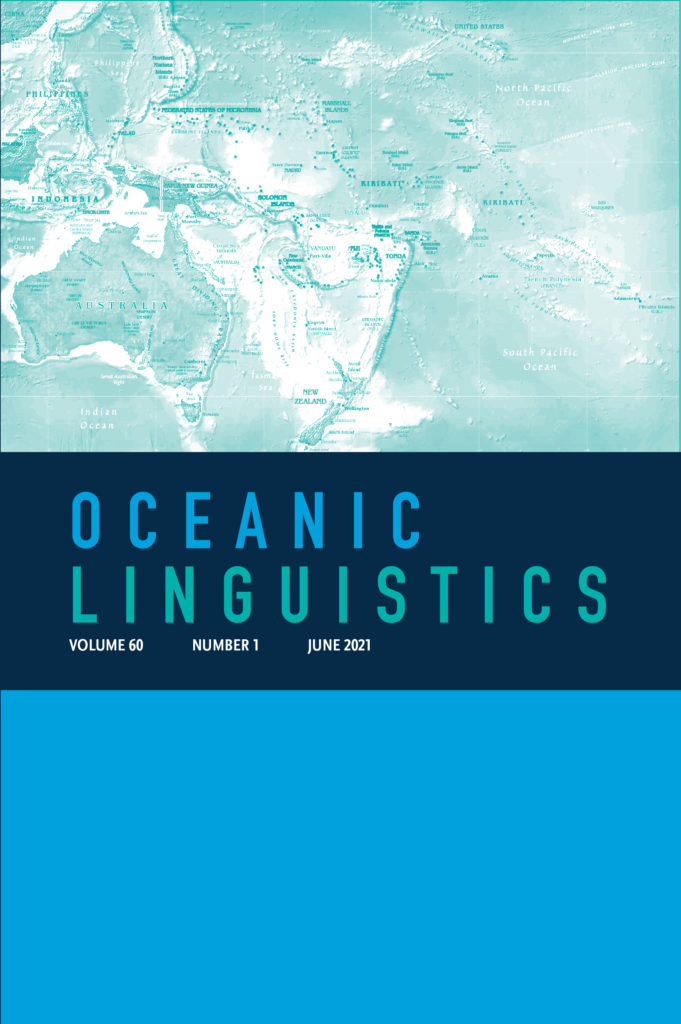
Volume 60, Number 1 (2021)
The new issue includes the following articles:
Avaipa, a Language of Central Bougainville
Jason Brown,Melissa Irvine
East Polynesian Subgrouping and Homeland Implications Within the Northern Outlier–East Polynesian Hypothesis
William H. Wilson
Toward a Comparative Typology of ‘Eating’ in Kanak Languages
Anne-Laure Dotte, Claire Moyse-Faurie
Find more research articles and reviews at Project MUSE.
Volume 71, Number 4 (2021)
The new issue included the following articles and translations:
Jian’Ai: Considerations From the “Greater Selection”
Susan Blake
Patterning the Myriad Things: Holism, Harmony, and Anthropogenic Influence in the Huainanzi
Matthew Hamm
Confucianism and Totalitarianism: An Arendtian Reconsideration of Mencius versus Xunzi
Lee Wilson
“America’s National Character” by Watsuji Tetsurō: A Translation
Kyle Michael James Shuttleworth, Sayaka Shuttleworth, Watsuji Tetsurō
Find more research articles, translations, and reviews at Project MUSE.
Volume 60, Number 1 (2021)
The new issue includes the following articles:
Addressing Tensions between Colonial and Post-Colonial Histories: Modeling Hawaiian Fort Pā‘ula‘ula/Russian Fort Elizabeth, Kaua‘i Island, Hawai‘i
Aleksander V. Molodin and Peter R. Mills
To Eat or Not to Eat? Animals and Categorical Fluidity in Shang Society
Yitzchak Jaffe and Roderick Campbell
Gendered Households and Ceramic Assemblage Formation in the Mariana Islands, Western Pacific
Jacy M. Miller, Darlene R. Moore, and James M.
Volume 38, Number 1, (2021)
From the Editor Siyuan Liu:
This issue starts with Carol Fisher Sorgenfrei’s appreciation of Leonard Pronko (1927–2019), noted kabuki scholar and teacher who passed away late 2019. Building on her profile of Pronko for Asian Theatre Journal’s “founders of the fields” series (28: 2, 2011), Sorgenfrei offers a touching personal profile of her former professor as an extraordinary human being.
As evidence to the flourishing field of Japanese theatre studies pioneered by Pronko and his peers, this issue continues with a special section on contemporary Japanese theatre with a combination of articles, reports, a translation, and a performance review essay.
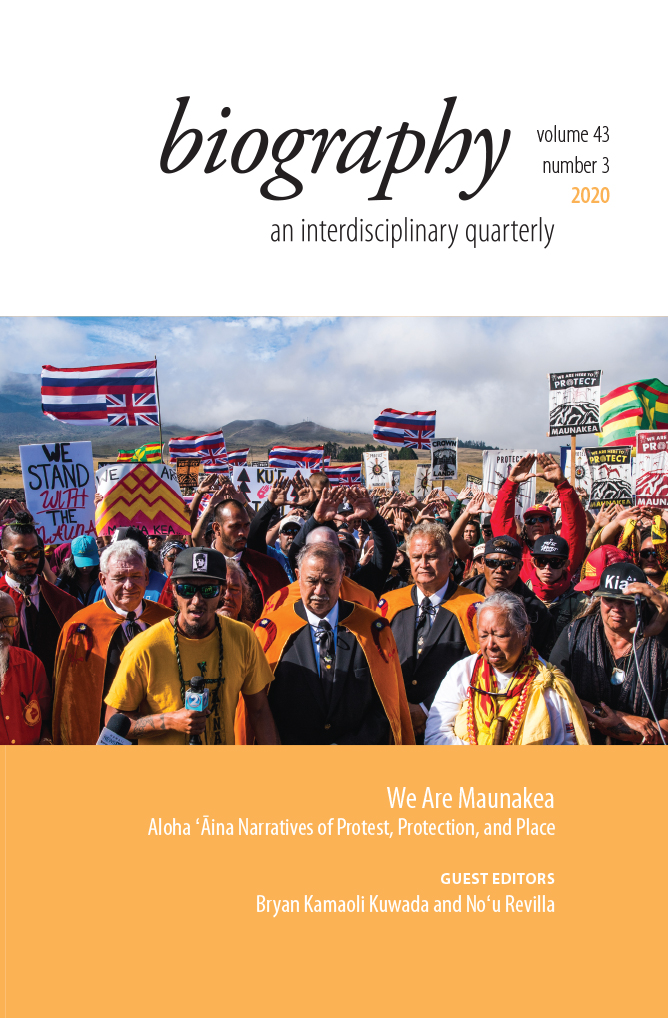
Volume 43, Number 3 (2020)
In the summer of 2019, kiaʻi (protectors) gathered at Puʻuhonua o Puʻuhuluhulu to defend Maunakea, a sacred mountain, against desecration by the construction of the Thirty Meter Telescope (TMT). Thousands gathered at Ala Hulu Kupuna, or Mauna Kea Access Road. Daily protocols were led by cultural practitioners and long-time protectors of Maunakea, intergenerational Native Hawaiian leadership was developed and empowered on Hawaiian terms, a community kitchen was organized, Puʻuhuluhulu University was established as an actual Hawaiian place of learning, and a collective commitment to ʻāina and kapu aloha rooted all who arrived and all who continue to stay in this movement.
The 2019 stand was also an unprecedented opportunity to witness the battle of narratives, as mainstream media and highly paid public relations firms were outmaneuvered by Kanaka- and ally-authored life writing. This special issue features first-hand accounts, academic reflections, creative works, photography, and interviews with kiaʻi from the 2019 front lines and members of the media team.
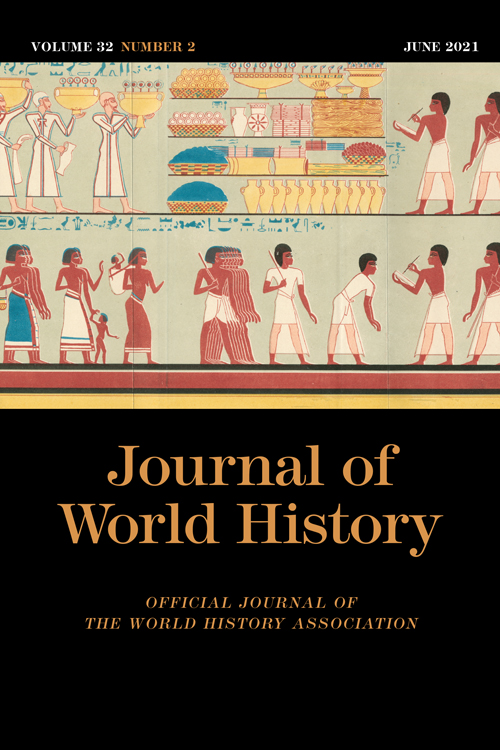
Volume 32, Number 2 (2021)
Introduction from Guest Editor Antoinette Burton reads:
The technological evangelism of much of anglophone digital humanities discourse should sit uneasily with empire historians, who know what languages of discovery and “new frontiers” have meant in the context of world history, especially where data collection is concerned. To be sure, digitization has made myriad colonial archives, official and unofficial, available via open access platforms. This means that vast stores of knowledge are now at our fingertips—a proximity and immediacy that has reshaped the lived experience of archival research for many scholars, in this case bringing the imperial world not just closer to home but into the hands of anyone who has access to a cellphone. And the revolution in digital tools in the last twenty-five years has given rise to equally vast possibilities for gathering and visualizing evidence as well as for scaling and interpreting data: for worlding, mostly by aggregation and consolidation, what we aim to know about the kinds of colonial pasts that are available and capturable via text and image. Yet, this information empire is not exactly new. Digitization most often reassembles archival collections proper, sometimes remixing them with print and visual culture and typically organizing them through mechanisms and selection processes that are more or less visible depending on the commitment to transparency of the conglomerator. In some cases, those conglomerators are private individuals or government entities; in others, corporate sponsors; in still others, community-based activists. Inevitably perhaps, today’s digital imperial “data” are actually, more accurately, digitally transformed imperial sources. And for colonial subjects, as for the enslaved, data has more often than not meant terror at the scene of the crime.
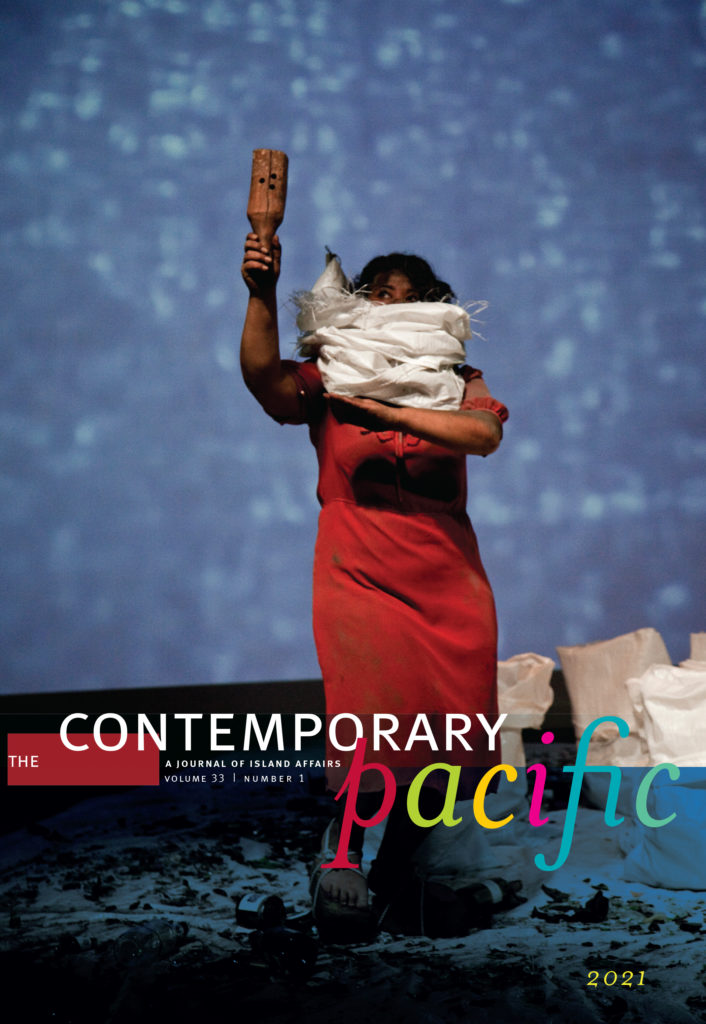
Volume 33, Number 1 (2021)
The new issue includes the following articles:
“We Want Development”: Land and Water (Dis)connections in Port Moresby, Urban Papua New Guinea
Michelle Nayahamui Rooney
“Keeping an Eye Out for Women”: Implicit Feminism, Political Leadership, and Social Change in the Pacific Islands
Ceridwen Spark, John Cox, and Jack Corbett
Gesturing to the Past: The Case for an Ethnography of Melanesian Poetics
Deborah Van Heekeren
Smart Sanctions, Hollow Gestures, and Multilateral Sport: New Zealand–Fiji Relations and the Politics of Professional Rugby, 1987–2011
Greg Ryan
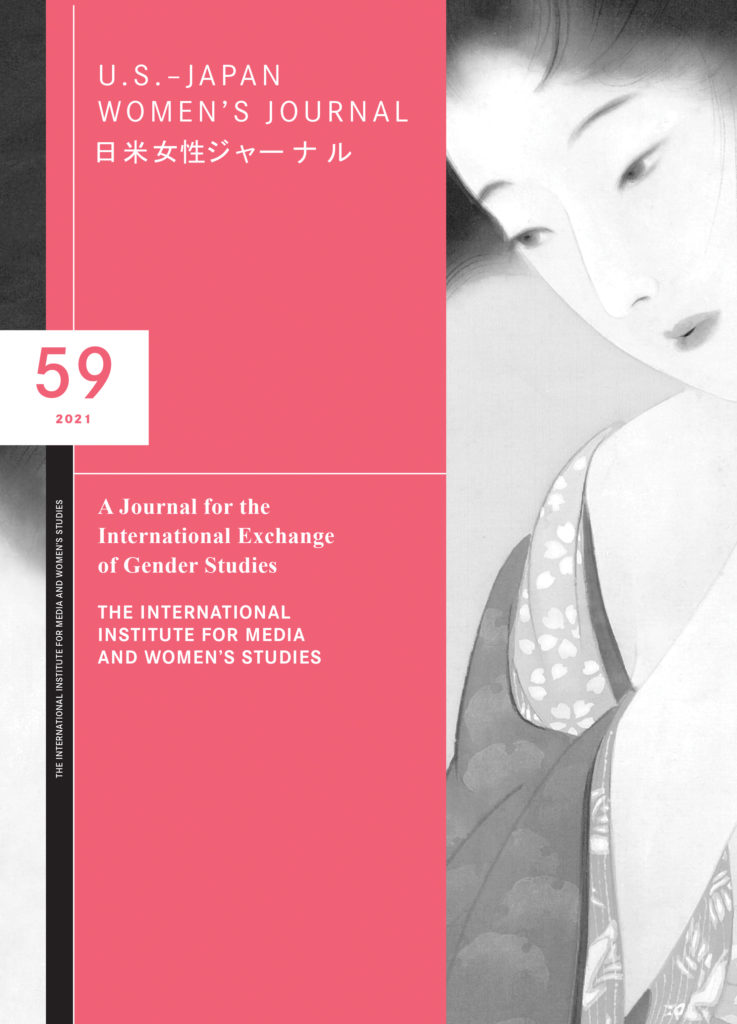
Volume 59 (2021)
The new issue includes the following articles:
Remembering Okei (1852-1871): Daughter of Aizu, Pioneer of Gold Hill おけいを記憶する:会津の娘、ゴールド・ヒルの草分け
Kristina S. Vassil
From Occupation Base Clubs to the Pop Charts: Eri Chiemi, Yukimura Izumi, and the Birth of Japan’s Postwar Popular
Music Industry 江利チエミ、雪村いづみ、日本の戦後のポピュラー音楽産業を再構築し た軍事占領基地クラブのミュージシャン
Michael Furmanovsky
My Encounter with Women’s Studies 女性学との出会い1
宗子水田
Noriko Mizuta and Bo Tao
Volume 12, Issue 1 (2021)
The new issue includes the following articles:
Going Global: The Transformation of the Korean Catholic Church
Denis WS Kim
Japanese Buddhist Modernism and the Thought of Sŏn Master Toeong Seongcheol (1912–1993)
Cho Myungje and Bernard Senécal S.J. (SeoMyeonggweon)
Calm Water is a Mirror: Neo-Confucian Meditation in the Chosŏn
Dynasty
Guy S. Shababo
A Buddhist Critique of Neo-Confucianismin Seventeenth-Century Chosŏn Korea
Kim Jong Wook
Book Review
Gender Politics at Home and Abroad: Protestant Modernity in Colonial-Era Korea, by Hyaeweol Choi
Reviewed by Choi Hee An
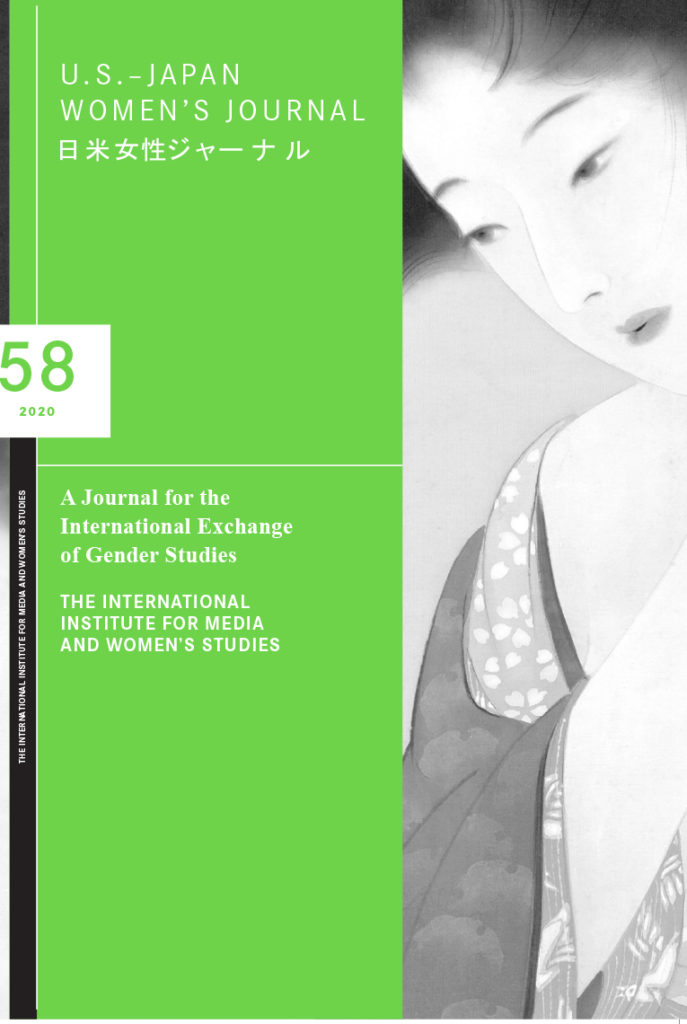
Issue 58 (2020)
Includes the following articles:
Plotting Illness: Cancer in Ogino Anna’s “Nue” and
Yamauchi Reinan’s The Spirit of Cancer
Amanda C. Seaman
Nue.
by Ogino Anna. Translated by Amanda C. Seaman
Performativity of Gender in Speech: Life Experiences
of Japanese Trans Women
Hideko Abe
Natsume Fusanosuke, Panel Configurations in Sho¯jo
(Girls’) Manga.
by Natsume Fusanosuke. Translated and Introduced by
Jon Holt and Teppei Fukuda
Volume 75, Issue 1 (2021)
Includes the following articles:
The Historical Ecology of Game Species Introductions in Hawai’i
Deidre J. Duffy, Christopher A. Lepczyk
A Terrestrial Vertebrate Palaeontological Reconnaissance of Lord Howe Island, Australia
Julian P. Hume, Ian Hutton, Greg Middleton, Jacqueline M.T. Nguyen, John Wylie
Light-Level Geolocators Reveal That White-Throated Needletails (Hirundapus caudacutus) Follow a Figure-Eight Migration Route Between Japan and Australia
Noriyuki M. Yamaguchi, Sayaka Mori, Hiroshi Yonekawa, Daichi Waga, Hiroyoshi Higuchi
Fine-Scale Distribution, Abundance, and Foraging Behavior of Salvin’s, Buller’s, and Chatham Albatrosses in the Northern Humboldt Upwelling System
Javier Quiñones, Ana Alegre, Cynthia Romero, Massiel Manrique, Luis Vásquez
Influence of Light and Substrate Conditions on Regeneration of Native Tree Saplings in the Hawaiian Lowland Wet Forest
Susanne Kandert, Holger Kreft, Nicole DiManno, Amanda Uowolo, Susan Cordell, Rebecca Ostertag
Potential Distribution and Environmental Niche of the Black Corals Antipathes galapagensis and Myriopathes panamensis in the Eastern Tropical Pacific
Antonella Lavorato, Silvia Stranges, Hector Reyes Bonilla
Investigating the Diel Occurrence of Odontocetes Around the Maui Nui Region Using Passive Acoustic Techniques
Marian Howe, Marc O. Lammers
Limnological Characterization of Three Tropical Crater Lakes in the Archipelago of Samoa (Lanoto’o, Olomaga, Mataulano)
Robert Schabetsberger, Christian D. Jersabek, Zlatko Levkov, Bianca Ehrenfellner, Laulu Fialelei Enoka, Seumalo Afele Faiilagi
Association Affairs: Pacific Science Association
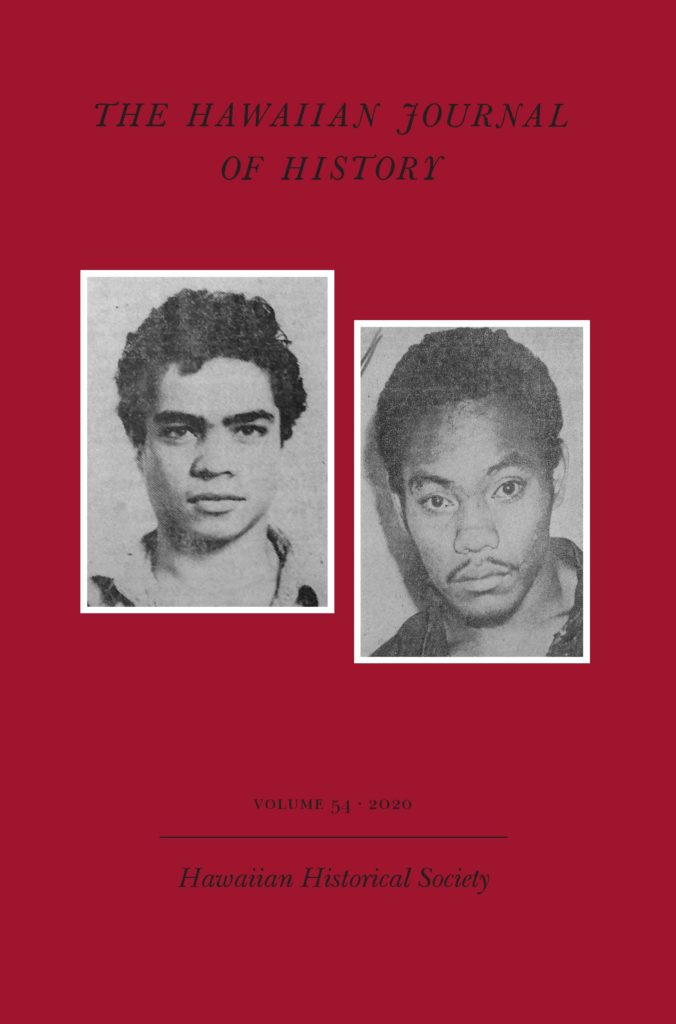
Volume 54 (2020)
Includes the following articles:
The Lasting Significance of the Majors-Palakiko Case
Jonathan Y. Okamura
A Rock in the Park: The Key to a Remarkable Historical Tale
Hugh R. Montgomery
Ne Tentes aut Perfice: Early Hawaiian Diplomacy in the Southwestern Pacific and the Creation of Hawai‘i’s First Royal Order
Lorenz Gonschor
Reconnecting to Kawaiaha‘o Female Seminary: The Lives of the Students at the End of the Nineteenth Century
Deborah Day
Our Royal Guest: American Press Coverage of King Kalākaua’s Visit to the United States, 1874–1875
Douglas V. Askman
The Watchers: How Espionage Doomed the Counter-Revolution of 1895
Ralph Thomas Kam
Book Reviews
Aloha Rodeo: Three Hawaiian Cowboys, the World’s Greatest Rodeo, and a Hidden History of the American West by David Wolman and Julian Smith
Reviewed by Elyssa Ford
Unsustainable Empire: Alternative Histories of Hawai‘i Statehood by Dean Itsuji Saranillio
Reviewed by Sarah Miller-Davenport
American Sutra: A Story of Faith and Freedom in the Second World War by Duncan Ryūken Williams
Reviewed by Kelli Y. Nakamura
Gateway State: Hawai‘i and the Cultural Transformation of American Empire by Sarah Miller-Davenport
Reviewed by JoAnna Poblete
Bibliography
Hawaiiana in 2019: A Bibliography of Titles of Historical Interest
Jodie Mattos
Thirty University of Hawai‘i Press World History titles (both print and eBook!) are now 30% OFF through the end of July.
Find a digital-only special issue, “Roads and Oceans” of the Journal of World History FREE HERE.
University of Hawai‘i Press celebrated International Open Access Week (October 21–27) with the announcement of Hawai‘i Open Books—a collection of ninety newly digitized and freely available academic titles from UH Press’s backlist, many of which have been out of print or unavailable for years.
Titles include seminal works of scholarship in Hawaiian, Pacific, and Asian studies, as well as grammars, dictionaries, and other resources for languages from throughout the Asia-Pacific region. The works are accessible from various online platforms, including UH’s institutional repository ScholarSpace, the newly created Hawai‘i Open Books website, JSTOR, and Project MUSE.
Hawai‘i Open Books is the culmination of over two years of work funded by two generous grants totaling $190,000 from the Humanities Open Book program, a joint initiative of the National Endowment for the Humanities and the Andrew W. Mellon Foundation.
“We are extremely excited about the renewed availability of so many classic UH Press books,” said UH Press interim director Joel Cosseboom. “The Press has long been recognized as a leading publisher in Hawaiian, Pacific, and Asian studies, and this collection of titles represents a significant resource to the university community and students and scholars around the globe.”
Trond Knutsen, principal investigator and digital publishing manager, added, “Open access is becoming an increasingly prominent feature of academic publishing, and we’re thankful to the Mellon Foundation for allowing us to explore this model so thoroughly.”
To revive the ninety books, UH Press’s digital-publishing team, including digital specialist Noah Perales-Estoesta, worked closely with faculty and library staff to identify the books best suited for republication. The team subsequently contacted authors, editors, and others to clear rights, collaborated with the university library on scanning, and liaised with ebook converters to create digital reproductions of the original print copies. Among the titles revived are:
· Over thirty grammars, dictionaries, and other language resources for Fijian, Tagalog, Carolinian, Cebuano, Marshallese, Bikol, and other languages of the Asia-Pacific region.
· Ancient Tahitian Society by Douglas L. Oliver: A three-volume ethnography of Tahiti, foundational to the anthropological study of Polynesia.
· China’s Old Dwellings by Ronald G. Knapp: A heavily illustrated study of domestic architecture from throughout different periods in Chinese history.
· Da Kine Talk: From Pidgin to Standard English in Hawaii by Elizabeth Ball: A detailed exploration of Hawai‘i’s unique relationship to the English language.
· The Path of the Ocean: Traditional Poetry of Polynesia edited by Marjorie Sinclair: The first anthology of poetry from throughout Polynesia presented as literature rather than anthropology.
About University of Hawai‘i Press
From its modest beginnings in 1947, University of Hawai‘i Press has grown from a regional operation into one of the most respected publishers of Asian, Hawaiian, and Pacific studies titles in the world. Located in historic Mānoa Valley on the island of O‘ahu, UH Press publishes approximately 70 new books and 40 new journal issues annually in the humanities, social sciences, and natural sciences. More than 3,000 UH Press titles are currently in print, and a growing selection of content is being made available online, including open-access publications and digital archives. Additionally, the Press markets and distributes a range of titles from University of Hawai‘i departments, and scholarly and educational institutions around the world.
About the Andrew W. Mellon Foundation
The Andrew W. Mellon Foundation endeavors to strengthen, promote, and, where necessary, defend the contributions of the humanities and the arts to human flourishing and to the well-being of diverse and democratic societies. To this end, the Foundation supports exemplary institutions of higher education and culture as they renew and provide access to an invaluable heritage of ambitious, path-breaking work.
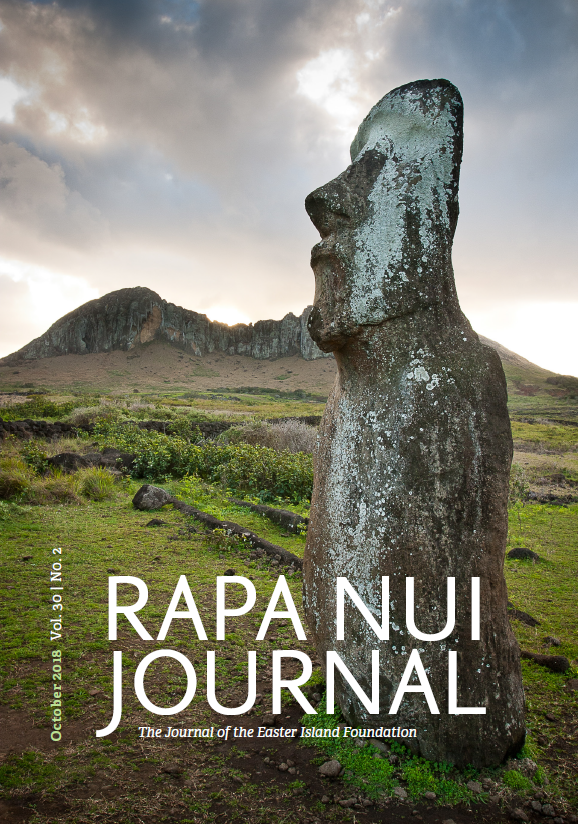
Applications are invited for the position of co-editor of Rapa Nui Journal: The Journal of the Easter Island Foundation (RNJ). The journal is published by the University of Hawai‘i Press in partnership with the Easter Island Foundation. Dr. Mara Mulrooney has served as the journal editor for the past several years and is looking forward to sharing the editorial duties with one or two co-editors.
The journal, launched in 1986 as Rapa Nui Notes, serves as a forum for interdisciplinary scholarship in the humanities and social sciences on Easter Island and the Eastern Polynesian region. Each issue may include Research Articles, Research Reports, Commentaries or Dialogues, Book or Media Reviews and EIF News.
RNJ is published twice a year and welcomes contributions from a wide range of social, cultural, indigenous and historical disciplines on topics related to the lives and cultures of the peoples of Rapa Nui and Eastern Polynesia. Abstracts for articles may be published in English, Spanish, and Rapanui. We welcome submissions from scholars across Oceania, North and South America, and beyond.
The editors are expected to assist in raising the profile of the journal, provide support increasing submissions, and secure timely and appropriate peer-review of articles. Editors will make the final decision on manuscripts, informing both the author(s) and reviewers of the final disposition. The editors must show openness to communicating with scholars about diverse ideas, openness to a diverse range of methodologies, and eagerness to continue building the journal’s reputation.
In accordance with the University of Hawai‘i Press’ mission to publish high quality scholarship, the following criteria are considered in selecting editors:
The actual costs associated with production and the online submission system for the journal are covered by the publisher.
Selection Process: (1) Applications will be received by the UH Press Journals Manager by Sept. 4, 2019. (2) The applicants will be reviewed and ranked by the current journal editor and UH Press Journals Manager. (3) The top two candidates will be contacted by phone for an interview and to discuss the journal editorial workflow by Sept. 25, 2019. (4) The candidate selection will be made by Oct. 10, 2019. (5) The new editor(s) will begin working with the current editor and UH Press no later than January 2020. (6) All other applicants will be notified of the final selection.
Applications: The applications should include the following:
Vision Statement: Set forth your goals and plans for the content of the journal.
Co-Editors Background Information: Describe the qualifications and experience of each person on the editorial team that supports their inclusion. There is no need to include names of individuals that you would like to include on the larger editorial board. If you wish to include names of nominees for Book Review editors, you may; these individuals will be appointed by the editors after they are selected, so you are not required to include them in your application.
Institutional Support: It is important for candidates to examine the feasibility of serving as co-editor in light of the resources provided by the publisher and their own home university. If candidates expect to receive support from their host institution, we request a preliminary letter of support from a dean or other appropriate institutional official.
CVs for all potential co-editors (and if applicable, any associate editors).
For questions and further information about the application process, please contact: Pamela Wilson, Journals Manager, [email protected]. We encourage anyone who is considering an application and wants to discuss ideas or ask questions, to get in touch. The application packet should be no more than five (5) pages (excluding CVs), and must be received by Sept. 4, 2019.
Applications may be emailed as PDFs to Pamela Wilson, Journals Manager at [email protected].
University of Hawaii Press, 2840 Kolowalu Street Honolulu, HI 96822
Tel: (808) 956-6790
https://www.uhpress.hawaii.edu/journals/