



USE CODE WHA2022
Free U.S. domestic shipping on orders of $100 or more
Offer ends September 30, 2022
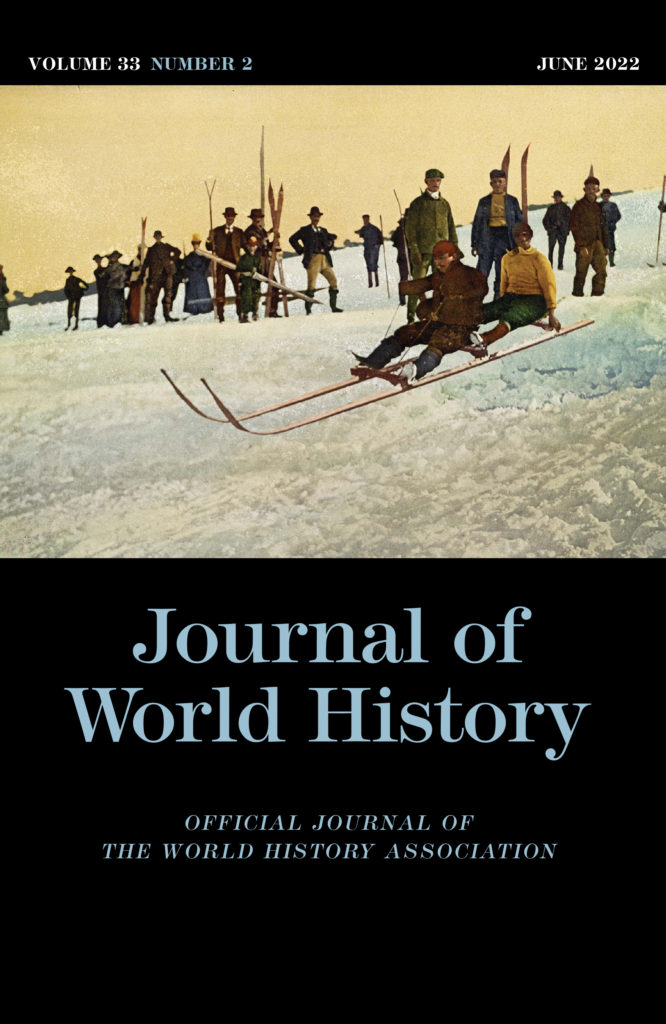
Find a digital-only special issue, “Missions & Conversions in World History,” of the Journal of World History FREE HERE.
Free U.S. domestic shipping on orders of $100 or more
Offer ends September 30, 2022
Find a digital-only special issue, “Missions & Conversions in World History,” of the Journal of World History FREE HERE.
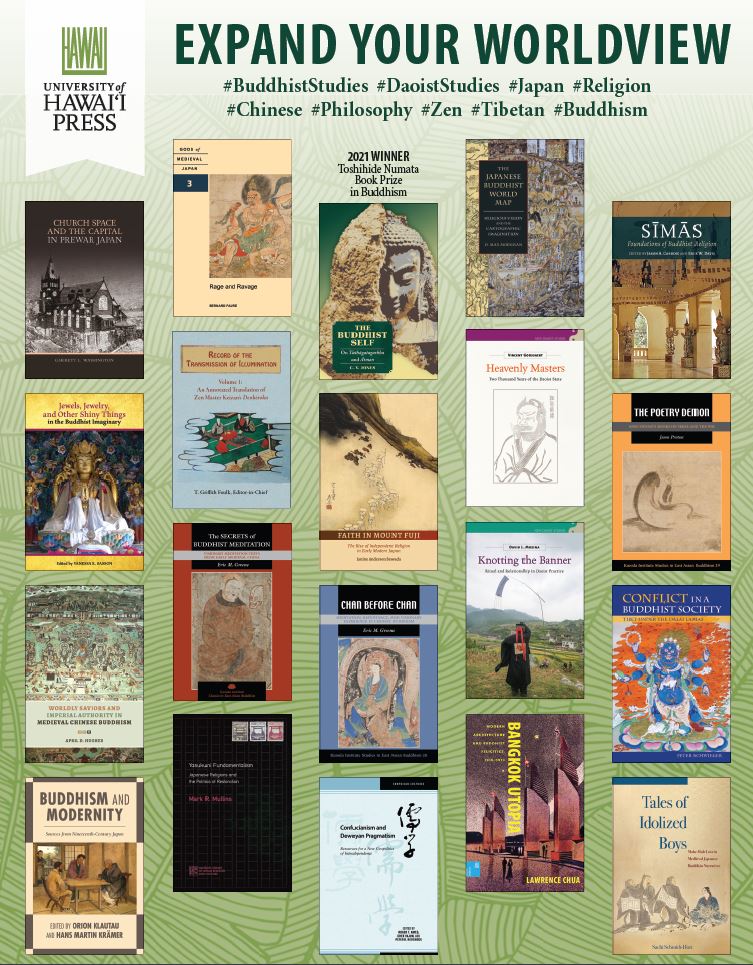
The annual American Academy of Religion meeting (held jointly with the Society of Biblical Literature) continues through Tuesday, November 23. If you’re attending in person, be sure to pick up the Publishers Weekly “Religion & Spirituality” supplement and check out our ad on page 15, shown below. Even if you’re not in San Antonio, use the conference discount code AAR2021 to order recent religion titles, those in our religion-related book series, and titles such as Places by the late Buddhist nun, Setouchi Jakuchō. (Coupon code good through December 31, 2021.)
Click image to open the PW ad as a PDF; then click on each book cover to link to its web page.

This week, March 21–26, the 2021 Association for Asian Studies (AAS) annual conference is taking place virtually. While most sessions require registration, there is also an open-access element to the conference, with plenary presentations accessible simply by signing up for a basic account. Be inspired by experiencing the opening ceremony and speech by AAS president Christine Yano (a University of Hawai‘i professor and UH Press author/series editor). The exhibit hall is also open to all—check out our virtual booth and explore its variety of offerings, including a conference discount and a jazzy video of our latest titles and books in series.
If you’re registered for the conference, there is much more to discover and absorb. For those who have a book proposal, please contact our acquisitions editors by email, after viewing this page that specifies their focus areas. As always, follow our Facebook and Twitter pages for our #AAS2021 posts. We look forward to the 2022 conference to be held (in-person, we hope) here in Honolulu!
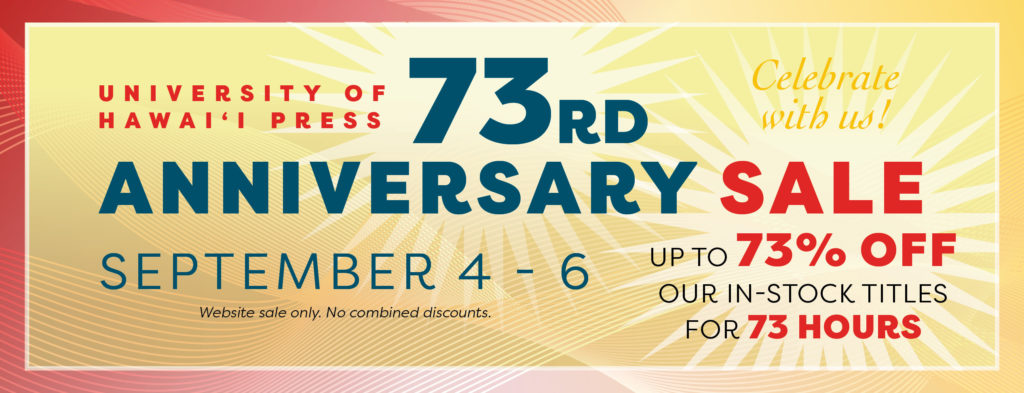
University of Hawaii is celebrating it’s 73rd Anniversary by offering discounts of up to 73% on nearly every title from Sept 4th through Sept 6th.
Full list of on sale titles can be found below (Download PDF, CSV):
73AnniversarySale.pdfWe are pleased to participate in the inaugural AAAS Virtual Book Fair (August 10–14, 2020) organized by the Association for Asian American Studies (AAAS) to highlight recent titles released by university presses, especially ones by AAAS members. With the cancellation of the in-person annual meeting, this virtual event fills the gap to celebrate the fine works published in Asian American and Pacific Islander studies. Here is a selection of our new and recent titles in the field:
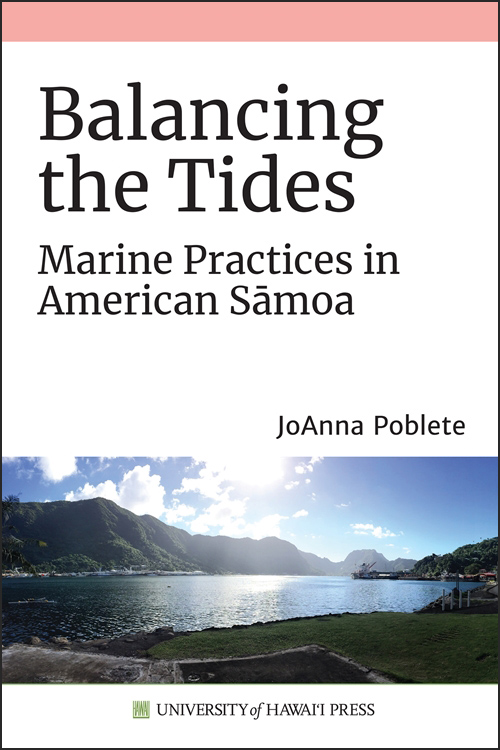
Balancing the Tides: Marine Practices in American Sāmoa
JoAnna Poblete
Also available in open-access editions.
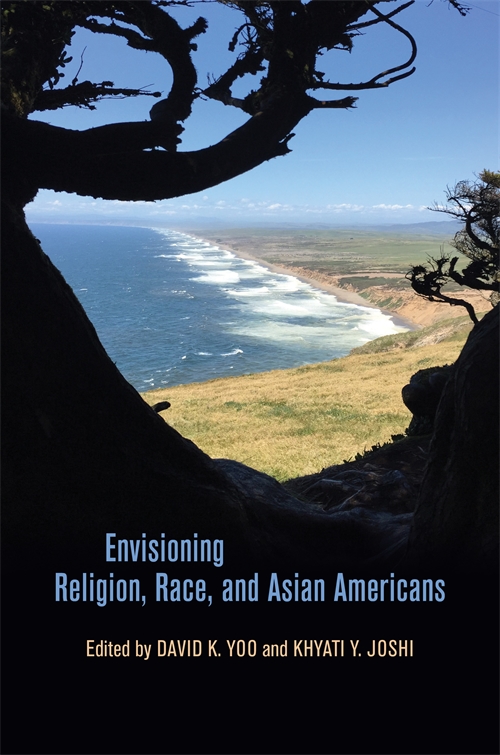
Envisioning Religion, Race, and Asian Americans
Edited by David K. Yoo and Khyati Y. Joshi
Intersections: Asian and Pacific American Transcultural Studies
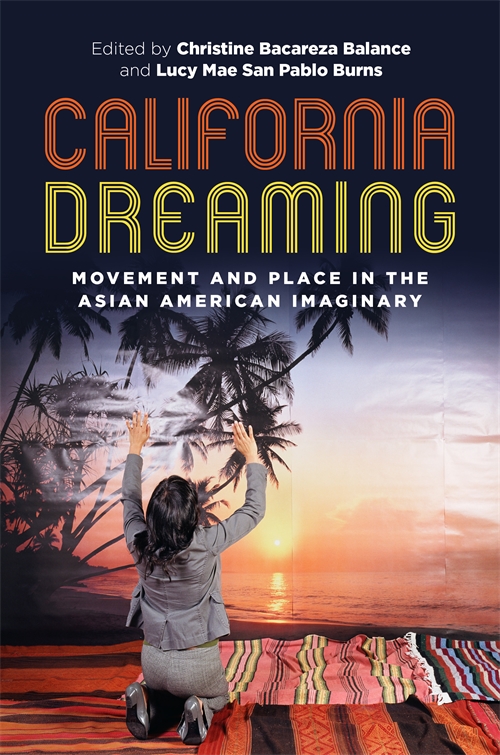
California Dreaming: Movement and Place in the Asian American Imaginary
Edited by Christine Bacareza Balance and Lucy Mae San Pablo Burns
(Available September 2020)
Intersections: Asian and Pacific American Transcultural Studies
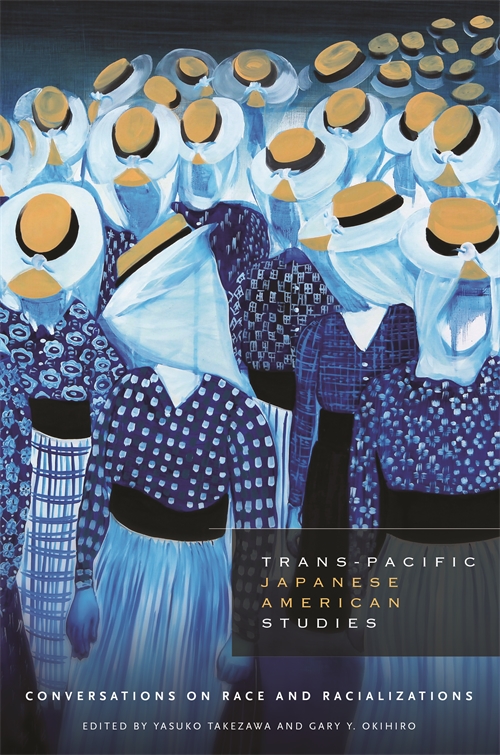
Trans-Pacific Japanese American Studies: Conversations on Race and Racializations
Edited by Yasuko Takezawa and Gary Y. Okihiro
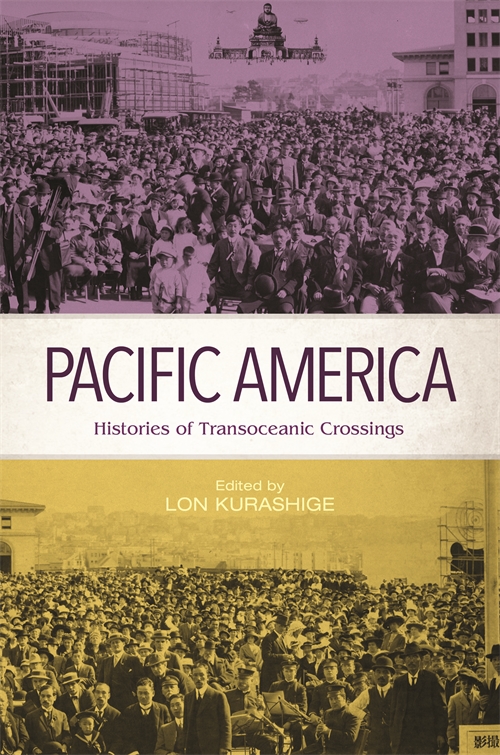
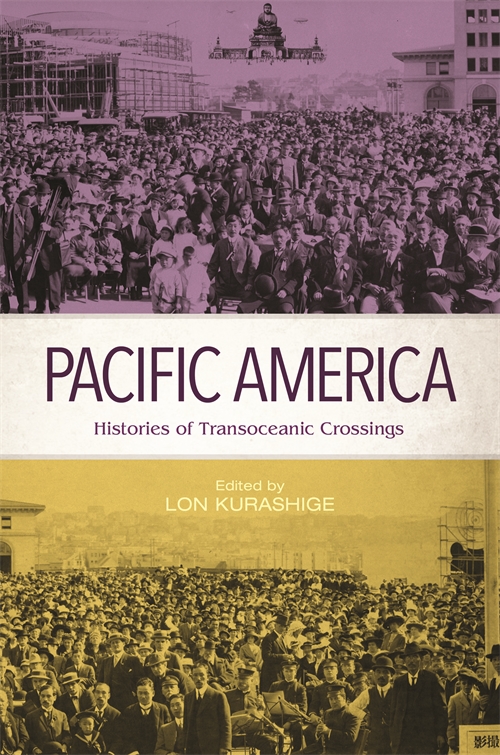
Pacific America: Histories of Transoceanic Crossings
Edited by Lon Kurashige
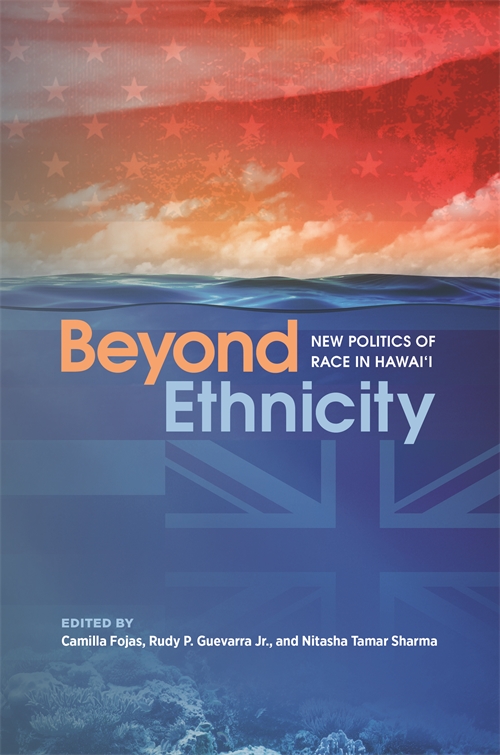
Beyond Ethnicity: New Politics of Race in Hawai‘i
Edited by Camilla Fojas, Rudy P. Guevarra Jr., and Nitasha Tamar Sharma
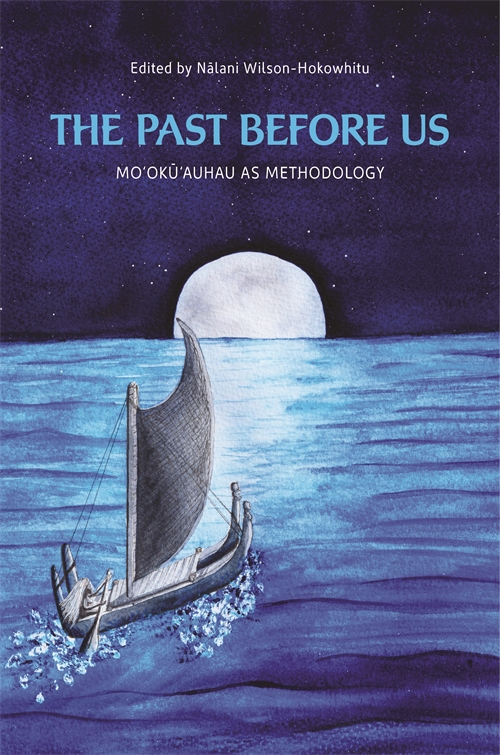
The Past before Us: Mo‘okū‘auhau as Methodology
Edited by Nālani Wilson-Hokowhitu
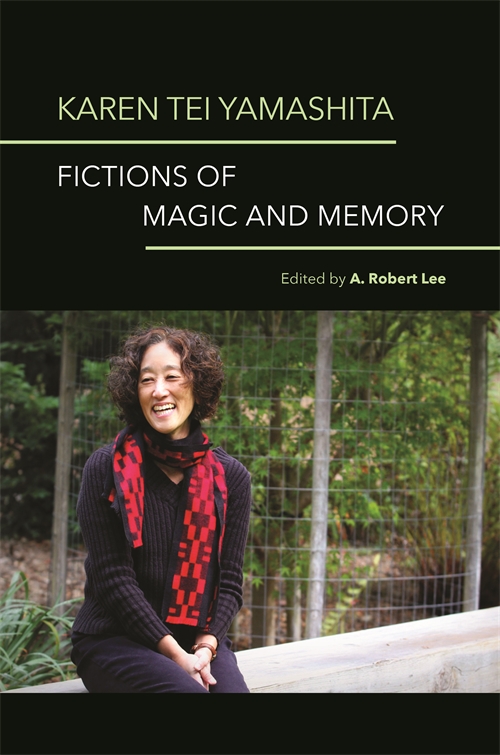
Karen Tei Yamashita: Fictions of Magic and Memory
Edited by A. Robert Lee
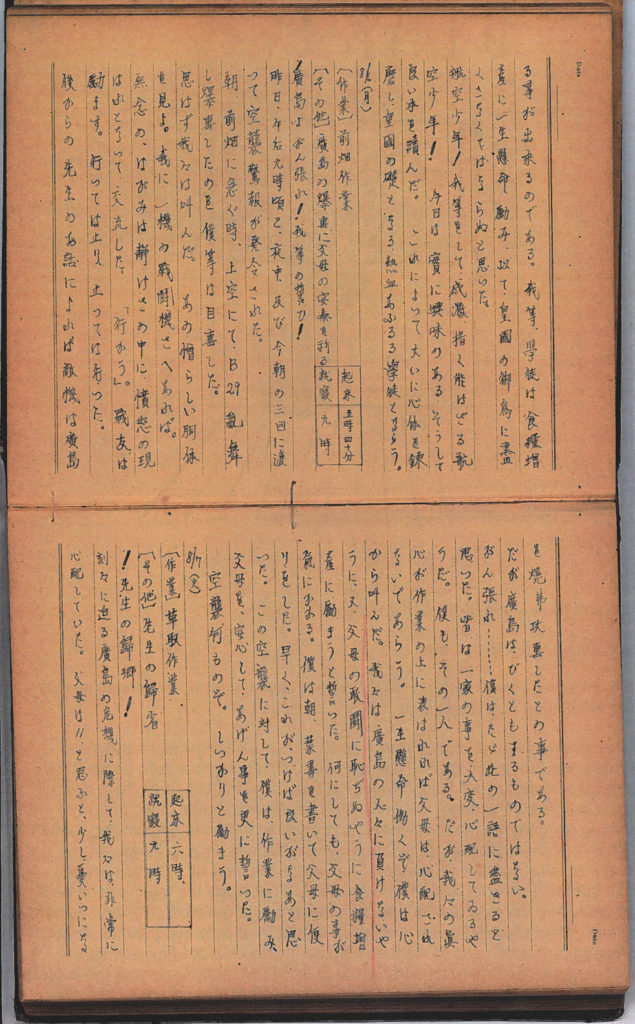
[English translation]
August 6, 1945 Up at 5:40 a.m. In bed at 9:00 p.m.
Assignment: Work at Maehata
Others: Prayed for my parents’ safety on learning of air raids on Hiroshima City. Gambare (Hang on), Hiroshima!
Air-raid alarms went off three times–at 9:00 p.m., after midnight and this morning. We witnessed B-29s (U.S. bombers) flying over our area as we were heading to Maehata. We instinctively shouted that we could shoot them down if we had a fighter. The anger within us filled the silence. “Let’s move on,” my comrade encouraged me. We walked and stopped frequently. According to the teacher, the enemy raided Hiroshima City with napalm bombs. However, Hiroshima will stand firm. Gambare! That is all I can say. All of us are worried they could see the results of our deep commitment to our work. “I’ll work as hard as I can,” I told myself. I swear I will work harder than ever to contribute toward increased production and to work as hard as my parents do. Anyway, I am concerned about my parents and I wrote them this morning. I hope the letter is delivered quickly. I further vowed to do my best so my parents would be reassured. Who is afraid of air raids? Just dig in and work!
[Note: The diary image appears as the background on the cover of Tadaima! I Am Home: A Transnational Family History by Tom Coffman (University of Hawai‘i Press, 2018).
Thirty University of Hawai‘i Press World History titles (both print and eBook!) are now 30% OFF through the end of July.
Find a digital-only special issue, “Roads and Oceans” of the Journal of World History FREE HERE.
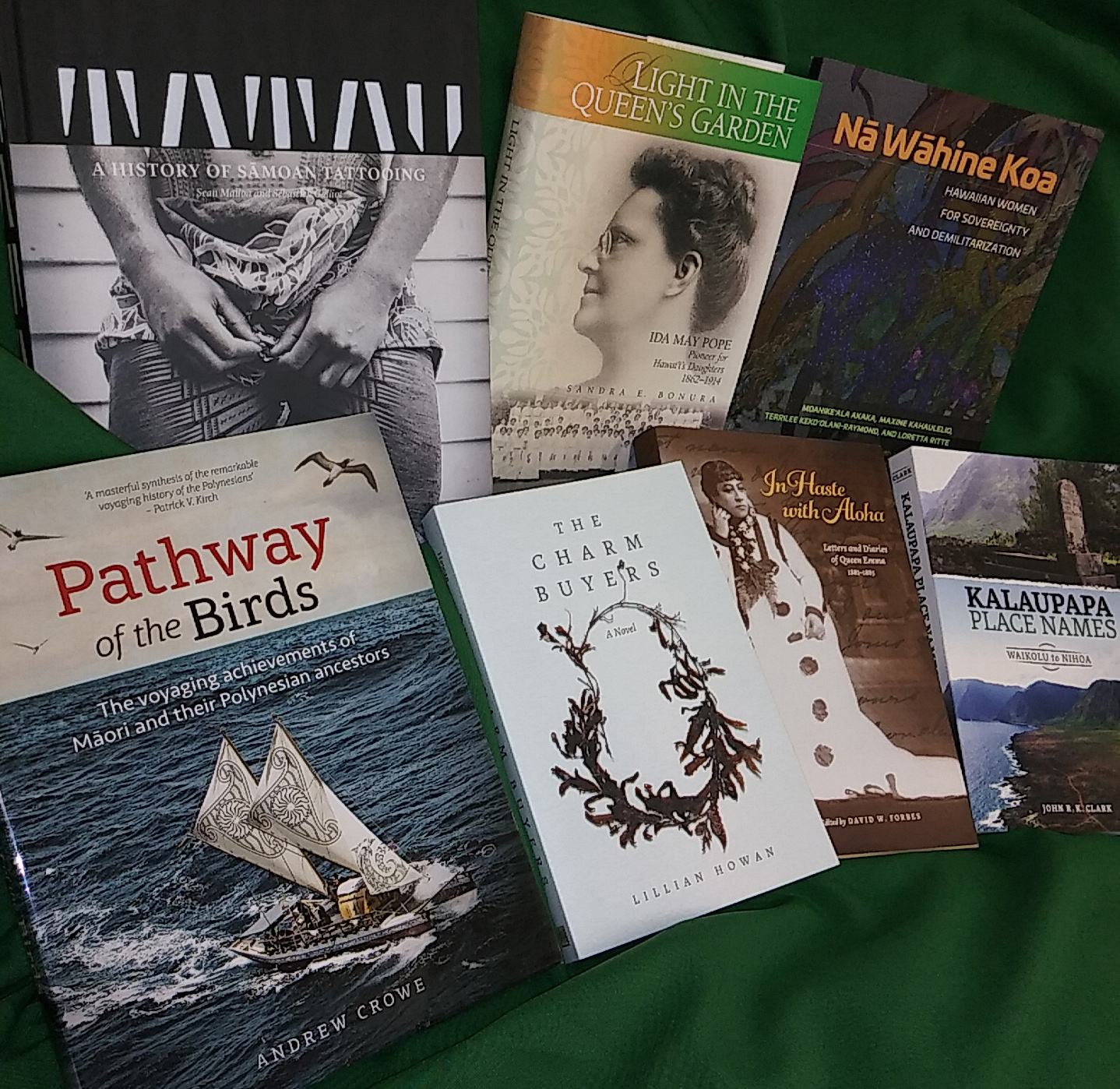 At the 2019 Ka Palapala Po‘okela awards presentation on December 13, we were delighted that seven of our titles were selected as honorees. These included:
• Pathway of the Birds: The Voyaging Achievements of Māori and Their Polynesian Ancestors, by New Zealand author Andrew Crowe, won in two categories: Illustrative or Photographic Books and Text or Reference Books.
• Light in the Queen’s Garden: Ida May Pope, Pioneer for Hawaiʻi’s Daughters, 1862–1914, by San Diego educator Sandra Bonura, won the Award of Excellence for Nonfiction.
• The Charm Buyers, a novel by Lillian Howan, won the Award of Excellence for Literature.
• Nā Wāhine Koa: Hawaiian Women for Sovereignty and Demilitarization, with personal essays by Moanikeʻala Akaka, Maxine Kahaulelio, Terrilee Kekoʻolani-Raymond, and Loretta Ritte; edited by Noelani Kaʻōpua-Goodyear, tied as winner in the Hawaiian Language, Culture, and History category.
• In Haste with Aloha: Letters and Diaries of Queen Emma, 1881–1885, edited by David W. Forbes, tied for honorable mention in the Nonfiction category.
• Kalaupapa Place Names: Waikolu to Nihoa, John R. K. Clark, received the honorable mention in Text or Reference Books.
• Inhouse Design of New Zealand won in the Design category for Tatau: A History of Sāmoan Tattooing, by Sean Mallon and Sébastien Galliot.
For a complete list of results and nominees, and a link to photos of the event, visit the Hawai‘i Book Publishers Association website.
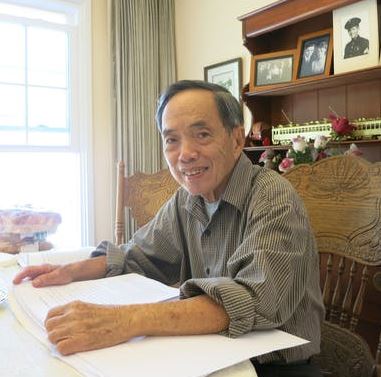
We mark last week’s passing of Trần Đình Trụ, the author of Ship of Fate: Memoir of a Vietnamese Repatriate (UH Press, 2017), with words from the book’s co-translators Jana K. Lipman and Bac Hoai Tran:
“Trần Đình Trụ’s life story was one of grace, fortitude, and devotion to his family. A skilled seaman and a naval commander, he journeyed from North Vietnam to South Vietnam as a young man, and then from South Vietnam to the Philippines, Guam, Japan, and ultimately, the United States. In his memoir, he recounts his evacuation from South Vietnam in 1975, his experiences in a refugee camp in Guam, and his decision to return to Vietnam in October 1975 with more than 1500 Vietnamese repatriates as the captain of the Việt Nam Thương Tín. After he successfully navigated the ship back to Vietnam, the new government viewed him and the repatriates with fear and suspicion. Trần Đình Trụ suffered physical and psychological brutality in “re-education” camps for more than twelve years. On release, he finally rejoined with his family and resettled in the United States. Through his memoir, Trần Đình Trụ captured the singularity of his life story and the universality of despair and uncertainty at the end of war. He will be deeply missed by his family and community.”
Read more about the book and Tru’s life in an essay by Professor Lipman that first appeared in The Conversation and was republished on the UH Press blog.
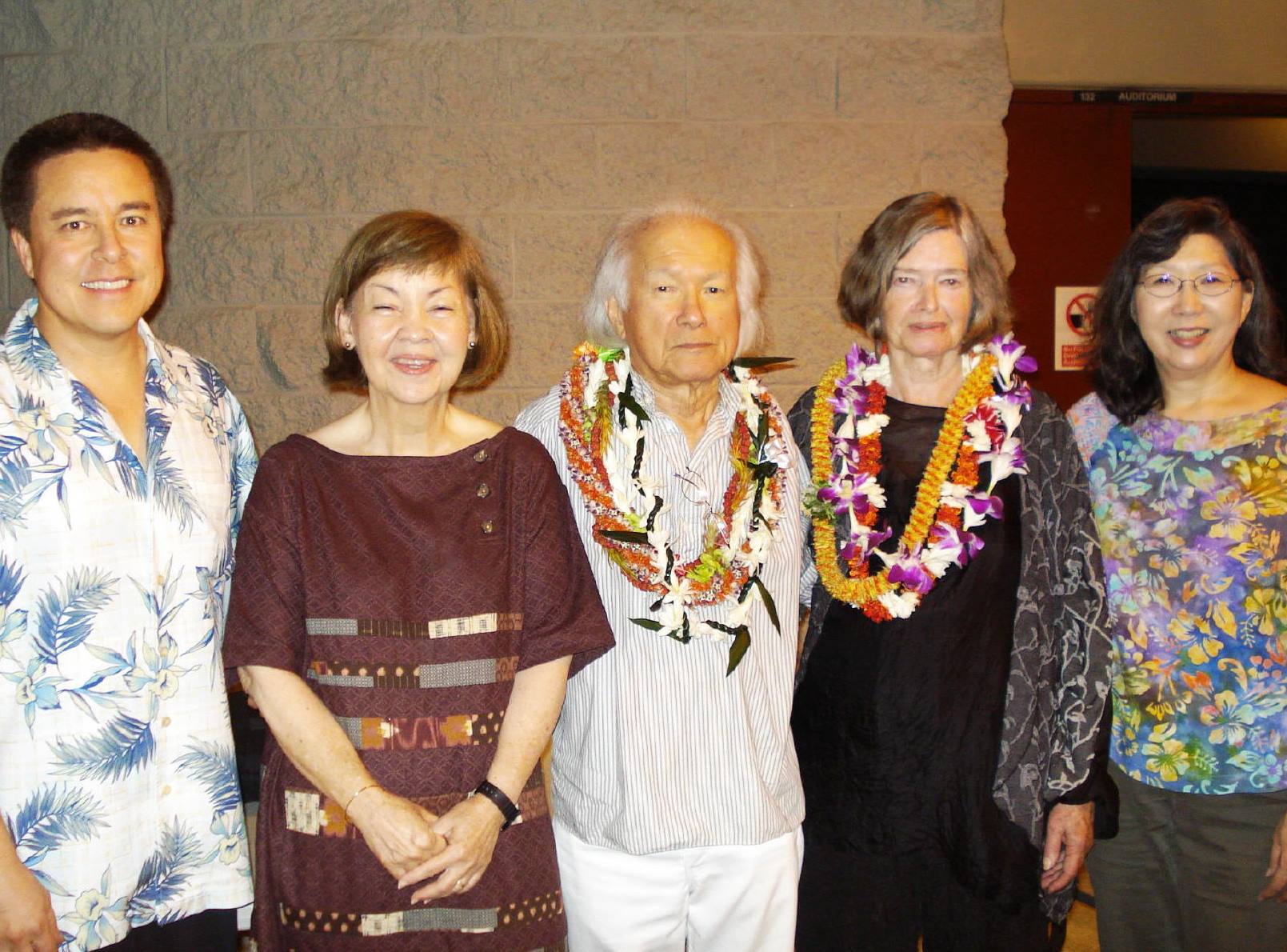
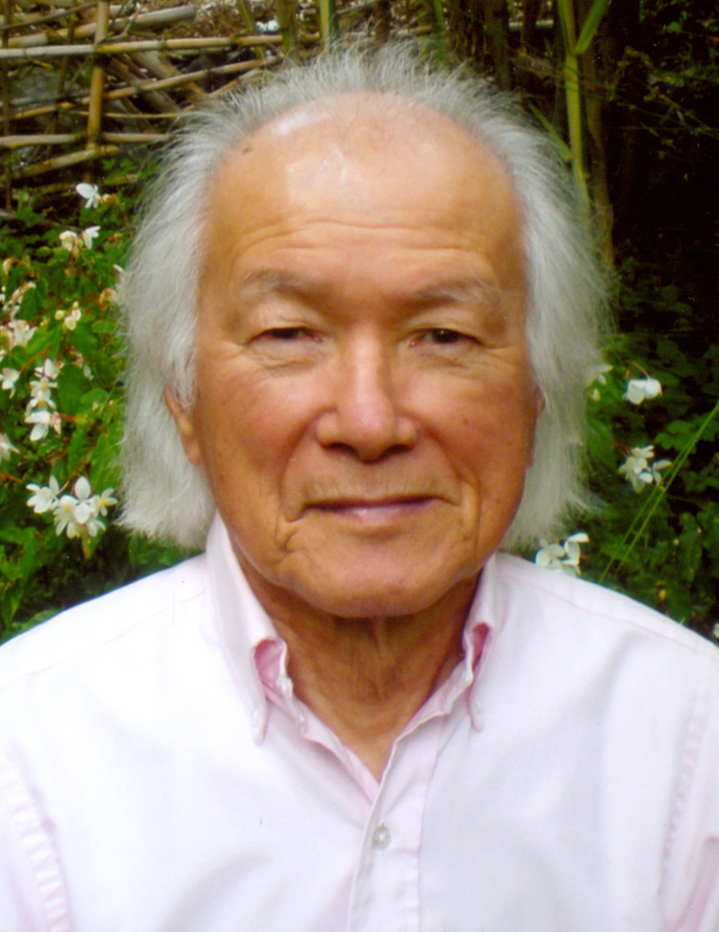 Originally this post was a way to mark this month’s Asian/Pacific American Heritage Month by sharing personal memories from an editorial perspective of a pioneering Asian American literary icon, Milton Murayama. It has grown to include other remembrances from a marketing perspective. We are all proud to be the publisher of his bestselling novels.
Masako Ikeda, Acquisitions:
I only met Milton Murayama once, at the Asian American studies conference held in Honolulu in 1991. I tagged along with Sharon Yamamoto, who acquired his manuscripts for Five Years on a Rock and then Plantation Boy. Nothing at that meeting was particularly memorable as I sort of stood in the background, but I ended up enjoying serving as his managing editor for those two books. We wrote letters back and forth and continued to do so even as the century changed. Most of the time all he said in his letters was that he wanted to buy copies of his books or he was writing a new book, which wouldn’t be finished for a while.
After Five Years our production department held onto an old computer drive knowing that Milton had not updated his system and refused to do so. Our marketing staff coaxed him a number of times: “Milton, I’ll help you set it all up.” He kept sending me hard copy manuscripts with perforations on both ends along with five-inch floppy disks. The manuscript wasn’t complete so he wanted everything back, including the floppy disks, which he couldn’t find anymore. Right before he sent the 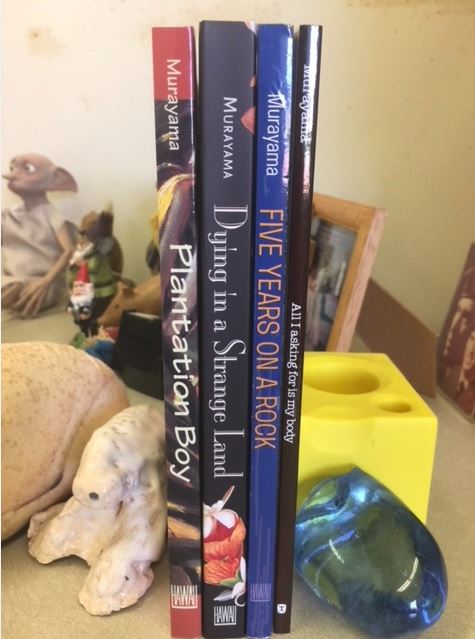 very final manuscript, which eventually became Dying in a Strange Land, we had gotten rid of the drive, and there was no way to read his WordPerfect files. I ended up asking our Production staffer to keystroke everything, which she did in three days.
Communication with Milton was always interesting and often a little strange. He’d call to complain about the copy editor who didn’t understand that “Pidgin English doesn’t have ellipses points, or letter spaces in between.” He would also hesitate to say “Okay bye” and hang up the phone, so our conversation would go on for a long time with several seconds of dead silence breaking our talks in the most uncomfortable way.
Milton passed away in July 2016, and I didn’t know it until a month later when we saw the obituary in the Sunday paper. I felt guilty for not staying in touch. I do think of him quite often just as I think about Sharon, his true editor, whose passing was almost fourteen years earlier.
Steven Hirashima, Marketing:
My fondest memories of Milton would be visiting his fudge brown three-story home in the hillside area of Glen Park of San Francisco. Whenever I was in town I would always make a point to book a visit. The ritual was always the same. I would call to say I’m leaving the hotel and heading for the Union Square BART Station. Once at Glen Park, I would call to say I arrived and no more than five minutes later Milton would arrive in his old Toyota and we would head up the steep and winding road to his “retreat in the hills.”
Overlooking the flatlands of the city with Candlestick Park and SFO to the west, I would always be given a tour as to what was updated or repurposed around the house since my last visit (the actor Lou Diamond Phillips’s childhood family had been a previous neighbor), from a newly reapportioned sunroom downstairs to a section outside with a bed of spring flowers to Milton’s designated writing room where tucked in a corner would be his antique word processor (a Commodore 64), which I almost convinced him to ditch in favor of a newfangled Mac but he never wavered and remained forever faithful to his trusty machine.
Any trip to the Murayamas would invariably end in the kitchen where Milton and Dawn were the most gracious of hosts. We would often gather around the large formal dinner table for spirited conversation from his next book project or his time in the 442nd, feasting on a bowl of delicious Alaskan King crab legs and steamed garlic brussels sprouts, masterfully prepared by Milton only minutes before. Looking back, they were wonderful and precious times. How I long for another afternoon with Milton. Until then, God Speed and Aloha.
Carol Abe, Marketing:
My very first encounter with Milton was in 1975, the year his original edition of All I Asking for Is My Body published, the green one with the bamboo forest on the cover and an overly large “$3” printed on the back 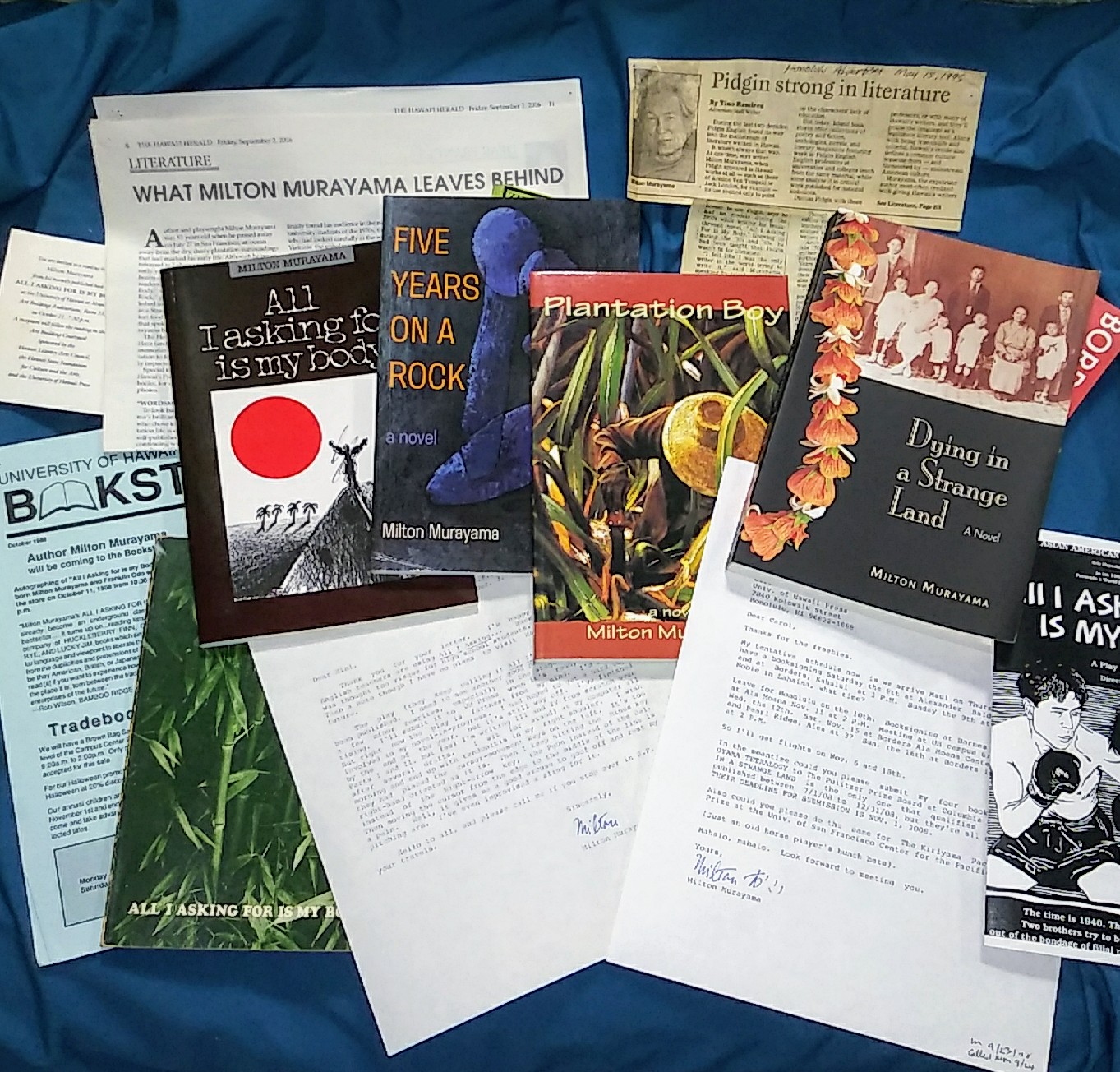 cover. He and wife Dawn lined up signings at Honolulu Book Shops, at which I was a bookstore clerk (we weren’t called “booksellers” until twenty years later). Of course I bought a copy with my generous employee discount and had it signed, but didn’t otherwise have a personal connection to him. Jump to 2008: I’d been at UH Press for ten years and we released Milton’s fourth and final novel in his tetralogy about the Oyama family. Steve Hirashima had switched to managing our Asian studies list and I did the same for our Hawai‘i, Pacific, and Asian American titles.
Dying in a Strange Land had a pub date of June but Milton called and said he would wait to visit in the fall, when it’d be cooler, and he only wanted to do low-key promotion of a few bookstore signings. Then, as now, the Press had no travel funds to support a book tour anyway. He finally decided November would be a good time to come and would do Maui and O‘ahu signings, but no readings or talks. So I booked a combination of Barnes & Noble and Borders stores that followed his wishes and filled his itinerary. We corresponded by snail mail and exchanged letters. In one of these, Milton revealed some of the real-life equivalents to the characters in his books. He wrote, “There’s more fact than fiction in my stories.”
After a fan of his scolded me for not paying for his travel and doing him justice, a series of serendipitous things happened that culminated in an event more befitting of a literary icon, “Revisiting Murayama: From Plantation to Diaspora.” Gary Pak, as it happened, had videotaped an interview with Milton that he still needed to screen; the amazing Marie Hara agreed to be co-organizer and was a conduit to both UHM English department and Bamboo Ridge; Craig Howes put me in touch with Phyllis 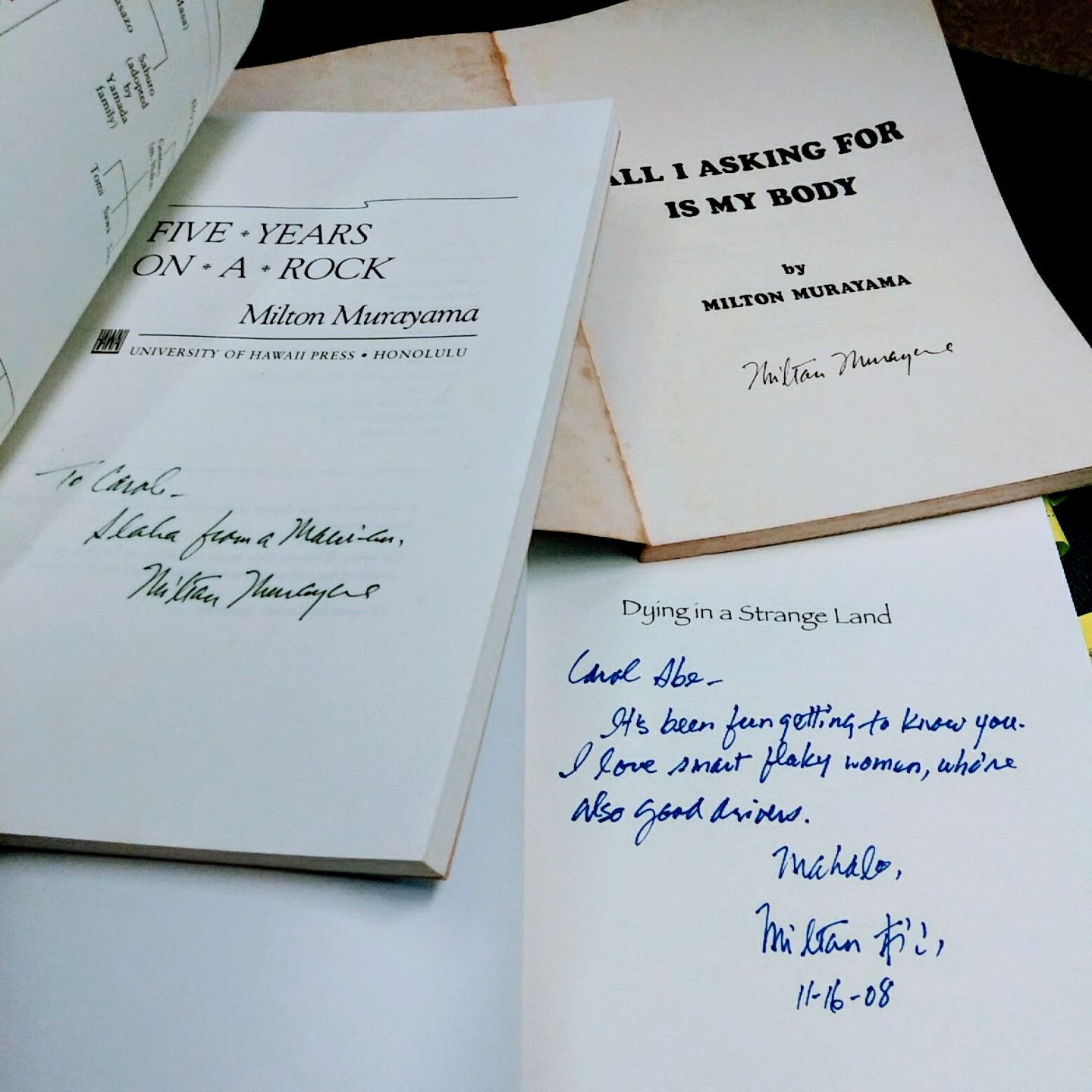 Look, who had directed a play of All I Asking. The program developed further by recruiting Arnold Hiura, Lee Cataluna, and one of our student employees, Tricia Tolentino, all tied together with Steve as emcee. (And, by rolling the dice, we obtained funding from SEED and Hawai‘i Council for the Humanities, including an honorarium for Milton.)
During their visit, I had chauffeured Milton and Dawn to four or five appearances, perhaps being a bit manic in my driving. At the end, I asked Milton to sign my copy of Dying in a Strange Land. We all laughed warmly as I read his inscription: “It’s been fun getting to know you. I love smart flaky women, who’re also good drivers.” It was my honor and pleasure to have been a tiny part of his life.
+++
Each of Milton’s novels can be read separately and not in sequence. Dying in a Strange Land is on sale now, at a very special price—click here to order.
 The 14th annual Hawai‘i Book and Music Festival happens this weekend, 10 a.m. to 5 p.m. each day, and UH Press will once again be there! Come to our tent alongside Honolulu Hale, near the Kristi Yamaguchi Keiki Reading Corner, and be among the first to see our newest titles. Also attend several presentations by UHP authors and follow them to our booth for short booksignings before you head off to the next session. Check out the interactive festival schedule here.
Featured UHP titles and presenters:
SATURDAY
Heiau, ‘Āina, Lani: The Hawaiian Temple System in Ancient Kahikinui and Kaupō, Maui will be discussed by coauthors Patrick Vinton Kirch and Clive Ruggles on Saturday at 10:00 a.m. Although the book is still at the printer, a set of page proofs will be available to browse and preorder at the event discount. Following their talk, 11:15–11:45, Dr. Kirch will sign copies of two of his most recent titles at our tent: Kua‘āina Kahiko: Life and Land in Ancient Kahikinui, Maui and Unearthing the Polynesian Past: Explorations and Adventures of an Island Archaeologist.
Indigenous Literatures from Micronesia, edited by Evelyn Flores and Emelihter Kihleng, is the inaugural title in The New Oceania Literary Series. On Saturday at 1:00 p.m., series editor Craig Santos Perez moderates a session with several volume contributors—Mary Hattori, Josie Howard, Kisha Borja-Quichocho-Calvo, Angela Hoppe-Cruz, and James Viernes. They’ll head over to our tent to sign copies, 2:15–2:45 p.m.
Palapala: A Journal for Hawaiian Language and Literature has just released its second volume as open-access on ScholarSpace, an online institutional repository for University of Hawai‘i at Mānoa. Journal editor Jeffrey (Kapali) Lyon speaks on a panel at 2:00 p.m. We will have a few copies of the print edition of volume one at our booth and volume two will be available in print later.
Nā Kahu: Portraits of Native Hawaiian Pastors at Home and Abroad, 1820–1900, by Nancy J. Morris and Robert Benedetto, will be presented on Saturday, 4:00 p.m., by Dr. Morris, Craig Howes, Aaron Mahi, and Kenneth Makuakane. A signing by Dr. Morris is scheduled for Sunday, 2:00–2:30 p.m.

SUNDAY
Nā Inoa Hoku: Hawaiian and Pacific Star Names opens Sunday’s program at 10 a.m. with Clive Ruggles and coauthor John Kaipo Mahelona (coauthor Rubellite Kawena Johnson is unable to attend). They will sign at the UHP tent immediately following their talk.
Tadaima! I Am Home: A Transnational Family History will have a panel at 11:00, with author Tom Coffman, Larry Miwa, and Stephen Miwa; the latter two are members of the family whose story is told in the book. The three will sign at our booth from 12:15–12:45 p.m. on Sunday. (The background image on the book’s cover is a page from Larry Fumio Miwa’s diary kept as a fourteen-year-old at the time of the Hiroshima bombing—view the page here.)
Hawai‘i’s White Tern: Manu-o-Kū, an Urban Seabird is the basis of Susan Scott‘s illustrated talk, “The Wings of Honolulu’s Wild Side.” Hear her speak at noon and then head to our booth for a signing at 1:15.
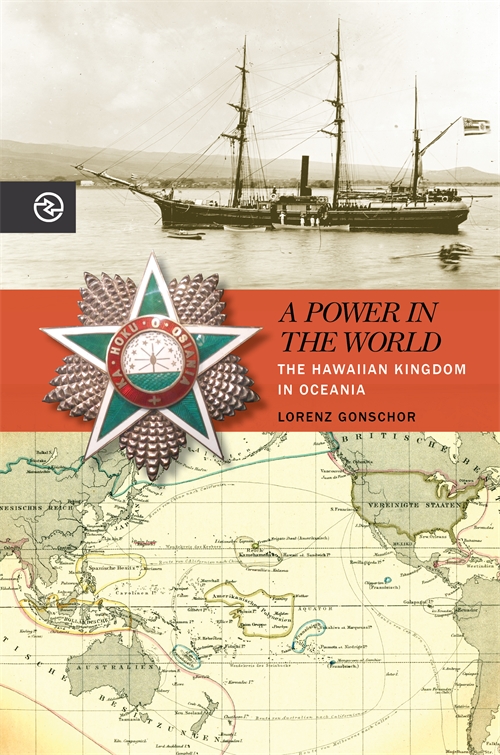
A Power in the World: The Hawaiian Kingdom in Oceania, by Lorenz Gonschor will publish in June, however, we’ll have an early proofing copy on display and will take preorders. Dr. Gonschor is a presenter on three Sunday panels, including one focused on his book at 2:00 p.m. Joining him as a discussant is Tiffany Lani Ing, whose forthcoming book, Reclaiming Kalākaua: Nineteenth-Century Perspectives on a Hawaiian Sovereign, will be published in October by UH Press.
Nā Wāhine Koa: Hawaiian Women for Sovereignty and Demilitarization, by Moanike‘ala Akaka, Maxine Kahaulelio, Terrilee Keko‘olani-Raymond, and Loretta Ritte is one of the books explored in the 3:00 afternoon session at the Humanities Pavilion, sponsored by Hawai‘i Council for the Humanities. The book’s editor Noelani Goodyear-Ka‘opua joins the panel moderated by HCH’s new executive director (and UHP author) Aiko Yamashiro. Dr. Goodyear-Ka‘opua signs copies at 4:15 p.m.

Other spring releases premiering at our booth:
Wind, Wings, and Waves: A Hawai‘i Nature Guide, by Rick Soehren;
The Past before Us: Moʻokūʻauhau as Methodology, edited by Nālani Wilson-Hokowhitu;
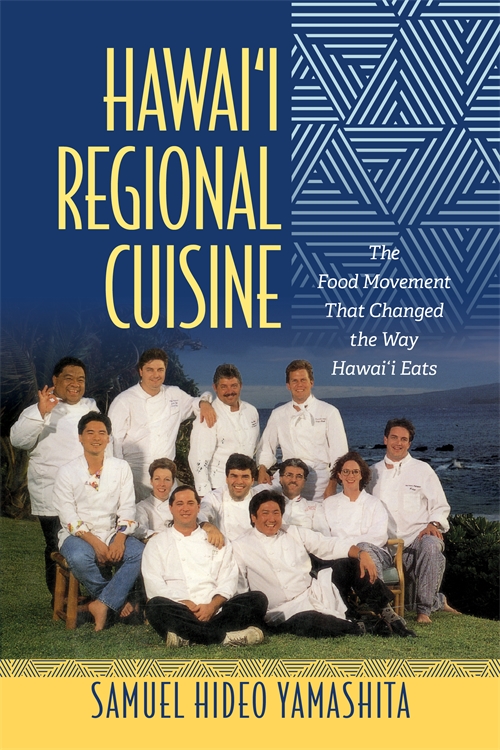
Hawai‘i Regional Cuisine: The Food Movement That Changed the Way Hawai‘i Eats, by Samuel Hideo Yamashita.
A limited number of copies of these and many more will be available and we’ll be taking orders for books not on hand, with free US shipping.
Stay updated with the latest news on the festival Twitter feed and check its Facebook posts. See you there!