



News and Events

Korean Studies Celebrates the Journal’s 50th Anniversary!

 
The University of Hawai‘i Press is honored to join the University of Hawai‘i at Mānoa’s Center for Korean Studies in celebrating Korean Studies journal on its 50th year of publication. Korean Studies has been the oldest continuously published academic journal exploring Korean studies outside the Korean peninsula. The journal has proudly presented research articles, review articles, commentaries, and book reviews on Korea-related topics since 1977. With its 50th issue, Korean Studies will shift from an annual to a semiannual publication. Korean Studies: Global Research & Critique, Volume 50, Number 1 will debut in April 2026.
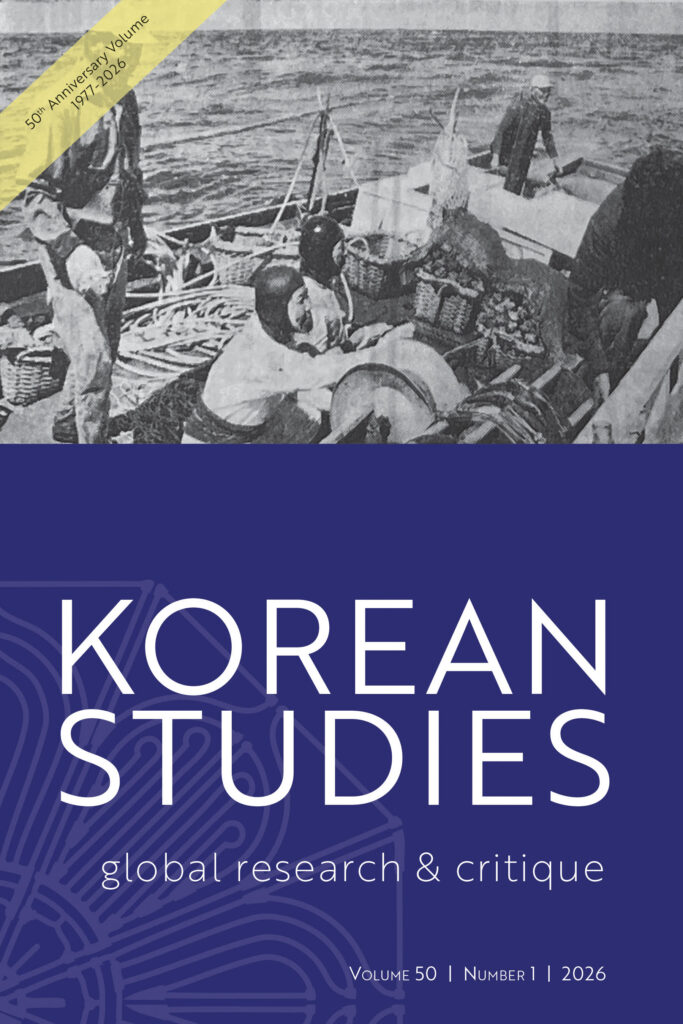

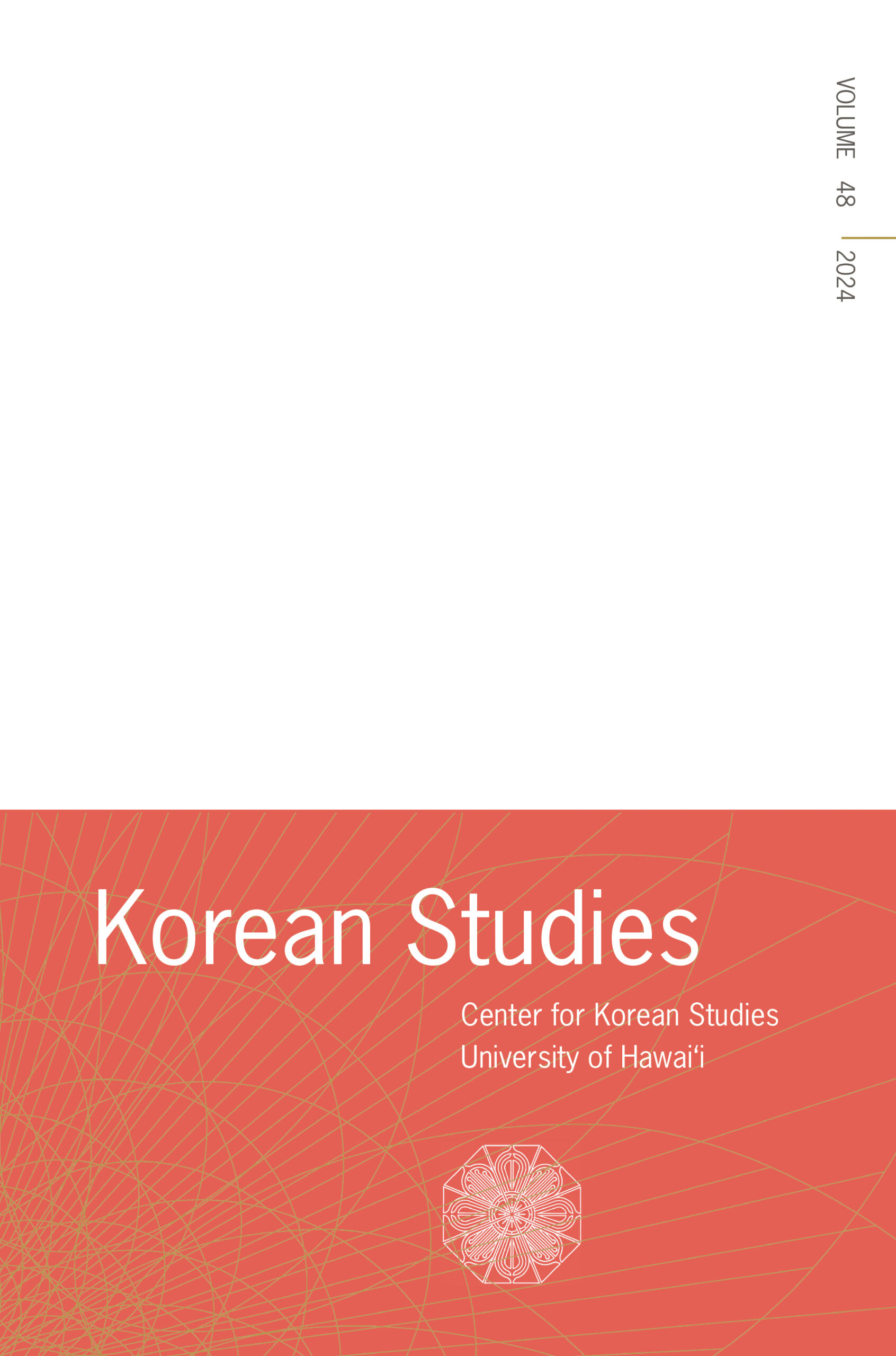
Editor Cheehyung Harrison Kim recognizes Korean Studies history, new title, and cover in the introduction stating:
This issue marks the fiftieth year of Korean Studies. We are the oldest continuously published academic journal in the field of Korean studies existing outside the Korean peninsula, the first issue coming out in mid-1977. The field today has many excellent journals, and we are fortunate and proud to have stayed relevant for the past five decades…
As the journal embarks on another fifty years, we unveil major changes in the name, design, and formatting. The journal is now called Korean Studies: Global Research & Critique. The cover features an elegant font on a matte navy background, and each issue will showcase an image from one of the articles. The original symbol of the lotus wadang (the circular roof-end tile) has been preserved, in a more integrated way. We are also going two issues per year, with the Fall issue reserved for a special issue.
A major change in formatting is that we are bringing back the footnotes. I am sure many researchers will welcome the return of footnotes.
This commemorative issue features four research articles (by Sang Mee Oh, Kyounghwa Lim, Wonseok Lee, and David Kwon), a commentary (by Eun-Young Kim), three book reviews (by Yejun Kweon, Kyu-hyun Jo, and Holly Stephens), and the reprint of Pihl’s 1977 article. These pieces represent the robustness and sophistication of what the journal strives to achieve in each issue.
Fifty years ago, the inaugural editor Dae-Sook Suh wrote that the
journal is dedicated to promoting “interdisciplinary and intercultural approaches to Korean studies.” Our new name reflects this original vision. The journal renews its pledge to publish excellent research on Korea by scholars from across the world.


Volume 50
Table of Contents


Editor’s Note
Cheehyung Harrison Kim


Articles

Engineers of the Human Soul: North Korean Literature Today
Marshall R. Pihl

Carving Out Space for Korean History: Contributions of Korean Scholars in East
Asian Studies in the United States, 1955–1965
Sang Mee Oh

Women Divers Resisting Oppression: A Brief History of Jeju Divers and Their
Representations in North Korea’s Literature, Performance Art, and Screen Culture
Kyounghwa Lim

From Policy to Pop: Navigating South Korean Cultural Policies and Their Impact on
Korean Popular Music
Wonseok Lee

Korea’s Path of Liturgical Inculturation: Ancestral Rites in Confucian-Christian
Interplay, Social Change, and Women
David Kwon


Commentary

Coming (Out) to Terms with Queerness in Korea: Language Matters
Eun-Young Julia Kim

Book Reviews

Park Nohae’s Dawn of Labor
Reviewed by Yejun Kweon

Vladimir Tikhonov’s The Red Decades: Communism as Movement and Culture in Korea, 1919–1945
Reviewed by Kyu-hyun Jo


Andre Schmid’s
North Korea’s Mundane Revolution: Socialist Living and the Rise of Kim Il Sung,
1953–1965
Reviewed by Holly Stephens


Volume 50 can be found on Project MUSE in April 2026.

Please also visit our UH Press Korean Studies site for more information on this fantastic journal!
Journals: Asian Theatre Journal, biography, Contemporary Pacific, Journal of Korean Religions, +more

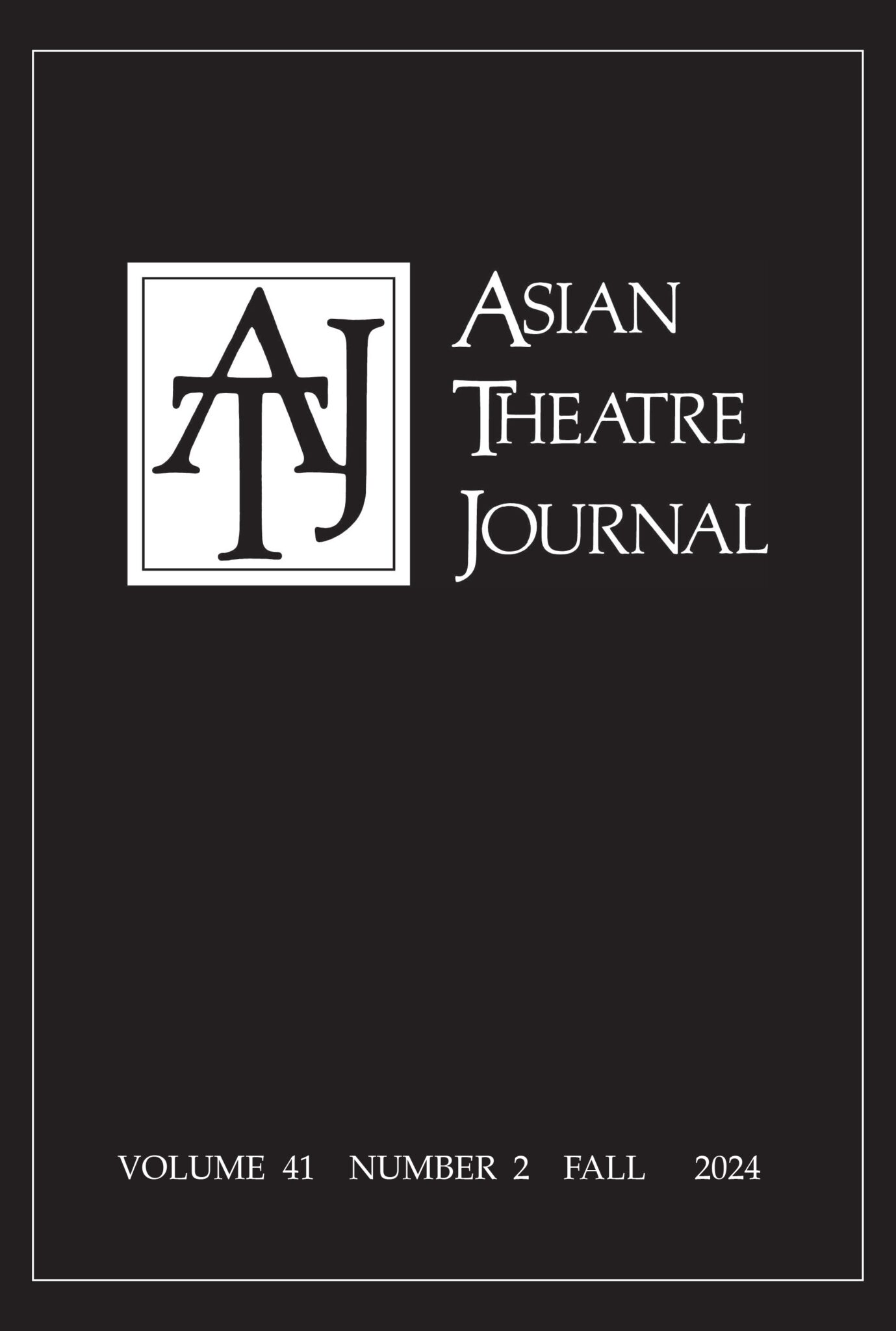
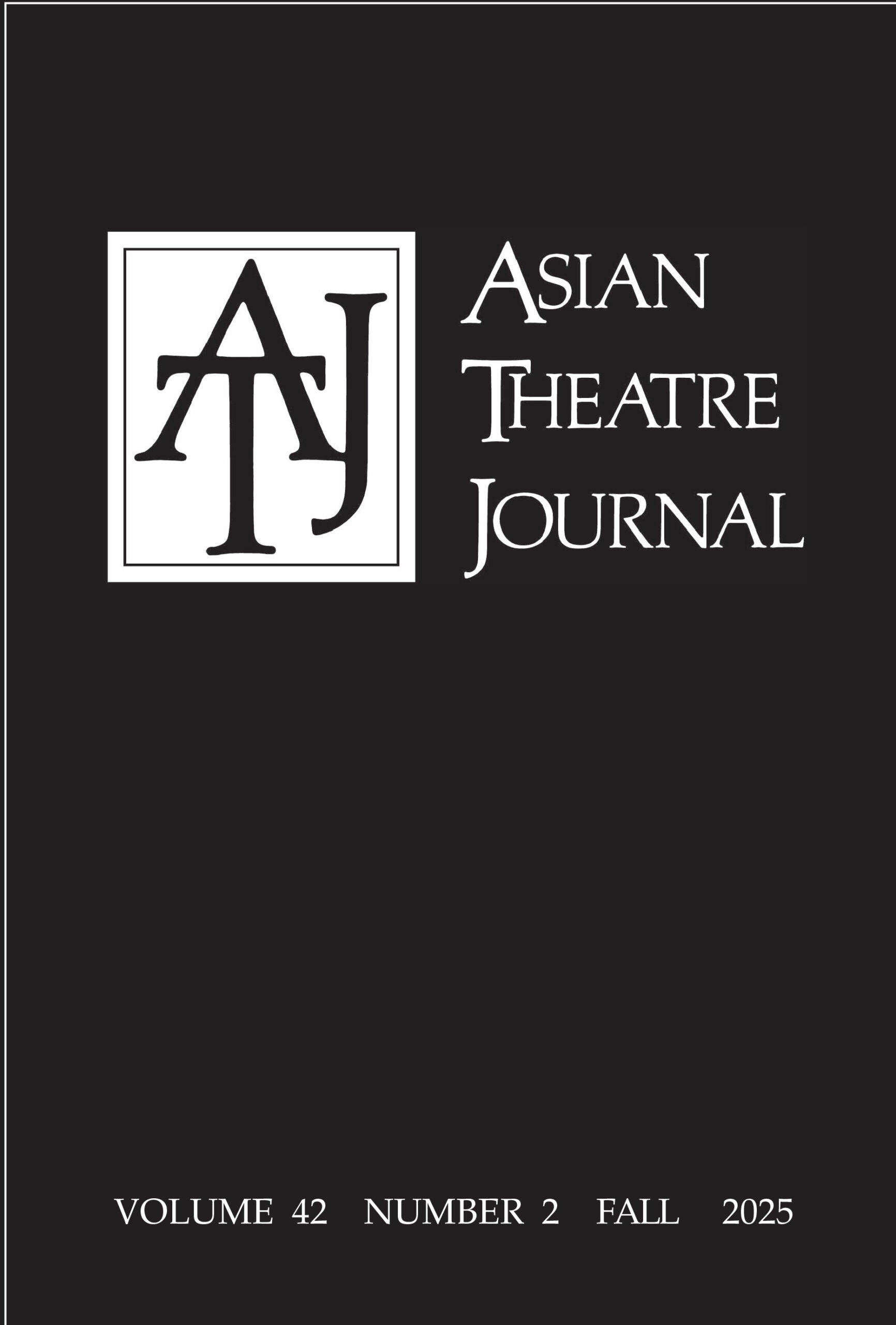
Asian Theatre Journal

Volume 42, Number 2 (2025)

This issue includes as Special Section: South and Southeast Asian Ecotheatre with an introduction by Catherine Diamond who discusses the issue stating:

Ecology, the science of the complex web of relationships between organisms and their environment, became codified in the mid-nineteenth century. It originally centered on biological mutualism and excluded humanity, yet it has since been appropriated by the arts and humanities to foreground human–nonhuman relations. Derived from the Greek oikos, meaning household or hearth, or in a broader sense, “home,” this derivation might make it closer to cultures that do not think of nature in exclusively scientific terms. But even returning to ecology’s original scope, for rural and economically marginalized communities, ecological awareness paired with protecting their proximate environments is often a matter of immediate physical and cultural survival, while for those in the cities, it can be a more abstract global ideology that insists current economic and production systems are at odds with the planet’s capacity to thrive and provide. This ATJ special volume includes essays exploring performances dealing with both the rural and urban perspectives toward human-wrought environmental changes.


Find this introduction, translations, emerging scholars, book reviews and more at Project MUSE.

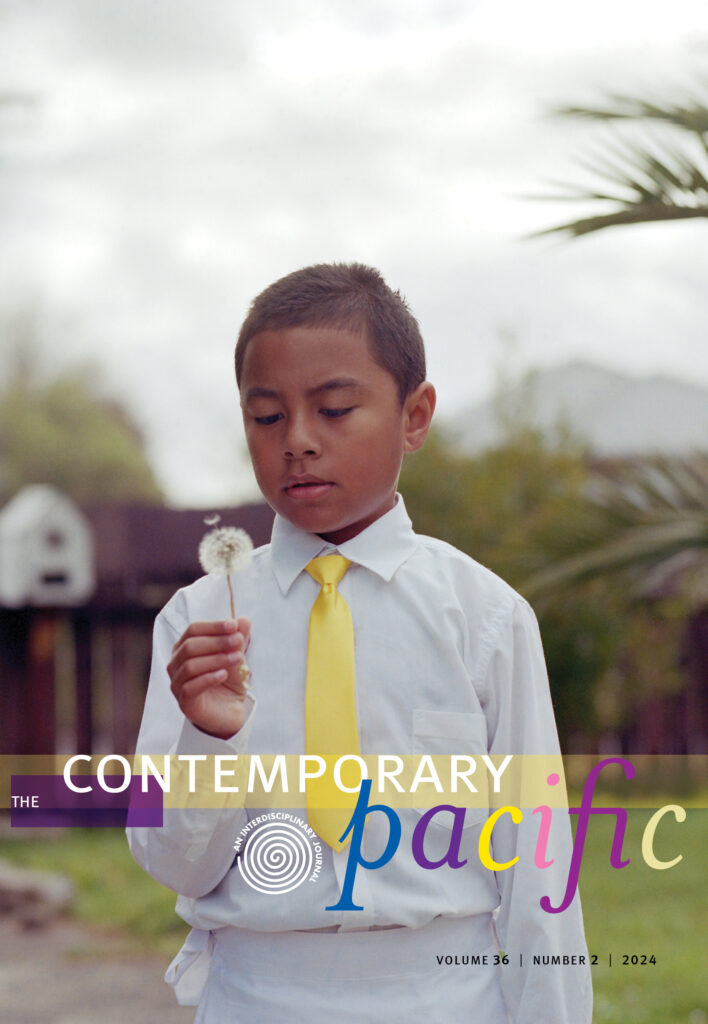
Front cover of The Contemporary Pacific Vol. 36 No. 2 (2025)

Contemporary Pacific

Volume 36, Number 2 (2024)

This latest issue features artwork by Edith Amituanai.  Amituanai’s work is discussed in About the Artist stating:

Edith Amituanai is a New Zealand–born Samoan photographer working from Tāmaki Makaurau. From interiors to driveways to communities, Amituanai’s practice is concerned with environments that shape who we are. Her ongoing study of the Samoan transnational community and their homes has taken her across New Zealand, Sāmoa, France, Italy, Canada, and the United States. In 2008, Amituanai was nominated for the Walters Prize for her series Déjeuner, which examined a new diaspora: expatriate New Zealand–Samoan rugby players living and working in France and Italy.  Her first foray outside of her Samoan community was the series La Fine Del Mondo (2009-2010), which focused on helping the Lai family, Chin refugees from Myanmar, settle into their new home in Massey, West Auckland. Amituanai’s interest in embedding herself in the environment she is working in means she often takes on different roles in the community, from sports team manager and youth worker to freelance photographer.

As a teaching artist, she has led a variety of workshops for art galleries, community groups, and institutions. In 2017, she undertook a six-week residency at Te Kura o Kimi Ora in Flaxmere, which resulted in Keep on Kimi Ora, an exhibition at Hastings Art Gallery featuring photographs taken by students of the school. Amituanai also taught photography in secondary schools in New Zealand as part of the Ministry of Education’s Creatives in Schools program.

Find these articles, book reviews, media reviews, About the Artist, and more at Project MUSE.

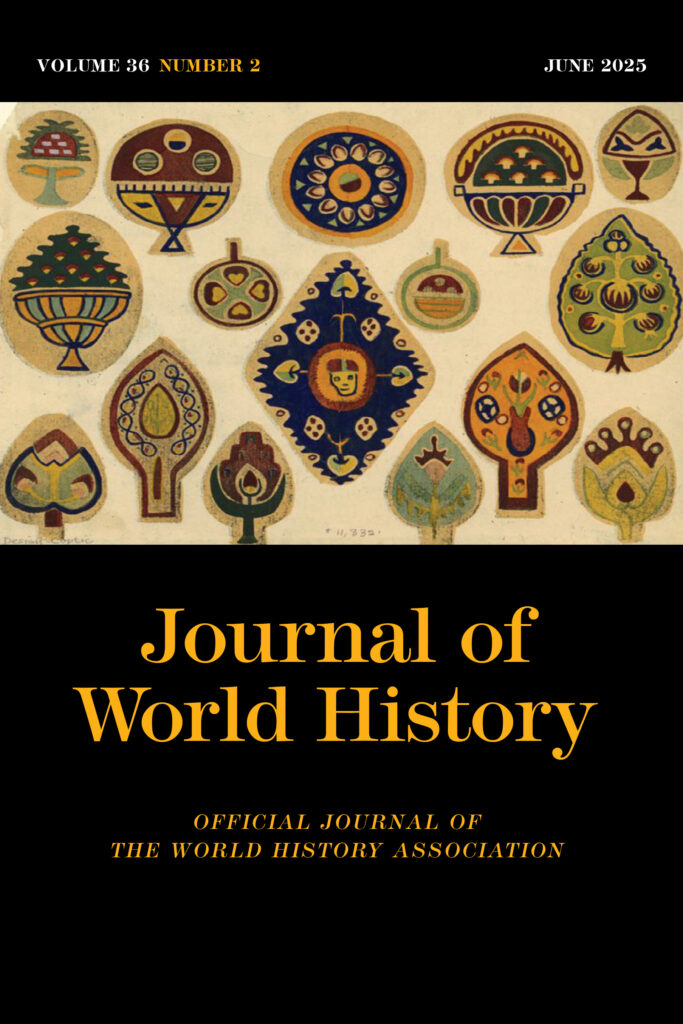
Hournal of Worl History 36-2 cover

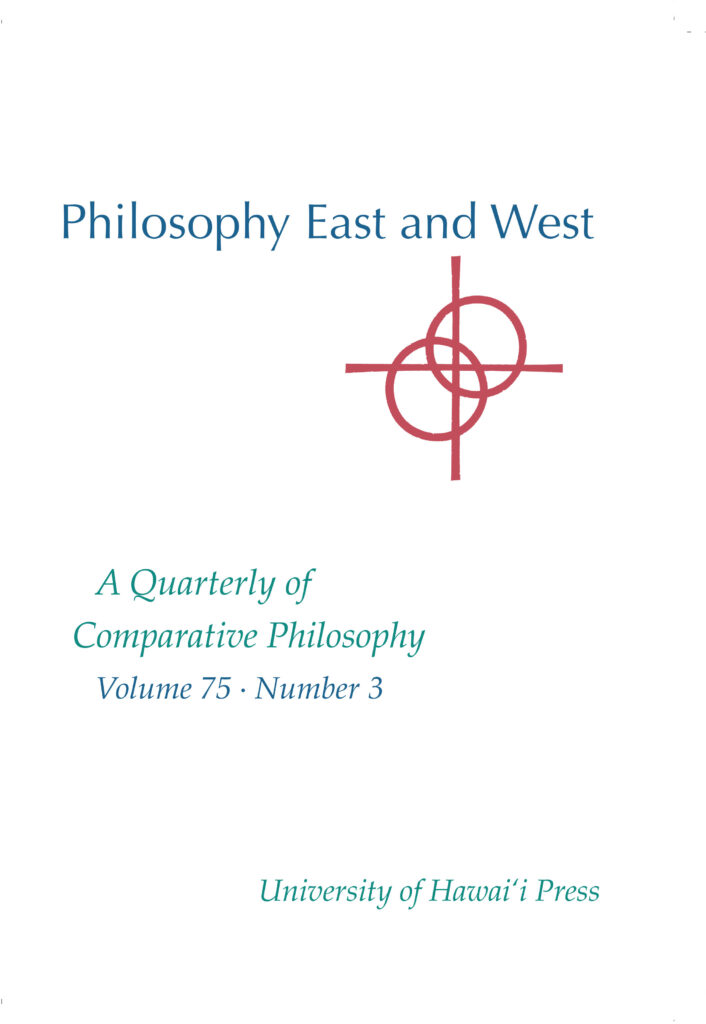
Philosophy East and West

Volume 75, Number 3 (2025)

This issue has an Special Feature: The Life and Work of J.N. Mohanty: A Philosophical Tribute.  Berger remembers Mohanty in the Introduction titled Some Memories of my Teachers, J.N. Mohanty stating:

It has been a little more than two years since I, along with many others, learned of the death of a giant in modern philosophy, and the loss still registers, as classical Indian Nyāya philosophers would say, the presence of his absence. Equally significant for his illumination of the thought of Edmund Husserl and of debates in the classical Indian tradition, that giant was Jitendranath Mohanty (1928–2023). I, along with several generations of people in these fields, in India and the United States, had the unmatched privilege and good fortune of being his student. I have written and done conference presentations about my learning experience from Mohanty and about his works in other venues, and so the editors of Philosophy East and West and this special issue have asked me to include my remembrance of him here.

Find this Special Introduction, articles, book reviews, and more at Project MUSE.

November 2025: A Trio of Book Exhibits

November is our busiest month for conference exhibits and this year is no exception. Find our staff at these in-person events from Boston to New Orleans to San Juan!
November  22 to 25, Boston Hynes Convention Center | Booth #625
(Order these and other selected titles at 30% off with coupon code AAR25!)​
Literature for Little Bodhisattvas: Making Buddhist Families in Modern Taiwan
   
 
November 21 to 23, New Orleans Ernest N. Morial Convention Center | Booth #1214
(Order these and other selected titles at 30% off with coupon code ACTFL25!)
 
 
November 20 to 22, Puerto Rico Convention Center, San Juan | Booth #105
(Order these and other selected titles at 30% off with coupon code AMST25!)​
Legacies of Incarceration: The World War II Experience of Hawai‘i’s Japanese

Journals: Asian Perspectives, Biography, Journal of Korean Religions + More

Cover for Asian perspectives 64-1

Asian Perspectives

Volume 64, Number 1 (2025)

A Neolithic Lapidary Workshop at the Lower Reaches of Yangtze River: Chaîne Opératoire of Quartzite Ornament Production at Fangjiazhou Site
Wen Yadi, Fang Xiangming, and Shi Yong

Production and Social Meaning of Wheel-Thrown Vessels during the Late Longshan Period in the Wei River Valley (Northern China): A Study of the Kangjia Site
Jiang Chengcheng, Guo  Xiaoning, Edward Allen, Miriam T. Stark, and Qin Xiaoli

Pottery Lipids Demonstrating Marine Product Tribute in Early Historic Japan
Natsuki MurakamiI, Alexandre Lucquin, Shou Fujimura, Susumu Kosaki, Yuki Oda, Miho SuzukiI, Hajime Baba, Takayuki Mifine, Oliver E. Craig, and Shinya Shoda

Refining the Cultural Chronology of Rurutu (Austral Islands), Central East Polynesia: Recent Excavations, Radiocarbon Dating, and Bayesian
Jennifer G. Kahn

Find these articles, book reviews, and more at Project MUSE.

Front cover of Biography Vol. 47 no. 3 (2024)

Biography

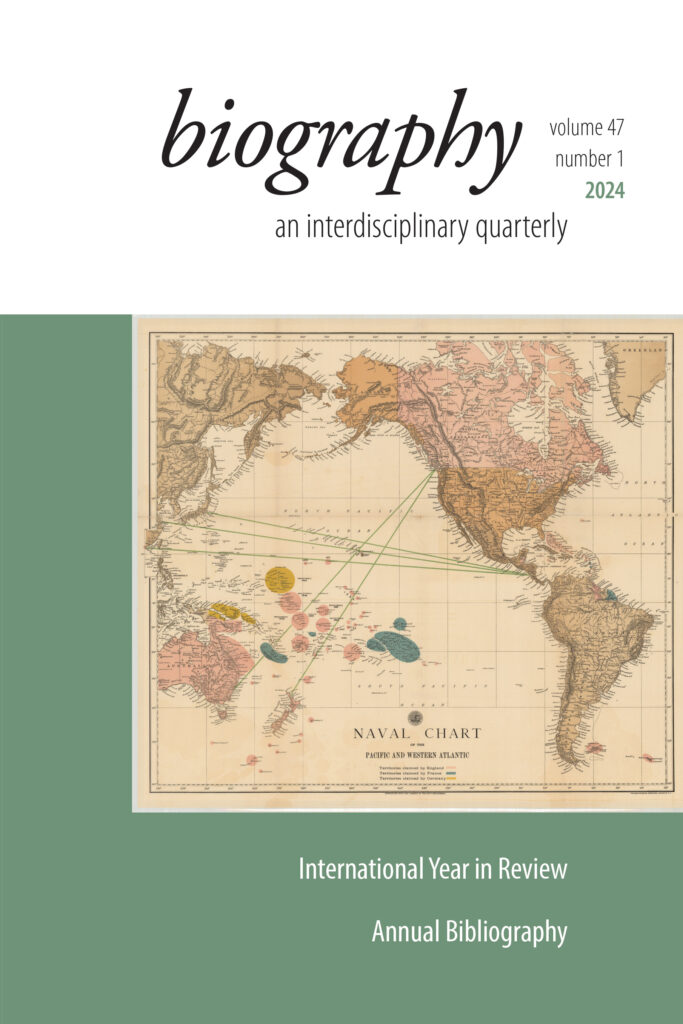
Volume 47, Number 1 (2024)

Editor John David Zuern reflects on the annual International Year in Review in the opening note to this issue:

I was impressed—as I always am—by the variety of life narratives and cultural contexts that the collection represents, and especially by the compassion and insight that our contributors bring to their reviews. This year’s essays introduce us to individual life stories that testify to collective values and freedoms while exploring the political and cultural forces that shape them.

Find this Editors’ Note, articles, and more at Project MUSE.

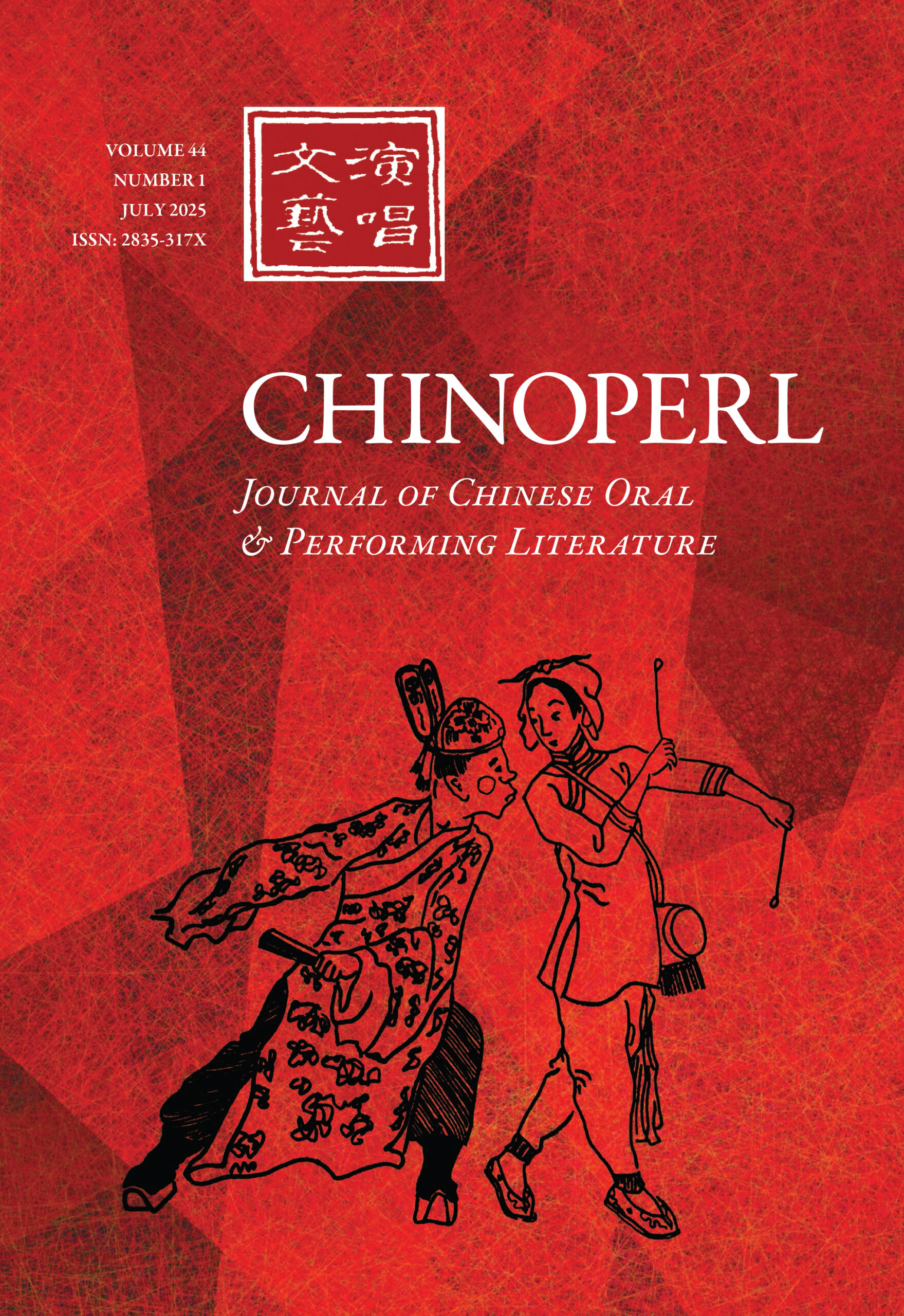
CHP 44-1 cover
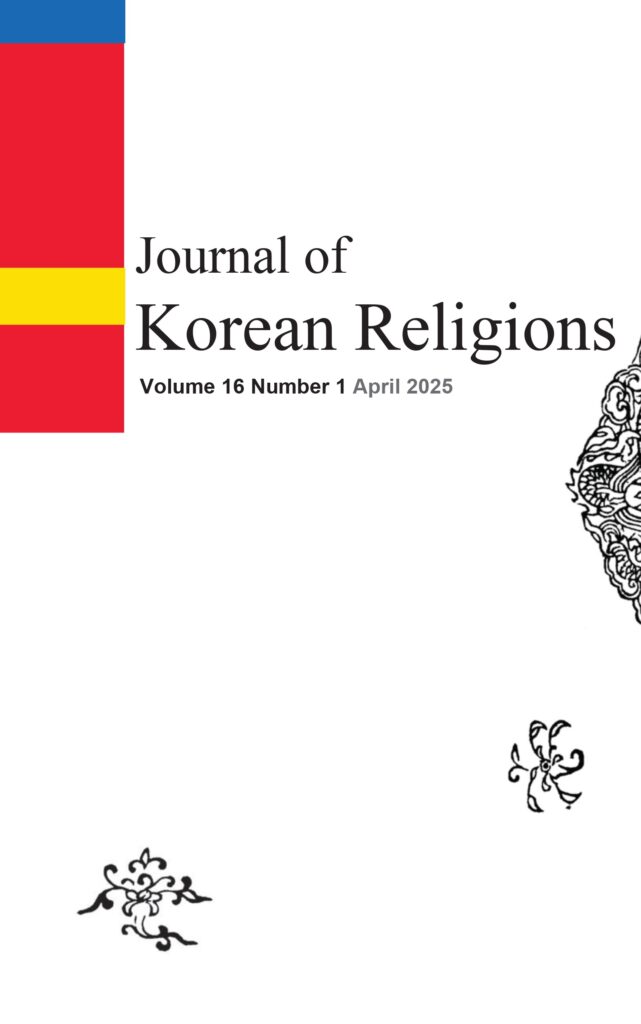
JKR 16-1 cover
OL 64-1 cover

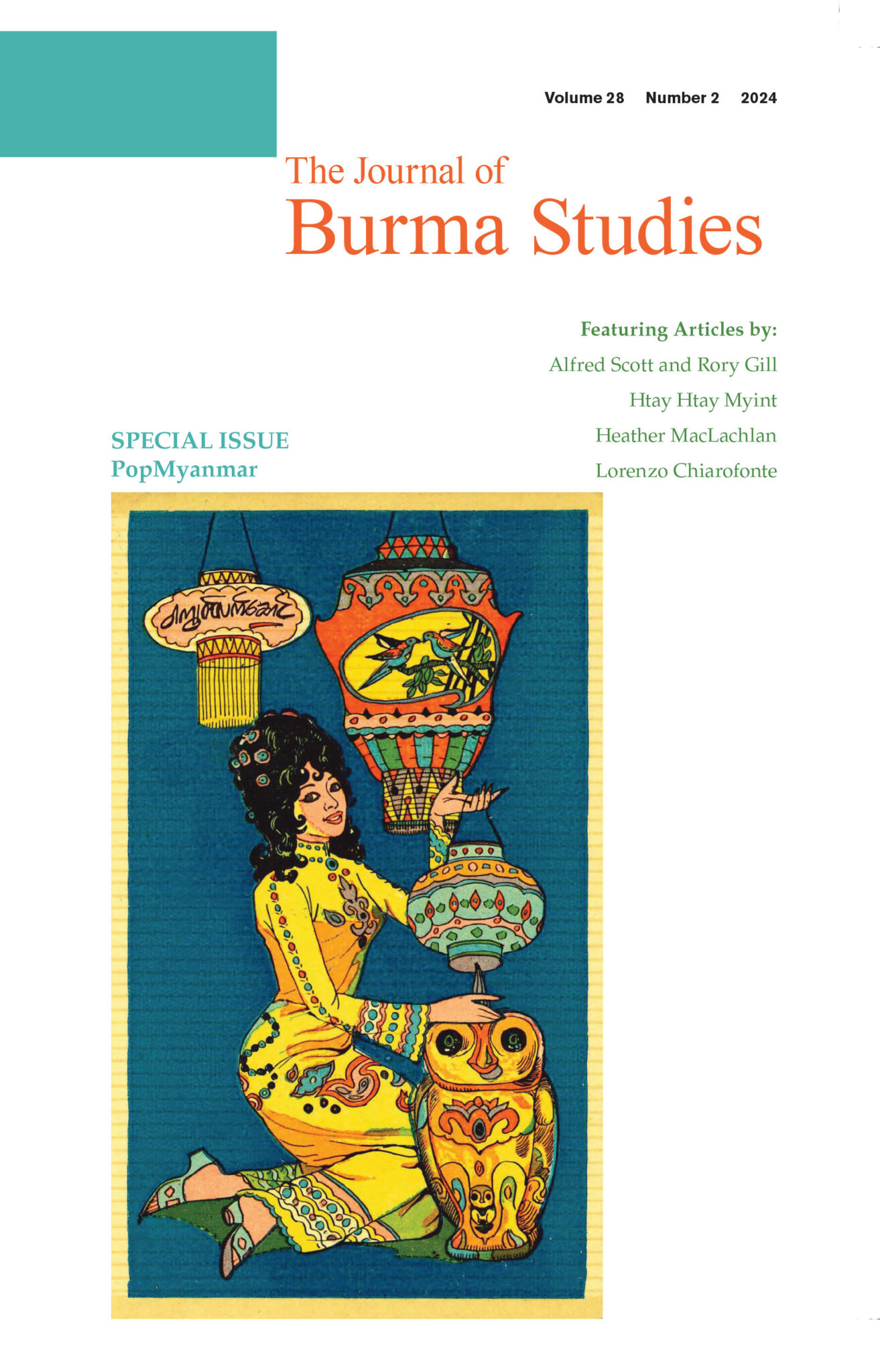
Open Access issue in Burmese and English, “Histories of Belonging and Identities (Re)Imagined” from The Journal of Burma Studies

The new special issue of Journal of Burma Studies is openly available on Project MUSE, including four articles in Burmese.

Photo from Maynadi Kyaw’s “The Appropriation of U Ottama by Japanese Bunkajin in Wartime Propaganda”: An Illustrated Book about U Ottama by Miyashita and Tanaka, 1943.
 
As described by co-editors Hitomi Fujimura and Alicia Turner:

This special issue, and the larger collaborative research project, began as small conversation between the two co-editors. Exchanging our experiences of field and archival work, we realized how fruitful interactions between scholars with different backgrounds and academic careers could be to reimagining Burma Studies. Although we both are “scholars from formerly colonizing countries,” our ways of understanding the Burmese language and culture are different because they are produced through scholars’ own culture and background. The more we talked, the more we realized that Burma Studies was poorer for lack of such discussions among scholars. While individual connections between scholars of different academic cultures have happened, there has rarely been an attempt to systematically bring these voices together.

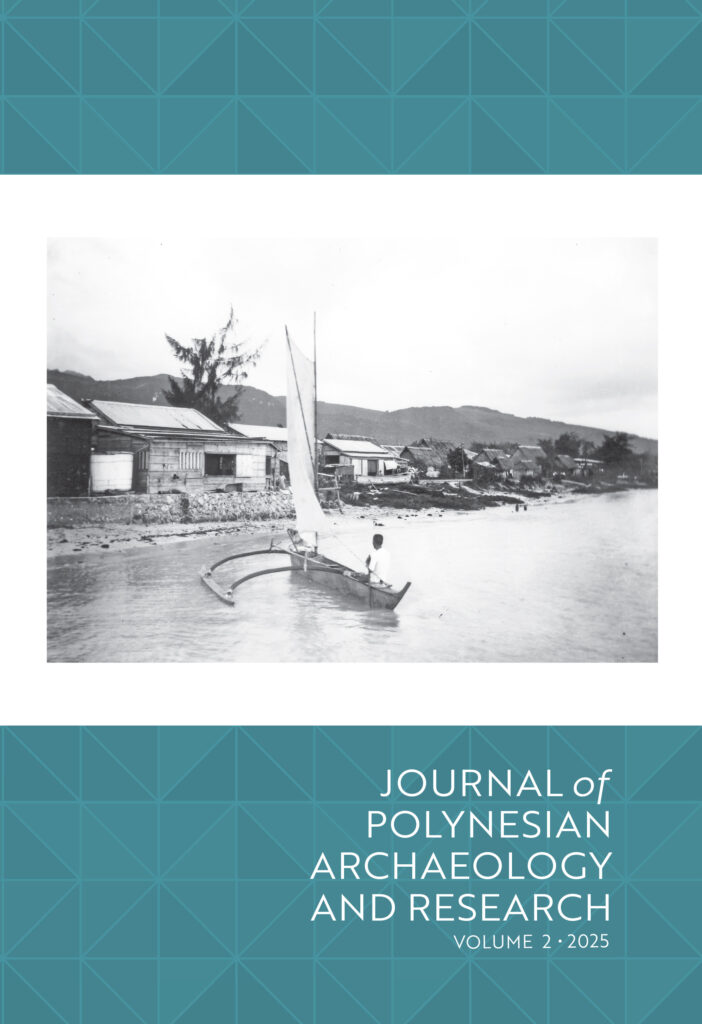
Journal of Polynesian Archaeology and Research, Vol. 2 – available now!

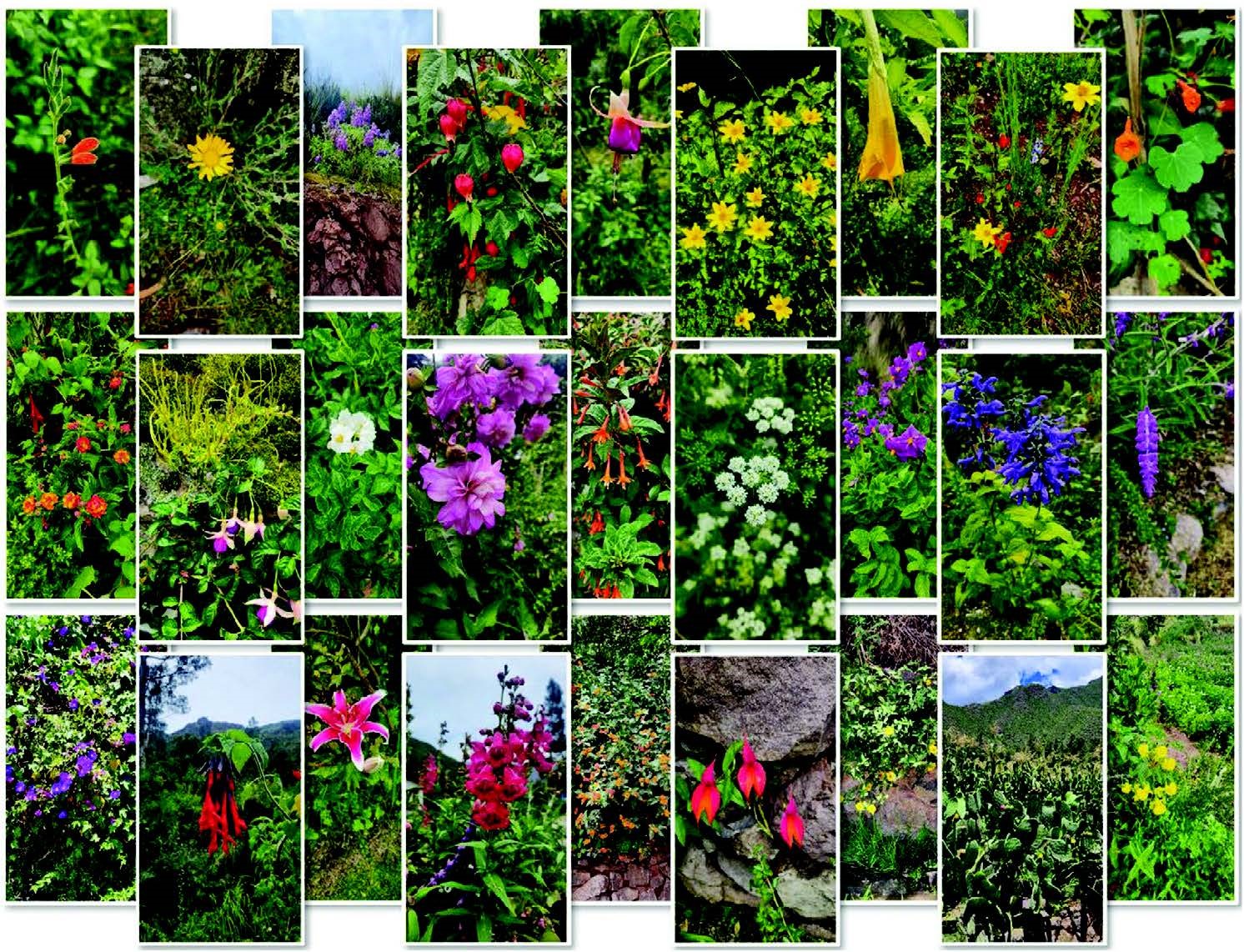
Photographs taken by TAO students were used to launch the digital database of flowering plants of the Sacred Valley region in “Terevaka Archaeological Outreach (TAO) 2023–2024 Field Report: Making Public Archaeology Less about Archaeology and More about Community Engagement” by Shepardson et al. Source: Terevaka Archaeological Outreach.

Co-editors Dr. Mara Mulrooney and Dr. Jillian Swift developed Journal of Polynesian Archaeology and Research to bring together important research and conversations around archaeology, history, and heritage management in Polynesia.

Table of Contents

Articles

Native Hawaiians in the Northern Mariana and Ogasawara Islands: An Historical Perspective
Boyd Dixon and Ben Barna

A Pictogram from Anakuakala (Pāhoa Cave) in the Puna District, Hawai‘i Island
Timothy E. Scheffler

Gendered Publishing Patterns and Occupational Trends, Oceania Archaeology 2005–2020: Regional Journal Results
Caroline Donovan and Jennifer G. Kahn

Reports and Commentaries

Terevaka Archaeological Outreach (TAO) 2023–2024 Field Report: Making Public Archaeology Less about Archaeology and More about Community Engagement
Britton L. Shepardson, Manuel Aguilar, Margarita Amezquita, Lexy Apaza, Carlos Arriagada, Hiva Atan, Javiera Ayala, José Pablo Ayala, Frank Baca, Mauricio Baca, Manoa Boulineau, Sindbad Boulineau, Antonela Cadagan, Ermelina Calderón, Javi Campos, Mana‘u Cardinali, Azumi Ccanto, Vicente Cifuentes, Isidora Contreras, Jean Cruces, Silvana Cruces, Shomara Cruz, Martín Cuevas, Jhojan Cusihuata, Ma‘aranui Enright, Angélica Figueroa, Pamela Figueroa, Renata Foitzick, Benjamin Fuentes, Fernando Ganga, Gabriel González, Luz González, Andrés Guzman, Maria Homberger, Mata‘u Hugueño, Hitu Icka, Vai Icka, Hanga Ika, Patricio Lagos, Hoa Laharoa, Mary Lopez, Dayana Lovon, Gabriela Maldonado, Mark McCoy, Omar Monares, Fernanda Mondaca, Alison Montoya, Alonso Montoya, Mara Mulrooney, Sofiu Muñoz, Heirangi Olivares, Miru Pakarati, Hiva Iti Pakomio, Apetahi Quiroz, Juan Manuel Quispe, Maryori Quispe, Georgina Riroroko, Repahoa Riroroko, Fernando Rivera, Antonia Rojas, Rocío Rupay, Amado Soto, Dorita Suarez, Rocío Teao, Ukita Teao, Mana Ora Teave, Kio Tuki, Moana Tuki,
Angel Valdes, Josefa Vargas, Gabriel Vera, Valentina Vicencio, and Valentina Wilkins

Book Review

Feathered Gods and Fishhooks, The Archaeology of Ancient Hawai‘i.
Reviewed by Timothy M. Rieth

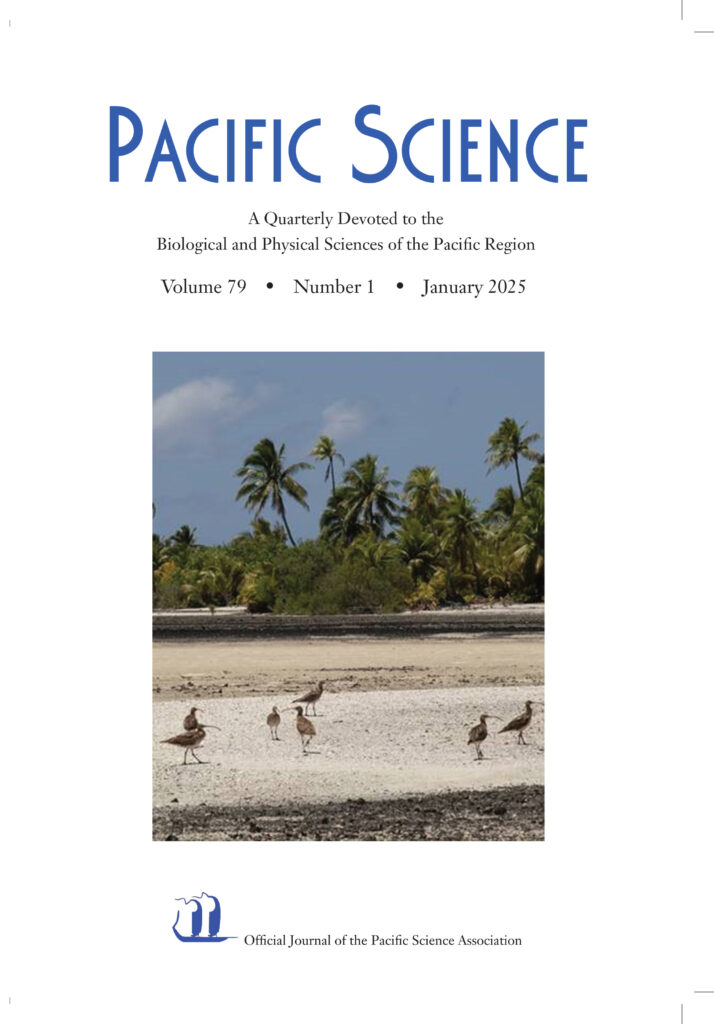
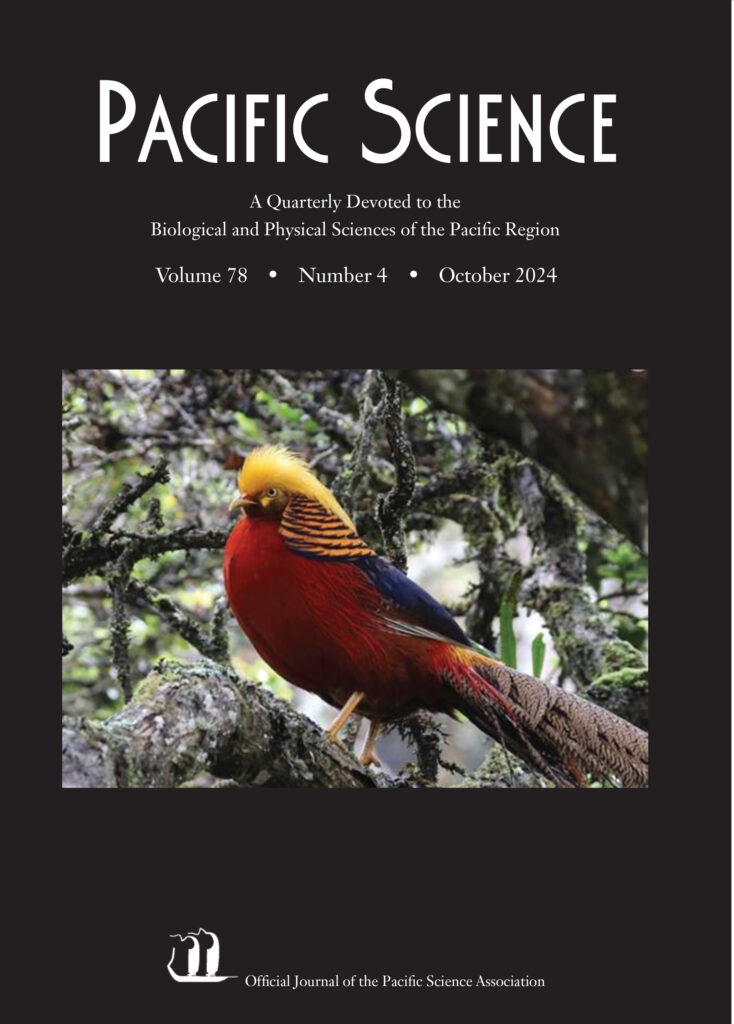
Celebrating the Golden Pheasant on Maui in the latest issue of Pacific Science 

This issue features a striking black cover, a deliberate design choice inspired by an article on the dark-throated pheasant and its symbolic contrast with the pale-throated species.

Golden Pheasant of Maui Pacific Scinece 78-4
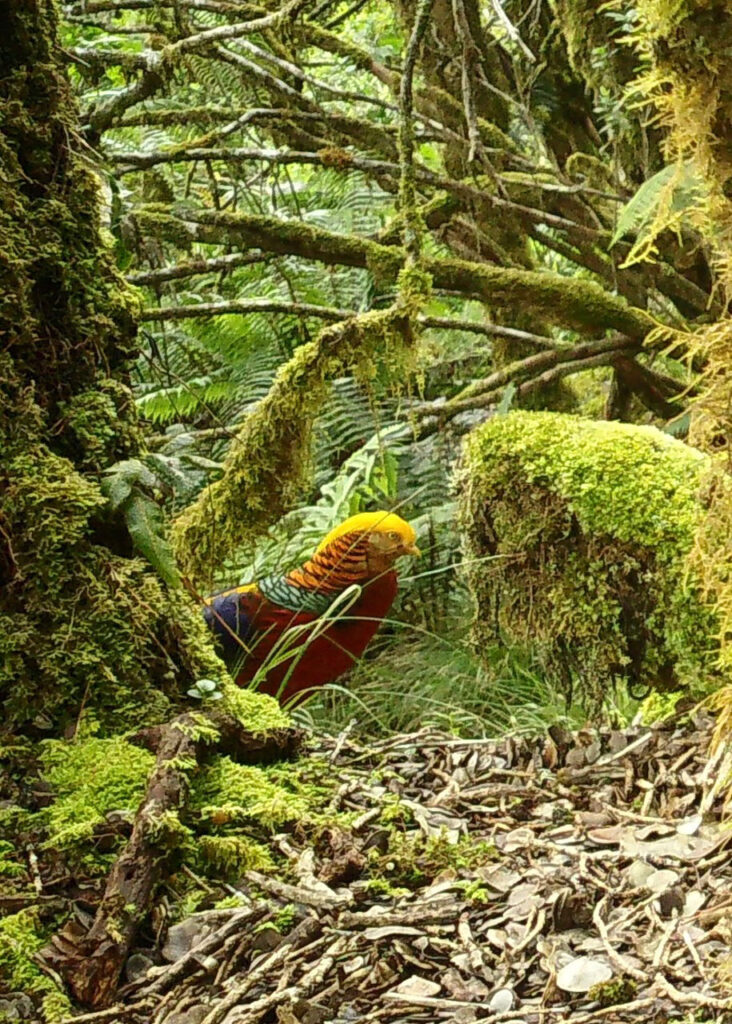
Photo: Golden Pheasant (Chryslophus pictus) male of the “pale-throated” morph.  Compare with the “dark-throated” morph on the front cover.  Photographed by Chris Daniels at upper Kīpahulu Valley, Haleakalā National Park, 30 August 2021. 

Ten More Years of the Golden Pheasant (Chrysolophus pictus) on Maui, Hawaiian Islands

Researchers Thane Pratt, Christopher C. Warren, Erika K. Kekiwi, Kerri Fay, and Richard J. Camp explore the fascinating contrasts between the dark-throated and pale-throated Golden Pheasant on Maui. The article discusses the history of these game birds as outlined in the abstract:

Since the introduction of the Golden Pheasant (Chrysolophus pictus) to
Haleakalā volcano, Maui, three decades ago, subsequent reports have hinted at an expansion of this nascent population. We draw from a variety of data sources to learn about this pheasant’s present status on Maui. First, forest bird surveys conducted every five years revealed that the frequency of Golden Pheasant detections has greatly increased, and the bird has both maintained its former distribution and expanded eastward into Haleakalā National Park (NP). Second, reports to eBird from The Nature Conservancy’s Waikamoi Preserve, where Golden Pheasants first appeared on Maui, demonstrate that the frequency of observations has increased and is strongly seasonal, predominantly in the spring. Third, autonomous recording units monitoring endangered forest birds recorded pheasants too, adding new locations. Finally, trail cameras set to monitor mammals picked up pheasants as well, showing males of two color morphs: original “wild-type” and “dark-throated.” Trail cameras also documented a small juvenile at Waikamoi Preserve and both females and males in Haleakalā NP. By “connecting the dots” of mapped occurrences, we traced the pheasant’s progression through a narrow band of subalpine cloud forest with open understory, extending from Waikamoi Preserve eastward to upper Kīpahulu Valley, a distance of 14 km. In summary, this body of evidence supports the claim that the Golden Pheasant has established a self-sustaining population on Maui, and we propose that the species’ success there may be attributed to the minimal influence of predators and the absence of competing gallinaceous birds in its preferred habitat.

Discover the issue here:

Pacific Science 78-4

Pacific Science 78-4 cover

Other articles in this issue:

Thor Heyerdahl’s Legacy: Ichthyological and Herpetological Collection on Fatu Hiva (Marquesas Islands) in 1937
Erwan Delrieu-Trottin, Thore Koppetsch, Ann-Helén Rønning, and
Michael Matschiner

Interactions between Humans and South American Sea Lions (Otaria byronia) during an Avian Flu Outbreak in the Southeastern Pacific
Liliana Ayala, Raúl Sánchez-Scaglioni, and Gonzalo Gómez


Length-Weight Relationships for 15 Coral Reef Fish Species from the Northern Line Islands
Anela K. Akiona, Brian J. Zgliczynski, Beverly J. French, and Stuart A. Sandin


Tracing the History of Māori Horticulture and Dogs (Canis familiaris) at Two Volcanic Cone Maunga Pā, Auckland, New Zealand, Using Microfossil and 14C Analyses
M. Horrocks, S. H. Bickler, A. Apfel, R. Shakles, E. Cameron, R. Foster, and B. Presswell

Weed Population Dynamics and Composition in a Tropical Island Eggplant (Solanum melongena L.) Agroecosystem: Implications for Sustainable Weed Management
Aradhana Devi Deesh, Leslie Toralba Ubaub, Michael Furlong, and Mereia Fong Lomavatu

Journal of World History Special Issue: Aesthetic Explorations of the Global Past – Free!

This week, the World History Association (WHA) gathers for its 34th Annual Meeting in Louisville, KY. This year’s theme is: Protest, Prohibition, & Pugilism: Louisville & the World.

The Journal of World History offers this accompanying special collection, “Aesthetic Explorations of the Global Past” free on the Project MUSE platform. Select World History titles will also be 30% off from July 1 through Sept 30, 2025.

The 11 articles selected by Emily De La Torre, June Bofetiado Tanner, and Laura J. Mitchell in “Aesthetic Explorations of the Global Past” provides accessible resources for scholars and teachers worldwide, with content freely available through September 2025.


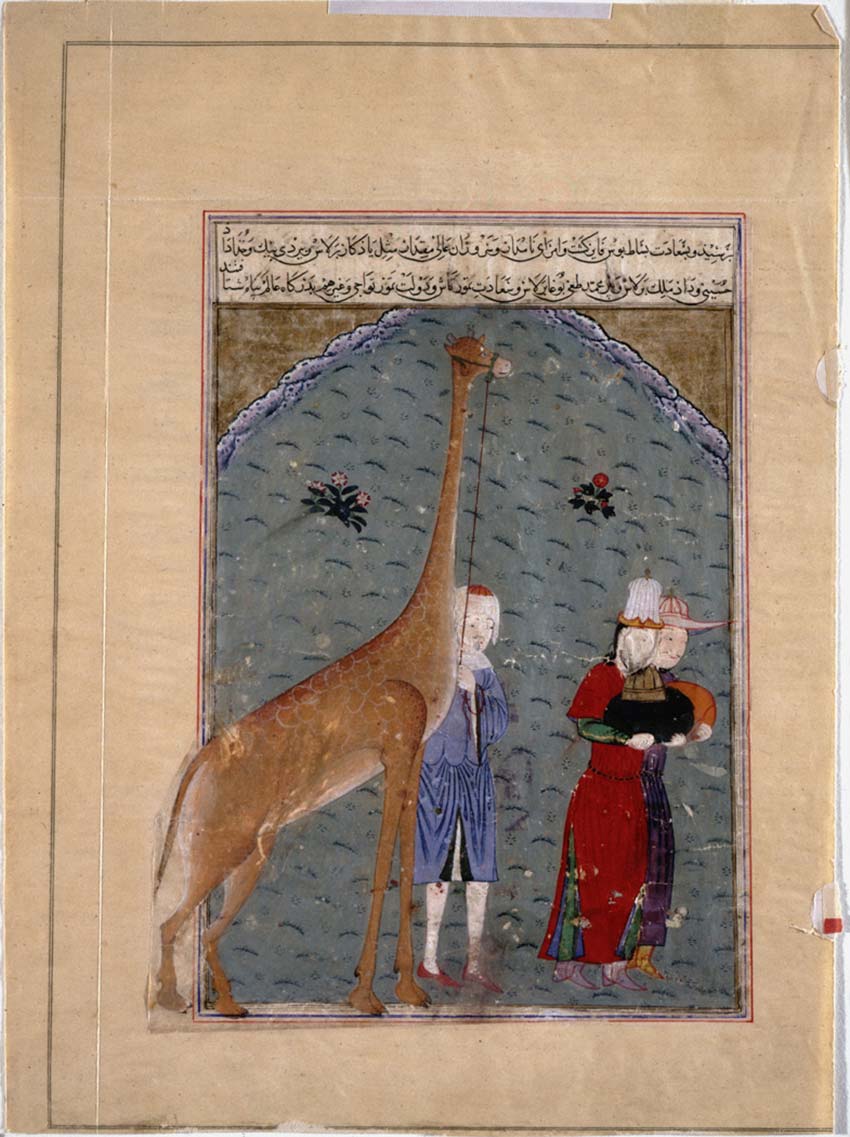
From George Riello’s “The ‘Material Turn’ in World and Global History” this issue: The ambassadors of the Egyptian Sultan al-Nasir Faraj ibn Barquq present their gifts of tribute, including a giraffe, to Timur (1370–1405).  Manuscript of the Zafarnama of Sharaf al-Din ‘Ali Yazdi Shiraz. Iran, 1436.  Source: Watercolor, gold, and ink on paper, 24.2 x 17.8 cm. Worcester Museum, Jerome Wheelock Fund, 1935.26.

The trio introduces this free special issue in their introduction, “Aesthetic Explorations of the Global Past”:

“[W]as such a thing as a global measure for human perfection even conceivable?” asks Sebastian Conrad, plunging headlong into an exploration of aesthetics. Can something understood as individual, relative, and locally contingent also be a useful category of analysis for world history? If a British observer in the 1750s considered a Muslim woman wearing şalvar (baggy trousers) in Istanbul to be beautiful, but an English woman wearing the same clothes in London to be shocking, can aesthetics offer a productive theoretical entry point for considering connections and disruptions across space and time? The papers in this year’s open-access special issue drawn from the Journal of World History’s backlist answer these questions with a hearty, collective “Yes!”

Explore the special issue

World History Titles – 30% Discount

Starting July 1 through September 30, get 30% off select World History titles, including ones in the Perspectives on the Global Past series. Use coupon code WHA2025.


Learn more about the WHA conference here.

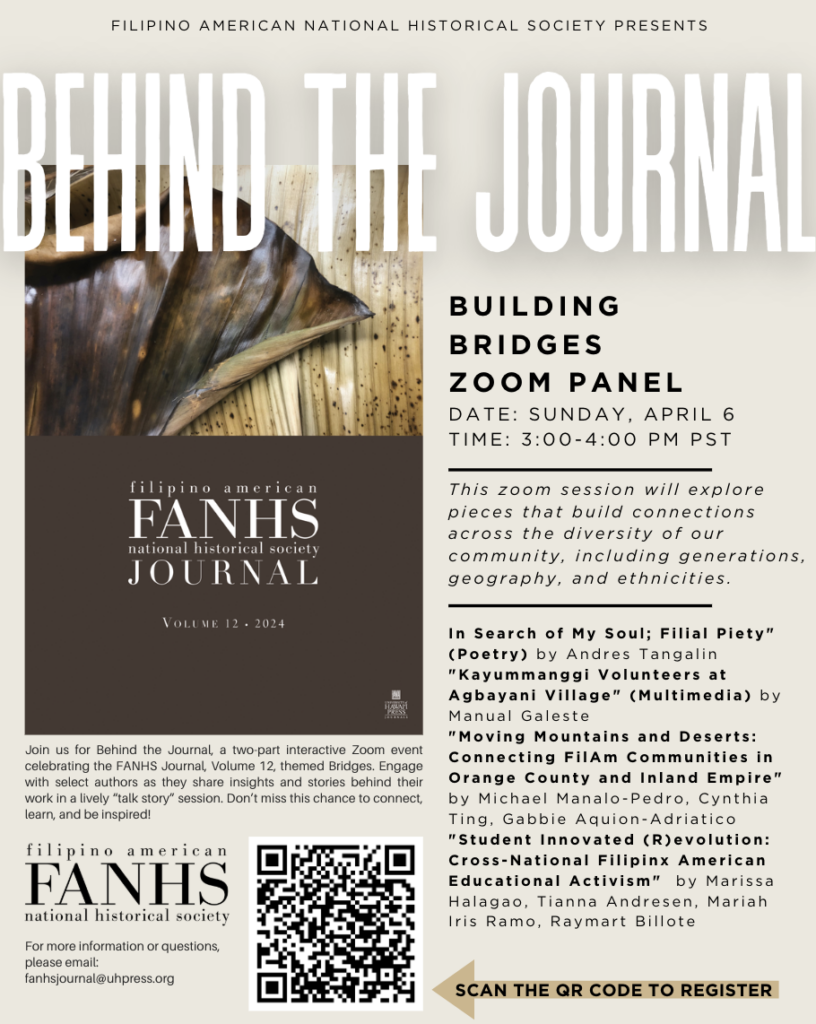
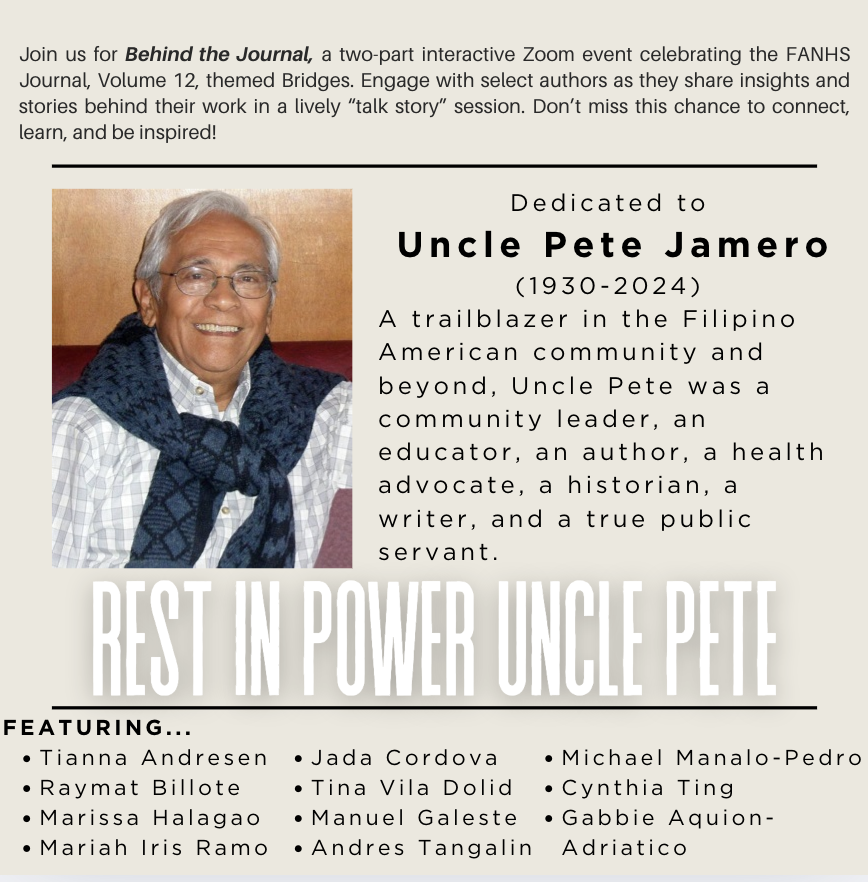
Behind the Journal: FANHS Hosts Building Bridges Zoom Panel 4/6 – Register Today!

Join the Filipino American National Historical Society Journal editors for an interactive Zoom event celebrating the recent issue focused on the theme, “Bridges.”

“Bridges” was inspired by Fred Cordova’s classic 1996 published piece, “The Bridge Generation and Building Bridges.”  Engage with select authors as they share insights and stories behind their work in a lively talk story session.

Panel: Building Bridges
Date: Sunday, April 6, 2025
Time: 3:00 – 4:00 PM PST
Register here to receive ZOOM link

This session will explore pieces that build connections across the diversity of our community, including generations, geography, and ethnicities.

For more information, please contact [email protected].

Now in Print!

The FANHS Journal is now available digitally via Project MUSE and in print via subscription with the University of Hawai‘i Press.


Read Volume 12

Find the “Bridges” issue online at Project MUSE


Recommend

Bring the FANHS Journal to your library

Join Mānoa Journal at AWP 2025 in Los Angeles (March 26-29)

AWP Bookfair Flyer

Mānoa journal will be at AWP 2025 in the Los Angeles Convention Center. Featuring thousands of literary professionals and hundreds of events celebrating the act of writing, the AWP Conference and Bookfair is one of the largest writing events in the world.

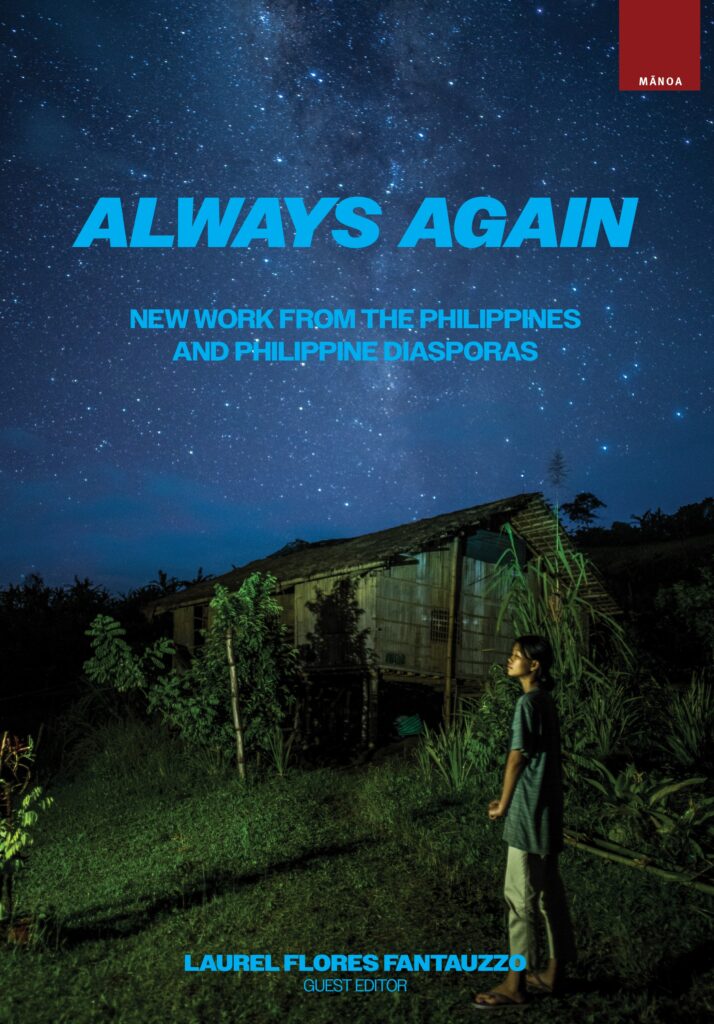
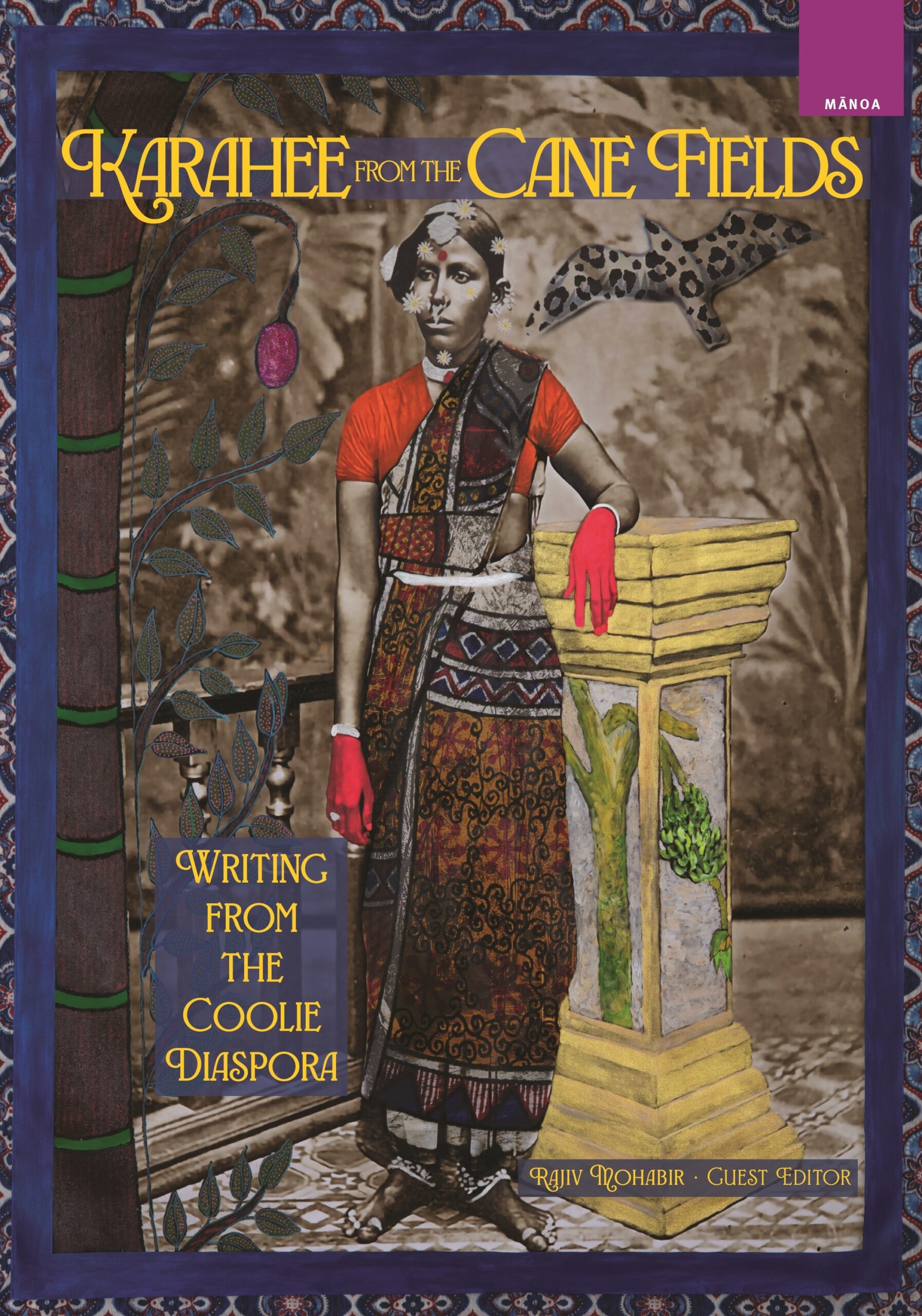
Mānoa journal will be present both at the bookfair and hosting special events throughout on their latest two releases (Karahee from the Cane Fields and Always Again) and upcoming issue, Architectures of FuturoPasados

Bookfair: During the conference, swing by booth 614 in West Hall A from Thurs., March 27 to Sat., March 29.

Panels: Join the panel, Cane & Malunggay: Mānoa Journal Explores South Asian Coolie & Philippine History, from 12:10–1:25pm on Sat., March 29 in room 409AB.

Pau Hana: Mānoa journal will be hosting Pau Hana Friday, an off-site reading event along with the UH Mānoa creative writing program, on Fri., March 28 from 5–7pm at the South Park Commons. Pau Hana Friday will be a grand gathering of UH student voices and vibrant tales created in the heart of the Hawaiian islands. Snacks and drinks will also be provided. Register here.

Learn more, including panels featuring Mānoa journal contributors, here.

Read

Freely available via Project MUSE for a limited time

Always Again: New Work from the Philippines and Philippine Diasporas

On this Gathering by Laurel Flores Fantauzzo

A Writer’s Secret Moves:On a Paired Rereading of Rizal’s Noli and Fili by Gina Apostol

This is an image of the front cover of Mānoa vol. 36 no. 1.

On Organizing the Coolie’s Karahee: The Diaspora’s New Literary Directions by Rajiv Mohabir

Subscribe

Subscribe to Mānoa journal today

Discounts offered to AWP attendees.

AAS2025 | 30% OFF on Select Asian Studies Titles

SEE OUR FULL LIST OF 30% OFF TITLES


NEW IN ASIAN STUDIES


FEATURED ASIAN STUDIES JOURNALS