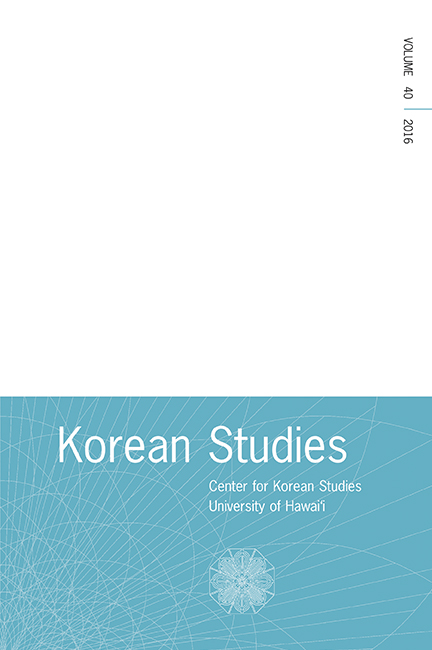
Korean Studies:A Multidisciplinary Journal on Korea and Koreans Abroad celebrates its 25th year in 2017. With that milestone also comes new leadership with editor-in-chief Christopher J. Bae of our very own University of Hawai’i at Mānoa. Read more about his background and goals for the annual publication in our interview below. You may also preview early release articles from the forthcoming volume or browse archives of the journal on Project MUSE.
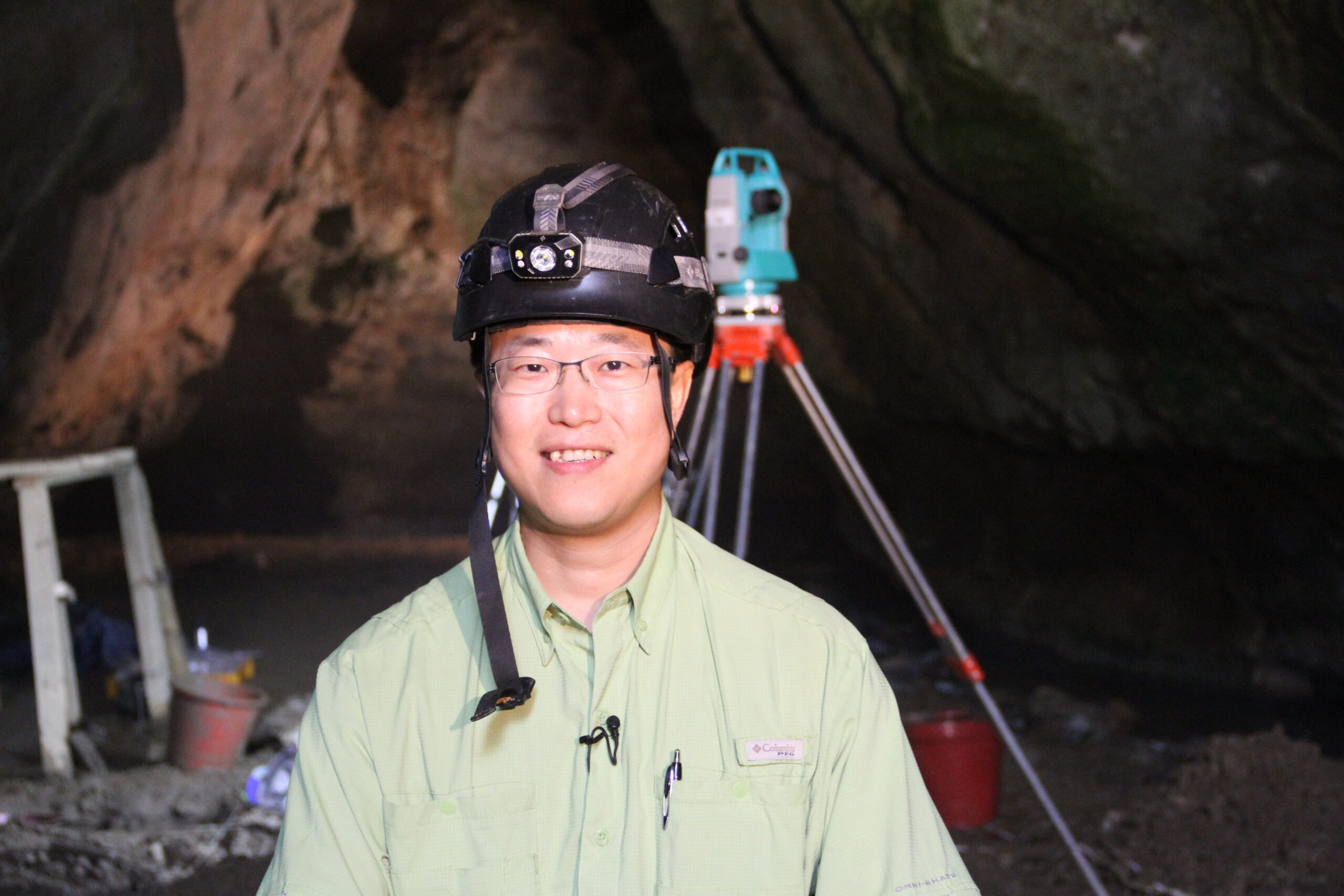
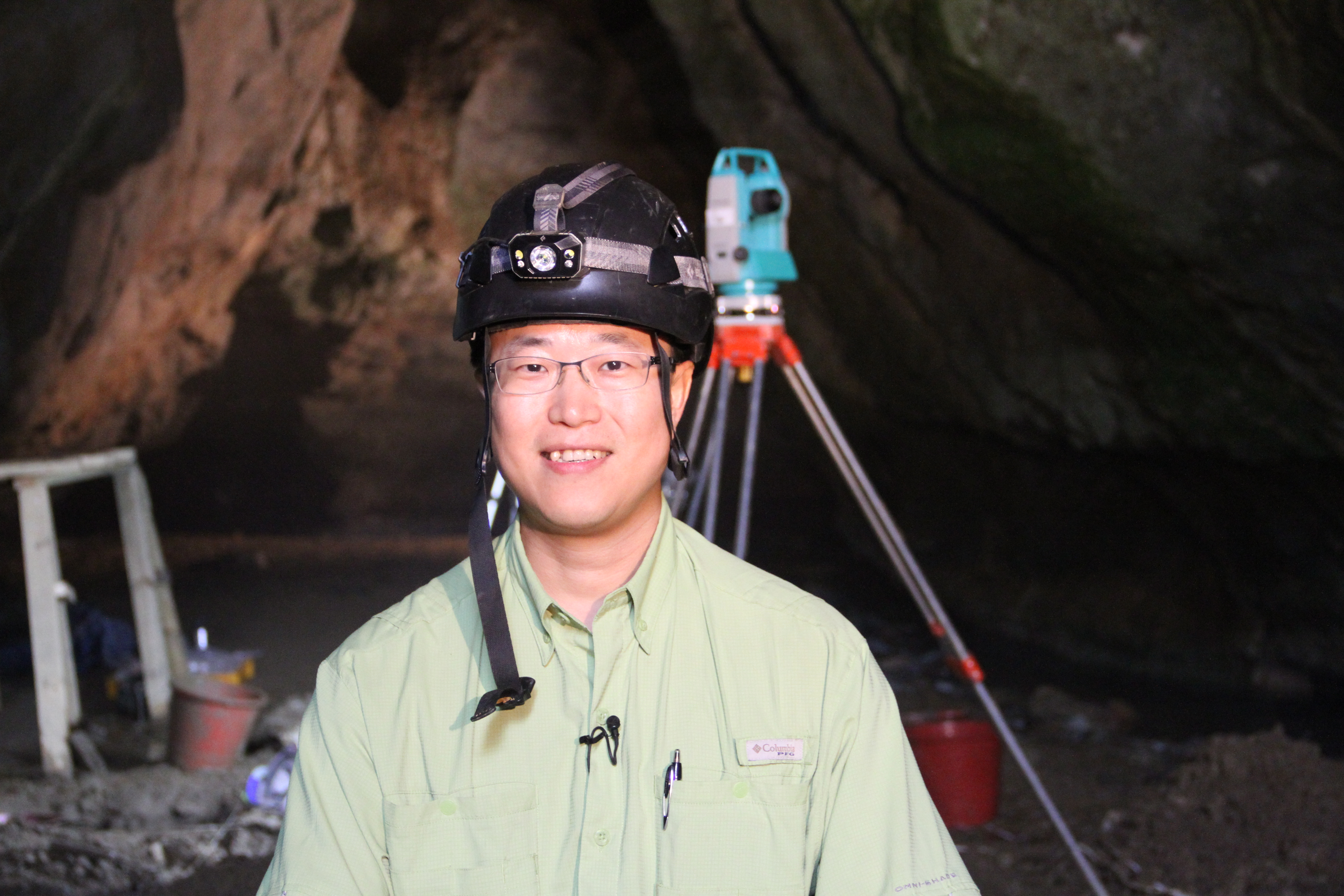
Christopher J. Bae, an UH Mānoa professor of anthropology and the new editor of Korean Studies, is shown here at an excavation site in Korea.
Tell us a bit about yourself and your new role as editor of Korean Studies.
I am a full professor in the UH Mānoa Department of Anthropology, and I specialize in the field of Asian paleoanthropology (human evolutionary studies.) I particularly focus on early human sites and materials in Korea, China, and Japan, and have recently started to investigate setting up similar research projects in Southeast Asia. So the connection for me with Korean Studies is that one of my core areas of focus is Korea, as I have worked there for the past quarter century collaborating on a diversity of projects related primarily to Korean prehistory.
The invitation to take over the editorship of the journal actually came as a surprise to me as the previous editor(s) have been doing a fine job managing the journal. That being said, I was honored to be invited to take on the role of editor of the journal as it is one of the oldest and most prestigious Korean studies focused journals outside of Korea.
How has Korean Studies evolved over the years?
Korean Studies was started by the Center for Korean Studies at UH Mānoa in 1977. It is a journal that is published annually and we will publish our forty-first volume this year. The main goal of the journal has always been to publish original research on Korean studies from humanities and social science perspectives. That goal has not changed since its inception. One minor change perhaps may be that we have become more open to publishing conference proceedings in the journal. For instance, in Vol. 37 (2013), we included a special section titled “Urban Cultural Landscapes of Colonial Korea, 1920s-1930s” that featured papers from a two-day conference held at the Center for Korean Studies at UH Mānoa in February 2012.
Have you learned anything interesting from your first months as editor?
Probably the most interesting aspect that I have learned since taking over the editorship is how broad Korean studies really is. I personally am learning a great deal about the different fields and how they contribute to the broader picture of Korean studies generally. Korean Studies is serving to broaden my own horizons in this area and from that perspective I really enjoy serving in this role.
In your field, what issues are particularly relevant right now?
North Korean politics is probably one of the hottest topics within Korean studies right now. As such, one of the first decisions I made after taking over the editorship was to invite Victor D. Cha, currently one of the most prominent U.S.-based specialists on North Korea, to contribute an article to Korean Studies. Cha’s piece “Informal Empire: The Origins of the U.S.–ROK Alliance and the 1953 Mutual Defense Treaty Negotiations” will appear in Vol. 41. I anticipate Cha’s paper should be well-received and well-cited.
Do you have any advice for academics interested in submitting to your journal?
We are open to submissions on any topic related to Korean studies. But if an author is not sure whether his/her manuscript may be suitable for our journal, they should contact the editor directly.
We have new Author Guidelines posted online (click here). It would help any potential authors to make sure their manuscripts follow the Author Guidelines closely before submitting their manuscripts.
What’s next for Korean Studies?
Since taking over the journal, I have started to make a number of changes. In particular, the journal now has formal Author Guidelines and a “News and Comments” section where authors may comment on previously-published works either in our journal or elsewhere. We are also moving to an online submission system, which should be up and running by the end of the year, if not sooner.
Because Korean Studies is such a broad area journal we will continue to be open to publishing manuscripts from various disciplines that cover Korean studies. But one area I see us publishing more on moving forward is the growing area of Korean-American or simply “Koreans abroad” types of research. For instance, studies on Korean immigrant history to places like the Americas, Europe, or Australia/New Zealand are particularly interesting. “Race” relations and how Koreans have assimilated/acclimated to new environments are also highly pertinent, especially given that this year marks the 25th anniversary of the famous Rodney King Riots in Los Angeles, California.
About the Journal
Korean Studies, edited at the University of Hawai‘i Center for Korean Studies, seeks to further scholarship on Korea by providing a forum for discourse on timely subjects, and addresses a variety of scholarly topics through interdisciplinary and multicultural articles, book reviews, and essays in the humanities and social sciences. All scholarly articles on Korea and the Korean community abroad are welcomed, including topics of interest to the specialist and nonspecialist alike.
Subscriptions
Individual and institutional subscriptions available through UH Press.
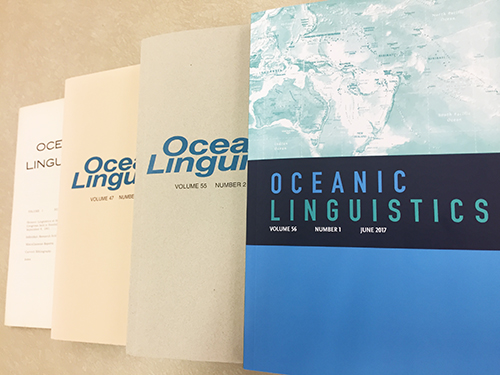
In 55 years, Oceanic Linguistics has grown from a 41-page inaugural issue stapled together to perfect-bound tomes published biannually. But as the field—and the journal—expanded, the cover remained constant with its signature blue logo since 1966. Now in its 56th volume, Oceanic Linguistics has a new look, reflecting Oceania.
Verb-Adjacent Clitic Climbing and Restructuring in Isbukun Bunun by Lillian Li-Ying Li
Influence of Social Network on Language Use of Kejaman Speakers
in Sarawak, Malaysia: by Amee Joan and Su-Hie Ting
The Vitality of Minority Languages in Malaysia by Paolo Coluzzi
Event Integration and Argument Realization in Nonconcordant Verb Serialization in Tsou by Gujing Lin
A First Reconstruction of Vowels in Proto-Timor-Alor-Pantar by Tyler M. Heston
Squibs
The Challenge of Semantic Reconstruction: Proto-Malayo-Polynesian *suku ‘lineage; quarter’? by Robert Blust
Stress and Gemination in Alor-Pantar Languages: Revising Heston (2016) by Antoinette Schapper
REVIEWS
Jean-Michel Charpentier and Alexandre François’s Linguistic atlas of French Polynesia/Atlas linguistique de la Polynésie françaisereviewed by Mary Walworth
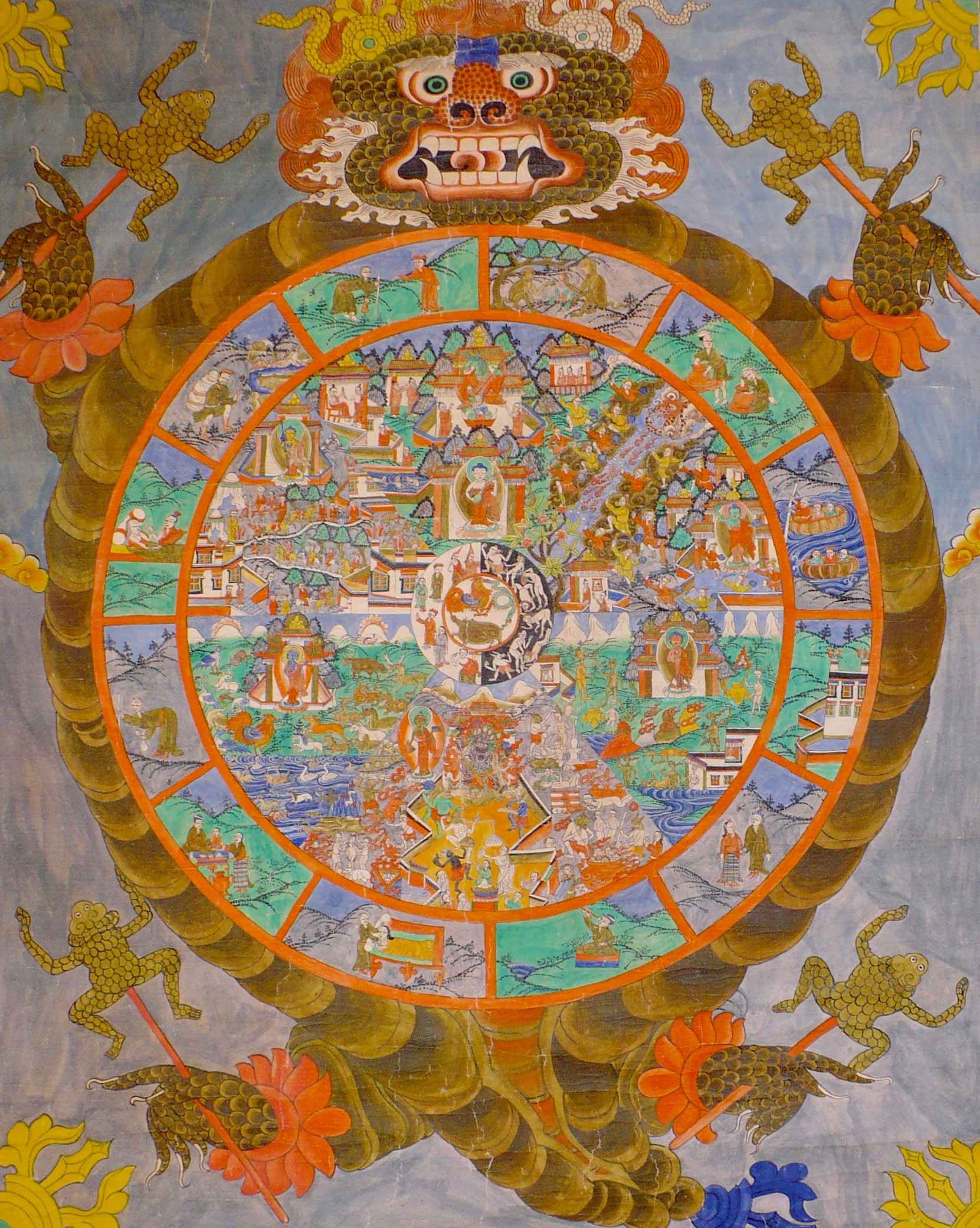
From Cartographic Anxieties in Mongolia: The Bogd Khan’s Picture-Map Uranchimeg Tsultemin. Bhavacakra, the Buddhist Wheel of Life. Thangka painting, Central Tibet, late nineteenth century. Source: Theos Bernard-Eleanor Murray collection, Berkeley Art Museum and Pacific Film Archive.
From Cartographic Anxieties in Mongolia: The Bogd Khan’s Picture-Map Uranchimeg Tsultemin. Bhavacakra, the Buddhist Wheel of Life. Thangka painting, Central Tibet, late nineteenth century. Source: Theos Bernard-Eleanor Murray collection, Berkeley Art Museum and Pacific Film Archive.
From Rhee et al.’s “Korean Contributions to Agriculture, Technology, and State Formation in Japan: Archaeology and History of an Epochal Thousand Years, 400 B.C.–A.D. 600”
June 23, 2017: This post has been updated with the results shown in bold.
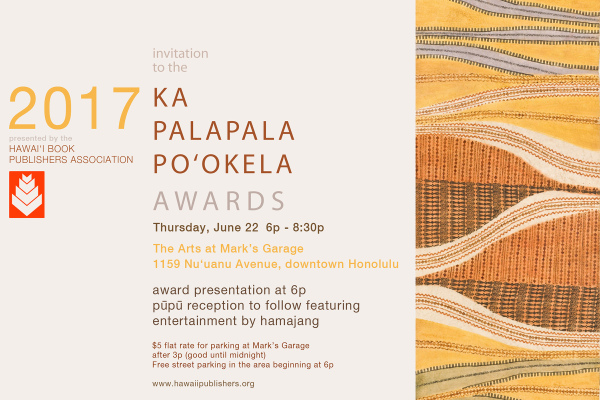
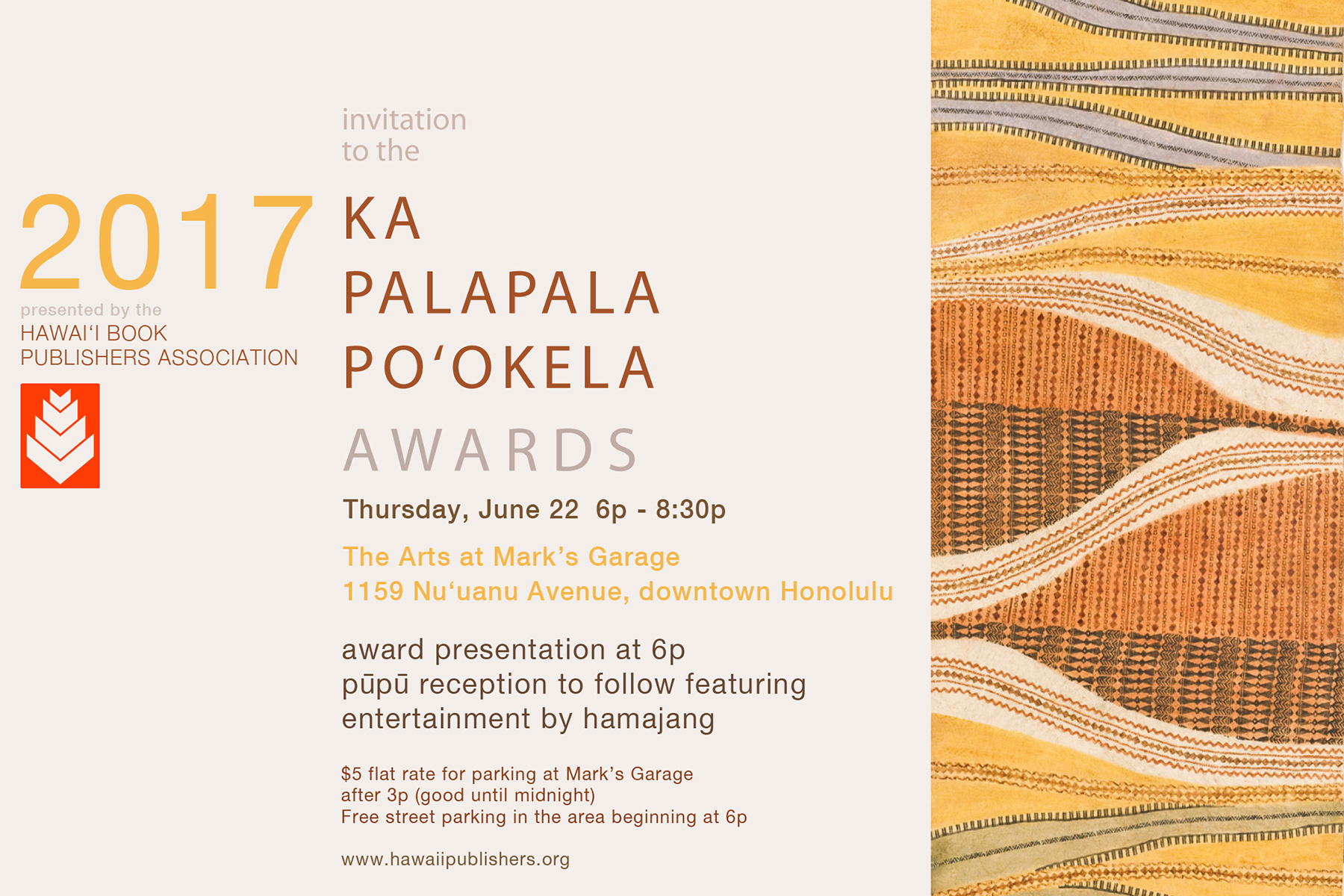
Now in its 23rd year, the Ka Palapala Po‘okela Awards are presented by Hawai‘i Book Publishers Associationto honor Hawai‘i’s finest books and their authors, illustrators, photographers, designers, and publishers. While previously given annually, HBPA has switched to a biennial schedule, and this year’s eligible titles have 2015 and 2016 copyright dates. The winners will be announced at the awards celebration scheduled for Thursday, June 22, 6 to 8:30 pm, at the ARTS at Marks Garage in downtown Honolulu; the event is free and open to the public.
Royal Hawaiian Featherwork: Nā Hulu Aliʻi by Leah Caldeira, Christina Hellmich, Adrienne L. Kaeppler, Betty Lou Kam, Roger G. Rose; copublished with Fine Arts Museums of San Francisco (Excellence in Hawaiian Language, Culture & History; Winner of the Award of Excellence in Illustrative or Photographic Books)
Curve of the Hook: An Archaeologist in Polynesia by Yosihiko Sinoto with Hiroshi Aramata; edited by Frank Stewart; translated by Frank Stewart and Madoka Nagadō (Winner of the Award of Excellence in Nonfiction)
Palapala: a journal for Hawaiian language and literature seeks papers for forthcoming volumes. Read the complete call for papers from the editors below:
Aloha Kākou!
Palapala is Hawaiʻi’s first academic, peer-reviewed journal dedicated to the study of and literature produced in ʻŌlelo Hawaiʻi. Following the online release of our first volume, we are eager to call for new submissions for future annual editions. Our first volume can be accessed online for free through the following link: Palapala Vol. 1
Palapala journal comes to us at a time when despite a growing number of speakers and academic work being produced in Hawaiian, there are few avenues through which scholars can share their research within a centralized, peer-reviewed archive dedicated to their language of study. Though Hawaiian is one of the most well-preserved indigenous languages in the world today, few outside of Hawaiʻi think to give it the scholarly attention it deserves, and there is still much archival information left for us to discover. It is our hope that Palapala will create a shift in this trend, and help bring Hawaiian and Hawaiian literature back to the forefront of scholarship, particularly in Hawaiʻi schools, but also throughout the academic world. Those eager to study Hawaiian language and culture should have more access to academically-credible, peer-reviewed works, which Palapala hopes to produce and provide for the community of scholars interested in na mea Hawaiʻi. It is our ambition that with this journal, we can continue to expand our knowledge of ancestral Hawaiʻi, and share that ʻike with the global community.
Palapala currently solicits three types of contributions:
New research on Hawaiian language and literature.
Book reviews on significant new books as well as books that have been widely used as references for people working in Hawaiian.
Important reprints of newspaper and journal articles that continue to be important for new research, whether from the Hawaiian language newspapers or from other sources that are now difficult to access.
Palapala prints articles in Hawaiian, English, and, if we can find peer reviewers, other languages. Anyone interested in contributing as an author or peer-reviewer may address an email to the editors at [email protected]. Please note that the annual deadline for submissions is September 1.
In honor of the many kupuna who strove to preserve Hawaiian language during its time of adversary, we look forward to embarking on this important voyage towards a better future for ʻŌlelo Hawaiʻi.
Submission guidelines: Submissions (research articles and reviews) must be original works not scheduled for publication by another publisher or original work for which the contributor has received all necessary permissions to republish as open access. Reprints of important articles may also be submitted. Please send proposals or full-length articles for consideration to the editors at [email protected].
Manuscripts must be provided in Word doc format with all images and tables extracted as separate files. Please format all manuscript notes as endnotes and refer to the 16th edition of The Chicago Manual of Style for citations and style guidelines. Please see the University of Hawai‘i Press Manuscript Guidelines for more details.
Special Issue: The 1,400th Anniversary of Wŏnhyo’s Birth
Robert E. Buswell Jr. and Eun-su Cho, Guest Editors
The year 2017 marks the 1,400th anniversary of the birth of Wŏnhyo 元曉 (‘‘Break of Dawn’’; 617–686), a towering figure in the Korean religious and intellectual firmament. Wŏnhyo was an important vaunt courier in the development of Korean Buddhism and it is no exaggeration to say that it was he who created the Silla tradition of the religion. Indeed, few others have exerted the depth and breadth of influence over the subsequent development of Korean Buddhism as did Wŏnhyo. His oeuvre is among the largest in the entire Korean intellectual tradition, comprising some one hundred works, of which over twenty are extant.
Special issue articles include:
Human Nature and Buddha Nature in Wŏnhyo by Jong Wook Kim
Towards a Buddhist Ethics of Emptiness: Wŏnhyo on Transgression and Repentance in the Mahayana Repentance of the Six Senses
by Eun-su Cho
Wŏnhyo’s View of This World
by Seunghak Koh
The Meaning of the Explicit and Inexplicit Approaches in Wŏnhyo’s System of the Two Hindrances
by Charles Muller
Kingship as ‘‘Dharma-Protector’’: A Comparative Study of Wŏnhyo’s and Huizhao’s Views on the Golden Light Sutra
by Sumi Lee
Wŏnhyo: Buddhist Commentator Par Excellence
by Robert E. Buswell Jr.
University of Hawai‘i Press is proud to present the early release of the following articles from Philosophy East and West: A Quarterly of Comparative Philosophy through a partnership with Project MUSE.
Please note: Early release manuscripts have gone through a rigorous peer-review process and will appear in a future issue of the journal. However, articles have not yet been through the full production process and therefore appear in their original manuscript form, which may contain errors. These articles will be removed from the early release page once they are published as part of an issue.
Stay tuned for more early release articles from UH Press journals in 2017.
I am bringing ten years’ association with AZALEA journal to an end with this essay, this issue. I am so very grateful to Young-Jun Lee, whose creation the journal was, is, and will always be, and also
to the translators, authors, and literary scholars in Korea, North
America, and around the globe who have contributed their work
to this effort. For Harvard University’s Korea Institute, which has
provided staff, office space, storage closets and shelves, and above all
a spirit of dedication to the field, my gratitude is immense. Finally,
my thanks to the International Communications Foundation of
Seoul, which has provided both financial support over the years and
encouragement for the effort here and in meetings in Korea on the
subject and the project.
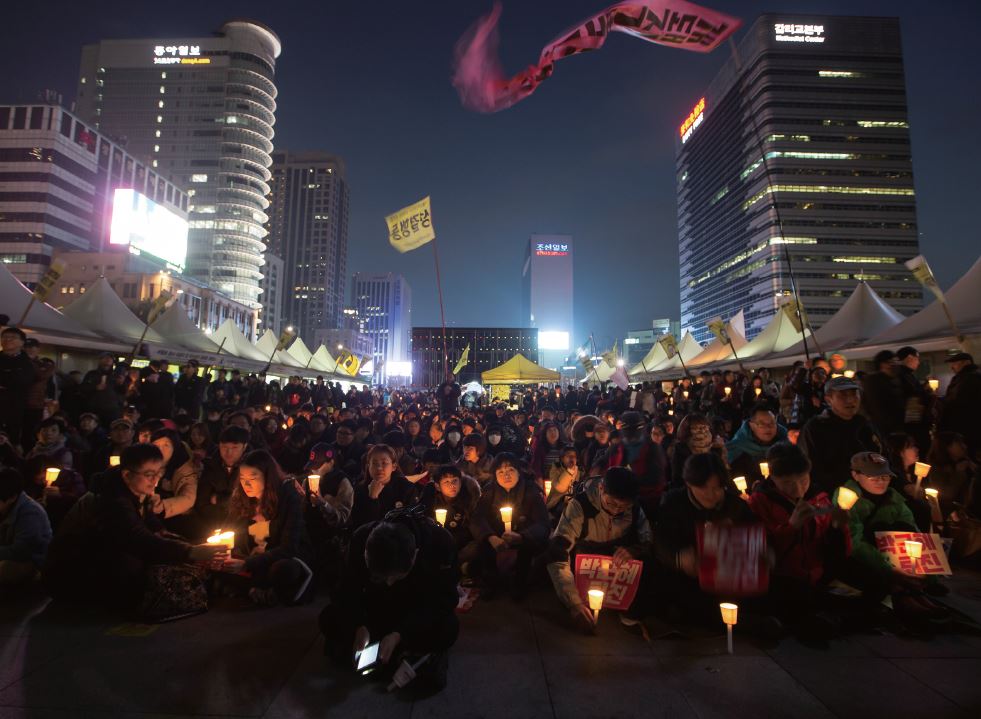
Trans-Humanities publishes materials that expand humanities research to include contemporary cultural and sociological phenomena and to open an academic and discursive space for trans-boundary and multi or trans-disciplinary approaches and communications, not just in the humanities but also the social sciences, the natural sciences, and the arts.









 June 23, 2017: This post has been updated with the results shown in bold.
 Trans-Humanities publishes materials that expand humanities research to include contemporary cultural and sociological phenomena and to open an academic and discursive space for trans-boundary and multi or trans-disciplinary approaches and communications, not just in the humanities but also the social sciences, the natural sciences, and the arts.