



New Asian Studies Books – University of Hawaiʻi Press AAS 2026 Selection

University of Hawaiʻi Press is pleased to present a curated selection of titles for the Association for Asian Studies (AAS) Annual Conference.

Our AAS 2026 featured books and journals reflect the breadth and depth of contemporary Asian Studies research. These titles engage topics including colonialism and empire, intellectual history, cultural production, religion, and political life, offering new perspectives grounded in archival research, ethnography, and interdisciplinary analysis.

Award-Winning Titles at AAS 2026

University of Hawaiʻi Press is honored to celebrate two award-winning titles recognized by the Association for Asian Studies in 2026 for their outstanding scholarly contributions.

Even in the Rain: Uyghur Music in Modern China by Chuen-Fung Wong is the winner of the E. Gene Smith Inner Asia Book Prize, which recognizes exceptional and innovative research on Inner Asia. This book examines Uyghur musical life in contemporary China, revealing how musicians navigate cultural identity, artistic practice, and political pressure. Through ethnographic insight and musical analysis, Wong demonstrates how music functions as a powerful site of expression, memory, and resilience.
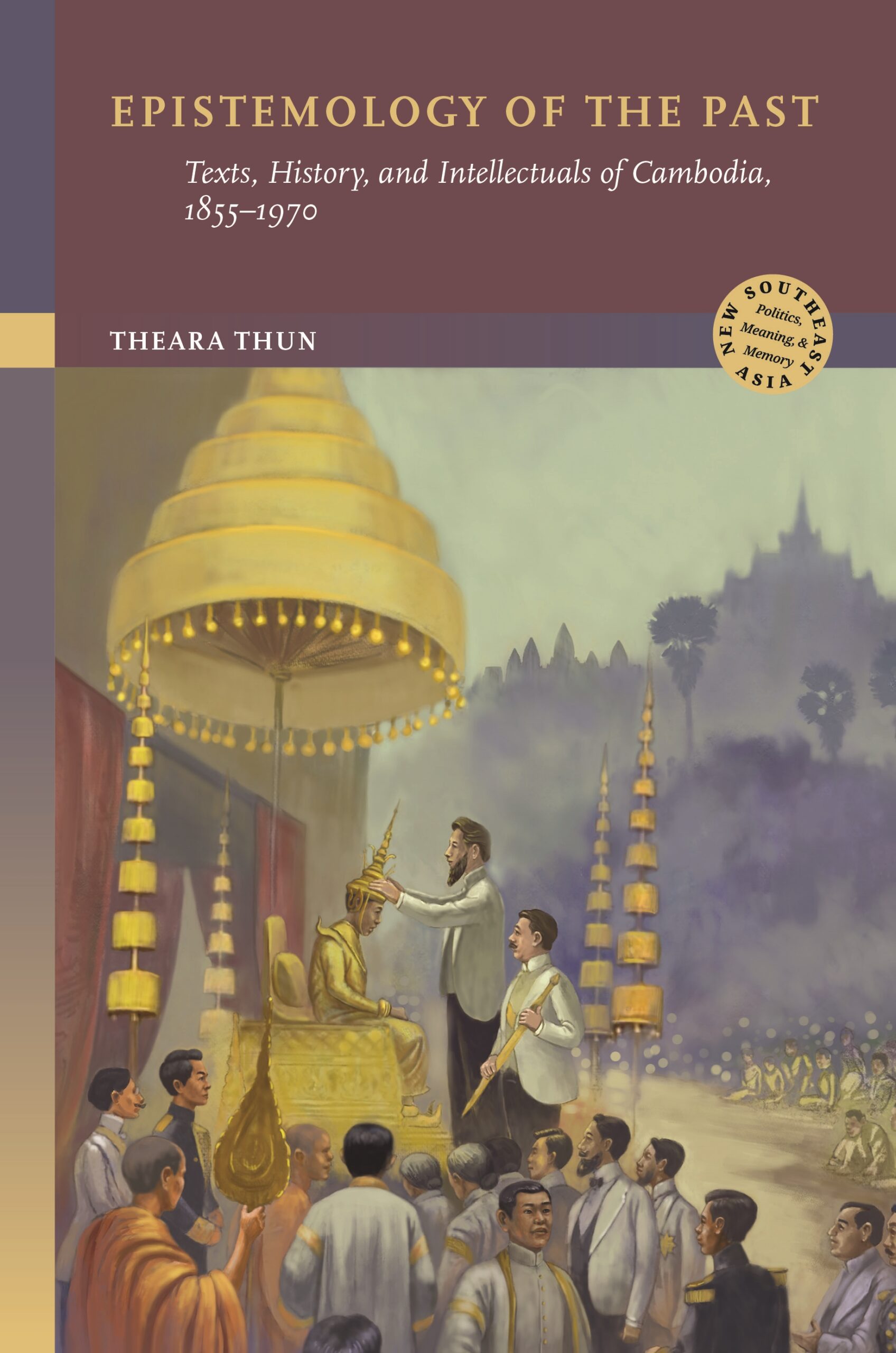
Epistemology of the Past: Texts, History, and Intellectuals of Cambodia, 1855–1970 by Theara Thun received an Honorable Mention for the Harry J. Benda Prize, awarded annually to an outstanding first book in Southeast Asian studies. This landmark study explores the development of historical knowledge in Cambodia by centering the intellectuals, texts, and scholarly practices that shaped understandings of the past during a period of colonialism, nationalism, and political transformation.

Explore Our New Asian Studies Titles & Journals

In addition to these prize-winning books, University of Hawaiʻi Press’s AAS 2026 featured titles and journals highlight recent and notable publications across Asian Studies and related fields. These works showcase cutting-edge research and diverse methodological approaches that speak to key debates shaping the discipline today.

To view the complete list of University of Hawaiʻi Press titles available for AAS 2026, please scroll to the bottom of this page, where you’ll find a link to our full conference selection in one place.

Receive 30% off with code AAS2026 through May 31, 2026. Visit us at Booth 325–327 in Vancouver or shop online.

BOOKS

JOURNALS
Cross-Currents, vol. 6, no. 2 (November 2017)

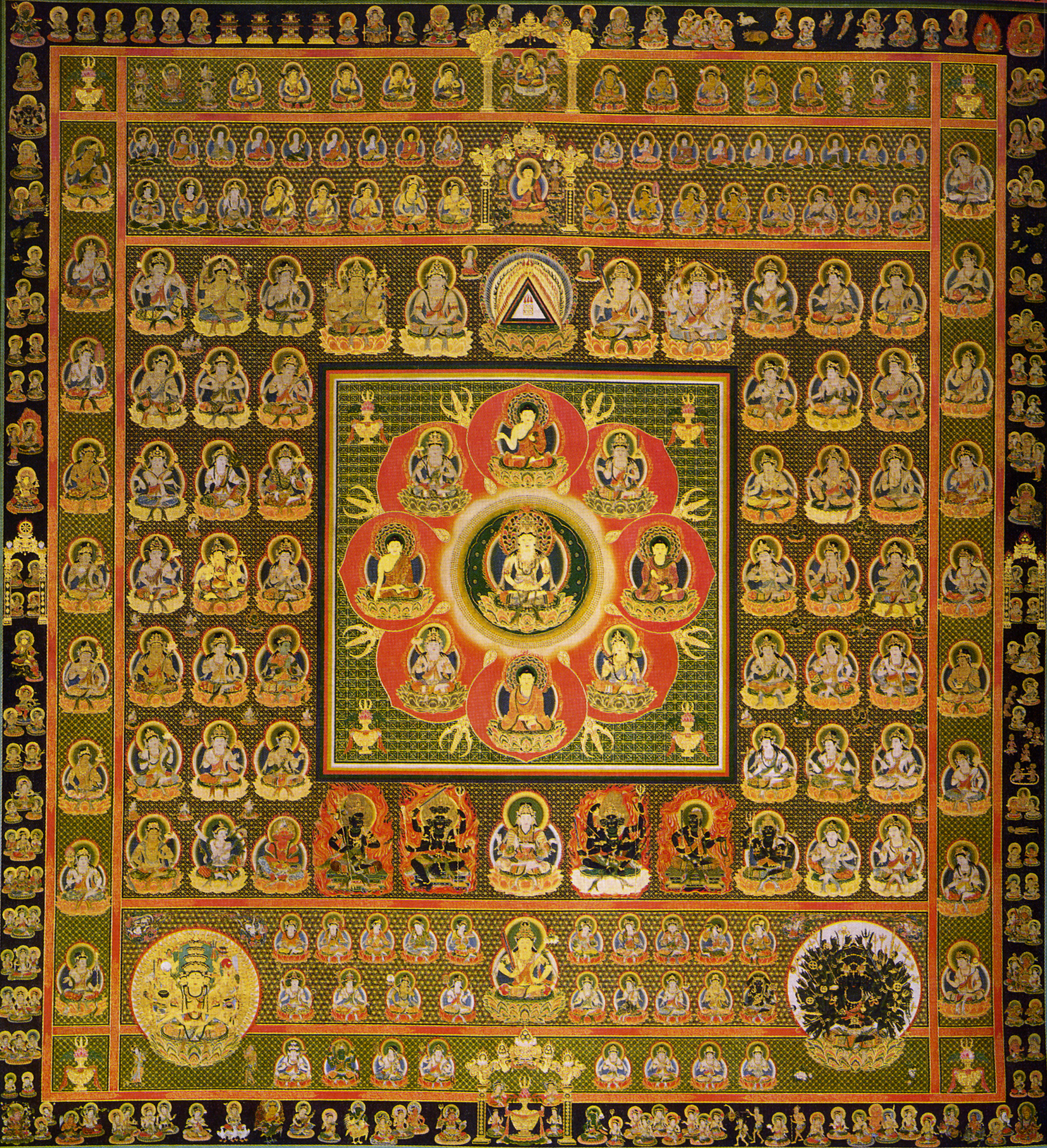
Mandala scroll
Mandala of the Two Worlds (Ryōkai mandara), one of two hanging scrolls, Edo period (1693). Ink and colors on silk, 410.9 x 378.4 cm (each). Tōji Temple, Kyoto. Source: Sawa and Hamada (1983–1984, 24, 29). From “Sankei Mandara: Layered Maps to Sacred Places,” in this issue.

Cross-Currents: East Asian History and Culture Review vol. 6, no. 2 opens with a section on cartography, echoing a theme published in vol. 6, no. 1 earlier this year. 

Maps and Their Contexts: Reflections on Cartography and Culture in Premodern East Asia

Continue reading “Cross-Currents, vol. 6, no. 2 (November 2017)”

Call for Papers: Cross-Currents

The editorial board of Cross-Currents: East Asian History and Culture Review—a joint project of the Research Institute of Korean Studies (RIKS) at Korea University and the Institute of East Asian Studies (IEAS) at the University of California, Berkeley—is currently accepting submissions of research articles, as well as proposals for special issues and photo essays.

Cross-Currents is a peer-reviewed, open-access, quarterly online and semi-annual print journal that offers its readers up-to-date research findings, emerging trends, and cutting-edge perspectives concerning East Asian history and culture from scholars in both English-speaking and Asian language-speaking academic communities.

The journal seeks to balance issues traditionally addressed by Western humanities and social science journals with issues of immediate concern to scholars in China, Japan, Korea, and Vietnam. This English-language journal includes scholarship on material from the 16th century to the present day that has significant implications for current models of understanding East Asian history and culture.

Embedded in a web-based platform with functions for collaboration, discussion, and an innovative publishing process, the e-journal uses new technologies to facilitate a dialogue among East Asia scholars around the world that is enhanced by audio-visual and multilingual capabilities. The semi-annual print issues of Cross-Currents (available through University of Hawai‘i Press and Project MUSE) feature research articles from the e-journal (the journal of record for indexing and citation purposes).

Complete information on how to prepare and submit articles and proposals may be found online here.

Cross-Currents is indexed in the Emerging Sources Citation Index (ESCI), Scopus, the Bibliography of Asian Studies, the Directory of Open Access Journals (DOAJ), and Project MUSE. The e-journal operates under a Creative Commons Attribution-NonCommerical-NoDerivs 3.0 United States License. 

Please email inquiries to the Managing Editor at [email protected].


About the Journal

Cross-Currents: East Asian History and Culture Review offers its readers up-to-date research findings, emerging trends, and cutting-edge perspectives on material from the sixteenth century to the present day that have significant implications for current models of understanding East Asian history and culture. Its semiannual print issues feature peer-reviewed content from the online version of the journal.

 Subscriptions

Individual and institutional subscriptions are available through UH Press.

Cross-Currents, vol. 6, no. 1 (2017)

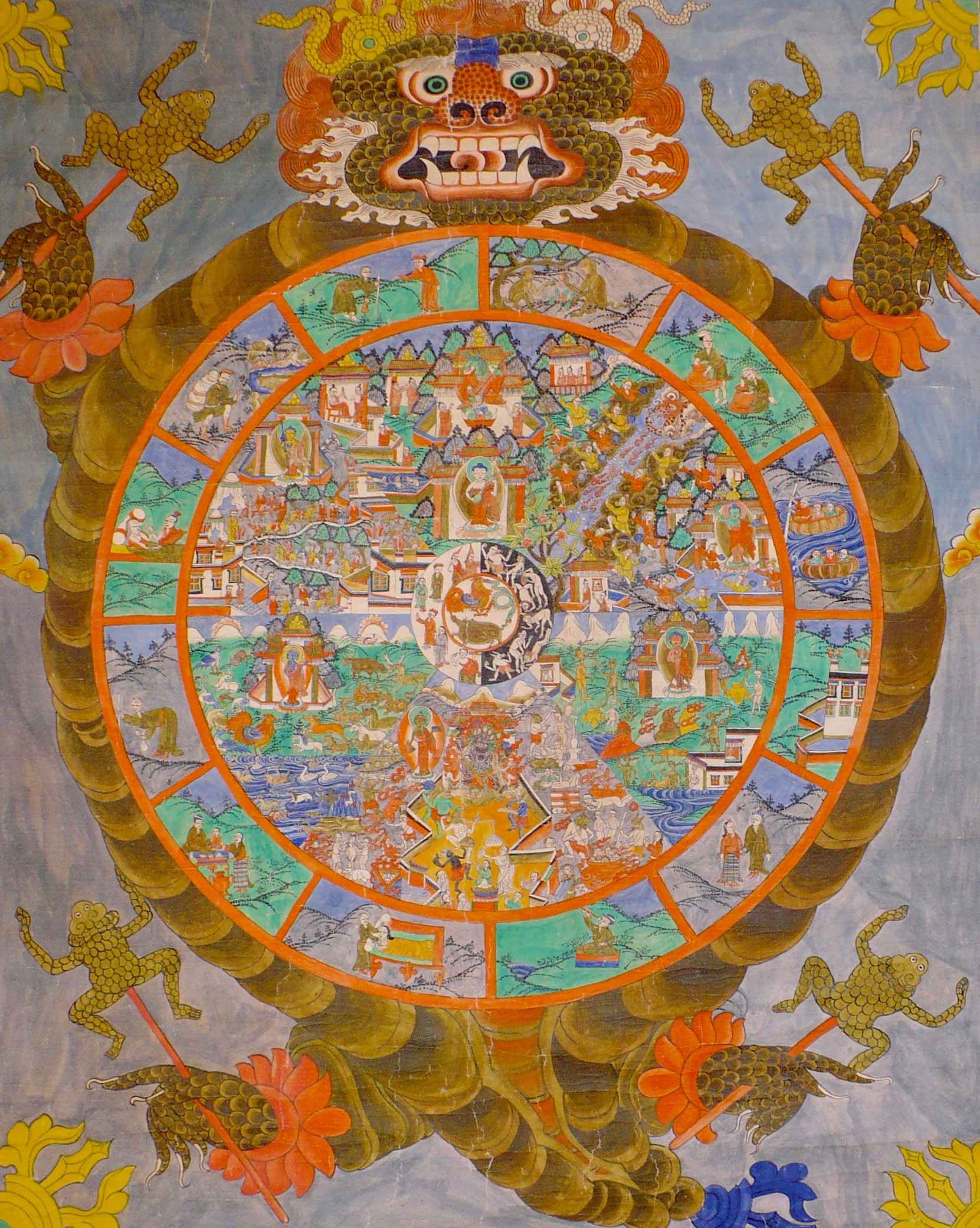
From Cartographic Anxieties in Mongolia: The Bogd Khan’s Picture-Map Uranchimeg Tsultemin. Bhavacakra, the Buddhist Wheel of Life. Thangka painting, Central Tibet, late nineteenth century. Source: Theos Bernard-Eleanor Murray collection, Berkeley Art Museum and Pacific Film Archive.


Cross-Currents: East Asian History and Culture Review volume 6, number 1 is now available and features the following articles.

Cartographic Anxieties

  • Introduction to “Cartographic Anxieties” by Franck Bille
  • Fishers and Territorial Anxieties in China and Vietnam: Narratives of the South China Sea Beyond the Frame of the Nation by Edyta Roszko
  • The Da Ming Hunyi: Repurposing a Ming Map in Sino-African Diplomancy by Alexander Akin
  • Cartographic Anxieties in Mongolia: The Bogd Khan’s Picture-Map by Uranchimeg Tsultemin
  • On China’s Cartographic Embrace: A View from Its Northern Rim by Franck Bille
  • A Spectacle of Maps: Cartographic Hopes and Anxieties in the Pamirs by Martin Saxer

Continue reading “Cross-Currents, vol. 6, no. 1 (2017)”

Cross-Currents, vol. 6, no. 1 (May 2017)

From Cartographic Anxieties in Mongolia: The Bogd Khan’s Picture-Map Uranchimeg Tsultemin. Bhavacakra, the Buddhist Wheel of Life. Thangka painting, Central Tibet, late nineteenth century. Source: Theos Bernard-Eleanor Murray collection, Berkeley Art Museum and Pacific Film Archive.


Cross-Currents: East Asian History and Culture Review volume 6, number 1 is now available and features the following articles.

Cartographic Anxieties

  • Introduction to “Cartographic Anxieties” by Franck Bille
  • Fishers and Territorial Anxieties in China and Vietnam: Narratives of the South China Sea Beyond the Frame of the Nation by Edyta Roszko
  • The Da Ming Hunyi: Repurposing a Ming Map in Sino-African Diplomancy by Alexander Akin
  • Cartographic Anxieties in Mongolia: The Bogd Khan’s Picture-Map by Uranchimeg Tsultemin
  • On China’s Cartographic Embrace: A View from Its Northern Rim by Franck Bille
  • A Spectacle of Maps: Cartographic Hopes and Anxieties in the Pamirs by Martin Saxer

Continue reading “Cross-Currents, vol. 6, no. 1 (May 2017)”

Cross-Currents, vol. 5, no. 2 (2016)

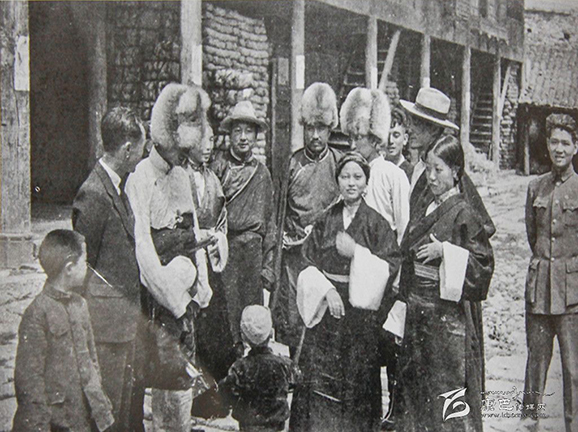
From “Guozhuang Trading Houses and Tibetan Middlemen in Dartsedo, the ‘Shanghai of Tibet'” in this issue. Photograph of Chu-nyi Barpa achak khapa (Ch. Qiujia guozhuang) taken by Sun Mingjing, 1944.

Cross-Currents: East Asian History and Culture Review volume 5, number 2 is now available and features the following articles.

Frontier Tibet: Trade and Boundaries of Authority in Kham

  • Introduction to “Frontier Tibet: Trade and Boundaries of Authority in Kham” by Stephane Gros
  • “To Control Tibet, First Pacify Kham”: Trade Routes and “Official Routes” (Guandao) in Easternmost Kham by Partrick Booz
  • Construction Work and Wages at the Dergé Printing House in the Eighteenth Century by Remi Chaix
  • Guozhuang Trading Houses and Tibetan Middlemen in Dartsedo, the “Shanghai of Tibet” by Yudru Tsomu
  • Victorianizing Guangxu: Arresting Flows, Minting Coins, and
    Exerting Authority in Early Twentieth-Century Kham by Scott Relyea
  • Tricks of the Trade: Debt and Imposed Sovereignty in Southernmost Kham in the Nineteenth to Twentieth Centuries by Stephane Gros
  • Memory Politics at Work in a Gyalrong Revolt in the Early Twentieth Century by Jinba Tenzin
  • Afterword: Why Kham? Why Borderlands? Coordinating New
    Research Programs for Asia by C. Patterson Giersch

Continue reading “Cross-Currents, vol. 5, no. 2 (2016)”

Cross-Currents, vol. 5, no. 1 (2016)

01_CC 5-1 Greene_Page_15_Image_0001
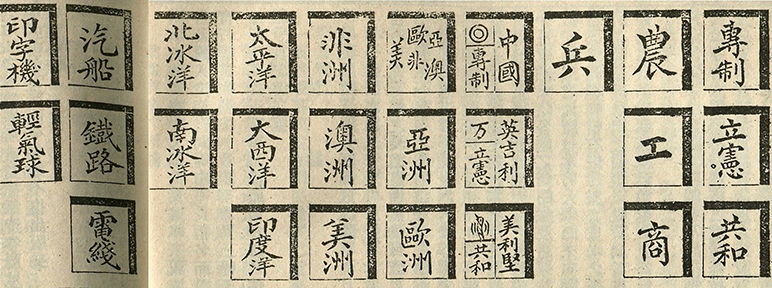
Tiles from the proposed version of reformed mahjong mentioned in “The Game People Played” by Maggie Greene in this issue. From the right, tiles include government types, classes of citizens, countries, continents, oceans, and technology.

Cross-Currents: East Asian History and Culture Review volume 5, number 1 is now available and features the following articles:

  • The Game People Played: Mahjong in Modern Chinese Society and Culture by Maggie Greene
  • The Afterlives of An Chunggŭn in Republican China: From Sinocentric Appropriation to a Rupture in Nationalism by Inhye Han
  • Against the Nihilism of Suffering and Death: Richard E.K. Kim and His Works by Jooyeon Rhee
  • Street Theater and Subject Formation in Wartime China: Toward a New Form of Public Art by Xiaobing Tang
  • Domesticating Hybridity: Straits Chinese Cultural Heritage Projects in Malaysia and Singapore by Karen M. Teoh
  • A Russian Radical and East Asia in the Early Twentieth Century: Sudzilovsky, China, and Japan by Vladimir Tikhonov (Pak Noja)
  • Imagining Urban Community: Contested Geographies and Parallax Urban Dreams on Cheju Island, South Korea by Tommy Tran

Continue reading “Cross-Currents, vol. 5, no. 1 (2016)”