



Journals: Asian Theatre Journal, Biography, The Contemporary Pacific, Mānoa and more.

Asian Theatre Journal

Volume 43, Number 1 (2026)

Editor Siyuan Liu signs off as we introduce a new editor Man He in From the Editor stating:

After eight years as ATJ editor, I am stepping down after this issue.  Man He will take over as the new editor. It has been a tremendous learning experience. I am grateful to everyone who helped make the task possible, from the authors, editors, reviewers, editorial assistants, and the editors and production teams at the UH Press to our readers.

With the exception of Emerging Scholar Essays, which always appear in the fall issue, this issue is complete with every regular format in ATJ: translation, article, report, performance review, and book review.

Find this From the Editor, translations, review essays, articles and more at Project MUSE.

Front cover of Biography Volume 47 Number 1 (2024)


Biography

Volume 47, Number 3 (2024)

Craig Howes discusses the new issue in the Editor’s Note stating:

When George Simson decided in 1978 to call Biography an Interdisciplinary Quarterly, he was optimistic, but determined. Although the vast majority of the journal’s contributors were housed in literature and history departments, with a decided bent toward textual studies, the masthead listed an ambitious range of recruited editors, ready to evaluate essays emerging from many academic disci­plines. As we approach our fiftieth anniversary, this issue of Biography suggests that George’s hopes for the journal have come closer to being realized.

The editors, reviewers, and essayists represented include archaeologists, psy­chiatrists, theatre and performance scholars, and specialists in American, Russian, Carribean, Jewish, and Arab American Studies. Black Studies, Feminist, Gender and Sexuality and LGBTQ+ Studies, and Disability Studies are also represented. And even while still situated in literature and language departments, as the contrib­utor biographies bear out, many are interdisciplinary scholars.

This state of affairs points to the nature of lifewriting as a field with permeable boundaries. Whenever the course of human events figures into research, policy, ethics, or instruction, lifewriting or life narrative in the broadest sense is a factor to be considered. Biography has published such considerations, regardless of field, and will continue to do so.

Find this Editor’s Note,  forum articles, reviews, and more at Project MUSE.
 

The Contemporary Pacific

Volume 37, Number 1 (2025)

Seeking Peace in Religious Teachings: Women’s Responses to Domestic Violence in Rural Vanuatu
Donna Jella Tagaro and Naohiro Nakamura

Pacific Studies: Engaging Law, Anthropology, Archives, and the Arts
Katerina Teaiwa, Terence Wesley-Smith, and Talei Luscia Mangioni

Pacific Studies and Anthropology: Articulations and Disarticulations
April K Henderson

Unsettling Legal Imperialism and Cultivating Homegrown Law: Why Law Schools Need Pacific Studies
Rebecca Monson, Dylan Asafo, Joseph D Foukona, and Bridget Fa‘amatuainu

Citing Ourselves
Talei Luscia Mangioni and Lisa Hilli

Find About the Artist, articles, reviews, and more at Project MUSE.

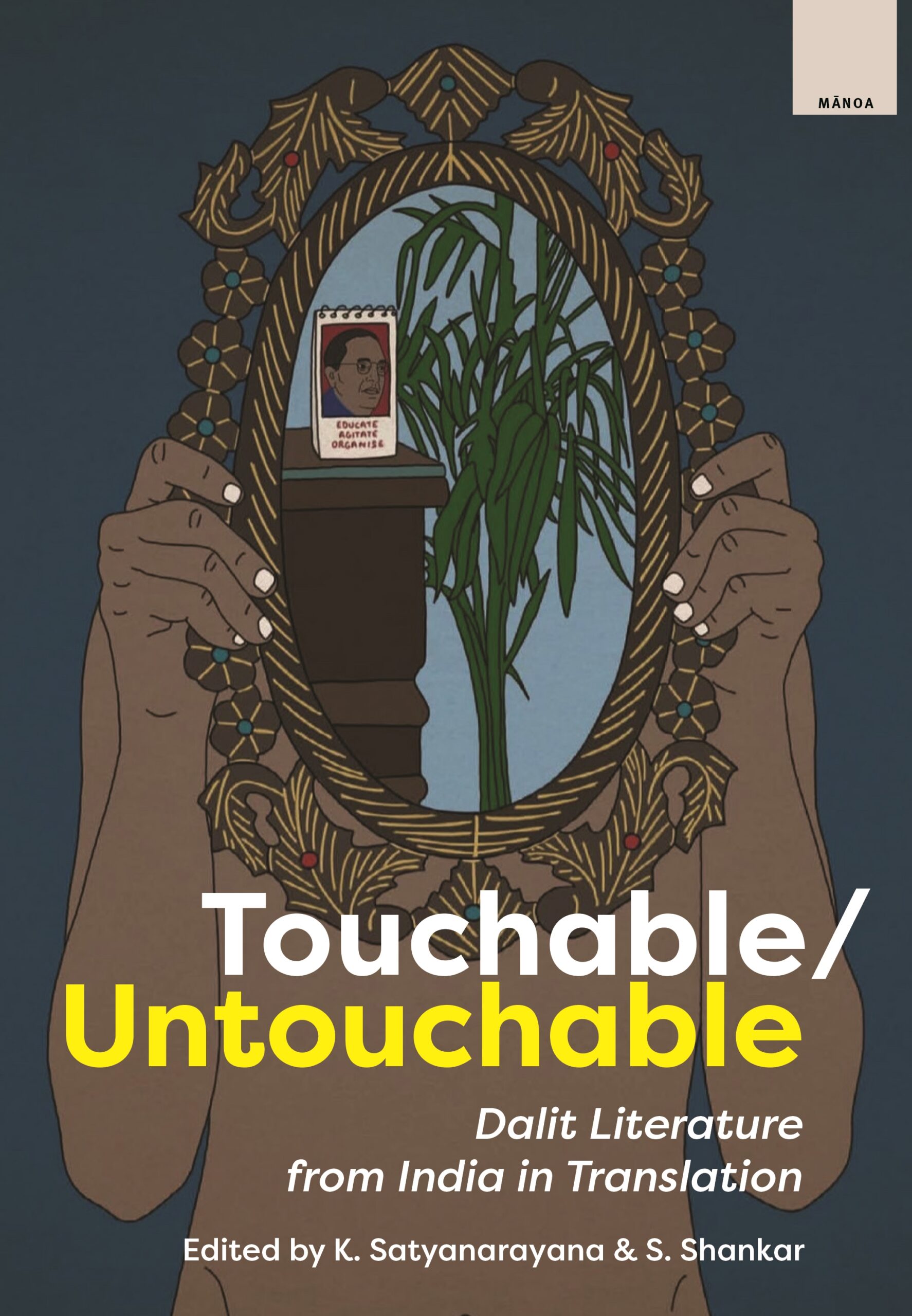
Touchable/Untouchable: Dalit Literature from India in Translation

Mānoa

Volume Volume 37, Number 2 (2026)

Touchable/Untouchable Dalit Literature from India in Translation

Guest Editors K. Satyanarayana and S. Shankar discuss their inspiration for these translations stating:

This issue of Mānoa presents Dalit literature from India in translation to a global audience of readers in English.

Why should readers outside India care about Dalit literature? For one thing, contemporary Dalit literature is among the most interesting and vibrant of literary enterprises currently underway in India. Contemporary Dalit literature has at one and the same time borne gripping witness to the centuries-old atrocious institution of exclusion and oppression known as caste, at the bottom of which Dalits are located as the most excluded and the most oppressed, and broken invigorating new literary ground. For these reasons alone, the value of reading Dalit literature should be evident. Dalit literature deserves a global audience, which it has begun to receive in recent years. This issue adds to Dalit literature’s global reach in significant ways.

Find these editors’ notes, art, poetry, fiction, essays, memoirs, and more at Project MUSE.

Oceanic Linguistics

Volume 65, Number 1 (2026)

Suprasegmental Adaptation of Japanese Loanwords in Isbukun Bunun
Hui-shan Lin

Observations on Malagasy Presentatives
Ileana Paul, Vanilla Diane Dimisy, Baholisoa Simone Ralalaoherivony, Jeannot Fils Ranaivoson, Lisa Travis

Contact or Inheritance? New Evidence on the Proto-Philippines Hypothesis
Victoria Chen, Maria Kristina Gallego, Jonathan Kuo, Isaac Stead, and Benjamin van der Voorn

The Languages of Atauro Island
Christoph Bracks and Owen Edwards

Gender Vocalism in the South Bird’s Head Languages in Comparative Perspective
Lourens de Vries

Find these articles, squibs, memoriams and more at Project MUSE.

Pacific Science

Volume 79 Number 4 (2025)

We bid a fond farewell to David Duffy as he departs from his role of Editor in Chief at Pacific Science who shares these words:

Pacific Science will be publishing its 80th volume next year, so it has survived much and is likely to persist. A new editor will bring fresh ideas and stamina. We are lucky to have Steve Young taking over the next volume. He received his degree from the University of California, Davis, working on plant and soil interactions related to the restoration of arid grasslands in the western US. He has spent time at the University
of Nebraska, Cornell, Utah State University, and most recently the USDA before taking a position at Oregon State about an hour north of me. I expect we will have future opportunities to get together to exchange war stories about editing this journal. I will leave it to him in the next issue to share his hopes and aspirations for
Pacific Science. “Be well, do good work, and keep in touch.”—Garrison Keillor

Find research articles and more at Project MUSE.


Journals: Seabirds Vulnerable to Climate Change, Anger in a Non-Ideal World, Living the Way of Tea + more

Asian Perspectives

Volume 62, Number 1 (2023)

The new issue shares the following introduction and welcomes a new editor:

You will note that several articles in this issue focus on the identification and interpretation of specific materials and technologies. The topics covered by four of the articles include rock art in early Mongolia, bone tools in prehistoric eastern China, metallurgy at the Han empire’s southern periphery, and plant remains and parasite microfossils in pre-contact New Zealand. A fifth article relies on settlement pattern and demographic data from Neolithic and Bronze Age China to draw insightful comparisons between the developmental trajectories of two distant regions.

We take this opportunity to welcome Cristina Castillo as the journal’s new Book Review Editor and thank Michèle Demandt for serving as the first editor dedicated to this important section of the journal. Michèle streamlined many of the editorial procedures for the book reviews. We wish her the best in all her future professional and personal endeavors.

Find this editorial, research articles, and more at Project MUSE.

bio 45-3 cover

biography

Volume 45, Number 3 (2022)

Editor Craig Howes honors founder George Simson in the introduction of this latest issue:

I am mentioning this constant in the life of Biography and the Center because when considering the contents of this “regular” issue, I realized that what began as an aspiration has with great effort become the norm. The five articles in this installment
feature writers and subjects from South Africa, Uganda, Lebanon, India, and France, representing an equally diverse range of approaches to life writing — whether through fashion, documentaries, oral histories, photographs, memoirs,
biographies, or “anti-biographies.”

I believe that George would find some of the theoretical approaches or topics puzzling—certainly far afield from biography as he understood and loved it. But I know he would be very happy that his dream of a journal that made its best effort to be international has been realized. And it will continue to do so.

Read this introduction, articles, reviews, and more at Project MUSE.
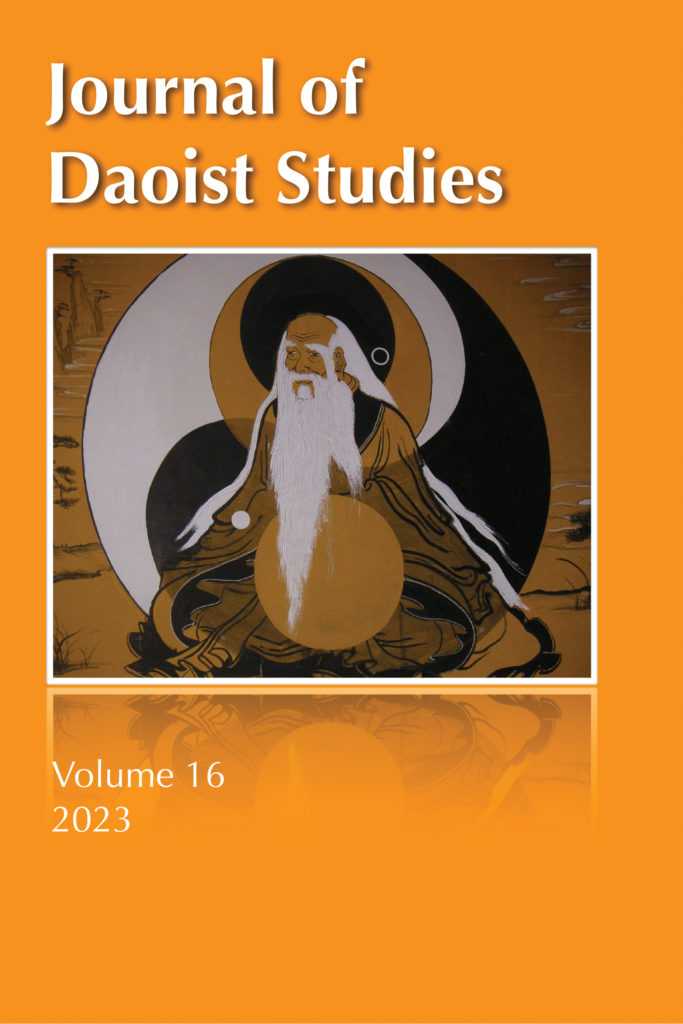
Journal of Daoist Studies JDS Volume 16 (2023)

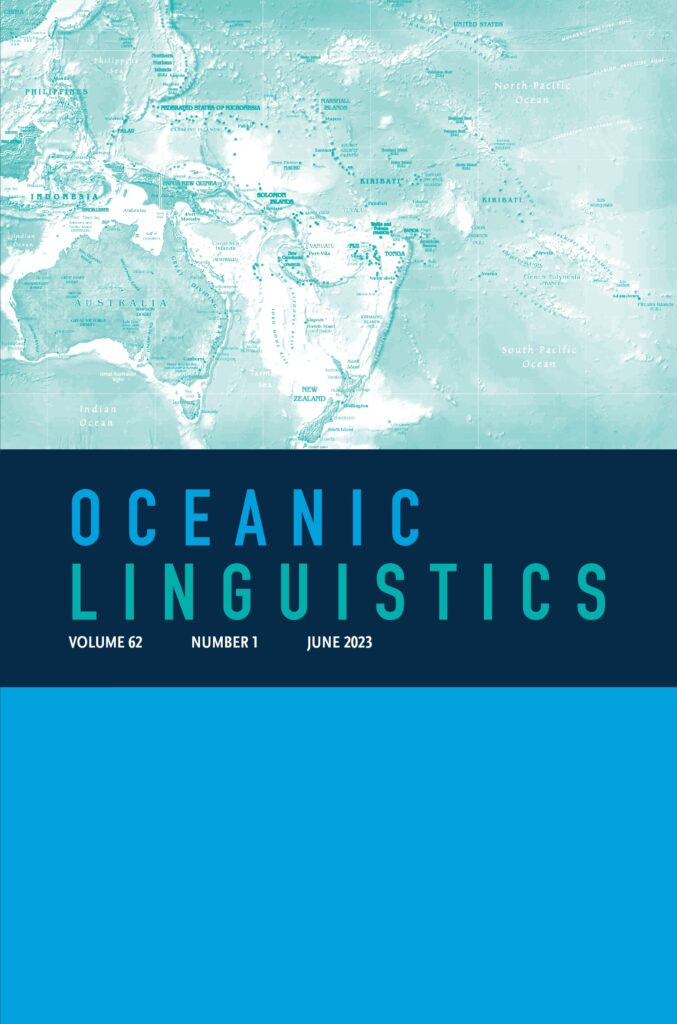
Oceanic Linguistics 62-1 cover

Oceanic Linguistics

Volume 62, Number 1 (2023)

The new issue contains the following articles:

Variable Copying Sites in Truku Cə- Reduplication
Hui-Shan Lin

Voice and Pluractionality in Äiwoo
Åshild Næss

Comitative Constructions in Reefs–Santa Cruz
Åshild Næss, Valentina Alfarano, Brenda H. Boerger, and Anders Vaa

Preverbal Determiners and the Passive in Moriori
John Middleton

Some Remarks on Sagart’s New Evidence for a Numeral-Based Phylogeny of Austronesian
Alexander D. Smith

Find these and more articles and squibs at Project MUSE.


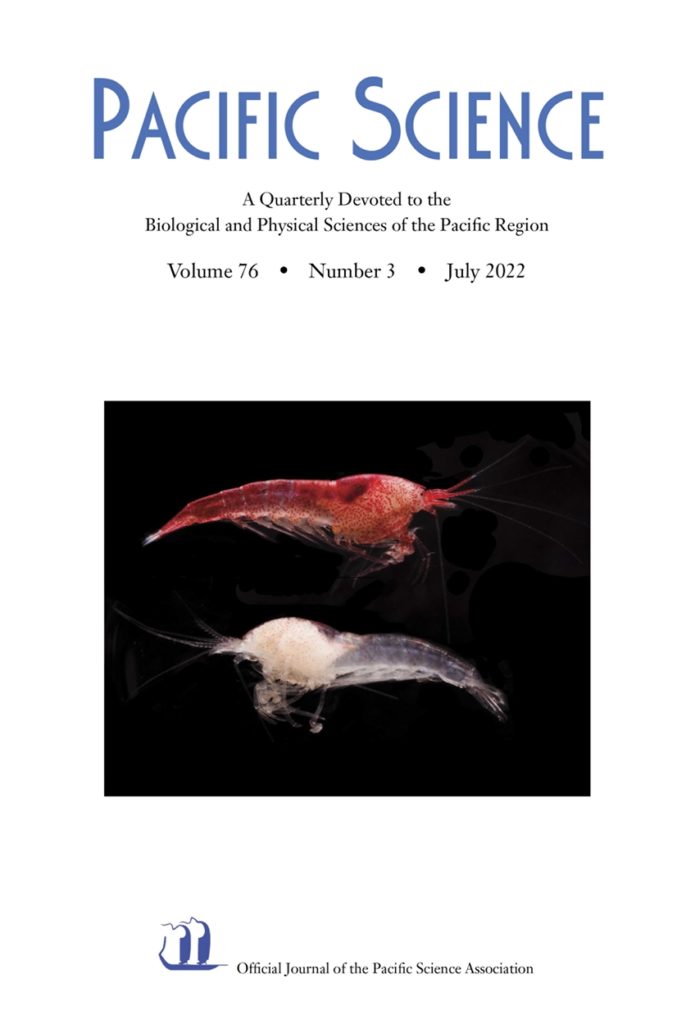
Pacific Science

Volume 76, Number 3 (2022)

The new issue contains the following articles:

Prioritization of Restoration Needs for Seabirds in the U.S. Tropical Pacific Vulnerable to Climate Change
Lindsay C. Young and Eric A. VanderWerf

A Third Pond on the Mauna Kea Summit Plateau
Norbert Schorghofer, Matthias Leopold, and Fritz L. Klasner

Lake Tagimaucia Montane Lake as a Potential Late Holocene Environmental Archive in Fiji’s Volcanic Highlands
James Terry, Kunal Singh, and Michelle McKeown

South(east) by Southwest: Identifi cation of a New Halocaridina rubra Holthuis, 1963 (Decapoda: Atyidae) Genetic Group From O‘ahu, Hawai‘i
Scott R. Santos, Livable Hawai‘i Kai Hui, Mike N. Yamamoto, Thomas Y. Iwai Jr., and Annette W. Tagawa

Landscape Configuration Influences ‘Ōma‘o (Myadestes obscurus)
Song Diversity

Nicole M. Fernandez, Kristina L. Paxton, Eben H. Paxton, Adam A. Pack, and Patrick J. Hart

Find more articles at Project MUSE.

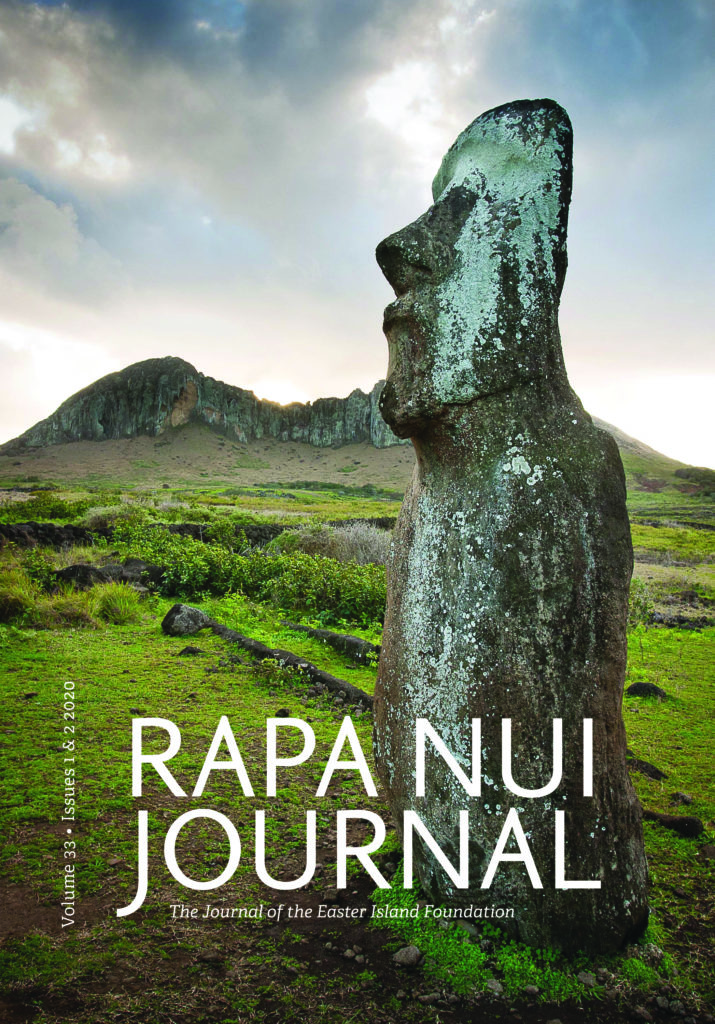
Rapa Nui Journal

Volume 33, Number 1 & 2 (2020)

The new issue contains the following articles, reports, and news:

Mana Tupuna: Honoring the Ancestors Abroad
Phineas Kelly

Rapa Nui in the Hans Helfritz Collection at the Rautenstrauch-Joest Museum
Tania Basterrica Brockman and Betty Haoa Rapahango

Con-ticci and the Bennett Monolith of Mocachi
Andrea Ballesteros Danel

Identifying Places and People in Walter Lehmann’s Photograph Collection of Rapa Nui (Easter Island, 1911)
Cristián Moreno Pakarati and Rafał Wieczorek

Terevaka Archaeological Outreach (TAO) 2020 Project Report: Digital Repatriation
Britton L. Shepardson

Find more articles, reports, and news on Easter Island at Project MUSE.

Yearbook of the Association of Pacific Coast Geographers

Number 84 (2022)

The new issue includes the following articles:

The Geographer as Bibliophile
Michael Pretes

Canyonlands National Park: A Multiple-Use Test Case
Tate Pashibin, Geoffrey Buckley, and Yolonda Youngs

Donald W. Meinig’s Southwest at Half-Century, a Reflection
and Appreciation

Daniel D. Arreola, Richard L. Nostrand, William Wyckoff, Craig
Colten, and Paul F. Starrs

Portland’s Post-Industrial Neighborhoods
Mark D. Bjelland and Madelyn Vander Veen

Weighted OWA Operators in Spatial MultiCriteria Decision-
Making

Soheil Boroushaki

Find more articles, research notes, book reviews, abstracts, meeting reports, and awards at Project MUSE.

November 2012 Author Events

Thursday, November 8, 12 noon to 1:15 p.m.
Wendy S. Arbeit shares her experiences in researching Hawaiian cultural and utilitarian objects, her techniques used in revealing their patterns, and how she documented them with detailed line drawings in her award-winning book, Links to the Past: The Work of Early Hawaiian Artisans.

Some of the questions that will be addressed:
What went into tracking down those artifacts now scattered across the globe?
What do the 1,400 illustrations tell you about pre- and early contact Hawaiian culture and the ways it changed in response to Westerners?
What sort of questions are raised by the grouping of so many objects?

The talk is part of the Brown Bag Biography series at the Center for Biographical Research, University of Hawai‘i at Mānoa, Henke Hall 325, 1800 East-West Road. For more information, see the UH event calendar or call 808-956-3774 or email: [email protected].

Isaiah Walker

Thursday, November 8, 5:00 to 7:00 p.m.
BYU-Hawaii professor and former competitive surfer Isaiah Walker will  give a lecture at Arizona State University on his thought-provoking book, Waves of Resistance: Surfing and History in Twentieth-Century Hawai‘i. Walker explains how Hawaiian surfers have successfully resisted colonial encroachment in the po‘ina nalu (surf zone). In making his case, he also explores empowerment and masculinity, media representation of islanders, identity struggles, and other topics. The talk is open to the public and will be held in West Hall, Room 135, at ASU in Tempe. For more information, see the ASU calendar posting.

Tuesday, November 13, 6:00 to 9:00 p.m.
See below listing under November 18 for George and Willa Tanabe’s Japanese Buddhist Temples in Hawai‘i.

Saturday, November 17, 3:00 p.m.
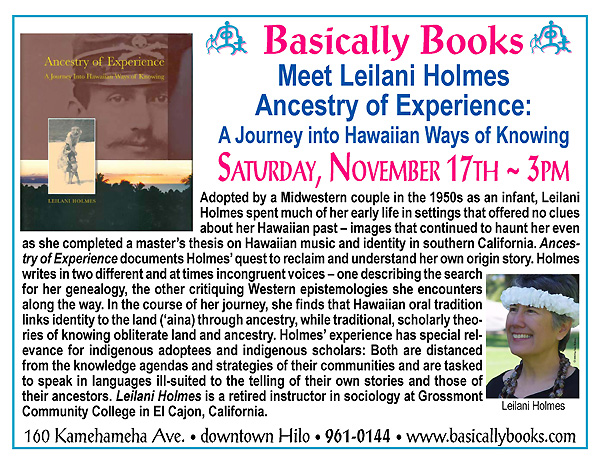
San Diego resident Leilani Holmes will visit Basically Books in Hilo, Hawai‘i to discuss and sign copies of her recent work, Ancestry of Experience: A Journey Into Hawaiian Ways of Knowing. Born in Honolulu in 1952 to a Hawaiian mother, Holmes was adopted as an infant by a haole (Caucasian) couple who moved to Ohio when she was four years old. The book recounts, explores, and analyzes the author’s quest to reclaim her origins and come to terms with the duality inherent in being an indigenous adoptee. The two-column format of the book mirrors this dichotomy, with a personal, conversational style of narrative on one side, and academic explanatory text on the other.

Saturday, November 17, 4:00 p.m.
Seattle author/poet/artist Alan Chong Lau will be at the Wing Luke Museum’s Tateuchi Story Theatre to join his sister, food writer Linda Lau Anusasananan, as she reads from The Hakka Cookbook, published by University of California Press. (Read a related post on the UC Press blog here.) Alan Lau provided the artwork for the book, done in a similarly whimsical, sumi-e style that illustrates his UH Press-published book of poetry, Blues and Greens: A Produce Worker’s Journal.

Sunday, November 18, 2:00 p.m.
George J. Tanabe and Willa Jane Tanabe will appear at Barnes & Noble, Ala Moana Center, for a signing of their just-released guidebook, Japanese Buddhist Temples in Hawai‘i: An Illustrated Guide. The Tanabes personally visited each of the ninety temples still in existence, and took photographs not only the buildings’ exteriors but of the ornate altars and interior details. Over 360 of these color photos are contained in the book. Descriptions of each temple and explanations of the symbolism of objects and design elements will help temple visitors decipher the meaning behind these physical expressions. Also at this event, information will be distributed on the related exhibit due to open December 1 at the Japanese Cultural Center of Hawai‘i.

Last-minute update: On Tuesday, November 13, 6:00 to 9:00 p.m., George and Willa Tanabe will give a PowerPoint lecture at the Honpa Hongwanji Hawaii Betsuin Annex Temple (makai of the main temple), 1727 Pali Highway. Open to the public, with a $10 fee. For more information, click here for a link to the Dharma Light Project brochure and map, or call 808-536-7044.