Behind the Journal: FANHS Hosts Building Bridges Zoom Panel 4/6 – Register Today!

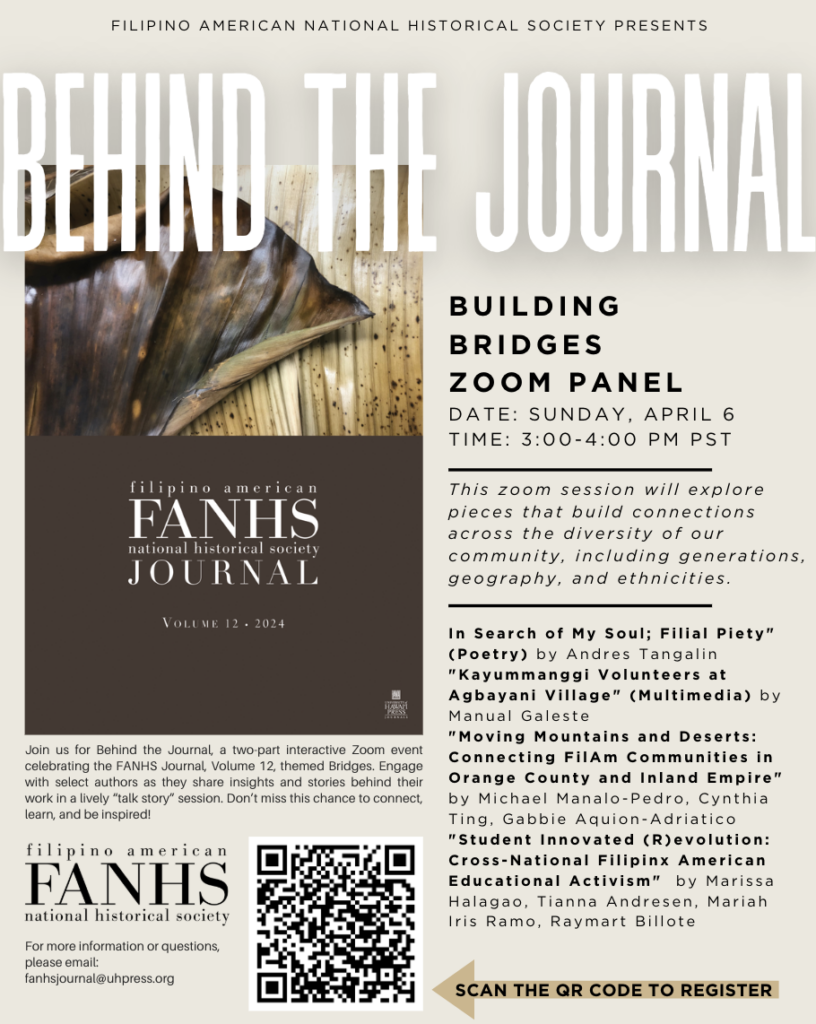
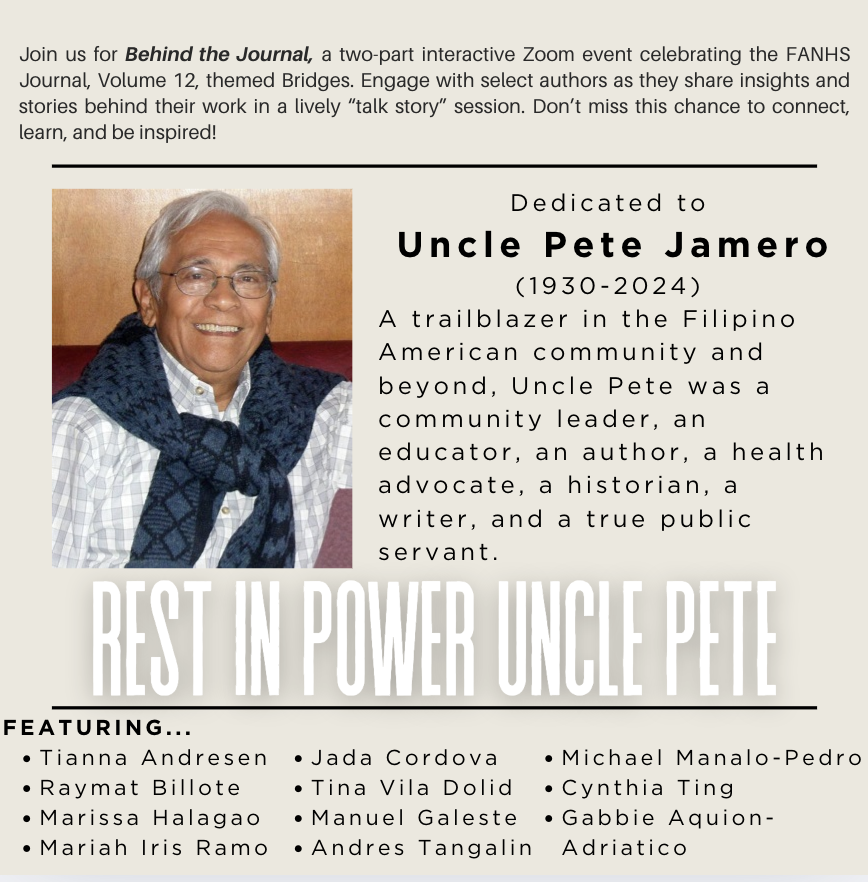
Join the Filipino American National Historical Society Journal editors for an interactive Zoom event celebrating the recent issue focused on the theme, “Bridges.”

“Bridges” was inspired by Fred Cordova’s classic 1996 published piece, “The Bridge Generation and Building Bridges.”  Engage with select authors as they share insights and stories behind their work in a lively talk story session.

Panel: Building Bridges
Date: Sunday, April 6, 2025
Time: 3:00 – 4:00 PM PST
Register here to receive ZOOM link

This session will explore pieces that build connections across the diversity of our community, including generations, geography, and ethnicities.

For more information, please contact [email protected].

Now in Print!

The FANHS Journal is now available digitally via Project MUSE and in print via subscription with the University of Hawai‘i Press.


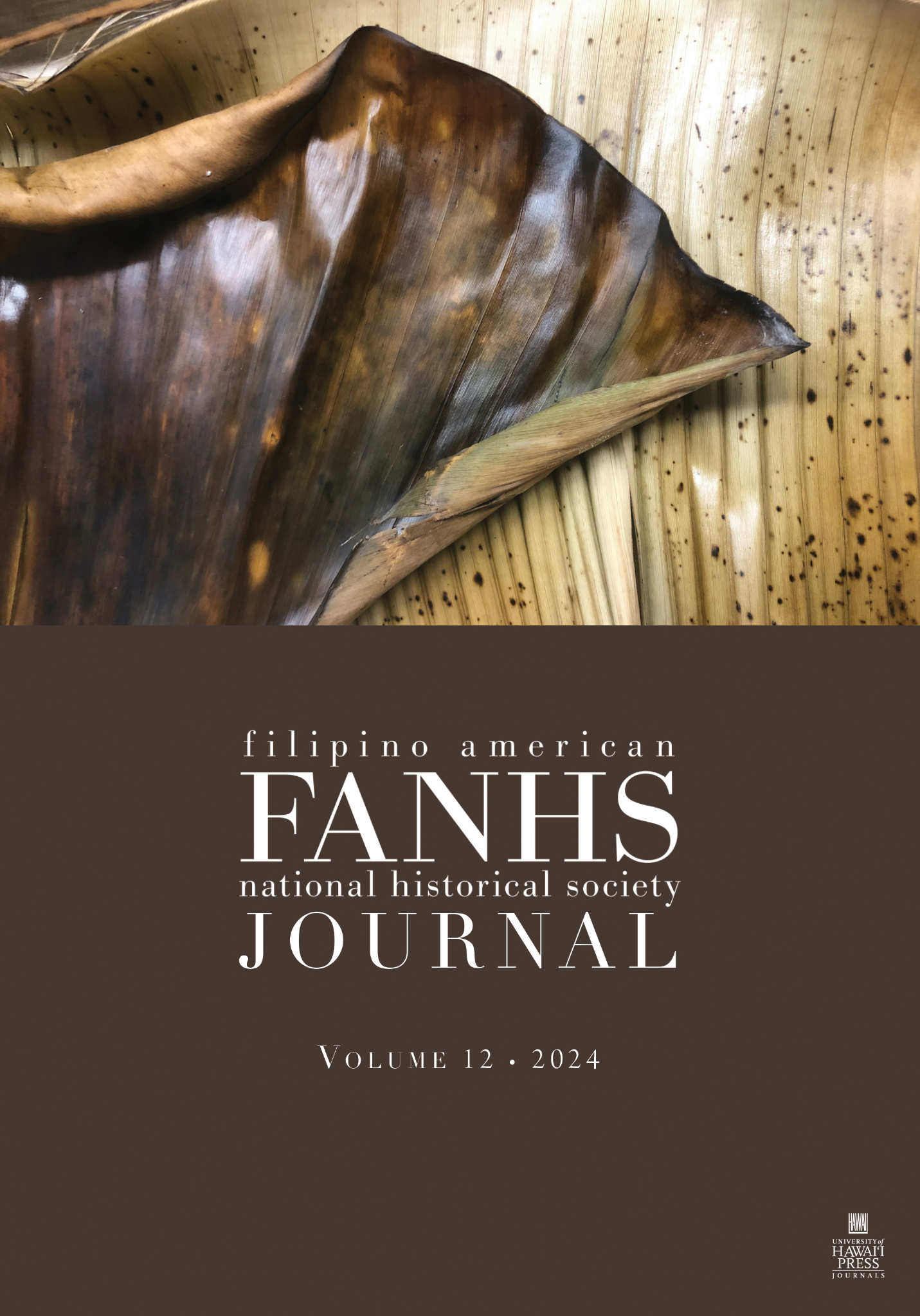
Read Volume 12

Find the “Bridges” issue online at Project MUSE


Recommend

Bring the FANHS Journal to your library

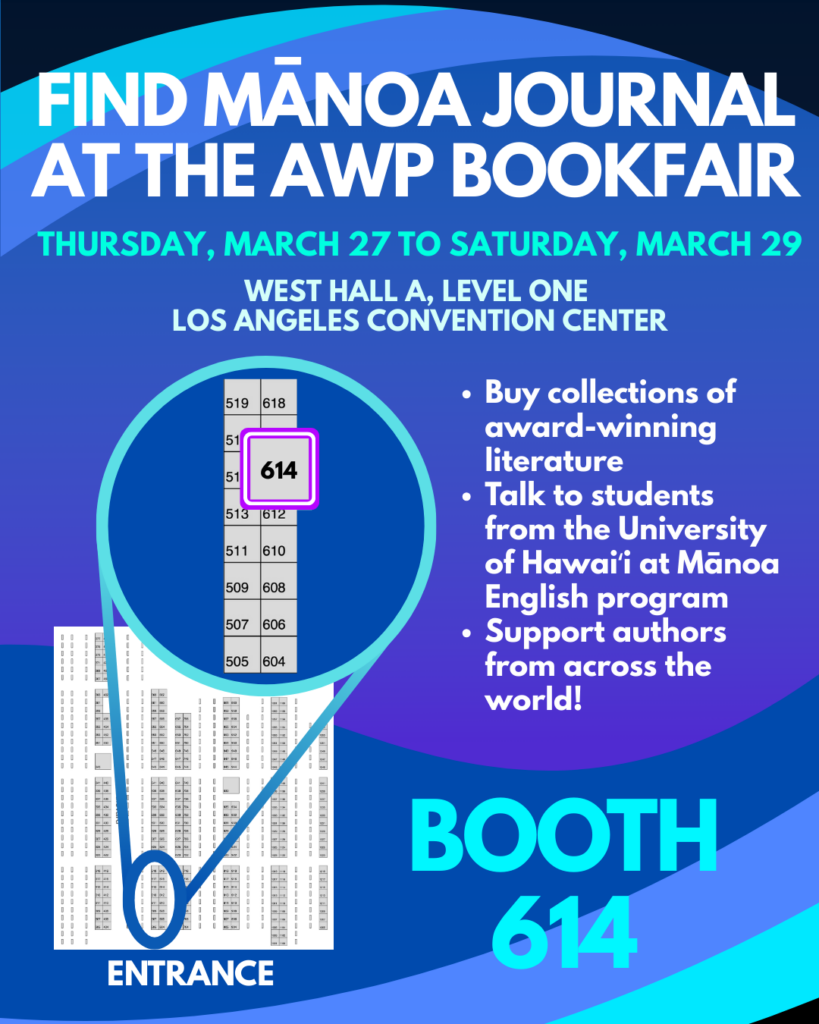
Join Mānoa Journal at AWP 2025 in Los Angeles (March 26-29)

AWP Bookfair Flyer

Mānoa journal will be at AWP 2025 in the Los Angeles Convention Center. Featuring thousands of literary professionals and hundreds of events celebrating the act of writing, the AWP Conference and Bookfair is one of the largest writing events in the world.

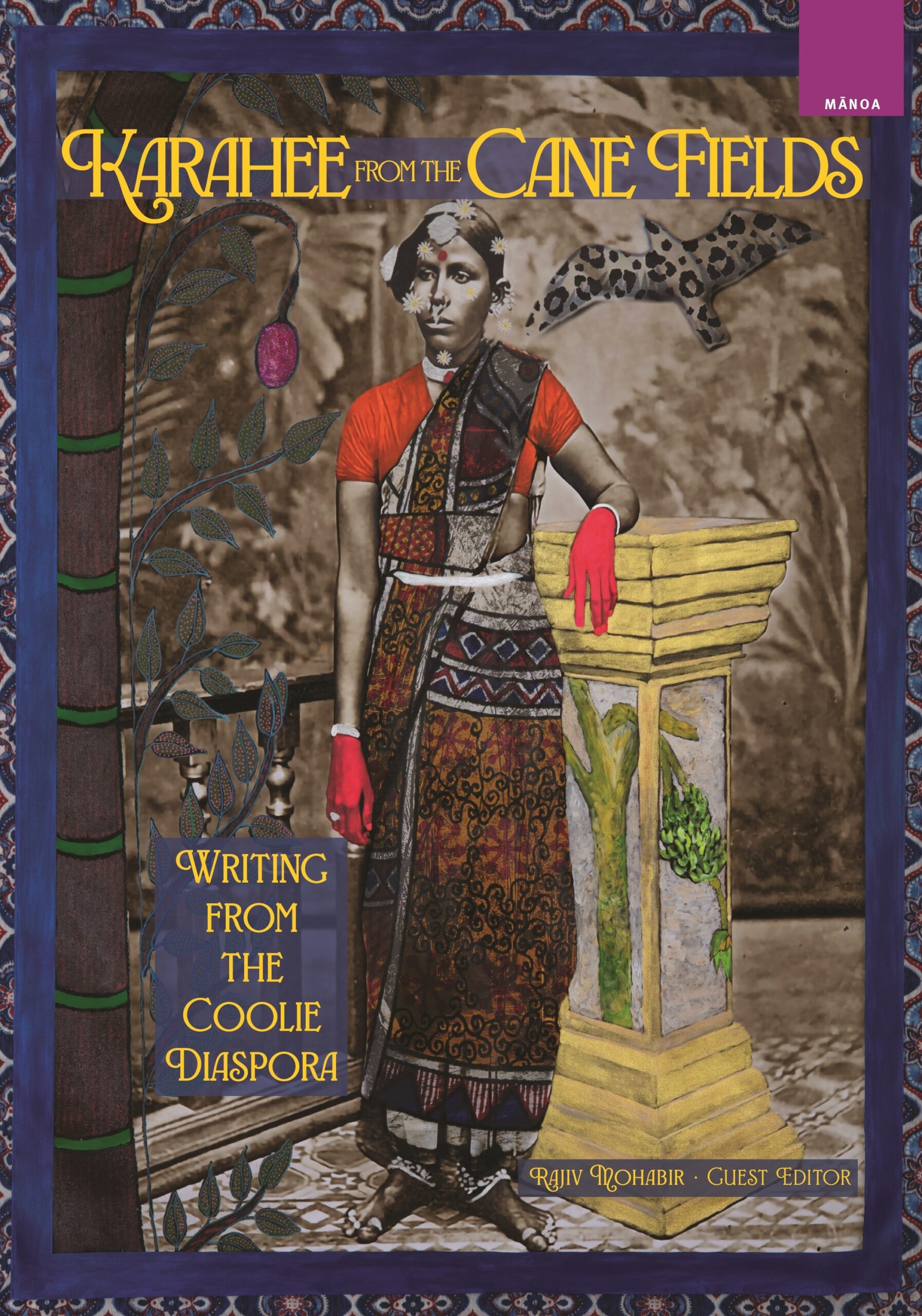
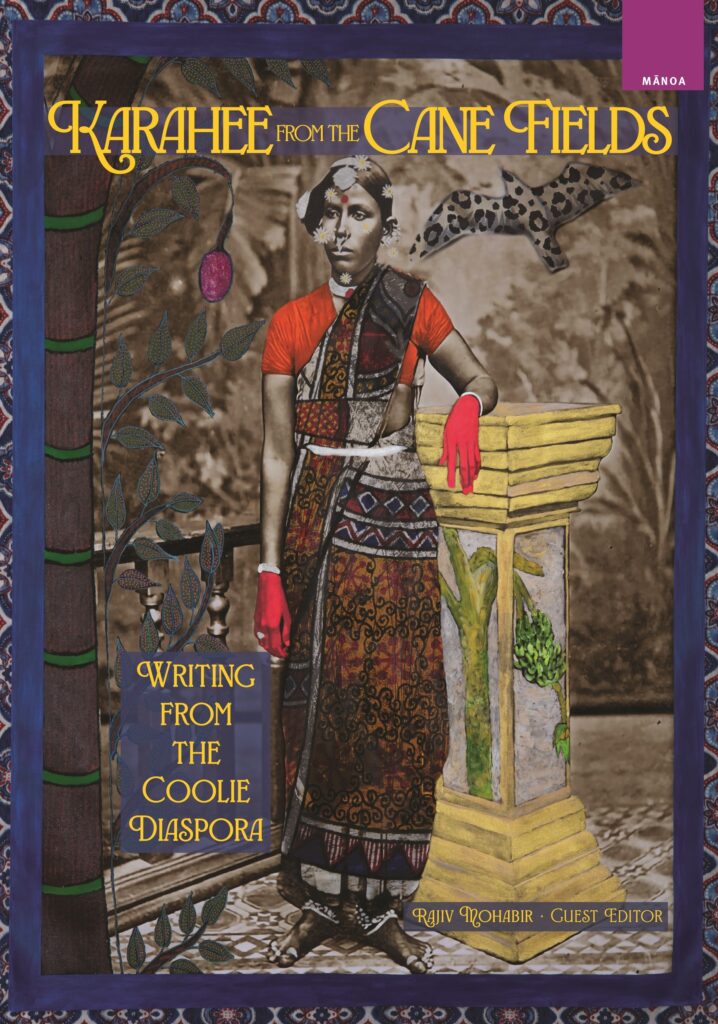
Mānoa journal will be present both at the bookfair and hosting special events throughout on their latest two releases (Karahee from the Cane Fields and Always Again) and upcoming issue, Architectures of FuturoPasados

Bookfair: During the conference, swing by booth 614 in West Hall A from Thurs., March 27 to Sat., March 29.

Panels: Join the panel, Cane & Malunggay: Mānoa Journal Explores South Asian Coolie & Philippine History, from 12:10–1:25pm on Sat., March 29 in room 409AB.

Pau Hana: Mānoa journal will be hosting Pau Hana Friday, an off-site reading event along with the UH Mānoa creative writing program, on Fri., March 28 from 5–7pm at the South Park Commons. Pau Hana Friday will be a grand gathering of UH student voices and vibrant tales created in the heart of the Hawaiian islands. Snacks and drinks will also be provided. Register here.

Learn more, including panels featuring Mānoa journal contributors, here.

Read

Freely available via Project MUSE for a limited time

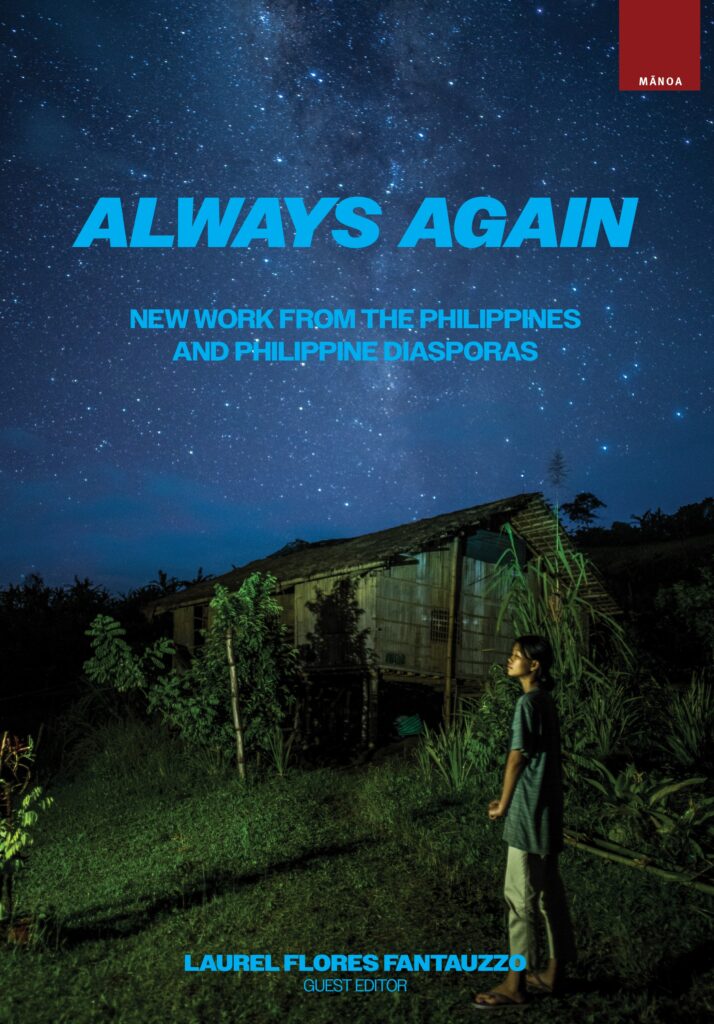
Always Again: New Work from the Philippines and Philippine Diasporas

On this Gathering by Laurel Flores Fantauzzo

A Writer’s Secret Moves:On a Paired Rereading of Rizal’s Noli and Fili by Gina Apostol

This is an image of the front cover of Mānoa vol. 36 no. 1.

On Organizing the Coolie’s Karahee: The Diaspora’s New Literary Directions by Rajiv Mohabir

Subscribe

Subscribe to Mānoa journal today

Discounts offered to AWP attendees.

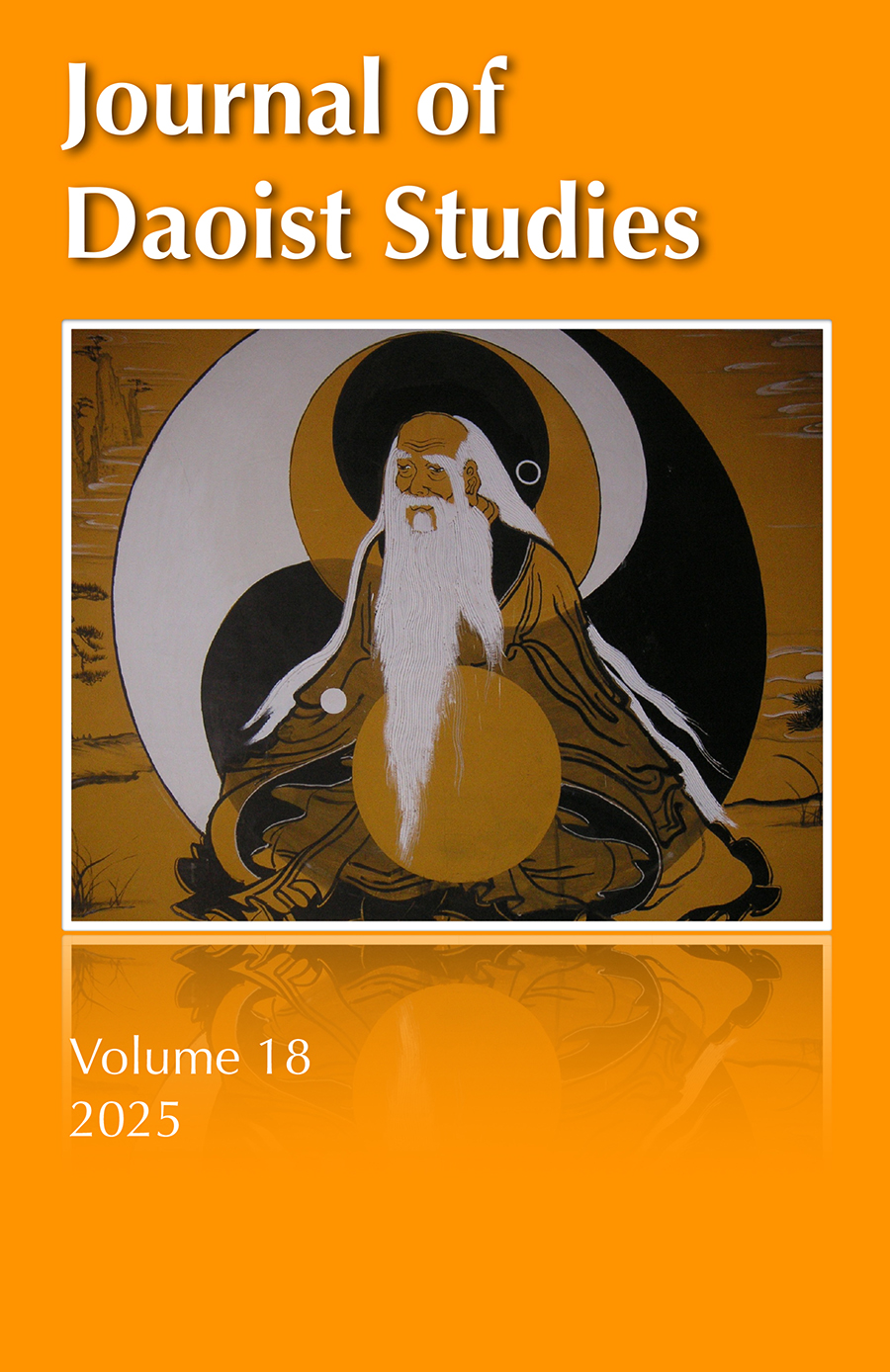
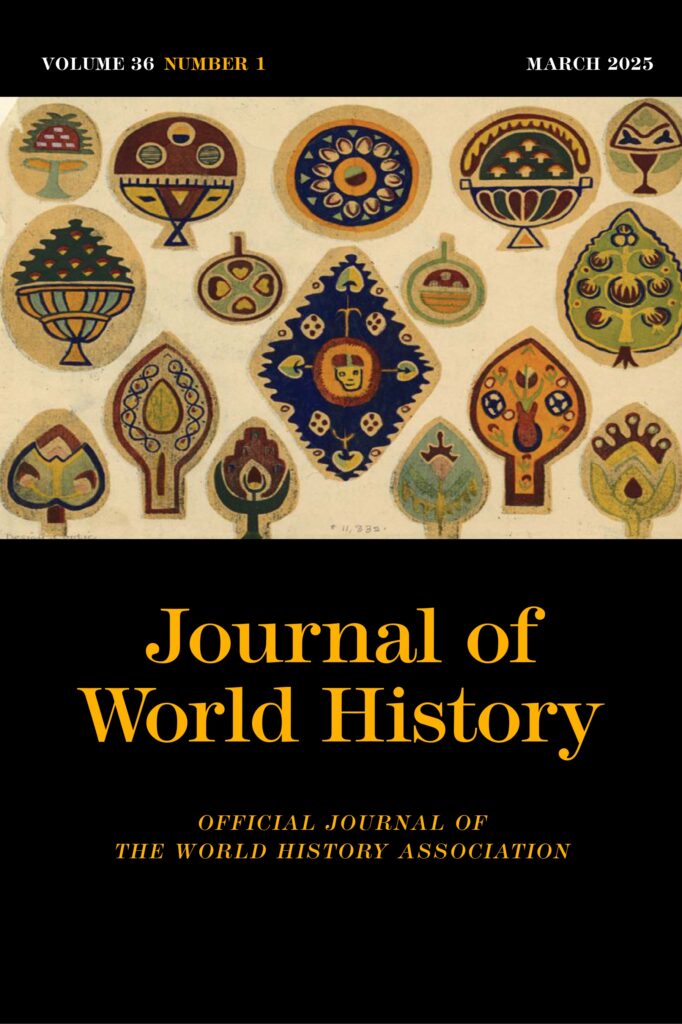
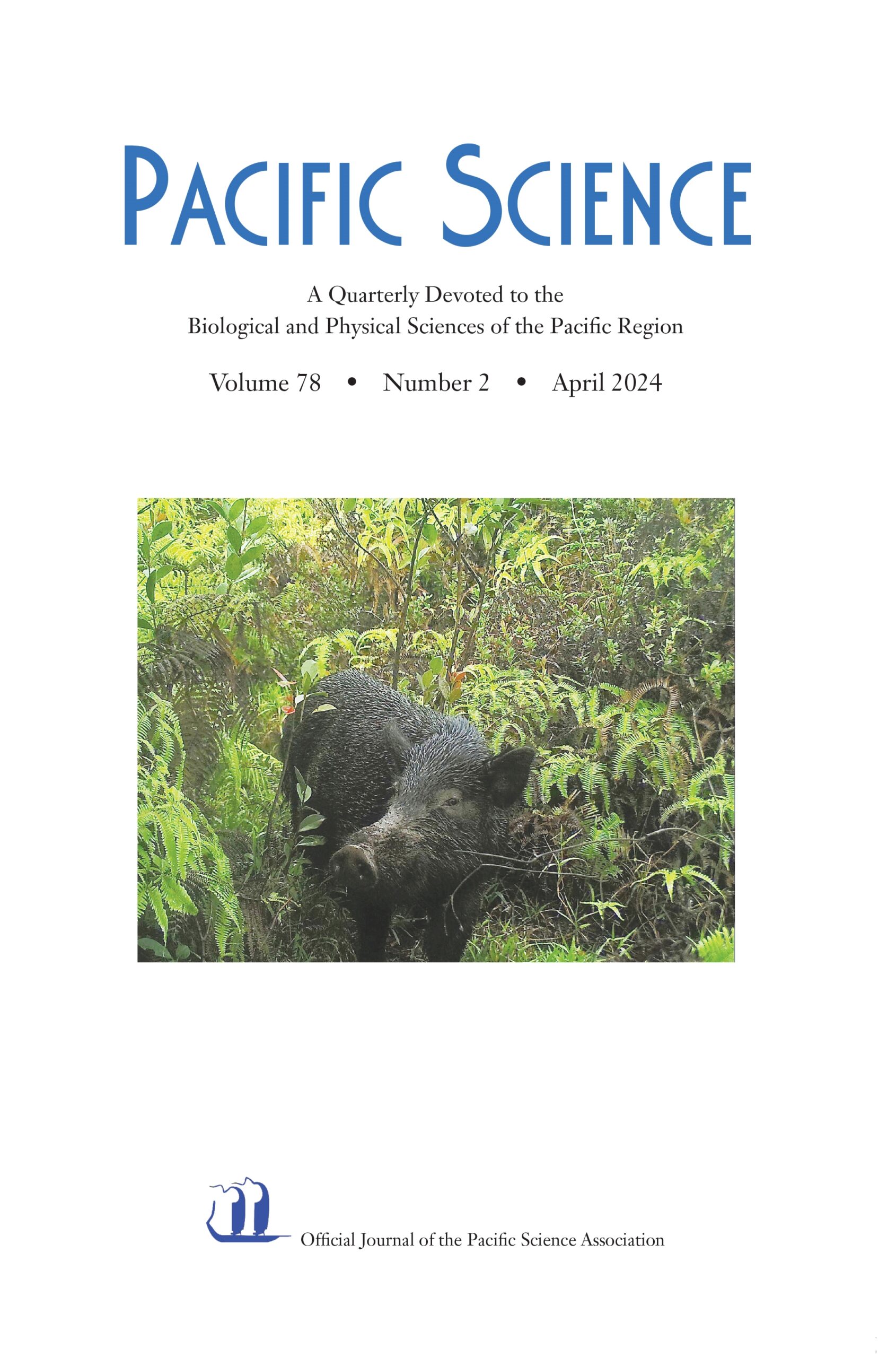
Journals: Journal of Daoist Studies, Journal of World History, Pacific Science + more

cover of Journal of World History 36-1

PS 78-2 cover
PEW_75_1 cover

Philosophy East and West

Special Feature: The Prospects, Problems, and Urgency of Global Intercultural Philosophy Now

Volume 75, Number 1 (2025)

Global Philosophy, Positionality, and Non-Relativist Perspectivism
Ralph Weber

Buddhism, Naturalism, and Animism (or Loving Our More-Than-Human Kin): Global Philosophy at Work in an Age of Ecological Crisis
Karin Meyers

Fazang’s Mereology as A Model For Holism
Felipe Cuervo Restrepo

Libertarianism, Hard Determinism, and Epoché in Indian Buddhism
Giuseppe Ferraro

The Sublime Extends to Chinese Aesthetics
Jonathan W. Johnson and Robert R. Clewis

Find these articles, reviews, and more at Project MUSE.

Journals: Chinese Studies International, Journal of Burma Studies, Oceanic Linguistics + more

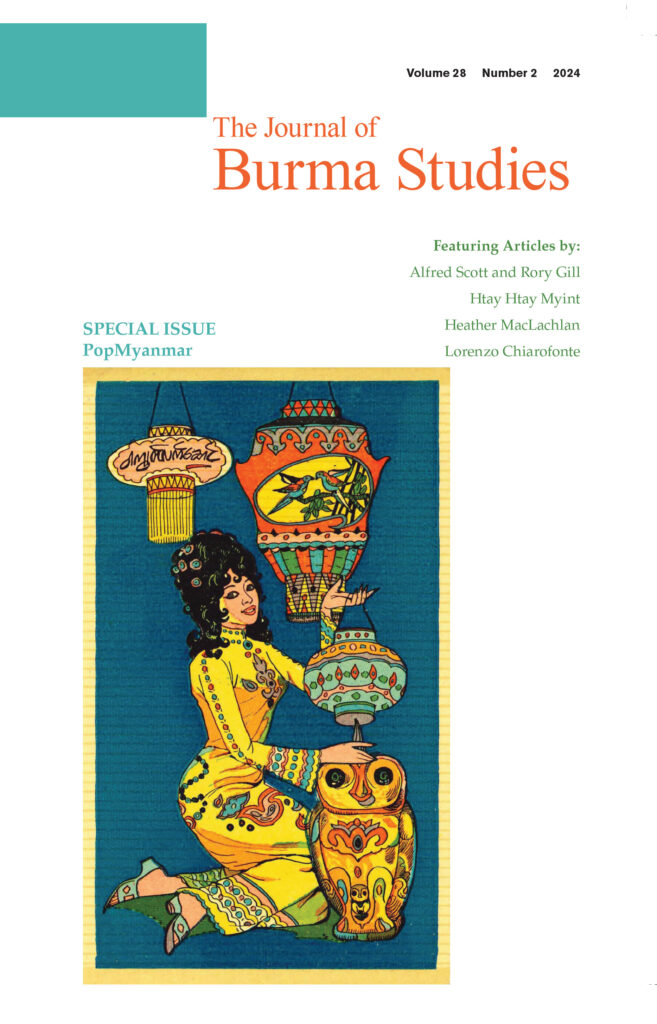
Journal of Burma Studies 28-2 cover

Journal of Burma Studies

Special Issue: PopMyanmar

Volume 28, Number 2 (2024)

The Special issue is introduced by editor Jane Ferguson who states:

Given the tremendous, enduring Burmese interest in—and affection for—local and transnational popular culture, The Journal of Burma Studies is proud to present this special issue: PopMyanmar. Various platforms for popular culture distribution, from print media to music to the internet, are embedded in everyday practices. Pop culture’s modes and meanings of consumption are constantly refashioned through history, taste, and caprice. Yet it is not free for all: these artifacts are still beholden to the political economy at large. Popular culture, as an essential part of modern society’s mainstream, is thus a reflection of its dominant values. As a site for cultural contestation, pop culture can influence imaginings for new political futures.

Find this introduction, articles and more at Project MUSE.

Oceanic Liguistics 63-2 cover

Journals: Buddhist-Christian Studies, Journal of Korean Religions + More


Buddhist-Christian Studies

Volume 44 (2024)

Editors Thomas Cattoi and Kristin Johnston Largen introduce this issue:

[T]he articles in this issue include several that offer a variety of perspectives on the thought of Thich Nhat Hanh for the sake of a more peaceful and just world. Another article examines whether and how certain interpretations of Theravāda Buddhist doctrines can lead to racist practices and policies. Yet another article looks at the current realities of Buddhist chaplains in the United States, both what they can offer in terms of a unique perspective on spiritual care and also the ways in which they are discriminated in a system that has been so dominated by Christian practitioners. And this is only the beginning. We hope that you will enjoy the breath of perspectives—scholarly, reflective, and practical —evidenced by this issue’s outstanding authors.

Find these articles, review, news and views and more at Project MUSE.

Cover Jounral of Korean religions JKR 15.2
PEW 74-4 cover

Journals: Asian Theatre Journal, Azalea, Manoa, Korean Studies, Pacific Science and more

Cover for ATJ 41-2
Azalea 16: Journal of Korean Literature and Culture

Azalea: Journal of Korean Literature & Culture

Special Features: Contemporary Korean Women Writers, Korean Women’s Poetry, Writer in Focus: Kwon Yeo-Sun, Voice from the Colonial Period: Imamura Eiji.

Volume 17 (2024)

Editor Young-Jun Lee introduces the new issue of Azalea with Special Features that focus on the Feminist Reboot of the 2010’s, stating:

Korean literature in the 20th century was dominated by men, but that changed in the 1990s after democratization and the rise of the economy. If you read literary magazines from the 1990s, you will find that names of women writers on the contents pages are strikingly more numerous than those of men. This trend has continued for almost three decades now and it is likely to continue for the foreseeable future, as long as Korean women writers are responding to Korean society, which keeps women in an inferior position. “Feminism Reboot” was one of the critiques of the resilient patriarchal system in Korea.

Personal income in South Korea has recently overtaken that of Japan. South Korea’s rise is not only economic, but also cultural. Pop culture fans, including many young people around the world, are fascinated by Korean culture and new works coming out of South Korea. The popularity of Korean language programs at universities around the world has gone beyond the limits of what those universities can accommodate. And yet, by any standard, it is still undeniable that women in South Korea are victims of serious social inequality.

Find this Editor’s note, articles, images, poetry, and more at Project MUSE.

Biography cover 46-3
JWH 35-3 front cover

Korean Studies

Special Section:  A Translational Reading of the Invention of Korea’s Confucian Traditions

Special Section: Portrayals of Motherhood in South Koran Popular and Practices Culture

Volume 48 (2024)

Editor Cheehyung Harrison Kim introduces this issue and the two Special Sections:

Two interconnected Special Sections are at the core of this volume. The first is titled “A Transnational Reading of the Invention of Korea’s Confucian Traditions,” exceptionally guest edited by Daham Chong (Sangmyung University). The second is guest editor Bonnie Tilland’s (Leiden University) superb “Portrayals of Motherhood in South Korean Popular and Practiced Culture.” Confucianism and motherhood are notions and practices tied to the ideological perception of constancy, on the one hand, and the shifting epistemological norms based on cultural and historical exigencies, on the other. The authors of the two Special Sections question and explore various historical and cultural predicaments of Confucianism and motherhood in modern and contemporary Korea.

The Special Section on the invention of Confucian traditions begins with Daham Chong’s meticulous account of the influence Max Weber had on modern Korean historians’ comprehension of Confucianism-derived systems in late Koryǒ and early Chosǒn, namely the civil service examination. Young-chan Choi (University of Oxford) adroitly investigates the epistemological changes distinctly occurring in late nineteenth century Korea, in which Confucianism comes to be seen as inferior to the modernist understandings of the world stemming from Protestantism. The postliberation space is Kim Hunjoo’s (Hanbat National University) research area, where the process of remaking Confucianism as a new tradition is carefully scrutinized in relation to the nation building process. The final piece in this Special Section is on literary culture. Owen Stampton’s (University of British Columbia) sophisticated article probes into the tension between tradition and modern life as experienced by women characters in Yi Kwang-su’s 1917 play Kyuhan, as well as discussing the birth of the modern stage in Korea.

Split Inalienable Coding in the East Bird’s Head Family
Laura Arnold

Observations on Tagalog Genitive Inversion
Henrison Hsieh

Variation and Change in Jakarta Indonesian: Evidence from Final Glottals
Ferdinan Okki Kurniawan

When Sound Change Obscures Morphosyntax: Insights from Seediq
Victoria Chen

Lexical Evidence in Austronesian for an Austroasiatic presence in Borneo
Juliette Blevins and Daniel Kaufman

Find these articles, squids, and more at Project MUSE.

This is an image of the front cover of Mānoa vol. 36 no. 1.

Mānoa

Volume 36, Number 1 (2024)

Special Issue: Karahee from the Cane Fields

Guest Editor Rajiv Mohabir introduces this issue:

Find Editor’s note, articles, songs, meditations, and more at Project MUSE.

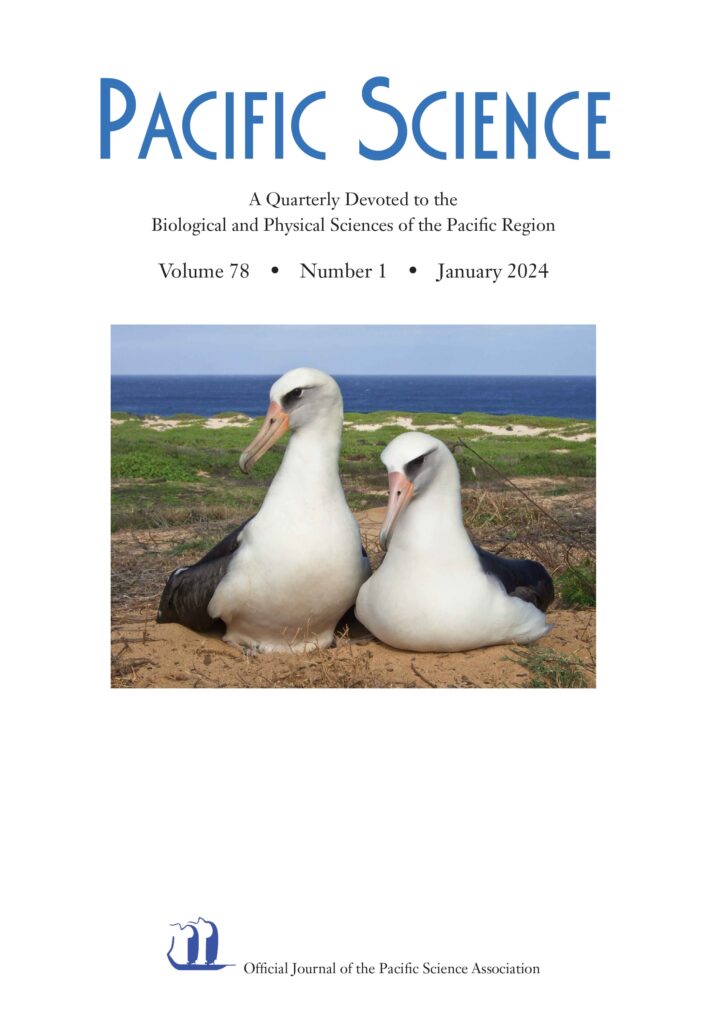
Pacific Science 78-1 Cover photo of Nesting Laysan Albatross pairs

Pacific Science

Volume 78, Issue 1 (2024)

Pre-Contact Vegetation and Persistence of Polynesian Cultigens in Hālawa Valley, Moloka‘i
Patrick V. Kirch, Mark Horrocks, Gail Murakami, Noa Kekuewa Lincoln, Dolly Autufuga, and Jillian Swift

Nesting Success of Lepidochelys olivacea (Cheloniidae) In Situ Incubation in the Cabo Pulmo National Park, Baja California Sur, Mexico
Mónica E. García-Garduño, Elena Solana-Arellano, Carlos R. Godínez-Reyes, Paula Aguilar-Claussell, and David Ramírez-Delgado

Biology and Impacts of Pacific Islands Invasive Species: Falcataria falcata (Miquel) Barneby and Grimes (Fabaceae)
R. Flint Hughes, Aidan Anderson, David R. Clements, Joanna Norton, and Rebecca Ostertag

The Impact of Light Attraction on Adult Seabirds and the Effectiveness of Minimization Actions
André F. Raine, Scott Driskill, Jennifer Rothe, Stephen Rossiter, Jason Gregg, Tracy Anderson, and Marc S. Travers

Status of Laysan and Black-Footed Albatrosses on O’ahu, Hawai’i
Lindsay C. Young, Eric A. VanderWerf, Erika M. Dittmar, C. Robert Kohley, Kelly Goodale, Sheldon M. Plentovich, and Lesley MacPherson


Find these articles and more at Project MUSE.

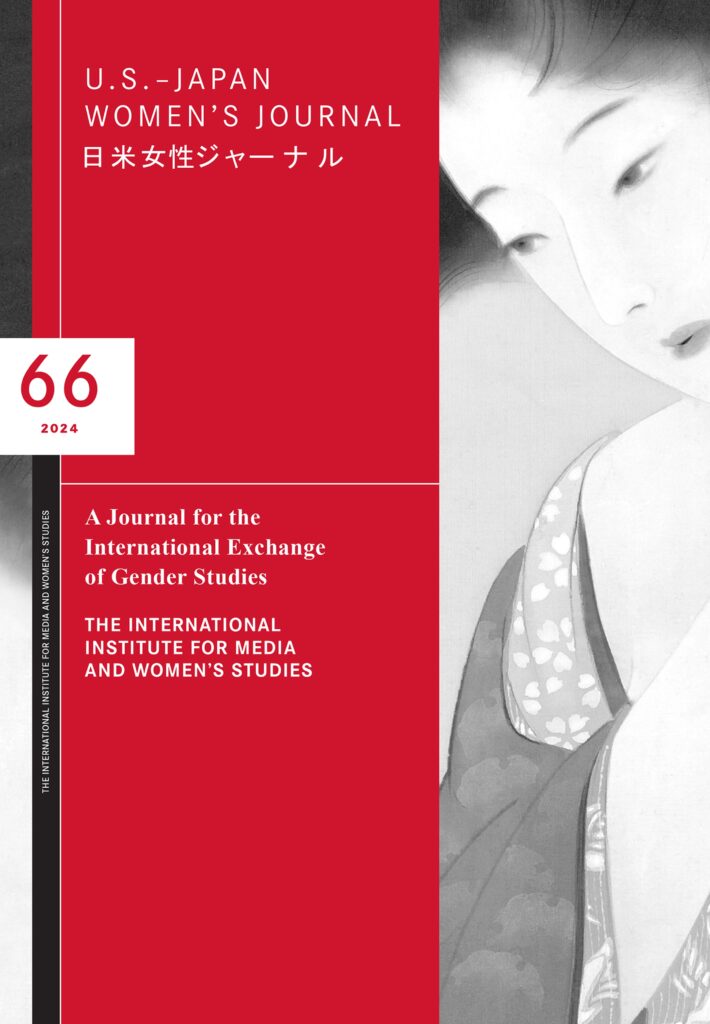
Cover for USJWJ 66

Call for Submissions: Filipino American National Historical Society Journal, Volume 13

The Filipino American National Historical Society Journal is an interdisciplinary, peer-reviewed annual journal that publishes, disseminates, and promotes research related to Filipino American history. The journal publishes research by community-based and academic historians, as well as personal histories.

From the editors:

FANHS Journal, Volume 13 is calling for submissions of papers based on presentations given at the FANHS Biennial Conference in Houston, Texas held July 17-20, 2024. 

We encourage all who presented at the conference to submit your work in one of the following formats and modalities:

  • Written work (e.g., essays, poems, articles)
  • Visual work (e.g., photo essays, prints and other artistic work, video)
  • Mixed modalities (e.g., videos, pictorial essays, zines)
  • Audio (e.g, recorded monologues, abridged oral histories with an accompanying article)

For more information, please see the journal’s Author Guidelines.

Whether you are submitting a written, visual, or audio contribution, we are looking for contributions that address the following sections:

 Type of contributionDescription or ExampleSuggested word count
ArtworkArtwork used for the cover or design throughout the FANHS Journal (i.e. photography, visual art, multimedia images)1 page or less 250 words
Collaborating with our Ancestors Tributes and dialogues between past and presentTributes paid to those who have passed and a space for intergenerational conversations between authors of today and classic pieces from past FANHS Journals around enduring issues.5-10 pages 1250-2500 words
Talk Stories Stories and oral histories  Written conversation or transcription of an oral history/interview of a single person or multiple people. Edited transcription of question-and-answer interview (the full transcription and recording of the interview can be archived with FANHS National).10-15 pages 2500-3750 words
 Community Research Personal or community research in contextPersonal histories, short anecdotes, or community stories situated in larger historical and social contexts.  5-15 pages 1250-3750 words
Academic Article Original scholarship of research or theoryArticle sharing original research or theory, connected to larger research conversations.15-25 pages 3750-6250 words
Reviews
Critical assessment of books, films and resources
Reviews and shares publications, books, films, resources related to Filipino American history (full listings can be shared on FANHS website).2-5 pages 500-1250 words
FANHS in Action Contributions that Move Community ForwardPieces that highlight enacting the mission or goals of FANHS, resources, and strategies for connecting and activism.2-5 pages 500-1250 words

For more information or questions, please contact [email protected]

cover for FAHNS Volume 13

Volume 12 will be published in October 2024 in print and on Project MUSE.

Submissions Due

Jan. 15, 2025

Links for Authors

Author Guidelines

Submit Your Contribution 

Inquiries

[email protected]

About the Journal

The Filipino American National Historical Society Journal is the only journal devoted exclusively to the identification, gathering, preservation, and dissemination of Filipino American history and culture in the U.S. The society was founded in Seattle, Washington in 1982 by Dorothy Laigo Cordova and Fred Cordova, and now hosts 40+ regional chapters nationwide.


OA Journal Language Documentation & Conservation Gets a Redesign

Language Documentation & Conservation (LD&C) unveils a comprehensive website redesign that enhances the journal’s aesthetic appeal and functionality, elevating the experience for authors, readers, and staff alike.

This project includes the launch of new logos, a refreshed layout for journal articles, and an entirely new website, all thoughtfully crafted to reflect the journal’s connection to the Hawai‘i.

The new LD&C logo was designed in concert with corresponding logos for the affiliated International Conference on Language Documentation & Conservation (ICLDC) and the forthcoming journal section Indigenous Language Rights & Realities (ILR&R), emphasizing the relationship between all three. Each logo represents natural elements significant to Hawaiian culture and place, portraying the palapalai fern, ʻilima flower, and the ʻōhiʻa lehua flower, respectively.

The journal’s PDF layouts have been restructured to present articles in a clean and professional format, reflective of the high-quality research we are proud to publish. The new layout can be seen currently in articles published in Volume 18.

The new website makes it easier to navigate LD&C’s extensive archives, submit manuscripts, and engage with the latest research. This redesign marks a significant milestone in LD&C’s ongoing commitment to excellence and dedication to fostering a vibrant and inclusive scholarly environment.

For more information, please visit the new website at nflrc.hawaii.edu/ldc.

LD&C is sponsored by the National Foreign Language Resource Center and published by the University of Hawai‘i Press.

LD&C is a peer-reviewed, open-access journal focusing on topics related to language documentation and conservation, sponsored by the National Foreign Language Resource Center.

A formal Indigenous driven academic publishing space that privileges and centers the work of Indigenous and Non-Dominant scholars (e.g. elders, language speakers-learners, knowledge holders, cultural practitioners, educators, researchers, advocates, etc.) from a variety of cultural, intellectual, and/or institutional traditions and practices. Coming soon.

The International Conference on Language Documentation & Conservation series, or ICLDC, has, since its inception in 2009, become the flagship conference for the field of language documentation.


Journal of Korean Religions, The Contemporary Pacific, U.S. Japan Women’s Journal + more

ATJ 41-1 cover
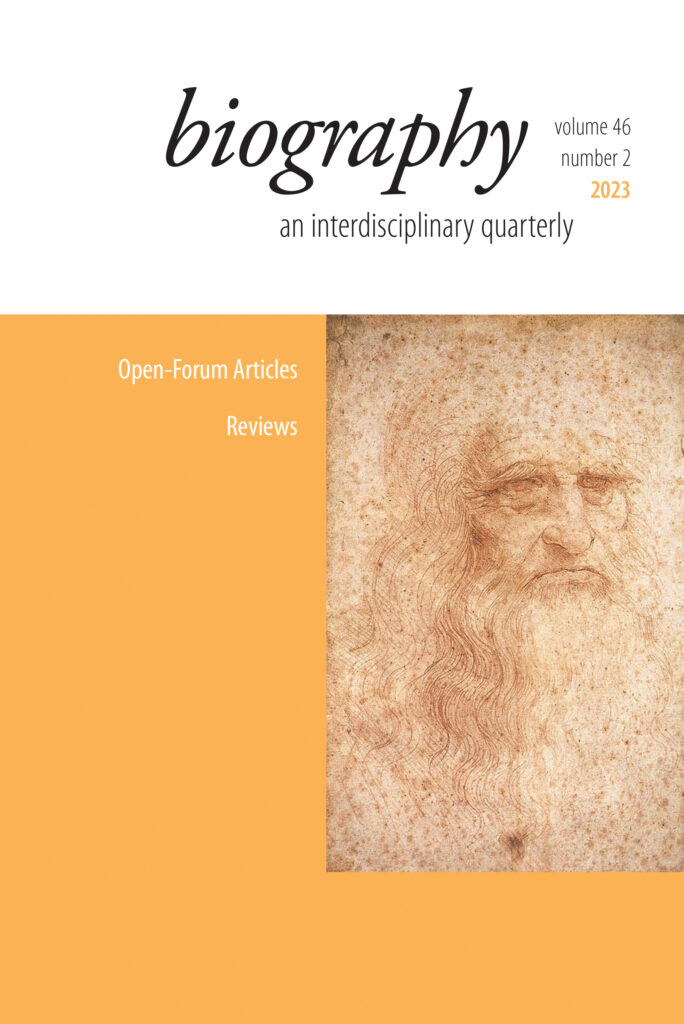
Front cover of Biography volume 46, number 2 (2024)

Biography

Volume 46, Number 2 (2023)

Editor Craig Howes discusses this edition and unique collection of writing:

[F]rom its first issue in 1978, Biography has been principally a forum journal, dedicated to publishing unsolicited articles from a wide variety of disciplines, and solicited reviews of recent critical and theoretical publications devoted to some aspect of life writing.  This issue continues the tradition, and renews this commitment. Seven very substantial articles and twenty-one reviews—nothing else. But a quick comparison of our first and latest issues reveals that some things have changed, largely in response to changes in the field itself. Although Biography declared itself an An Interdisciplinary Quarterly from the start, all of the first six articles dealt with American, English, and French literary or historical subjects. The current issue’s seven articles deal with religious, psychoanalytic, broadcast, graphic, and social media texts from a far wider range of geographic locations—North America and Western Europe, but also the Caribbean, Eastern Europe, and Western Asia, with glances at Africa and South and Eastern Asia for important context.

Find this Editors’ Note, articles, reviews, and more at Project MUSE.

Front cover of The Contemporary Pacific volume 35 numbers 1 and 2
JKR 15.1

Journal of the Southeast Asian Linguistics Society

Volume 17, Number 1 (2024)

Voice And Pronominal Forms In Kayan (Uma Nyaving)
Alexander D. Smith, Michael Yoshitaka Erlewine, and Carly J. Sommerlot

Chronology of Registrogenesis in Khmer: Analyses of Poetry and Inscriptions
Sireemas Mapong

Classifiers and Definiteness in Longdu (Min Chinese)
Joanna Ut-Seong Sio

Notes on the sociopolitical history of nomenclatures in Northeast India
Pauthang Haokip

Remembering Michel Ferlus (1935-2024)
Alexis Michaud and Minh Châu Nguyên

Find these research papers, data paper, reviews, bibliographies, remembrances, and more at eVols.

PEW 74-2 cover
USJWJ 65 cover

Journals: Biography International Year in Review, Journal of Burma Studies Contribution to Pyu Studies + more 


Front cover of Biography volume 46 number 1 (2023)
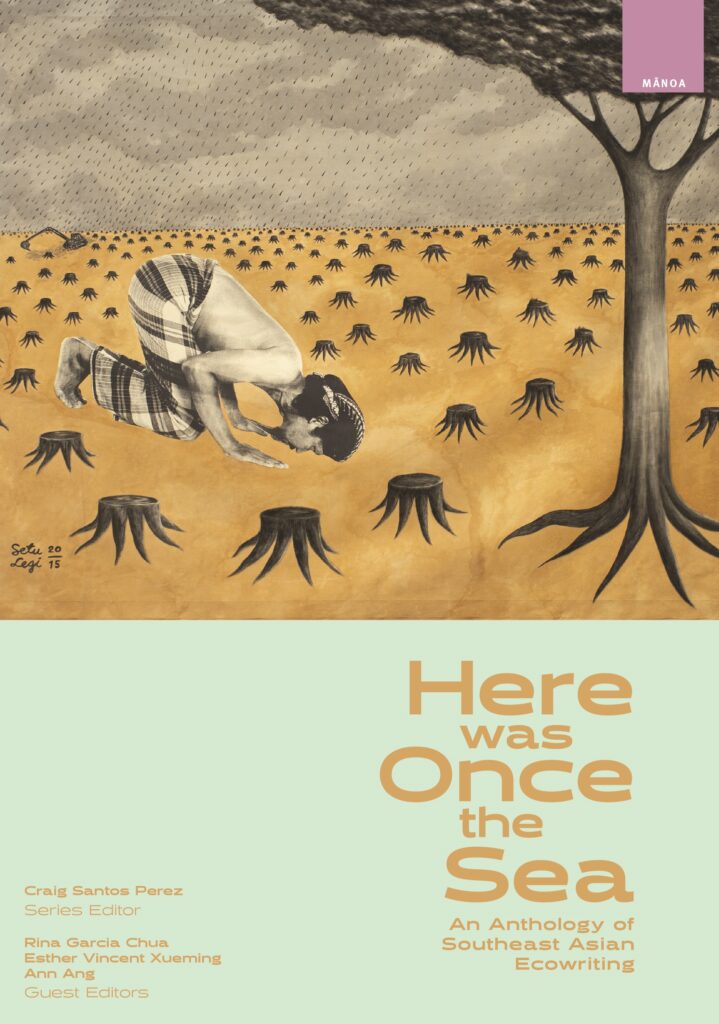
Here was Once the Sea: An Anthology of Southeast Asian Ecowriting

Mānoa

Here was Once the Sea: An Anthology of Southeast Asian Writing

Volume 35 Number 2 (2023)

Guest Editors Rina Garcia Chua, Esther Vincent Xueming, and Ann Ang discussion their vision with this unique collection of writing:

This anthology represents a chorus of offerings, first and foremost to the land and the sea, and second to you, our readers, as an invitation to attend to the urgencies and travails of our homes. On the one hand, while the anthology is comprised mostly of anglophone texts, which reflect the aspirations of regional writers to speak across borders and to the globe at large, the English of these pages is inhabited by meanings and associations that make the language our own. This can be seen in the use of indigenous names of plants and places in the works of Annisa Hidayat, Diana Rahim, and Mohamed Shaker, or through rhymes and sounds in the poems of Natalie Foo Mei-Yi and Teresa Mei Chuc. At other times, the native language emerges like weeds, surprising and demanding to be noticed, as in Enbah Nilah’s use of Tamil, which persists as linguistic, cultural, and historical memory in a legacy of erasure.

Find this editorial note, poems, statements, art, and more at Project MUSE.

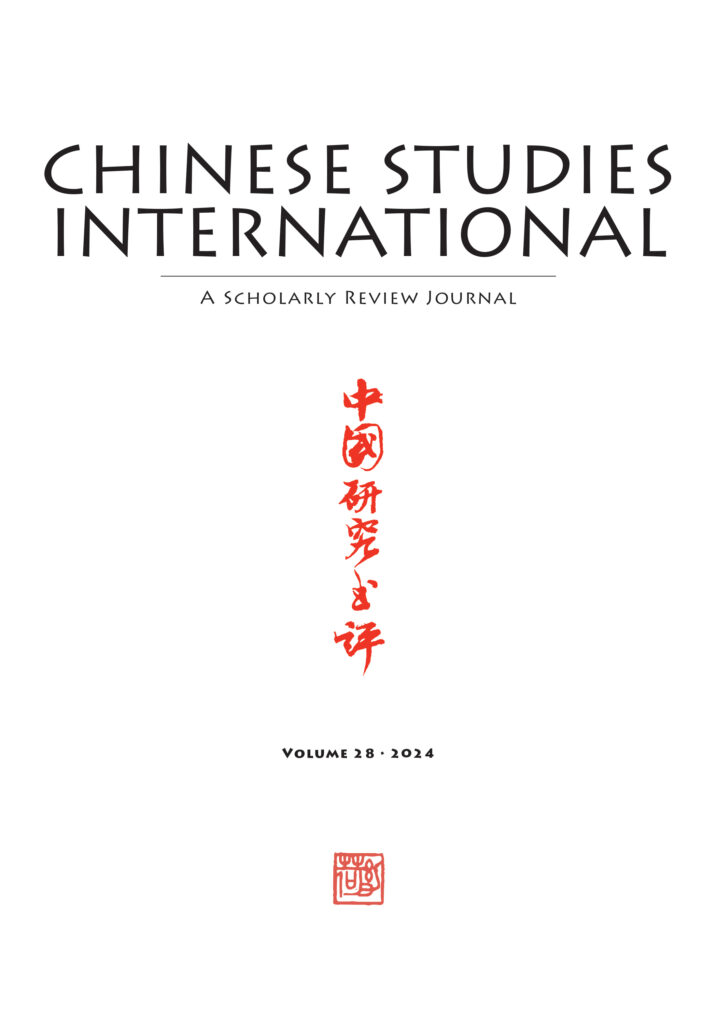
Presenting Chinese Studies International: A Scholarly Review Journal

China Review International: A Journal of Reviews of Scholarly Literature in Chinese Studies is now Chinese Studies International: A Scholarly Review Journal.

This current issue, Volume 28, opens with this note from editor Ming-Bao Yue:

The journal launched in 1994 under the editorship of Roger T. Ames (Professor Emeritus) with the goal to serve the “Sinological community by keeping it abreast of published scholarhip in all areas of Chinese studies in a timely way.” The journal aimed to be inclusive, providing English-language reviews of current literature across the boundaries of both language and discipline, drawing scholars from differing geographical and political perspectives into conversation.

The updated title better reflects the new trends and changes in the field of Chinese Studies that articulate well with the evolving mission of this official journal of the University of Hawai‘i at Mānoa’s Center for Chinese Studies.

The updated title also signals a shift to keep pace with the times: Once a quarterly print journal, Chinese Studies International will now publish online continuously throughout each year with the same volume of content. This allows the journal to be more timely, greatly decreasing the duration to publication. This online format also allows the journal to better serve its largest audience. In academic year 2023-24, China Review International content was accessed more than 75,000 times in more than 100 institutions from nearly 20 countries.

The journal is sponsored by the Center for Chinese Studies, College of Arts, Languages & Letters, University of Hawai‘i

Project MUSE S20 Subscribe to Open Access S20

Chinese Studies International is proud to participate in the inaugural Project MUSE S20 program, an equitable open access model for scholarly journals.

Chinese Studies International

Recommend Chinese Studies International to your library

Contribute

Interested in reviewing a book for Chinese Studies International? Review author guidelines here.


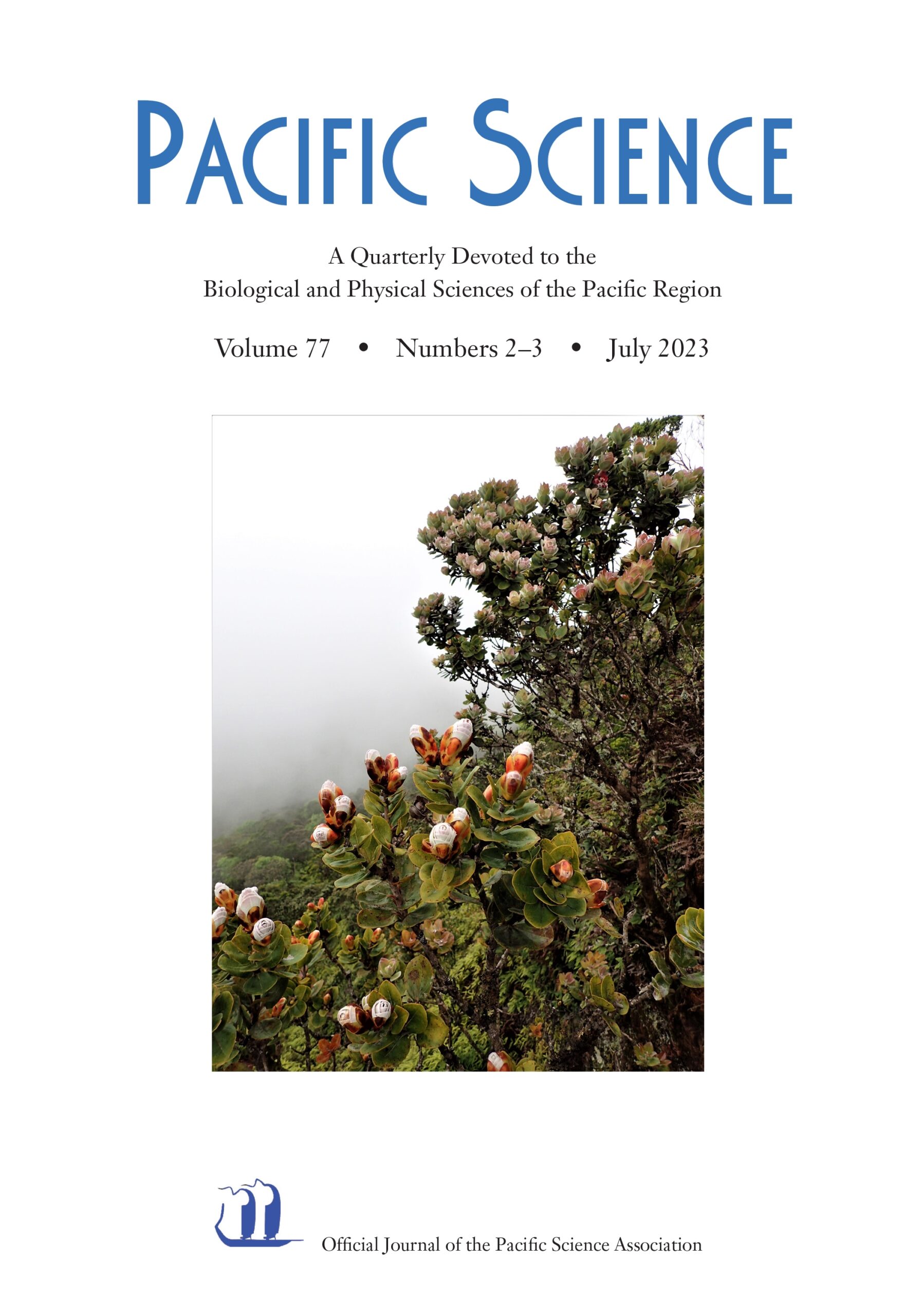
Pacific Science Pays Tribute to Dieter Mueller-Dumbois

Dr. Dieter Mueller-Dombois at Hawai’i Volcanoes National Park. Photograph taken by Nicholas Tomasello.
Dr. Dieter Mueller-Dombois at Hawai’i Volcanoes National Park. Photograph taken by Nicholas Tomasello

The new issue of Pacific Science pays tribute to Dr. Dieter Mueller-Dombois, who is best known for his work studying the ōhi‘a forests of Hawai‘i for over fifty years.

The double issue complies new articles reflecting Mueller-Dombois’s research, with many papers written by his students and those influenced by his work. Editor David Duffy—along with researchers James D. Jacobi, Donald R. Drake, Kanehiro Kitayama and Peter Vitousek—remembers Mueller-Dombois in this volume:

“We were all saddened to learn of the passing of Professor Dieter Mueller-Dombois on July 19, 2022. He was a giant in the field of ecology and an inspiration to countless students, colleagues, and friends to learn to appreciate and work to preserve the composition, structure, and function of our natural ecosystems…

He was also a passionate teacher and his classes and field trips at the university were highly popular and focused on teaching appreciation of Hawai‘i’s natural ecosystems and methods to study vegetation. During his time at the University of Hawai‘i he taught thousands of undergraduate students and successfully chaired 17 MS and 18 PhD graduate students…

During his career he served as an inspirational model for a new generation of people involved with conservation in Hawai‘i, as well as throughout the Pacific. Many of those that he mentored are now continuing to expand his legacy as they serve in important natural resource research, management, and administration roles. While his knowledge, leadership, and friendship will be sorely missed, we all need to build upon his inspiring career and continue to strive to ensure that natural ecosystems conservation is appreciated and effective throughout Hawai‘i, the greater Pacific island nations, as well as globally.”


Call for Submissions

Pacific Science is the official journal of the Pacific Science Association. Appearing quarterly since 1947, Pacific Science is an international, multidisciplinary journal reporting research on the biological and physical sciences of the Pacific basin. It focuses on biogeography, ecology, evolution, geology and volcanology, oceanography, paleontology, and systematics. Manuscript submissions on topics such as Pacific biodiversity, conservation, and sustainability are also encouraged. In addition to publishing original research, the journal features review articles providing a synthesis of current knowledge.

Contributions to the biological and physical sciences of the Pacific area are welcomed from authors in all parts of the world. Manuscripts should be submitted online. Authors will receive a confirmation of their submission.

Electronic Submissions
Submit manuscript online at https://pacificscience.msubmit.net/

Table of Contents

Tribute to Professor Dieter Mueller-Dombois
James D. Jacobi, Donald R. Drake, David Duffy, Kanehiro Kitayama, and Peter Vitousek

Climate-Induced Forest Mortality in the Tropical Pacific Islands: What Do We Really Know?
Hans Juergen Boehmer and Stephen Galvin

Microclimatic Effects of Ko- (Sugarcane, Saccharum officinarum) Row Planting
in the Leeward Kohala Field System, Hawai‘i Island
Michael W. Burnett, Duncan Coleman, Gabriel Saiz, Kiara Bacasen, Marina Luccioni, Ke-haulani Marshall, and Peter M. Vitousek

‘Ōhi‘a lehua (Metrosideros polymorpha): A Most Resilient and Persistent Foundation Species in Hawaiian Forests
James D. Jacobi, Hans Juergen Boehmer, Lucas Berio Fortini, Samuel M. ‘Ohukani’ōhi’a Gon III, Linda Mertelmeyer, and Jonathan Price

A 60-Year Record of Plant Colonization on Alpine Lava Flows, Maunaloa,Hawai‘i: Climate Change, Substrate Control, and Human Disturbance
James O. Juvik, Brett T. Rodomsky, Jessica A. Kirkpatrick, Marie M. McKenzie, John E. Barnes, Sonia P. Juvik, Kathryn Y. Akamine, John P. Lockwood, and Dieter Mueller-Dombois

Changes in Community Composition and Functional Traits After Cyclones and Fire in a Pacific Rainforest
Gunnar Keppel, Thomas Ibanez, and Edward L. Webb

A Comparative Study of the Floristic Diversity and Structure of Relictual Littoral and Swamp Forests in the Island of Tahiti (French Polynesia, South Pacific)
Solène Fabre Barroso, Olivier Flores, Pauline Palmas, Robin Pouteau, and Jean-Yves Meyer

Shrub Dieback and El Niño Drought in Hawai‘i: Life Stage Demography and Population Rejuvenation
Robert A. Wright and Dieter Mueller-Dombois

Hawaiian Subalpine Plant Communities: Implications of Climate Change
Alison Ainsworth and Donald R. Drake

Gap Model Simulation of Metrosideros-Cibotium Stand Structure and Displacement Dieback
Philip J. Burton and Steven G. Cumming

Landscape Development From Point Zero
Reinhard F. Hüttl and Werner Gerwin

Vegetation Succession Following Clearcutting of Lowland Hawaiian Rainforest on the Island of Hawai’i
Dennis H. Grossman and R. Flint Hughes

A Conversation on the UH Botany Department, Vegetation Ecology, and Life with Professor Emeritus Dr. Dieter Mueller-Dombois
Georgia Hart-Fredeluces and David Duffy

Read Pacific Science online at Project MUSE, BioOne, or ScholarSpace