




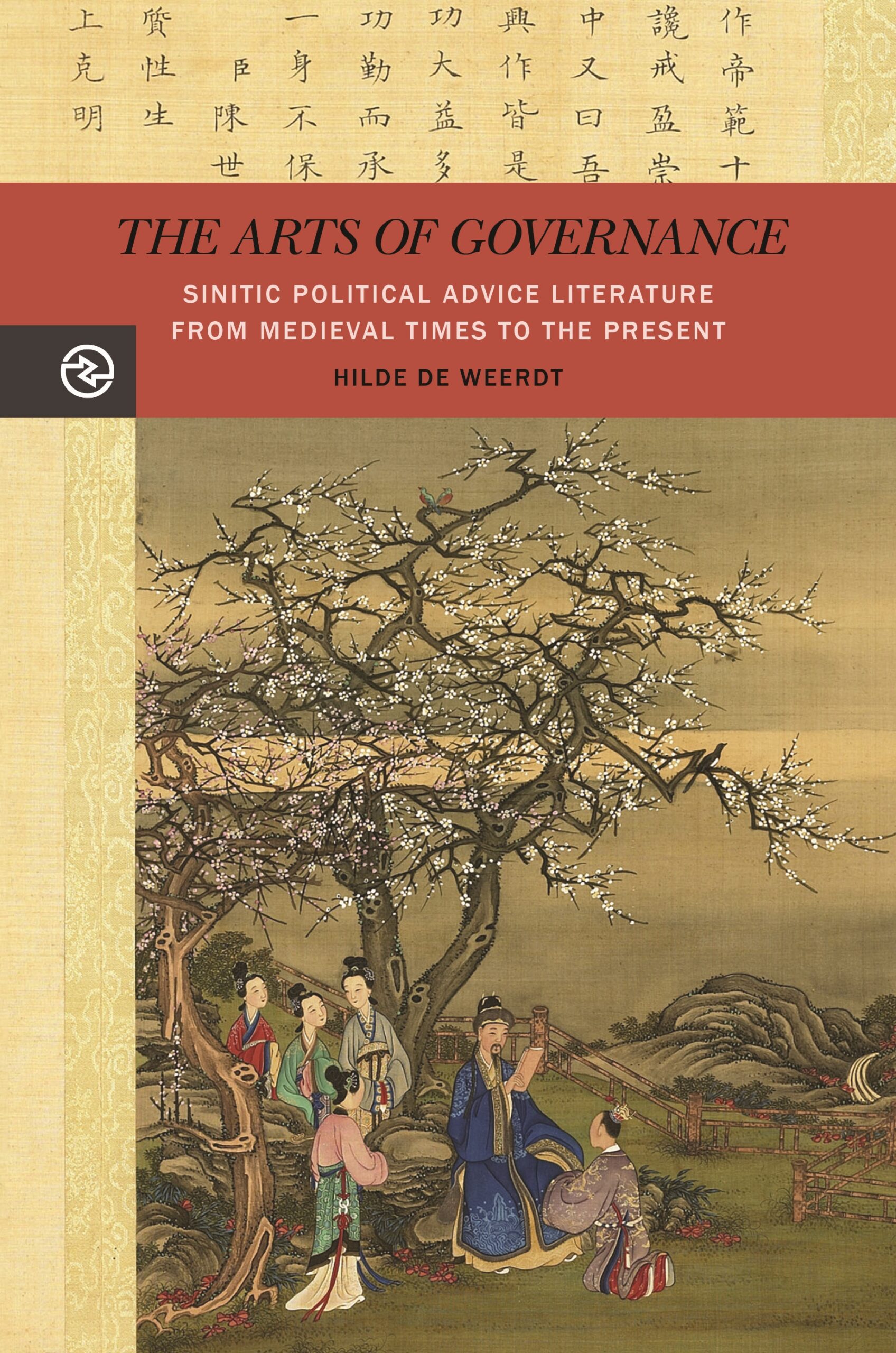
The Arts of Governance: Sinitic Political Advice Literature from Medieval Times to the Present
- About the Book
-
The Arts of Governance offers a global history of the creation, uses, and adaptations of the political advice literature produced at the court of or about the reign of Tang Emperor Taizong (r. 626–649). This book is the first to place the history of Sinitic mirror texts in a global and comparative historical framework. De Weerdt interprets medieval political advice literature as an administrative technology attested throughout Afro-Eurasia whose history is shown to have been cross-cultural from inception through the present. The five chapters explain key moments in the longue-durée global history of the Taizong mirror literature and do so by describing their global and comparative contexts as well as by probing the specific models of governance and the political agendas that were at play during each of these moments.
The first chapter documents the use of political metaphors of the body and the mirror in Sinitic political advice literature and explains the early medieval construction of “the arts of governance” as a model through these metaphors. Subsequent chapters show how later medieval Neo-Confucian politicians developed the “learning of emperors” as a model to respond to the early fourteenth-century Mongol infatuation with the Taizong mirror literature, and ask why the Tang mirror texts, after having been long overshadowed by Neo-Confucian alternatives, were adapted in various genres and different media at early modern East Asian and West European courts and broadly circulated in print. The fifth and final chapter delves into the remarkable phenomenon of the explosion of vernacular East Asian translations of these mirror texts (over forty unique modern Chinese translations) from the late twentieth century to the present.
The Arts of Governance vividly depicts the continuities and transitions in the longue-durée history of East Asian mirror literature, and challenges temporal and spatial divides such as medieval arts of governance/modern political theory and Euro-Mediterranean mirror literature/East Asian classics and commentary. It also invites readers to rethink the chronologies and modalities of vernacularization and the global exchange of administrative knowledge and technologies.
- About the Author(s)
-
Hilde De Weerdt, Author
Hilde De Weerdt is professor of Chinese and early modern global history at KU Leuven and senior researcher at the International Institute of Social History, Amsterdam.
- Reviews and Endorsements
-
- De Weerdt’s The Arts of Governance unfolds a fascinating case of how medieval Sinitic political advice literature traveled across time and space. Her study of Sinitic traditions is remarkably thorough and nuanced, rich in details that bring a knowing smile to specialists, while never losing sight of comparative and cross-disciplinary prospects with early modern European and modern Asian contexts. . . . The book thus makes a significant contribution not only to the study of premodern China, but also to global history more broadly, offering thought-provoking insights and innovative methodological approaches that will inspire future research.
—Lili Xia, Barnard College, Journal of Chinese History
- De Weerdt’s The Arts of Governance unfolds a fascinating case of how medieval Sinitic political advice literature traveled across time and space. Her study of Sinitic traditions is remarkably thorough and nuanced, rich in details that bring a knowing smile to specialists, while never losing sight of comparative and cross-disciplinary prospects with early modern European and modern Asian contexts. . . . The book thus makes a significant contribution not only to the study of premodern China, but also to global history more broadly, offering thought-provoking insights and innovative methodological approaches that will inspire future research.
- Supporting Resources