



The Journal of Burma Studies: Q&A with Jane Ferguson on Gender and Social Change in Myanmar Special Issue

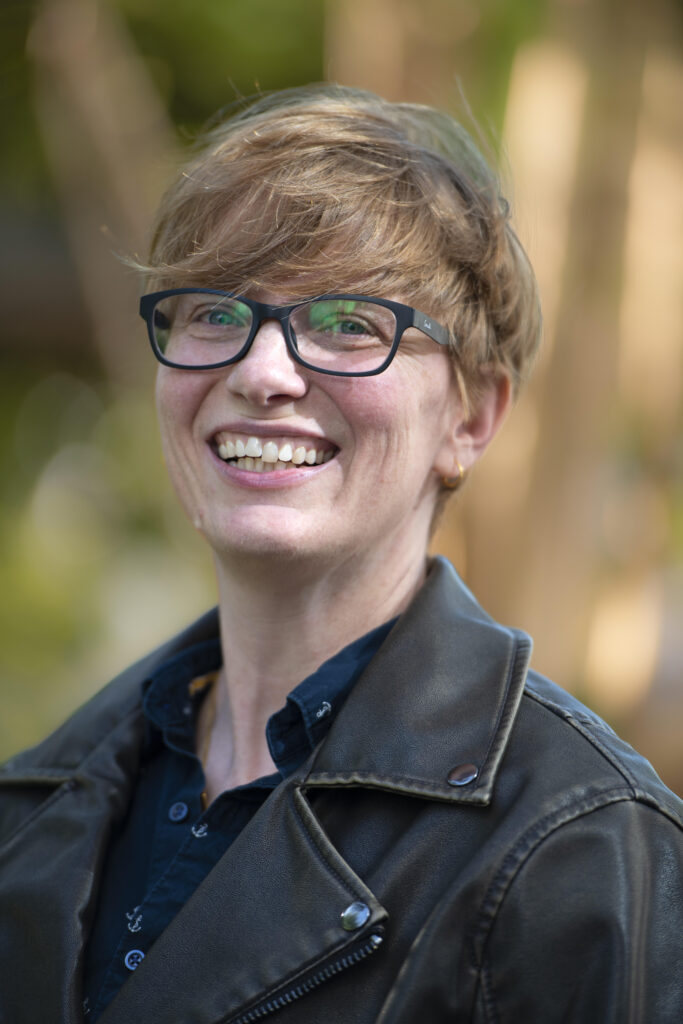
Photo of Jane Ferguson
Photograph provided by Jane Ferguson

A new special issue from The Journal of Burma Studies is now available to readers on Project MUSE. “Gender and Social Change in Myanmar” analyzes the role of gender within social activism, everyday practices, identity politics, and religious histories in Myanmar are explored in this volume.

The Journal of Burma Studies was established in 1996, with current editor Jane M. Ferguson coming on board in December 2017.  She is an Associate Professor of Anthropology, Southeast Asian History, and School of Culture, History, and Language at the Australian National University with a PhD in Anthropology and Southeast Asian history from Cornell University.

Ferguson’s publications include Repossessing Shanland: Myanmar, Thailand, and a Nation-State Deferred (University of Wisconsin Press, 2021) and Silver Screens, and Golden Dreams: A Social History of Burmese Cinema (University of Hawai‘i Press, forthcoming).

Below she shares with UH Press what its been like these last five years as the editor for The Journal of Burma Studies:

University of Hawai‘i Press: After half a decade sitting at the editorial desk, what issues or historic events have changed in your field? Additionally, why was this issue important now?

Jane Ferguson: The horrific events and repression following General Min Aung Hlaing’s 2021 military coup in Myanmar — for a country struggling with economic collapse from the COVID pandemic — constitute a large-scale humanitarian crisis, with war enveloping the country even more than in previous decades. JBS’ charter is to support research and education about and within the country; it is a minuscule contribution where civil war and repression are horrendous, but it does represent one forum for discussing issues that matter to Myanmar, from politics to history, art to popular culture and more. It is also worth engaging with Myanmar’s diverse, rich cultures, ecologies, languages, and human creativity. There is a massive humanitarian crisis in Myanmar, but focusing only on suffering risks ignoring the cultural diversity and tremendous vibrance of its people, historically and today.

UHP: JBS recently introduced a new Special Issue, “Gender and Social Change.” How did this come about? 

JF: “Gender and Social Change” is a capacious theme, and remains crucial for any context and study. It is accessible in the sense that despite the articles’ individual topics and particular research in Myanmar, the lessons are relatable to others. This issue deals with topics including gendered activism and transformation, religiosity, global popular culture, sexism, homophobia, and cyber-bullying; subjects of universal concern and relevance.  

The Special Issue on “Gender and Social Change in Myanmar” is part of our plan to reach out to and engage new and emerging scholars. JBS has general issues which gather individually-submitted articles, but the strategy for this Special Issue was to take a general, but pressing theme, and seek out different responses to it. We advertised the Special Issue via a call for abstracts, worked with authors through peer-review and the revision process, and wrote an introduction engaging the papers thematically and historically. 

UHP: What is next for JBS

JF: The Journal of Burma Studies will carry on its research and educational charter, working with new and returning authors to encourage lively debate and discussion about issues relevant to Myanmar, Southeast Asian Studies, or disciplinary themes writ large. Please stay tuned for the next call for papers for a thematic issue, or if you have a research topic you are working on please get in touch!

UHP: Do you have any advice for academics interested in submitting to The Journal of Burma Studies?

JF: Anyone interested in contributing to the Journal simply needs to send us an email and let us know! We have standard research articles, but also sections about research notes and book reviews. To support and encourage new authors, we have short written guides to help them navigate the waves of academic publishing.   
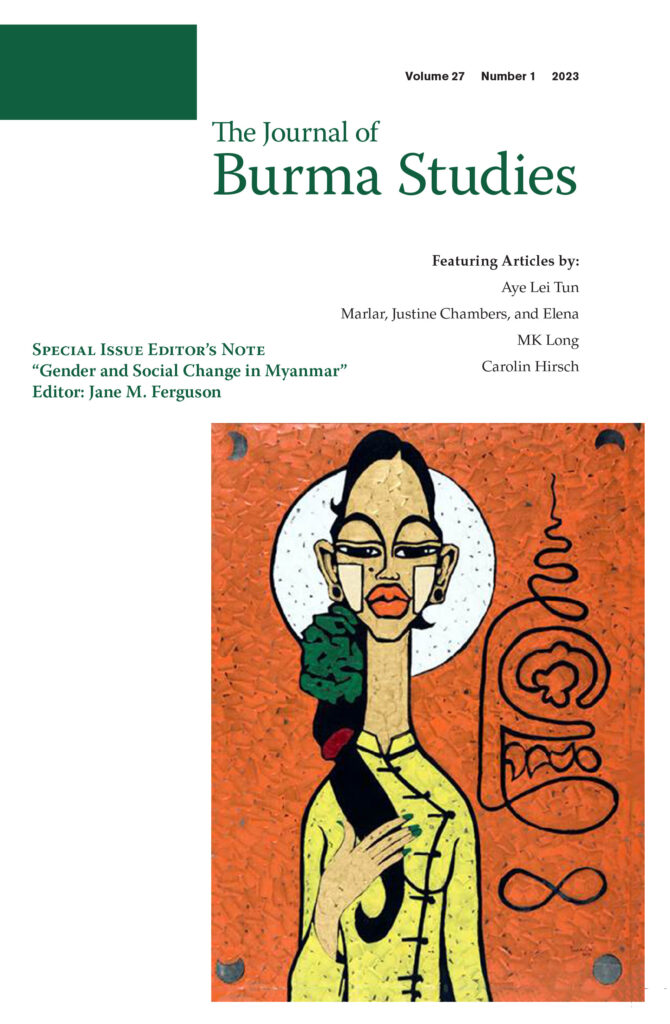
The Journal of Burma Studies
Volume 27, Number 1 (2023)

TABLE OF CONTENTS

Editor’s Note: Special Issue: Gender and Social Change in Myanmar
Jane M. Ferguson

Deconstructing and Reinforcing Gender Norms and Cultural Taboos in Myanmar’s Spring
Revolution

Aye Lei Tun

Our Htamein, Our Flag, Our Victory: The Role of Young Women in Myanmar’s Spring Revolution
Marlar, Justine Chambers, and Elena

Reconsidering Renunciation: Shifting Subjectivities and Models of Practice in the Biography of a
Buddhist Woman

MK Long

The Gendered Rebel: Challenging Gendered Norms through Punk in Urban Yangon
Carolin Hirsch

CALL FOR SUBMISSIONS

Established in 1996, The Journal of Burma Studies is the premier peer-reviewed academic print journal that focuses exclusively on Burma. The Journal of Burma Studies is jointly sponsored by the Burma Studies Group and the Center for Burma Studies at Northern Illinois University.

It is published twice a year for the Center for Burma Studies. The Journal seeks to publish the best scholarly research focused on Burma/Myanmar, its ethnic nationalities, stateless and diasporic cultures from a variety of disciplines, ranging from art history and religious studies, to economics and law.
Submit your manuscript online.

Journals: Seabirds Vulnerable to Climate Change, Anger in a Non-Ideal World, Living the Way of Tea + more

Asian Perspectives

Volume 62, Number 1 (2023)

The new issue shares the following introduction and welcomes a new editor:

You will note that several articles in this issue focus on the identification and interpretation of specific materials and technologies. The topics covered by four of the articles include rock art in early Mongolia, bone tools in prehistoric eastern China, metallurgy at the Han empire’s southern periphery, and plant remains and parasite microfossils in pre-contact New Zealand. A fifth article relies on settlement pattern and demographic data from Neolithic and Bronze Age China to draw insightful comparisons between the developmental trajectories of two distant regions.

We take this opportunity to welcome Cristina Castillo as the journal’s new Book Review Editor and thank Michèle Demandt for serving as the first editor dedicated to this important section of the journal. Michèle streamlined many of the editorial procedures for the book reviews. We wish her the best in all her future professional and personal endeavors.

Find this editorial, research articles, and more at Project MUSE.

bio 45-3 cover

biography

Volume 45, Number 3 (2022)

Editor Craig Howes honors founder George Simson in the introduction of this latest issue:

I am mentioning this constant in the life of Biography and the Center because when considering the contents of this “regular” issue, I realized that what began as an aspiration has with great effort become the norm. The five articles in this installment
feature writers and subjects from South Africa, Uganda, Lebanon, India, and France, representing an equally diverse range of approaches to life writing — whether through fashion, documentaries, oral histories, photographs, memoirs,
biographies, or “anti-biographies.”

I believe that George would find some of the theoretical approaches or topics puzzling—certainly far afield from biography as he understood and loved it. But I know he would be very happy that his dream of a journal that made its best effort to be international has been realized. And it will continue to do so.

Read this introduction, articles, reviews, and more at Project MUSE.

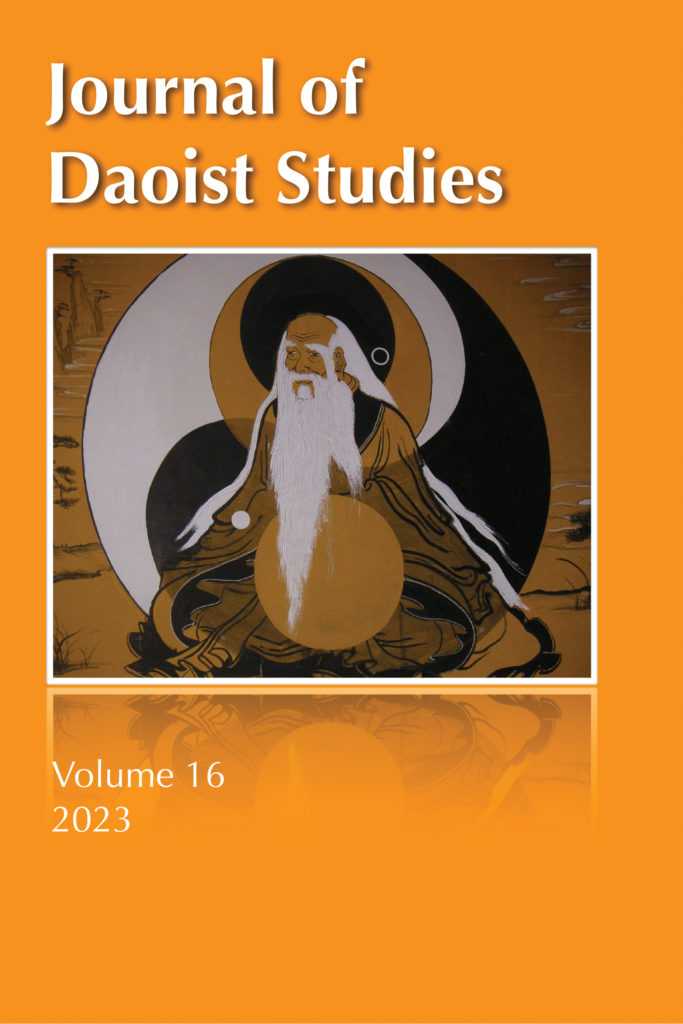
Journal of Daoist Studies JDS Volume 16 (2023)

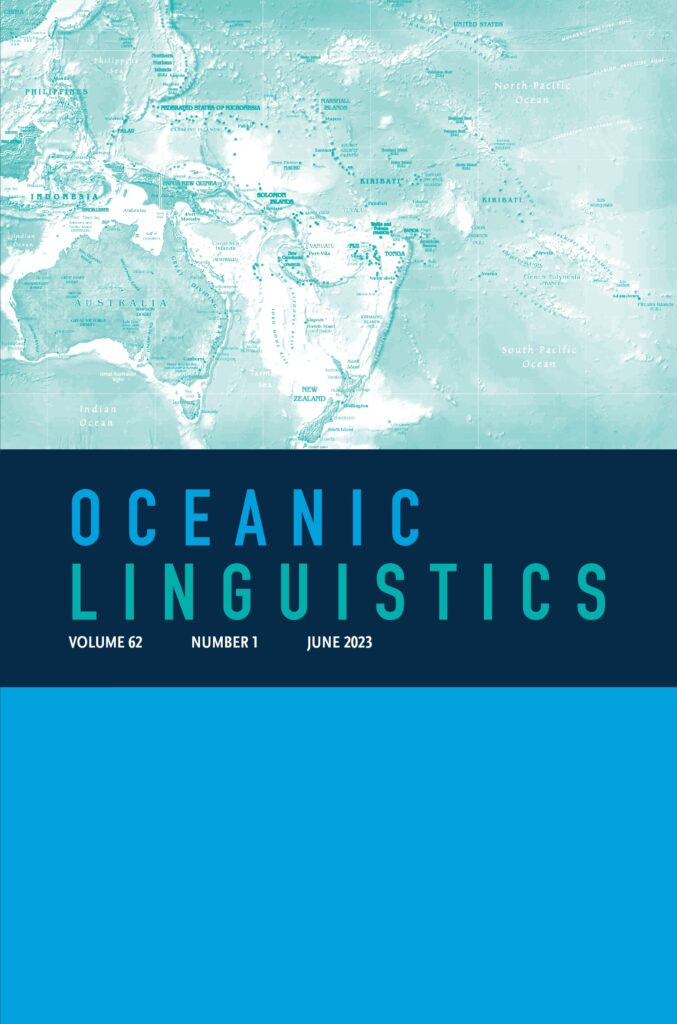
Oceanic Linguistics 62-1 cover

Oceanic Linguistics

Volume 62, Number 1 (2023)

The new issue contains the following articles:

Variable Copying Sites in Truku Cə- Reduplication
Hui-Shan Lin

Voice and Pluractionality in Äiwoo
Åshild Næss

Comitative Constructions in Reefs–Santa Cruz
Åshild Næss, Valentina Alfarano, Brenda H. Boerger, and Anders Vaa

Preverbal Determiners and the Passive in Moriori
John Middleton

Some Remarks on Sagart’s New Evidence for a Numeral-Based Phylogeny of Austronesian
Alexander D. Smith

Find these and more articles and squibs at Project MUSE.


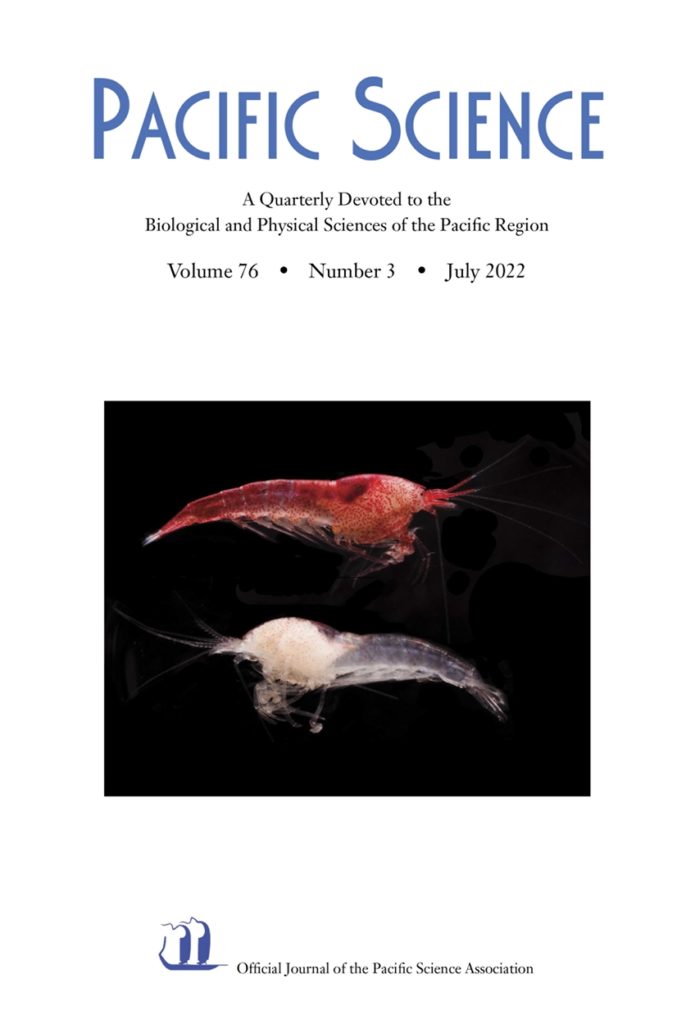
Pacific Science

Volume 76, Number 3 (2022)

The new issue contains the following articles:

Prioritization of Restoration Needs for Seabirds in the U.S. Tropical Pacific Vulnerable to Climate Change
Lindsay C. Young and Eric A. VanderWerf

A Third Pond on the Mauna Kea Summit Plateau
Norbert Schorghofer, Matthias Leopold, and Fritz L. Klasner

Lake Tagimaucia Montane Lake as a Potential Late Holocene Environmental Archive in Fiji’s Volcanic Highlands
James Terry, Kunal Singh, and Michelle McKeown

South(east) by Southwest: Identifi cation of a New Halocaridina rubra Holthuis, 1963 (Decapoda: Atyidae) Genetic Group From O‘ahu, Hawai‘i
Scott R. Santos, Livable Hawai‘i Kai Hui, Mike N. Yamamoto, Thomas Y. Iwai Jr., and Annette W. Tagawa

Landscape Configuration Influences ‘Ōma‘o (Myadestes obscurus)
Song Diversity

Nicole M. Fernandez, Kristina L. Paxton, Eben H. Paxton, Adam A. Pack, and Patrick J. Hart

Find more articles at Project MUSE.

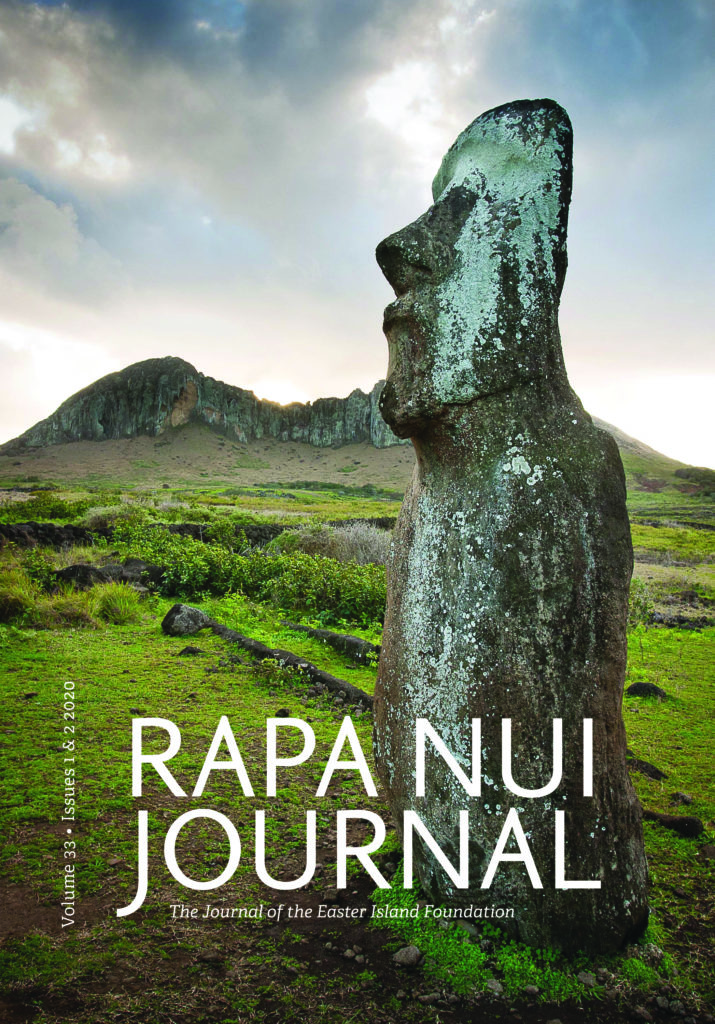
Rapa Nui Journal

Volume 33, Number 1 & 2 (2020)

The new issue contains the following articles, reports, and news:

Mana Tupuna: Honoring the Ancestors Abroad
Phineas Kelly

Rapa Nui in the Hans Helfritz Collection at the Rautenstrauch-Joest Museum
Tania Basterrica Brockman and Betty Haoa Rapahango

Con-ticci and the Bennett Monolith of Mocachi
Andrea Ballesteros Danel

Identifying Places and People in Walter Lehmann’s Photograph Collection of Rapa Nui (Easter Island, 1911)
Cristián Moreno Pakarati and Rafał Wieczorek

Terevaka Archaeological Outreach (TAO) 2020 Project Report: Digital Repatriation
Britton L. Shepardson

Find more articles, reports, and news on Easter Island at Project MUSE.

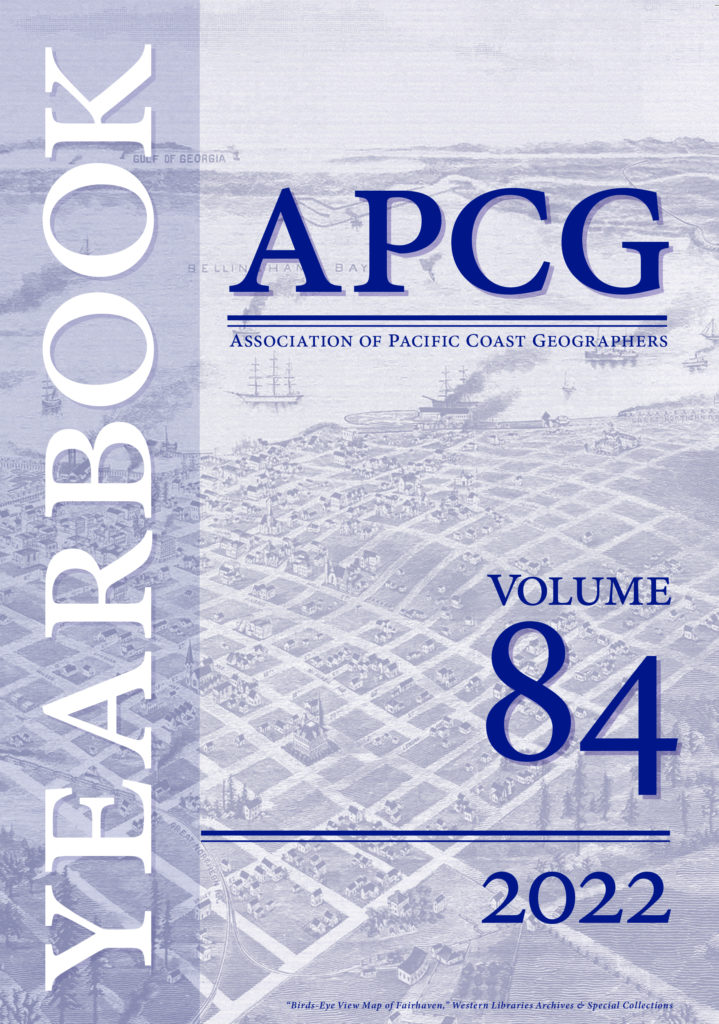
Yearbook of the Association of Pacific Coast Geographers

Number 84 (2022)

The new issue includes the following articles:

The Geographer as Bibliophile
Michael Pretes

Canyonlands National Park: A Multiple-Use Test Case
Tate Pashibin, Geoffrey Buckley, and Yolonda Youngs

Donald W. Meinig’s Southwest at Half-Century, a Reflection
and Appreciation

Daniel D. Arreola, Richard L. Nostrand, William Wyckoff, Craig
Colten, and Paul F. Starrs

Portland’s Post-Industrial Neighborhoods
Mark D. Bjelland and Madelyn Vander Veen

Weighted OWA Operators in Spatial MultiCriteria Decision-
Making

Soheil Boroushaki

Find more articles, research notes, book reviews, abstracts, meeting reports, and awards at Project MUSE.