



Celebrating the Golden Pheasant on Maui in the latest issue of Pacific Science 

This issue features a striking black cover, a deliberate design choice inspired by an article on the dark-throated pheasant and its symbolic contrast with the pale-throated species.
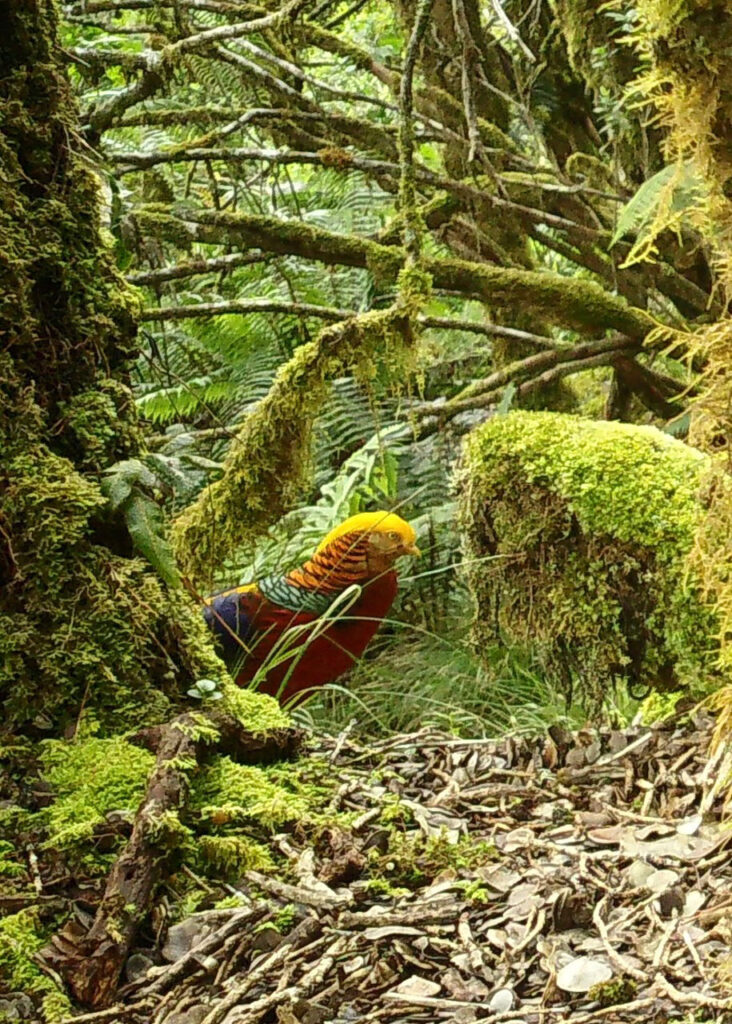
Golden Pheasant of Maui Pacific Scinece 78-4
Photo: Golden Pheasant (Chryslophus pictus) male of the “pale-throated” morph.  Compare with the “dark-throated” morph on the front cover.  Photographed by Chris Daniels at upper Kīpahulu Valley, Haleakalā National Park, 30 August 2021. 

Ten More Years of the Golden Pheasant (Chrysolophus pictus) on Maui, Hawaiian Islands

Researchers Thane Pratt, Christopher C. Warren, Erika K. Kekiwi, Kerri Fay, and Richard J. Camp explore the fascinating contrasts between the dark-throated and pale-throated Golden Pheasant on Maui. The article discusses the history of these game birds as outlined in the abstract:

Since the introduction of the Golden Pheasant (Chrysolophus pictus) to
Haleakalā volcano, Maui, three decades ago, subsequent reports have hinted at an expansion of this nascent population. We draw from a variety of data sources to learn about this pheasant’s present status on Maui. First, forest bird surveys conducted every five years revealed that the frequency of Golden Pheasant detections has greatly increased, and the bird has both maintained its former distribution and expanded eastward into Haleakalā National Park (NP). Second, reports to eBird from The Nature Conservancy’s Waikamoi Preserve, where Golden Pheasants first appeared on Maui, demonstrate that the frequency of observations has increased and is strongly seasonal, predominantly in the spring. Third, autonomous recording units monitoring endangered forest birds recorded pheasants too, adding new locations. Finally, trail cameras set to monitor mammals picked up pheasants as well, showing males of two color morphs: original “wild-type” and “dark-throated.” Trail cameras also documented a small juvenile at Waikamoi Preserve and both females and males in Haleakalā NP. By “connecting the dots” of mapped occurrences, we traced the pheasant’s progression through a narrow band of subalpine cloud forest with open understory, extending from Waikamoi Preserve eastward to upper Kīpahulu Valley, a distance of 14 km. In summary, this body of evidence supports the claim that the Golden Pheasant has established a self-sustaining population on Maui, and we propose that the species’ success there may be attributed to the minimal influence of predators and the absence of competing gallinaceous birds in its preferred habitat.

Discover the issue here:

Pacific Science 78-4
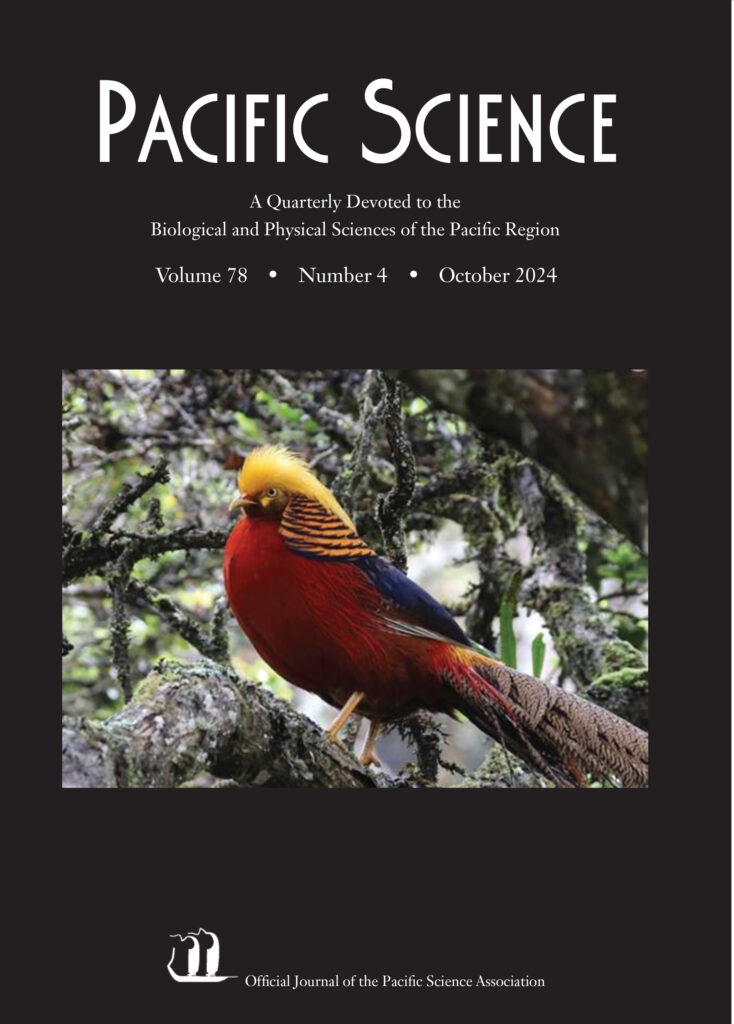
Pacific Science 78-4 cover

Other articles in this issue:

Thor Heyerdahl’s Legacy: Ichthyological and Herpetological Collection on Fatu Hiva (Marquesas Islands) in 1937
Erwan Delrieu-Trottin, Thore Koppetsch, Ann-Helén Rønning, and
Michael Matschiner

Interactions between Humans and South American Sea Lions (Otaria byronia) during an Avian Flu Outbreak in the Southeastern Pacific
Liliana Ayala, Raúl Sánchez-Scaglioni, and Gonzalo Gómez


Length-Weight Relationships for 15 Coral Reef Fish Species from the Northern Line Islands
Anela K. Akiona, Brian J. Zgliczynski, Beverly J. French, and Stuart A. Sandin


Tracing the History of Māori Horticulture and Dogs (Canis familiaris) at Two Volcanic Cone Maunga Pā, Auckland, New Zealand, Using Microfossil and 14C Analyses
M. Horrocks, S. H. Bickler, A. Apfel, R. Shakles, E. Cameron, R. Foster, and B. Presswell

Weed Population Dynamics and Composition in a Tropical Island Eggplant (Solanum melongena L.) Agroecosystem: Implications for Sustainable Weed Management
Aradhana Devi Deesh, Leslie Toralba Ubaub, Michael Furlong, and Mereia Fong Lomavatu
Pacific Science, vol. 71, no. 1 (2017)

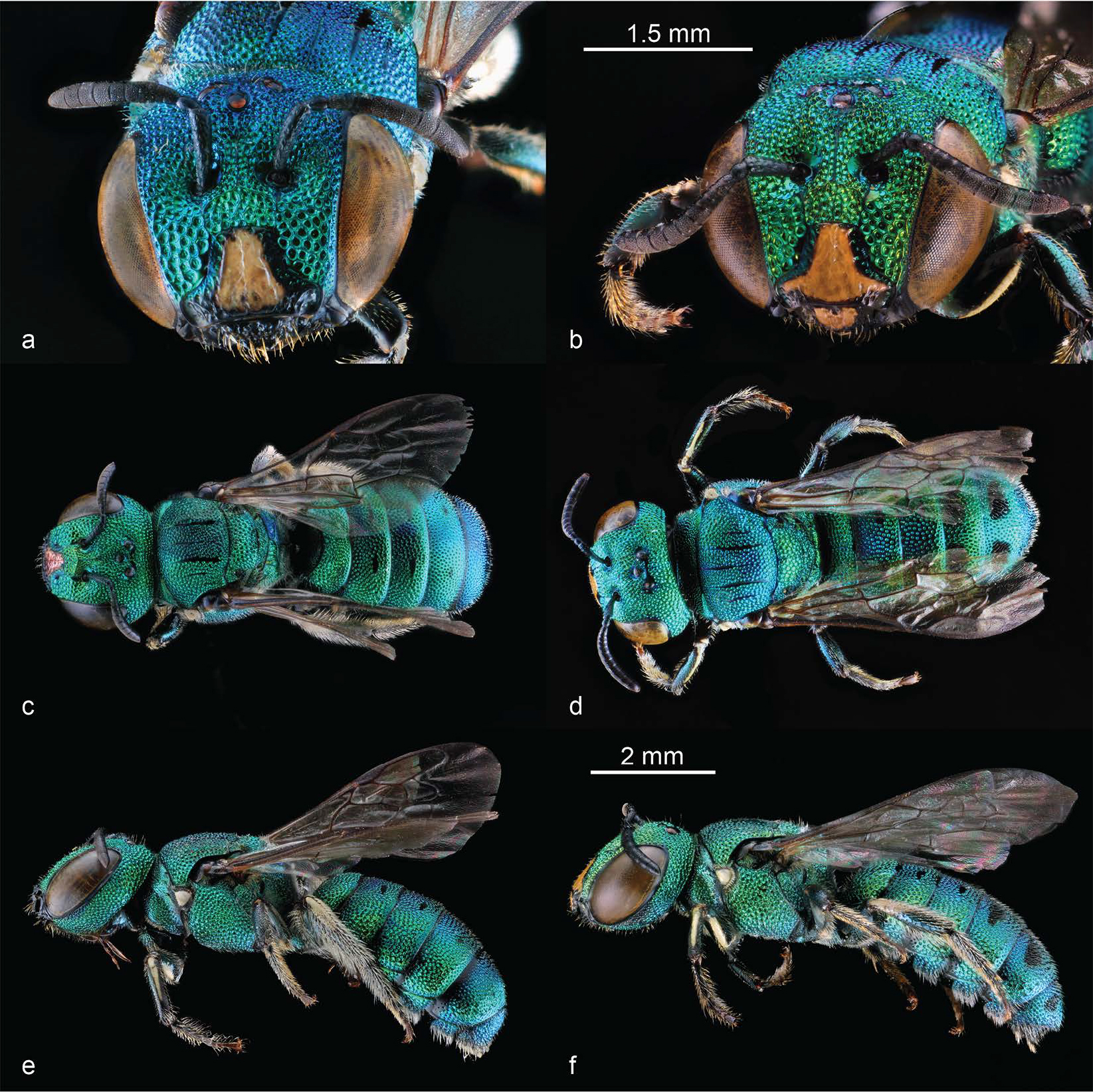
From ‘Range Expansion of the Small Carpenter Bee Ceratina smaragdula across the Hawaiian Archipelago with Potential Ecological Implications for Native Pollinator Systems’ in this issue. Female (left) and male (right) Ceratina (Pithitis) smaragdula: face, a, b; dorsal view, c, d; lateral view, e, f. Body length is between 6 and 8 mm on average. Note relatively prominent facial maculation and black abdominal patches of the male.

Preview Pacific Science, vol. 71 no. 1 with the following article free for all from Bio-One:

New Species of Stylasterid (Cnidaria: Hydrozoa: Anthoathecata: Stylasteridae) from the Northwestern Hawaiian Islands by Stephen D. Cairns

Also inside this quarter’s issue, Wyatt A. Shell examines small green carpenter bee range expansion in Hawai’i:

Invasive bee species may have a widely detrimental impact on their novel host ecosystem. Introduced bees can rapidly disrupt native plantpollinator mutualisms through competition with indigenous pollinator fauna and facilitation of invasive flora reproduction. […] Here we present a comprehensive synthesis of C. smaragdula’s known biological and ecological history, as well as a population genetic analysis of C. smaragdula from Maui, and from locations across its native range, at the cytochrome oxidase I (COI ) locus. We update C. smaragdula’s known distribution and occurrence elevation in Hawai‘i and reveal a lack of genetic structure between Hawaiian and native range populations.

Scholarly articles in this issue:

Continue reading “Pacific Science, vol. 71, no. 1 (2017)”

In the Footsteps of Frank Chin on Maui

McMillin_CONOS&magMany of the characters and locations featured in Frank Chin‘s The Confessions of a Number One Son are based on the author’s experiences living on Maui over four decades ago. In 1969, Chin taught at San Francisco State, but decided to take a break from teaching and move to the island, where he worked as a carpenter with some old friends from Berkeley. Over time, Chin grew anxious to return to the mainland, but found that he couldn’t afford a plane ticket home.

As fate would have it, he learned of a playwriting contest sponsored by the East West Players, a showcase theater for Asian American actors in Los Angeles. The top prize was a thousand dollars. Over the course of several weeks, Chin wrote and submitted a play, and eventually found himself sharing the award with Momoko Iko—thereby earning half of the prize money, which was more than enough to buy a plane ticket back to California. That prize-winning play was The Chickencoop Chinaman and the rest, as they say, is history.

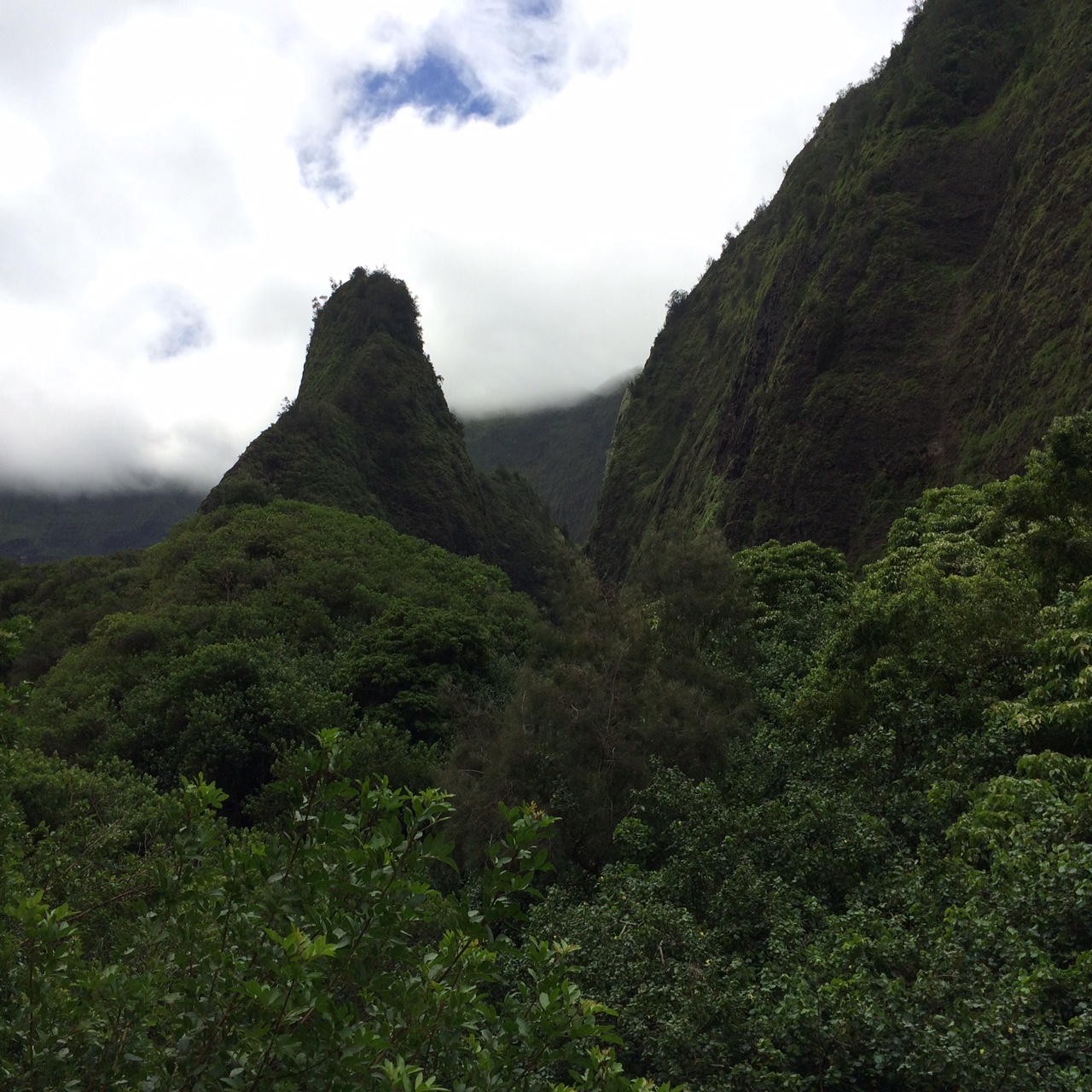
McMillin_IaoNeedleThis August, forty-five years after Chin left Maui, editor Calvin McMillin decided to travel to the island to investigate the writer’s old haunts, especially those featured in the novel. He visited Wailuku, located at the mouth of ‘Iao Valley and near the landmarks of ‘Iao Needle and ‘Iao Stream (historically known as Wailuku stream). As Calvin reported after his trip, seeing the lush and beautiful natural environment in person added a new understanding of the novel’s Hawaiian backdrop.

McMillin_IaoTheaterAfter visiting the historic Iao Theater, Calvin followed in Frank Chin’s footsteps (and more recently, those of Anthony Bourdain) by eating at Tasty Crust, an old-fashioned local diner in Wailuku, and concluded that the startling similarities between Tasty Crust’s breakfast menu and the main character’s diet in The Confessions of a Number One Son was unlikely to be just a coincidence.

“I ate in restaurants. Spam and eggs, canned Vienna sausage and eggs, canned corned beef hash and Portuguese linguica and eggs, and canned ham and eggs out of a typical greasy spoon for breakfast. The mass eats of the white missionary culture and U.S. military now a part of island culture. The wonders of canned processed meat—a part of life every morning—sealed up hunger with grease.” (page 43)McMillin_TastyCrustdiner

Calvin also visited many of the beach locations featured in the novel and drove to Lahaina’s Wo Hing Museum, which offers information about Chinese immigration to Maui in the nineteenth and early twentieth centuries.

To see more of Calvin McMillin’s trip to Maui, visit the official Facebook page for The Confessions of a Number One Son. You can also follow him on Twitter @roninonempty.