




Path of the Teabowl
Additional Information
- About the Book
-
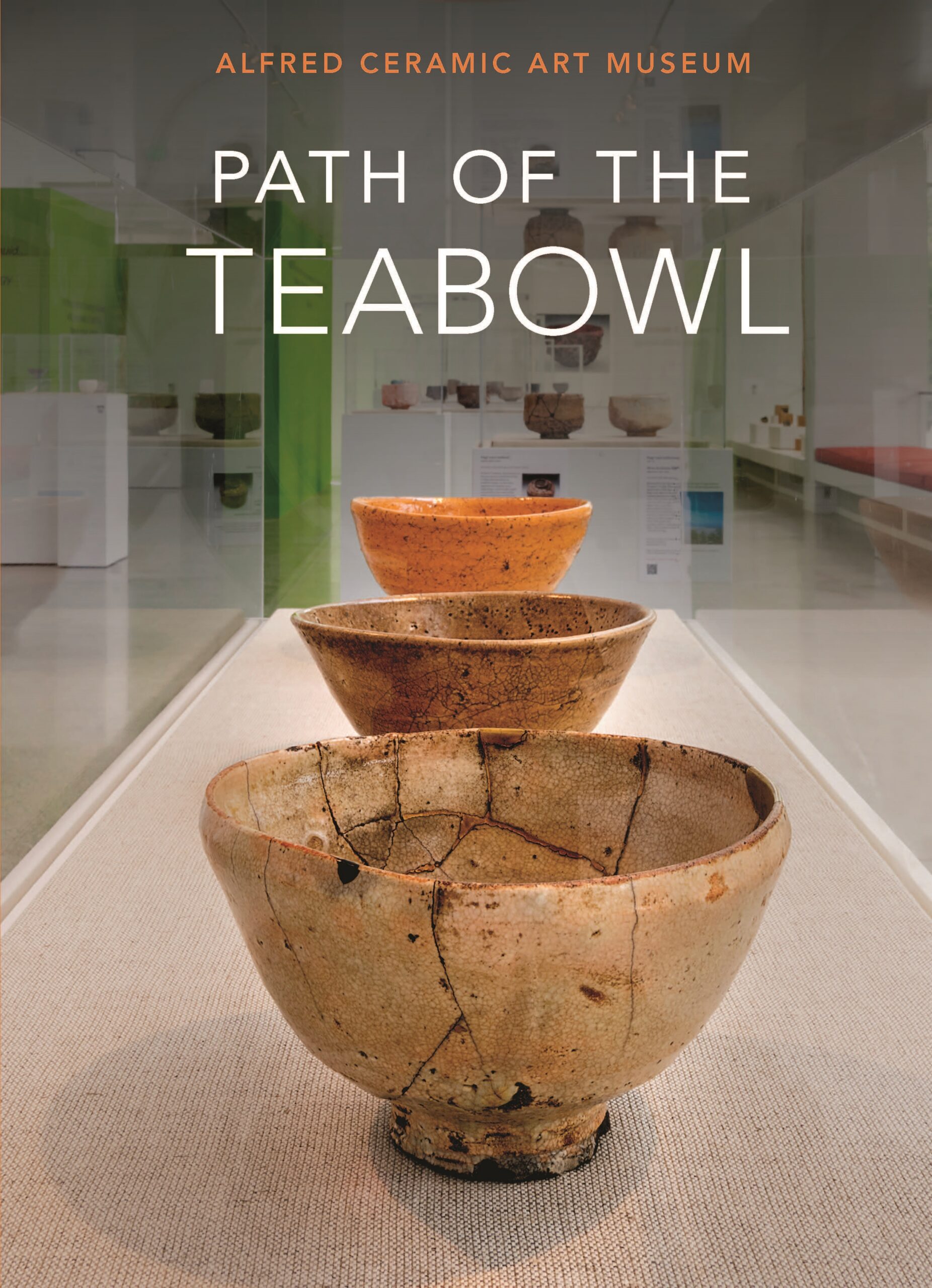
Originating in China and developed in Korea and Japan, the teabowl has been a special category of ceramics for more than a thousand years. Path of the Teabowl illuminates the historical, geographic, stylistic, and conceptual trajectories of this iconic genre, tracing its evolution from the black and brown glazed bowls used by Song Dynasty Buddhist monks to the avant-garde explorations of contemporary artists worldwide. Based on an exhibition held at the Alfred Ceramic Art Museum (2021–2022), this richly illustrated volume brings together essays by art historians Meghen Jones (Alfred University), Robert D. Mowry (Harvard Art Museums/Christie’s), and Seung Yeon Sang (Korea National University of Arts); curator Natsu Oyobe (University of Michigan Museum of Art); and ceramic artists Wayne Higby (Alfred University/Alfred Ceramic Art Museum) and Linda Sikora (Alfred University). A catalogue of more than one hundred objects—with descriptions and makers’ quotes—completes the volume.
- About the Author(s)
-
Meghen Jones, Editor
Meghen Jones is Professor of Art History at Alfred University.
- Reviews and Endorsements
-
- The teabowl: a thing to hold and behold. Metaphorically brimming but also a cipher for emptiness and imperfection, it is a crucible of East Asian culture and an icon in global exchange. . . . This book will be an enduring resource for people who make, study, collect, or otherwise engage with ceramics.
—Richard L. Wilson, International Christian University - Although the teabowl is an iconic form of world ceramics, until now it has perhaps been too iconic to be given the scholarly, art historical, and trans-regional treatment this book provides. Path of the Teabowl convenes a remarkable selection of objects and an expert group of authors, who not only introduce us to the thousand-year history of the East Asian teabowl, but through it myriad religious, cultural, and social practices in different parts of the world. There is something here for everyone; scholars, students, ceramicists, tea enthusiasts, and general readers will all be able to drink from the same bowl.
—Yukio Lippit, Harvard University - An important contribution to a deep history of a ceramic vessel that captivated merchants and elites in early modern East Asia, collectors and aesthetes at the turn of the 20th century, and ceramists throughout the 20th century. . . . The discussion of women in tea ceremony after World War II, the emphasis on raku over chanoyu, and the acknowledgment of cultural appropriation make this a thought-provoking read and feast for the eyes.
—Edward S. Cooke, Jr., Yale University - While the global discourse on Zen has long framed the tea ceremony chiefly around its spiritual dimensions, this remarkable book shifts the paradigm by centering on the chawan (teabowl) itself, tracing a rich historical arc where Japan absorbed Chinese influence, celebrated Korean craftsmanship, and synthesized them into a distinct native identity. Even more vital is the book's rare insight into how 20th-century British and American ceramicists actively engaged with and evolved this heritage.
—Maezaki Shinya, Ritsumeikan University
- The teabowl: a thing to hold and behold. Metaphorically brimming but also a cipher for emptiness and imperfection, it is a crucible of East Asian culture and an icon in global exchange. . . . This book will be an enduring resource for people who make, study, collect, or otherwise engage with ceramics.