




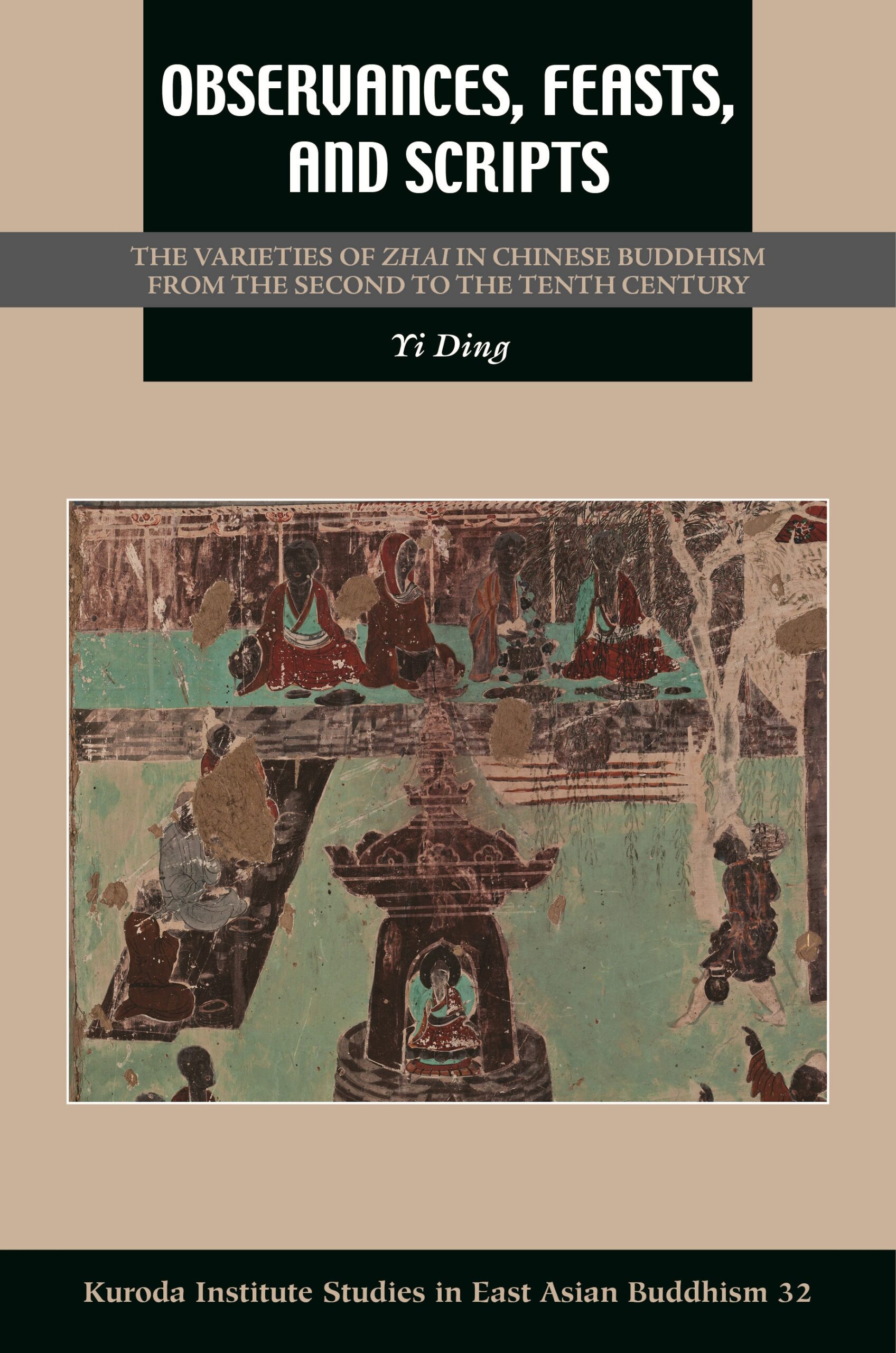
Observances, Feasts, and Scripts: The Varieties of Zhai in Chinese Buddhism from the Second to the Tenth Century
- About the Book
-
Observances, Feasts, and Scripts is the first monograph written in English to offer a comprehensive analysis of the varieties of zhai, a multifaceted term with deep historical and religious significance in Chinese Buddhism. Drawing on a wide array of sources—including canonical texts, apocryphal writings, hagiographies, and ritual documents—this book unveils zhai as a ritual complex encompassing temporary observances, communal feasts, and modes of interaction between the seen and unseen realms. These practices, rooted in both lay and monastic traditions, illustrate the intricate interplay between food, community, and ritual in Indian and Chinese Buddhism.
Part I traces how Indian Buddhist temporary observances were adapted, debated, and reimagined in the Chinese context. Part II explains the sponsored feast as a mechanism for lay-monastic interaction and merit-making. It also examines how Buddhists engaged with deities and spirit saints through remote invitations and ritual offerings. Part III focuses on “scripts” used for receiving the Eightfold Observance and conducting sponsored feasts, thus revealing their evolution from simple master-disciple interactions to complex communal events.
Observances, Feasts, and Scripts is an essential resource for scholars interested in food-related religious practices and the history of Buddhism. Through its meticulous examination of Chinese, Pāli, Sanskrit, and Tibetan materials, the book offers a fresh perspective on Chinese Buddhism as an intercultural endeavor. It sheds light on relevant scholastic debates, the creation of apocrypha, translation strategies, and ritual innovations in medieval China. By moving beyond teleological frameworks such as Sinicization, it emphasizes the agency of cultural, doctrinal, and social factors in shaping these practices. Additionally, it engages with the cognitive dimensions of ritual and highlights ritual logic as a cross-cultural analytical lens.
- About the Author(s)
-
Yi Ding, Author
Yi Ding teaches in the Department of Religious Studies at DePaul University.Jacqueline I. Stone, Series Editor
Jacqueline I. Stone is professor of religion at Princeton University.
- Reviews and Endorsements
-
- This is a rich, innovative study on the evolution of Chinese Buddhist rituals in which laypeople made offerings to monks and spirits by sponsoring feasts. Lay-monk interaction is an important issue across Buddhist Asia, and the question is particularly crucial for the early medieval Chinese case. Yi Ding does an impressive job of digging up, combing through, and making sense of a large variety of materials in Sanskrit, Chinese, and Tibetan to shed important light on how local monks helped define the practice by authoring (and copying and performing) the scripts used during the feasts.
—Stephen F. Teiser, Princeton University
- This is a rich, innovative study on the evolution of Chinese Buddhist rituals in which laypeople made offerings to monks and spirits by sponsoring feasts. Lay-monk interaction is an important issue across Buddhist Asia, and the question is particularly crucial for the early medieval Chinese case. Yi Ding does an impressive job of digging up, combing through, and making sense of a large variety of materials in Sanskrit, Chinese, and Tibetan to shed important light on how local monks helped define the practice by authoring (and copying and performing) the scripts used during the feasts.
- Supporting Resources